
Stresstech XStress 3000 G3 X-Ray Residual Stress Analyzer
| Brand | Stresstech Oy |
|---|---|
| Origin | Finland |
| Model | XStress 3000 G3 |
| Power Supply | 100–240 VAC, 50/60 Hz |
| Standard Cable Length | 5 m |
| Main Unit (X3003) Dimensions | 552 × 413 × 254 mm |
| Goniometer G3 Dimensions | 555 × 492 × 574 mm |
| Goniometer G3R Dimensions | 966 × 573 × 605 mm |
| Application | X-ray diffraction-based residual stress and retained austenite measurement in polycrystalline materials including ceramics |
Overview
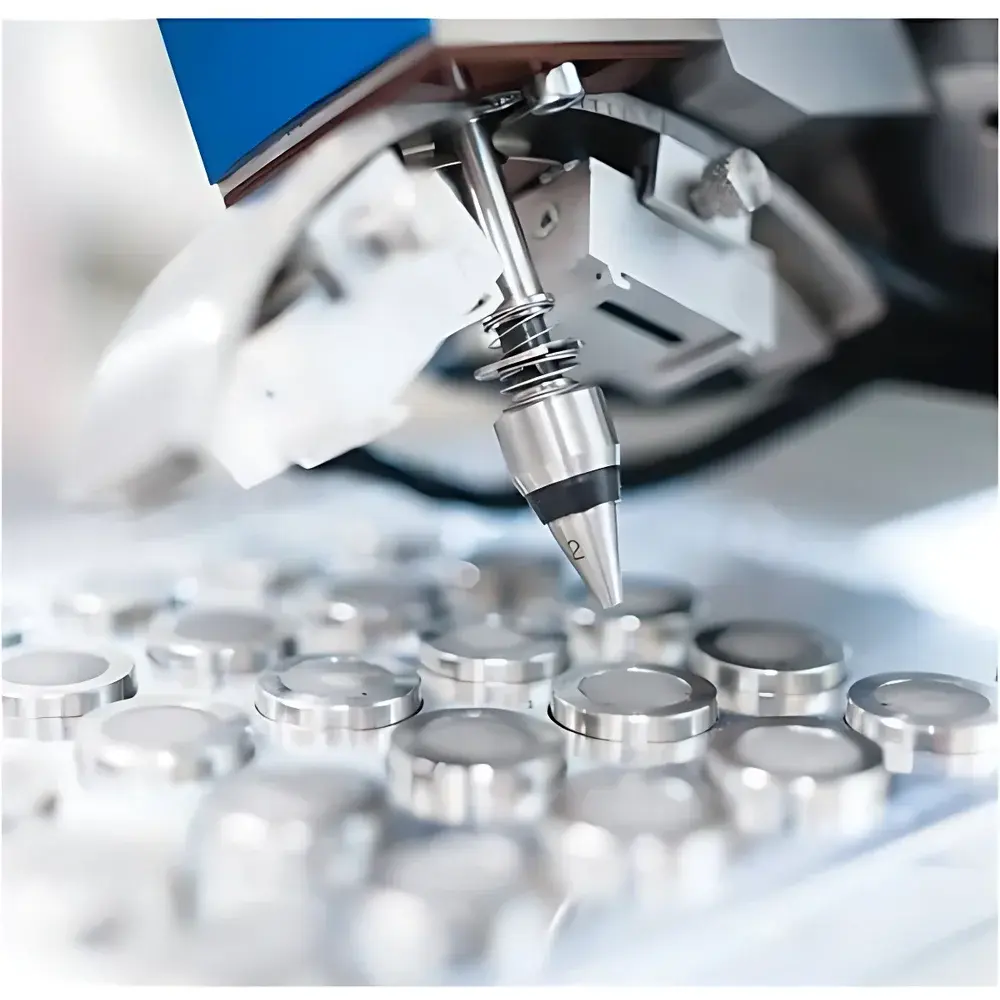
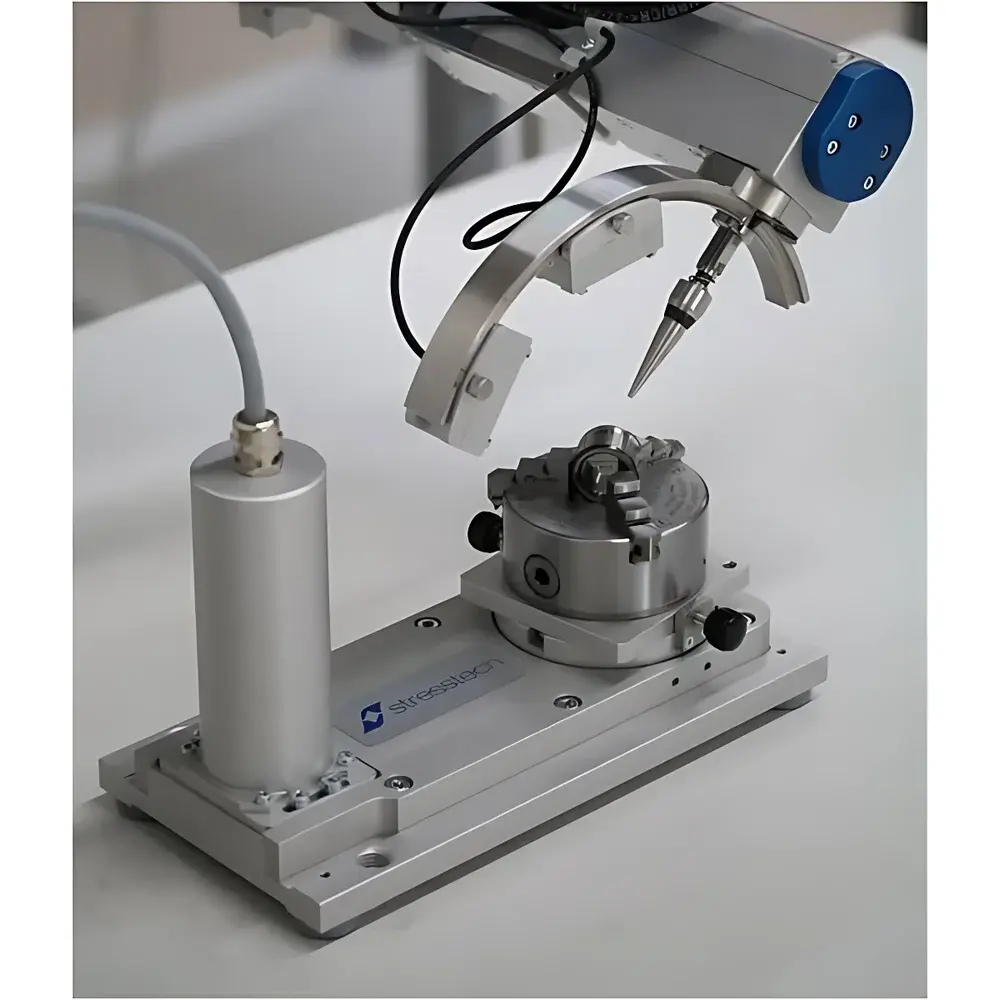
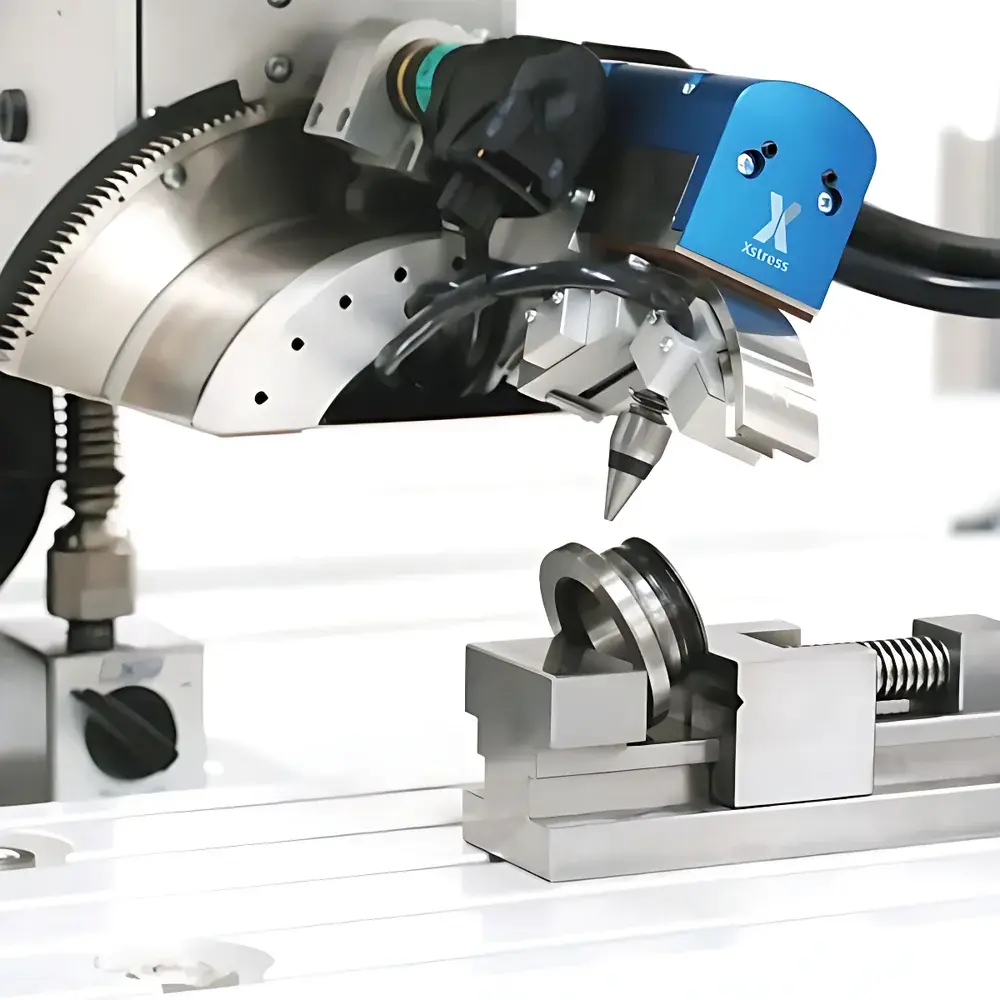
The Stresstech XStress 3000 G3 is a portable, high-precision X-ray diffraction (XRD) system engineered for non-destructive determination of residual stress and retained austenite content in polycrystalline engineering materials—including steels, nickel- and titanium-based alloys, aluminum, ceramics, and composites. Operating on Bragg’s Law (nλ = 2d sinθ), the instrument measures lattice strain via angular shifts in diffraction peak positions, enabling quantitative stress calculation using established sin²ψ methodology. Unlike laboratory-bound diffractometers, the XStress 3000 G3 integrates a compact microfocus X-ray tube, high-resolution silicon strip detector, and motorized goniometer into a modular architecture designed for both lab-controlled environments and field-deployable applications—such as turbine blade inspection on shop floors, weld integrity assessment at power plant sites, or additive manufacturing part qualification in production cells.
Key Features
- True portability: Complete system weight under 45 kg; main unit and goniometer separable for single-operator transport and setup.
- Rapid deployment: Full mechanical and electrical commissioning completed within ≤10 minutes—no external cooling, vacuum pumps, or shielding infrastructure required.
- Integrated computing: Embedded Windows-based industrial processor enables real-time data acquisition, peak fitting, and stress tensor calculation without external PC dependency.
- Flexible connectivity: USB 2.0 and Ethernet interfaces support remote monitoring, firmware updates, and integration with enterprise LIMS or MES platforms.
- Operator safety compliance: Fully interlocked radiation enclosure meeting IEC 61010-1 and EN 62471; automatic beam shutter and dose-rate monitoring ensure ALARA (As Low As Reasonably Achievable) operation.
- G3R extended-range goniometer option available for large components (e.g., crankshafts, pressure vessel nozzles) with ±70° 2θ range and sub-0.01° angular reproducibility.
Sample Compatibility & Compliance
The XStress 3000 G3 accommodates flat, curved, and irregular surfaces with radii down to 15 mm via adjustable sample stage and multi-axis alignment tools. Measurement spots range from 1 × 1 mm to 3 × 3 mm (adjustable collimation), supporting ASTM E915-22 (Standard Test Method for Verifying the Alignment of X-Ray Diffraction Instrumentation for Residual Stress Measurement) and ISO 21942:2020 (Non-destructive testing — X-ray diffraction methods for residual stress analysis). Retained austenite quantification follows ASTM E975-21 protocols using integrated Rietveld refinement algorithms. System validation reports include traceable calibration certificates compliant with ISO/IEC 17025 requirements, and audit-ready electronic records satisfy FDA 21 CFR Part 11 and EU Annex 11 expectations for regulated industries.
Software & Data Management
Stresstech’s proprietary XStress Studio v5.x software provides intuitive workflow navigation—from sample positioning and exposure parameter selection (kV, µA, exposure time, scan step) to automated peak search, background subtraction, and full stress tensor derivation (σ₁, σ₂, σ₃, τmax). All raw diffraction patterns, metadata (sample ID, location, operator, timestamp), and intermediate processing steps are stored in encrypted SQLite databases with configurable auto-backup to network drives. Export formats include CSV, XML, and PDF reports compliant with GLP/GMP documentation standards. Optional API access enables direct scripting for batch analysis pipelines or integration with Python-based material informatics frameworks.
Applications
- Aerospace: Surface and subsurface stress mapping of turbine disks, landing gear, and airframe welds pre- and post-shot peening.
- Power Generation: In-situ evaluation of residual stress gradients in nuclear reactor piping welds and steam turbine rotor grooves.
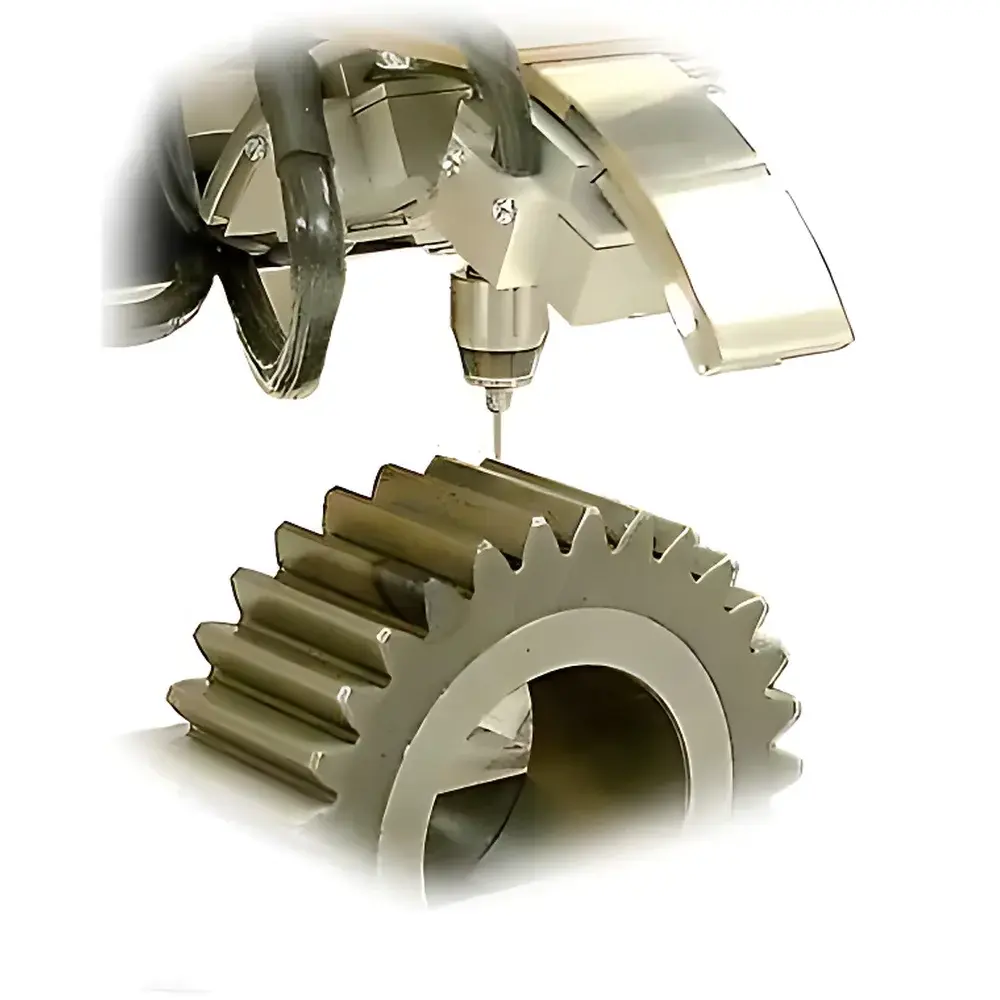
- Automotive: Process validation of induction-hardened gears, camshafts, and bearing races during heat treatment and grinding.
- Additive Manufacturing: Layer-by-layer stress evolution tracking in Ti-6Al-4V and IN718 builds to inform support structure optimization and HIP cycle design.
- Academic Research: Correlative studies linking thermomechanical history, phase transformation kinetics, and macroscopic stress states in advanced ceramics and metal matrix composites.
FAQ
Does the XStress 3000 G3 require external water cooling or compressed air?
No—its sealed microfocus X-ray tube operates with passive convection cooling and requires only standard AC power.
Can it measure residual stress through coatings or surface treatments?
Yes, provided the coating thickness is ≤50 µm and X-ray penetration depth exceeds the target measurement depth; optional Cr-Kα and Co-Kα anodes enhance contrast for near-surface analysis.
Is third-party software integration supported?
Yes—via documented RESTful API and DLL libraries for custom MATLAB, LabVIEW, or C# applications.
What radiation safety documentation is supplied?
Each unit ships with a site-specific radiation survey report, operator training certificate, and EU Declaration of Conformity (CE marking) covering EMC and low-voltage directives.
How is measurement uncertainty quantified?
Uncertainty budgets follow GUM (JCGM 100:2019) principles and include contributions from angular calibration, peak centroid determination, elastic constants, and ψ-tilt repeatability—typically ±15 MPa for steel at 1σ confidence level.
Related Products





