
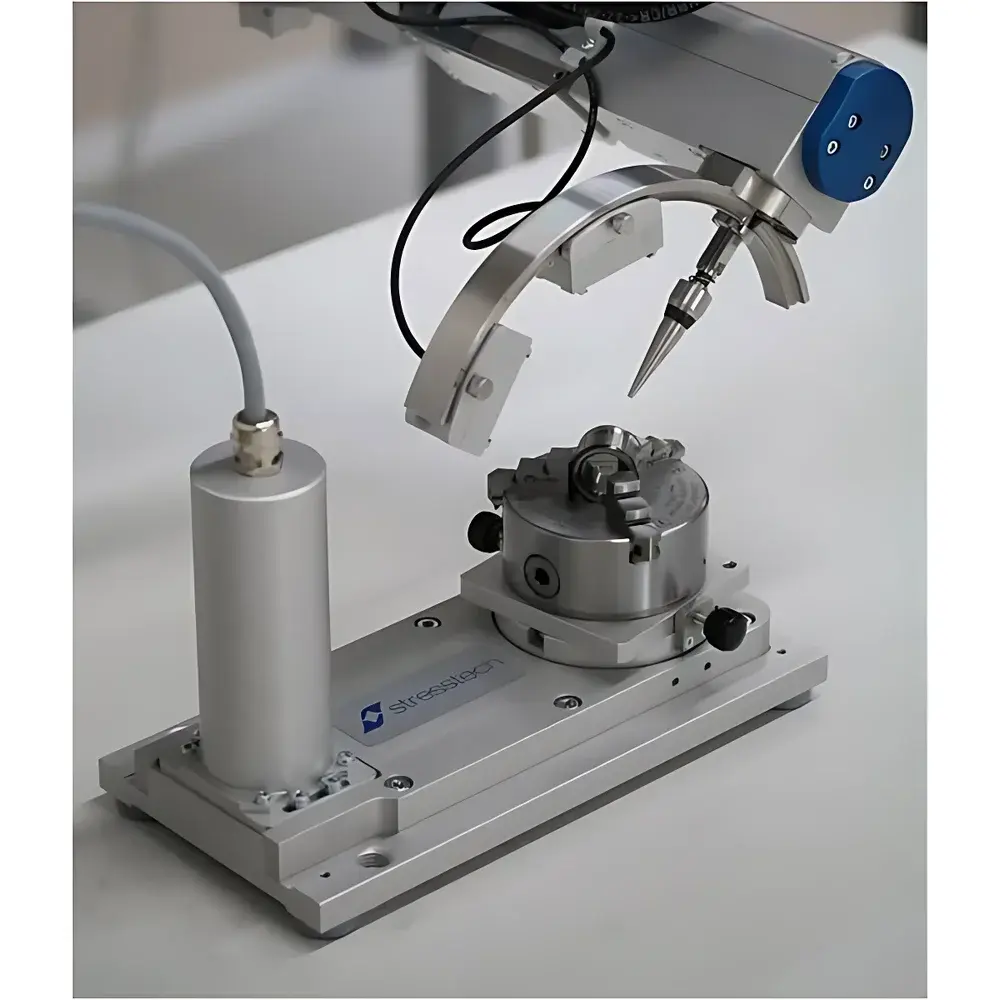
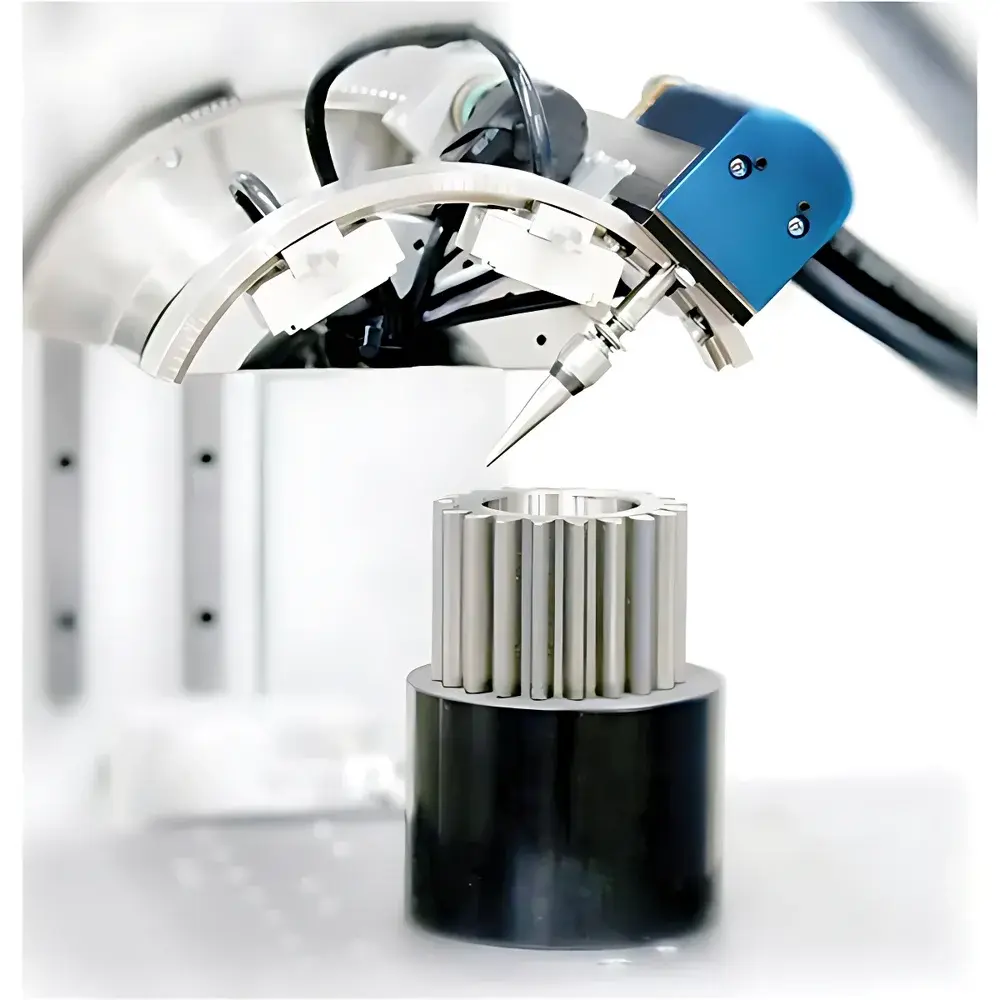
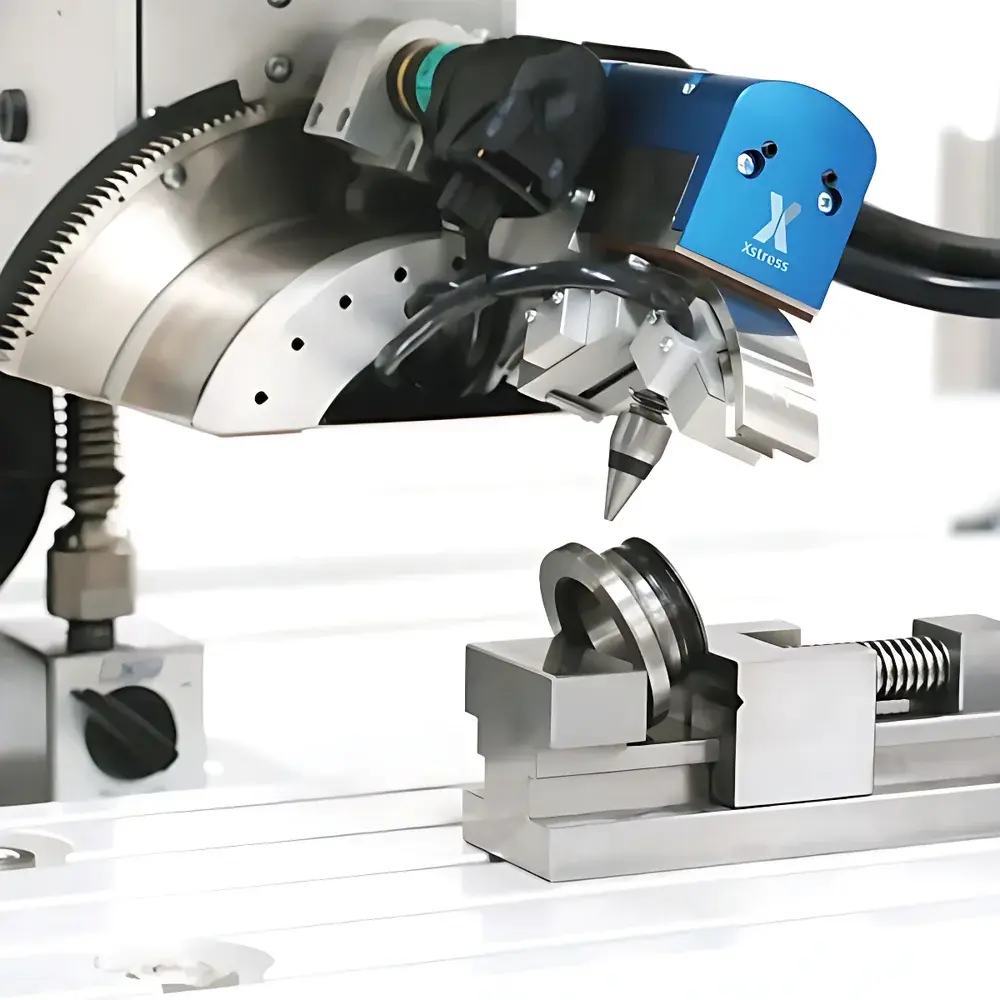
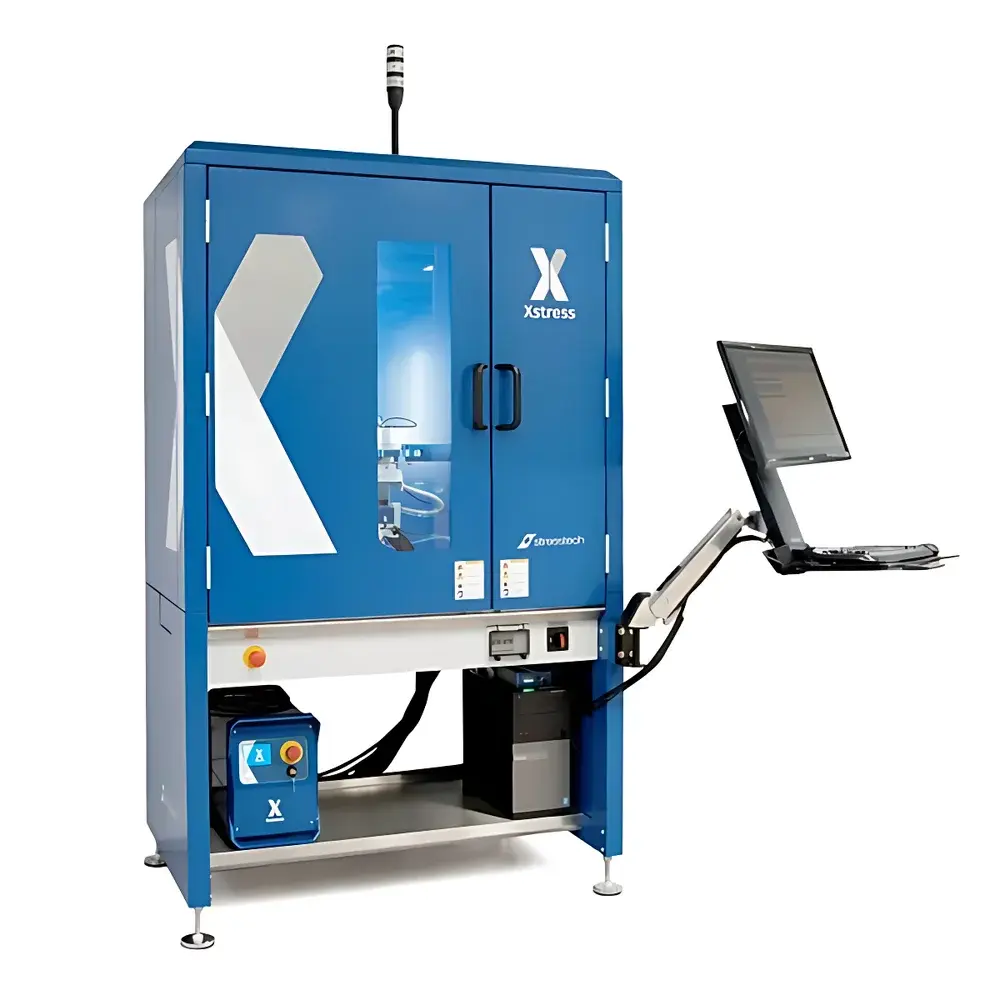
Stresstech XSTRESS 3000 Portable X-ray Residual Stress Analyzer
| Brand | Stresstech Oy |
|---|---|
| Origin | Finland |
| Manufacturer Status | Authorized Distributor |
| Origin Category | Imported |
| Model | XSTRESS 3000 |
| X-ray Tube | Micro-focus, 5–30 kV / 0–6.7 mA / 200 W adjustable |
| Target Materials | Cr, Cu, Co, Fe, V, Ti, Mn (Cr standard) |
| Detector | Solid-state position-sensitive proportional counter |
| Cooling | Integrated self-circulating liquid cooling (no external water supply) |
| Interface | RS-232, Windows-based GUI |
| Measurement Time | <10 s per diffraction peak |
| Portability | Fully portable, single-operator deployment, setup time ≤10 min |
| Compliance | Designed to meet IEC 61000-6-3 (EMC), IEC 61000-6-4, and radiation safety requirements per IEC 61010-1 and national X-ray equipment regulations |
Overview
The Stresstech XSTRESS 3000 is a fully portable, laboratory-grade X-ray diffraction (XRD)-based residual stress analyzer engineered for non-destructive, in-situ measurement of surface and near-surface residual stresses in polycrystalline metallic components. It operates on the sin²ψ method—leveraging Bragg’s law and lattice strain analysis—to quantify elastic strain from shifts in diffraction peak positions. Unlike fixed-laboratory systems requiring sample removal or complex fixturing, the XSTRESS 3000 integrates a microfocus X-ray tube, solid-state position-sensitive detector, and embedded control electronics into a compact, battery-compatible chassis. Its self-contained liquid cooling system eliminates dependence on external water lines or chilled recirculators, enabling reliable operation in environments ranging from factory floors and turbine maintenance bays to offshore platforms and rail yard inspection points. The instrument complies with international radiation safety standards (IEC 61010-1, IEC 61000-6-3/4) and supports full traceability under GLP/GMP-aligned workflows when paired with audit-trail-enabled software configurations.
Key Features
- True field-deployable architecture: Weighing under 25 kg with integrated carry handles and ruggedized housing; no external chiller, vacuum pump, or high-voltage rack required.
- Multi-target X-ray source: Interchangeable anodes (Cr, Cu, Co, Fe, V, Ti, Mn) optimized for diverse material systems—including austenitic steels, nickel superalloys, titanium alloys, and aluminum composites—with Cr as standard for ferritic/martensitic steels.
- High-efficiency detection: Position-sensitive proportional counter enables rapid, high signal-to-noise diffraction pattern acquisition—typical measurement cycle (including ψ-tilt, data collection, and strain calculation) completes in under 10 seconds per orientation.
- Real-time operational transparency: Full access to live spectra, raw intensity data, calibration parameters, and intermediate strain values at any stage—even during active measurement or motorized ψ-tilt sequencing.
- Modular hardware design: X-ray tube replacement achievable in ≤10 minutes without specialized tools; detector and collimator modules support field recalibration using NIST-traceable reference foils.
- Embedded Windows CE platform: Local processing reduces latency and ensures deterministic response; all firmware, spectral libraries, and stress calculation algorithms reside onboard.
Sample Compatibility & Compliance
The XSTRESS 3000 accommodates flat, curved, or irregularly shaped metallic components with surface roughness ≤ Ra 3.2 µm and minimum radius of curvature ≥ 25 mm. It supports residual stress evaluation per ASTM E915-22 (Standard Test Method for Verifying the Alignment of X-Ray Diffraction Instrumentation for Residual Stress Measurement) and ISO 21943:2020 (Non-destructive testing — X-ray diffraction methods for residual stress analysis). When used with optional electrolytic polishing units (e.g., Struers LectroPol series), depth-profiling down to 100 µm is achievable via sequential layer removal and re-measurement. All safety interlocks—including beam shutter status monitoring, door-open cutoff, and real-time dose rate feedback—are certified to EN 62471 (Photobiological Safety) and national regulatory frameworks governing portable ionizing radiation devices.
Software & Data Management
The bundled XSTRESS Software Suite (v8.x) provides a menu-driven, ISO 17025-aligned interface supporting ASTM E915-compliant measurement protocols, ASTRIM® 3D stress tensor reconstruction, and automated residual austenite quantification per ASTM E975. Data files are stored in vendor-neutral HDF5 format with embedded metadata (operator ID, timestamp, environmental conditions, instrument configuration). Export options include CSV, XML, and PDF reports compliant with FDA 21 CFR Part 11 requirements when configured with electronic signature modules and audit trail logging. Remote diagnostics and firmware updates are supported via USB or Ethernet; no cloud dependency is required for core measurement functionality.
Applications
This analyzer serves critical quality assurance and failure prevention roles across regulated industries: In aerospace, it verifies shot-peening effectiveness on compressor blades and weld integrity in airframe structures; in power generation, it assesses thermal stress gradients in steam turbine discs and nuclear reactor pressure vessel welds; in automotive manufacturing, it validates heat treatment uniformity in crankshafts and gear teeth; and in rail transport, it monitors rolling contact fatigue development in wheel treads and axle journals. Its portability also enables forensic metallurgical investigations following in-service failures—without disassembly or destructive sectioning.
FAQ
Does the XSTRESS 3000 require external cooling water or compressed air?
No. It features a closed-loop, self-circulating liquid cooling system with phase-change thermal management—zero external utilities needed.
Can it measure residual stress on curved surfaces such as pipes or shafts?
Yes. With optional curvature compensation kits and motorized ψ-tilt stages, it maintains measurement accuracy on convex surfaces with radii ≥25 mm.
Is operator training and certification required for regulatory compliance?
While no formal license is mandated in most jurisdictions, Stresstech recommends completion of their certified Level II XRD Residual Stress Practitioner course—aligned with ISO 9712 principles—for personnel conducting measurements in GxP environments.
How is measurement uncertainty determined and documented?
Uncertainty budgets follow EURACHEM/CITAC Guide CG4, incorporating contributions from peak centroid fitting (±5–15 arcsec), ψ-angle encoder resolution (±0.05°), lattice parameter reference uncertainty, and specimen surface normal alignment error—all reported automatically in final output files.
What maintenance intervals are recommended for field use?
Annual verification against NIST SRM 1979 (stainless steel powder) is advised; X-ray tube lifetime is rated at ≥5,000 operating hours under typical duty cycles (≤30% duty factor).





