
Stresstech XStress 3000 Portable X-Ray Residual Stress Analyzer
| Brand | Stresstech Oy |
|---|---|
| Origin | Finland |
| Manufacturer Status | Authorized Distributor |
| Origin Category | Imported |
| Model | XStress 3000 |
| Pricing | Upon Request |
Overview
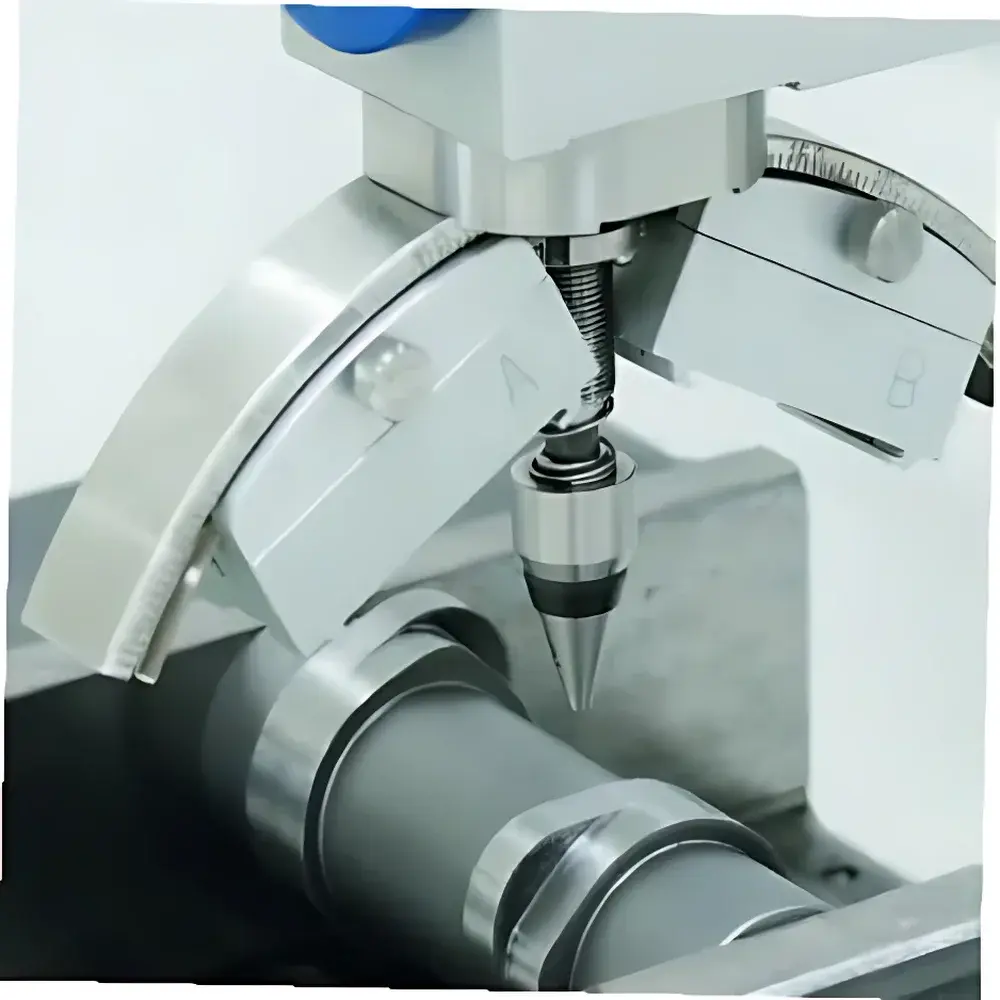
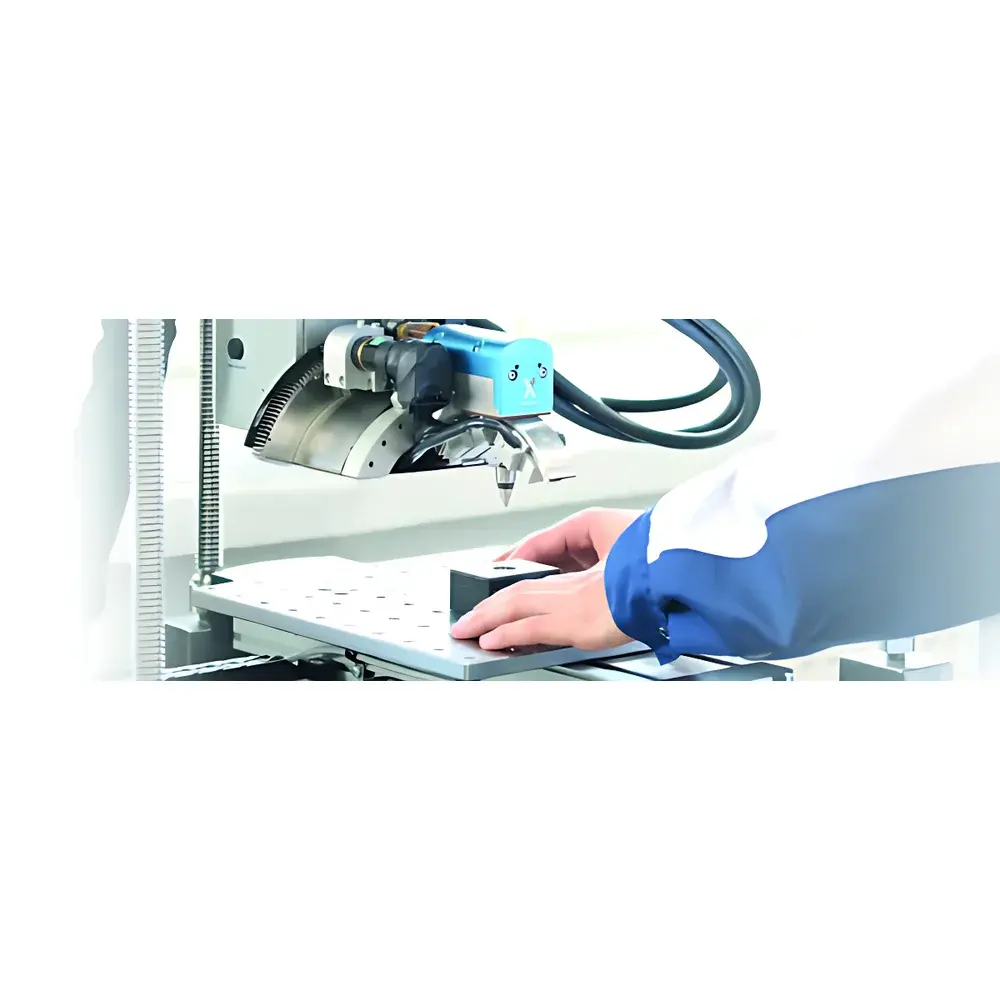
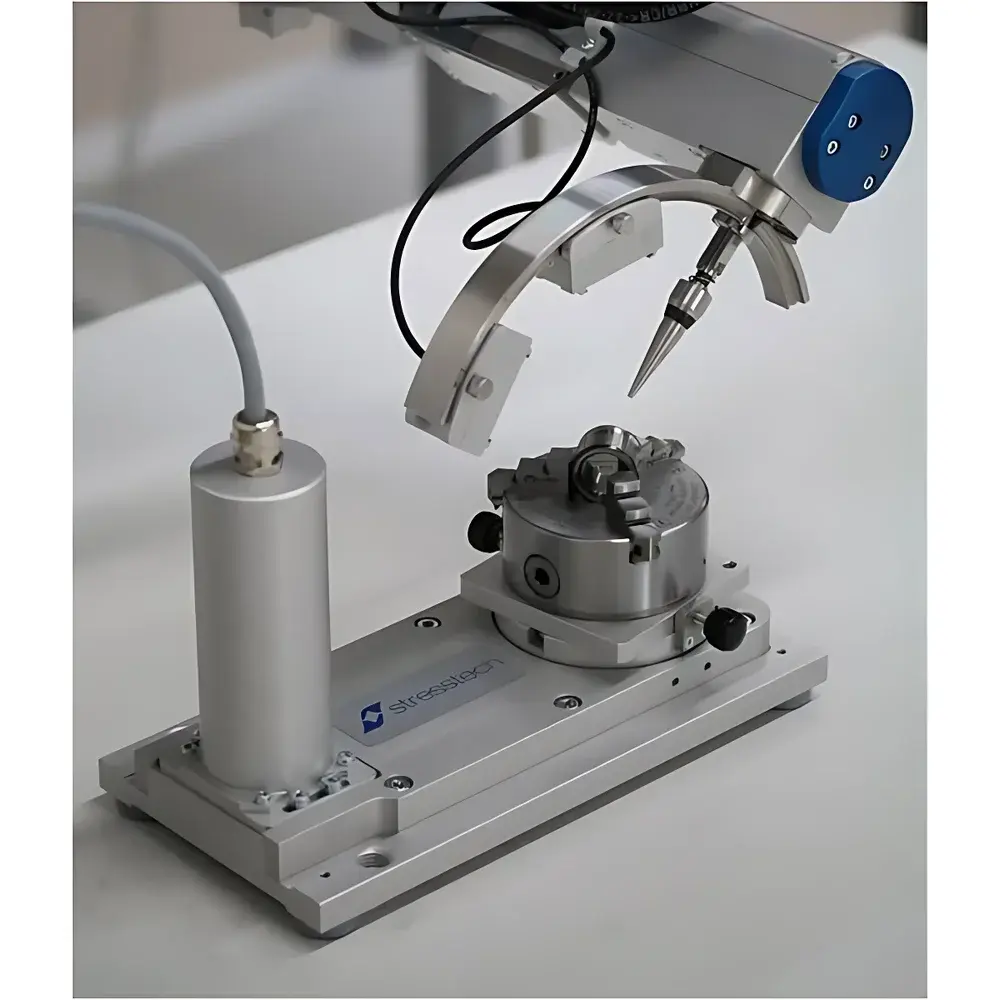
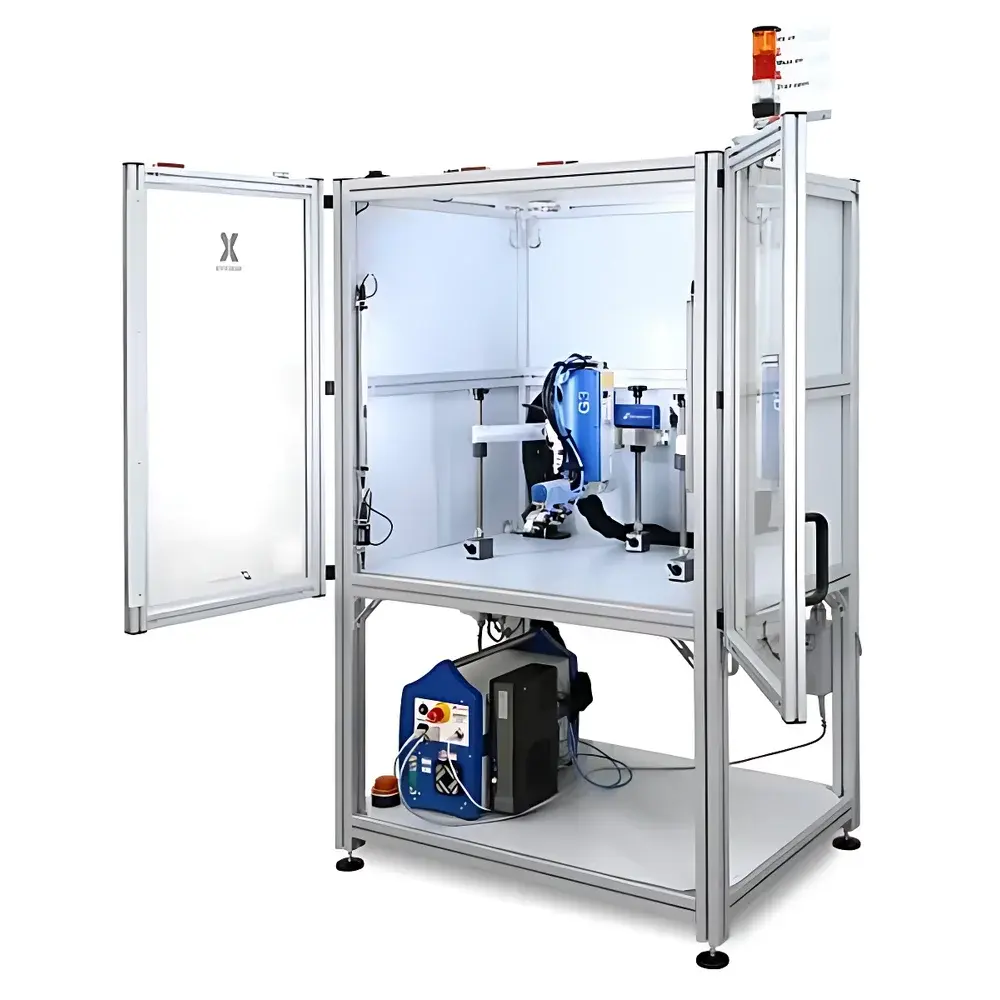
The Stresstech XStress 3000 is a portable, high-precision X-ray diffraction (XRD)-based residual stress analyzer engineered for non-destructive, in-situ measurement of macroscopic residual stresses in polycrystalline metallic components. It operates on the sin²ψ method—leveraging lattice strain determination via angular shifts in Bragg diffraction peaks—to quantify both normal and shear stress components in the surface and near-surface layers (typically 10–50 µm depth, depending on material and radiation). Designed for industrial metrology and materials integrity assurance, the system meets the fundamental requirements of ASTM E915-22 (Standard Test Method for Verifying the Alignment of X-Ray Diffraction Equipment for Residual Stress Measurement) and ISO 21432:2020 (Metallic materials — Determination of residual stresses by X-ray diffraction). Its field-deployable architecture enables direct measurement on large-scale infrastructure—including pressure vessels, welded joints, turbine blades, crankshafts, camshafts, gears, bearing races, and rolling mill rolls—without component removal or lab relocation.
Key Features
- True portability: Weighing under 25 kg, fully self-contained with integrated X-ray tube, detector, goniometer, and battery option; deployable on-site within 10 minutes by a single operator—no external tools, vacuum pumps, or cooling infrastructure required.
- φ-rotation goniometer: Eliminates sample repositioning errors by rotating the incident beam geometry instead of the specimen, ensuring consistent irradiated volume and angular accuracy across multiple ψ tilts.
- Multi-target X-ray tube compatibility: Interchangeable anode targets (Cr, Co, Fe, Cu, Mo) mounted on individual water-cooled cartridges; tool-free swap in <3 minutes to optimize Kα wavelength selection for specific lattice planes (e.g., Cr-Kα for ferritic steels, Co-Kα for austenitic stainless steels).
- Dual-axis stress mapping capability: Integrated motorized XY stage and optional automated electrolytic polishing unit enable sequential layer-by-layer removal and 2D/3D stress profiling (depth-resolved stress gradients) per ISO 21432 Annex C.
- Real-time operational monitoring: Software interface displays live kV/mA values, detector count rate, peak position stability, and ψ-tilt encoder feedback—critical for GLP-compliant data traceability.
Sample Compatibility & Compliance
The XStress 3000 accommodates geometrically unrestricted samples—from small machined coupons to immobile plant assets—with no upper size limit. It supports ferrous and non-ferrous alloys (steel, Ti, Ni, Al, Mg), provided crystallite size exceeds ~10 nm and microstrain contribution remains below 10⁻⁴. Surface roughness should be ≤ Ra 3.2 µm for reliable peak fitting; electrolytic polishing or low-stress grinding is recommended for castings or heavily deformed surfaces. The system complies with IEC 61000-6-3 (EMC) and IEC 61000-6-4, and its radiation shielding meets national regulatory limits for handheld X-ray devices (e.g., FDA 21 CFR 1020.40, EU Council Directive 2013/59/Euratom). Full audit trail generation satisfies 21 CFR Part 11 requirements when used with validated software configuration.
Software & Data Management
Control and analysis are executed via Stresstech’s proprietary WinXStress software (v8.5+), which provides guided workflow automation—from parameter setup (hkl reflection, ψ range, step size) to peak search, profile fitting (Pseudo-Voigt), stress tensor calculation, and uncertainty estimation per GUM (JCGM 100:2019). Raw diffraction patterns, instrument logs, and user annotations are stored in vendor-neutral HDF5 format. Export options include CSV, XML, and industry-standard .stp for integration with MES/QMS platforms. Software validation packages—including IQ/OQ documentation, electronic signature support, and change control records—are available for regulated environments operating under ISO 17025 or GMP.
Applications
- Verification of stress relief efficacy post-welding, heat treatment, or shot peening.
- Quality gate inspection for critical rotating components (e.g., aerospace shafts, automotive CV joints) prior to service.
- Root cause analysis of premature fatigue failure or stress corrosion cracking (SCC) in pipelines and pressure equipment.
- Process optimization of surface enhancement techniques (e.g., laser shock peening, deep rolling) via quantitative feedback on compressive layer depth and magnitude.
- In-field acceptance testing of additive manufactured parts where residual stress distribution directly influences build qualification.
FAQ
What is the typical measurement depth for steel using Cr-Kα radiation?
Approximately 15–25 µm, depending on grain orientation, carbon content, and surface condition.
Can the XStress 3000 measure residual stress in aluminum alloys?
Yes—using Co-Kα or Cu-Kα radiation; requires careful selection of hkl reflection (e.g., {311} for Al) and surface preparation to minimize oxide interference.
Is calibration traceable to national standards?
Yes—Stresstech provides annual calibration certificates traceable to NIST SRM 660c (LaB₆) and PTB reference materials, including angular accuracy verification across full ψ and 2θ ranges.
Does the system support automated mapping over curved surfaces?
Limited curvature compensation is available via user-defined surface normals; for complex geometries (e.g., turbine blade airfoils), local flat-area approximation is recommended per ASTM E915 Section 8.2.
What safety certifications does the instrument hold for international deployment?
CE marking (2014/30/EU EMC Directive, 2014/53/EU RED), RoHS 2011/65/EU compliance, and type approval from Finnish Radiation and Nuclear Safety Authority (STUK) for Class IIb X-ray equipment.







