
Stresstech XStress 3000 Residual Austenite & Stress Analyzer
| Brand | Stresstech Oy |
|---|---|
| Origin | Finland |
| Model | XStress 3000 |
| Detector Type | Solid-State Position-Sensitive Proportional Counter (MOS Linear Imaging Detector) |
| Angular Resolution | 0.029°/pixel, 512-pixel linear array |
| 2θ Range | 110–171° (continuously adjustable) |
| Collimator Options | Ø0.5 mm, Ø0.8 mm, Ø1.0 mm, Ø2.0 mm, Ø5.0 mm |
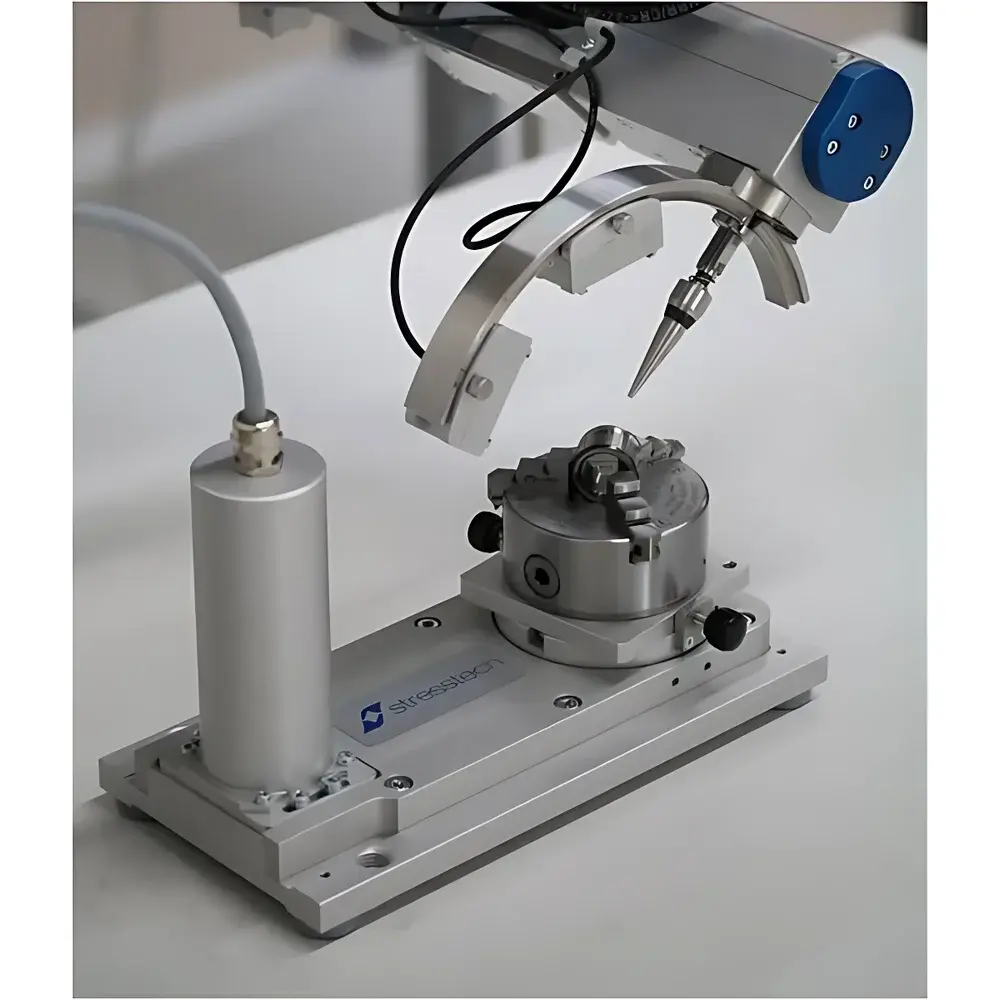
| Goniometer Geometry | Modified y-geometry (side-inclination method) with dual symmetrically mounted detectors |
| Calibration | Fully automated, positional accuracy < 0.003 mm |
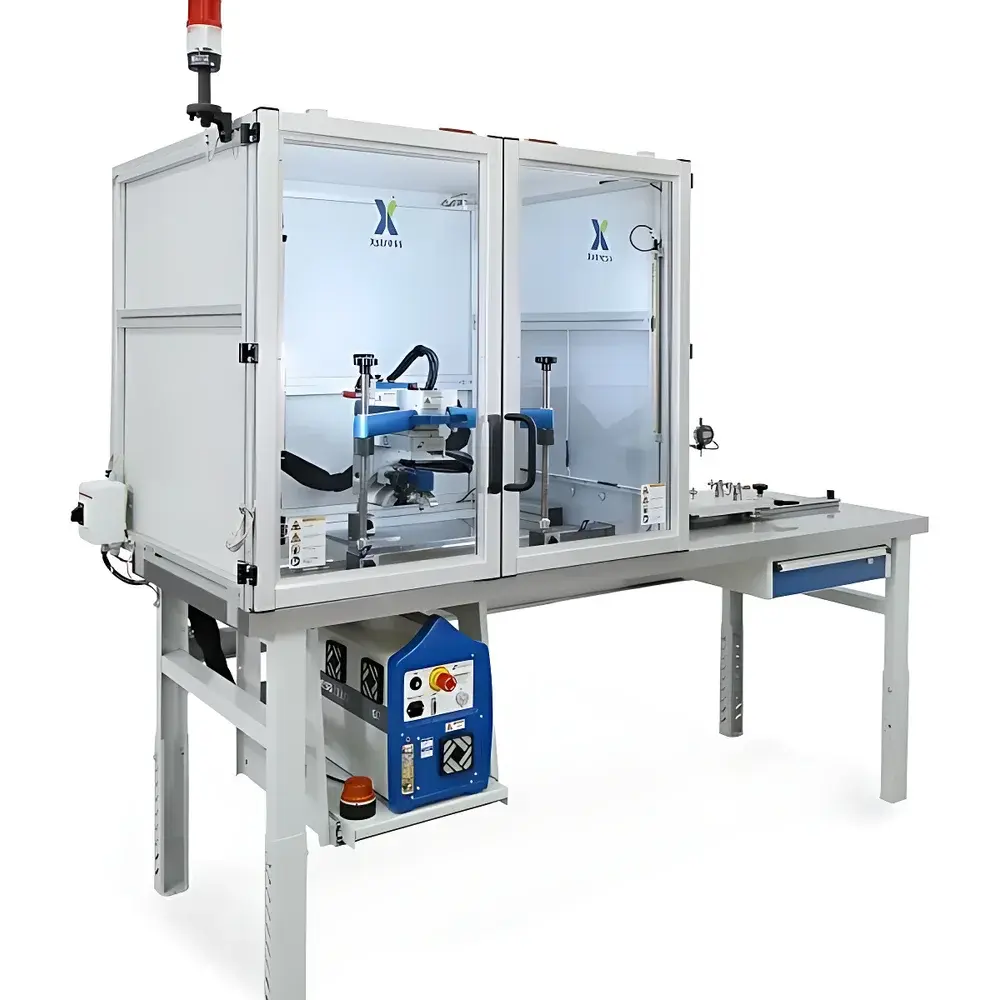
| Cooling System | Closed-loop recirculating chiller with active forced cooling |
| Power Consumption | 1 mW (detector only) |
| Safety | Integrated interlocks, radiation shielding per IEC 61010-1 and EN 62471 |
| Operating System | Windows-based control software |
Overview
The Stresstech XStress 3000 is a high-precision, laboratory- and shop-floor-ready X-ray diffraction (XRD) instrument engineered for quantitative determination of residual austenite content and macroscopic residual stress in polycrystalline metallic components. It operates on the fundamental principle of Bragg diffraction using monochromatic Cu-Kα radiation (λ = 0.15406 nm), enabling non-destructive, surface-layer-specific analysis (typically 10–30 µm depth, depending on material and measurement geometry). The system implements the sin²ψ method—supported by multi-point d-sin²ψ exposure sequences—and employs cross-correlation algorithms for sub-pixel peak shift detection, delivering stress resolution better than ±10 MPa under standardized conditions. Designed for industrial metrology rather than crystallographic research, the XStress 3000 prioritizes repeatability, ease of operator training, and robustness in environments subject to vibration, temperature fluctuation, and electromagnetic interference.
Key Features
- Modular goniometer architecture with dual symmetrically aligned position-sensitive detectors, eliminating sample repositioning between stress and phase measurements.
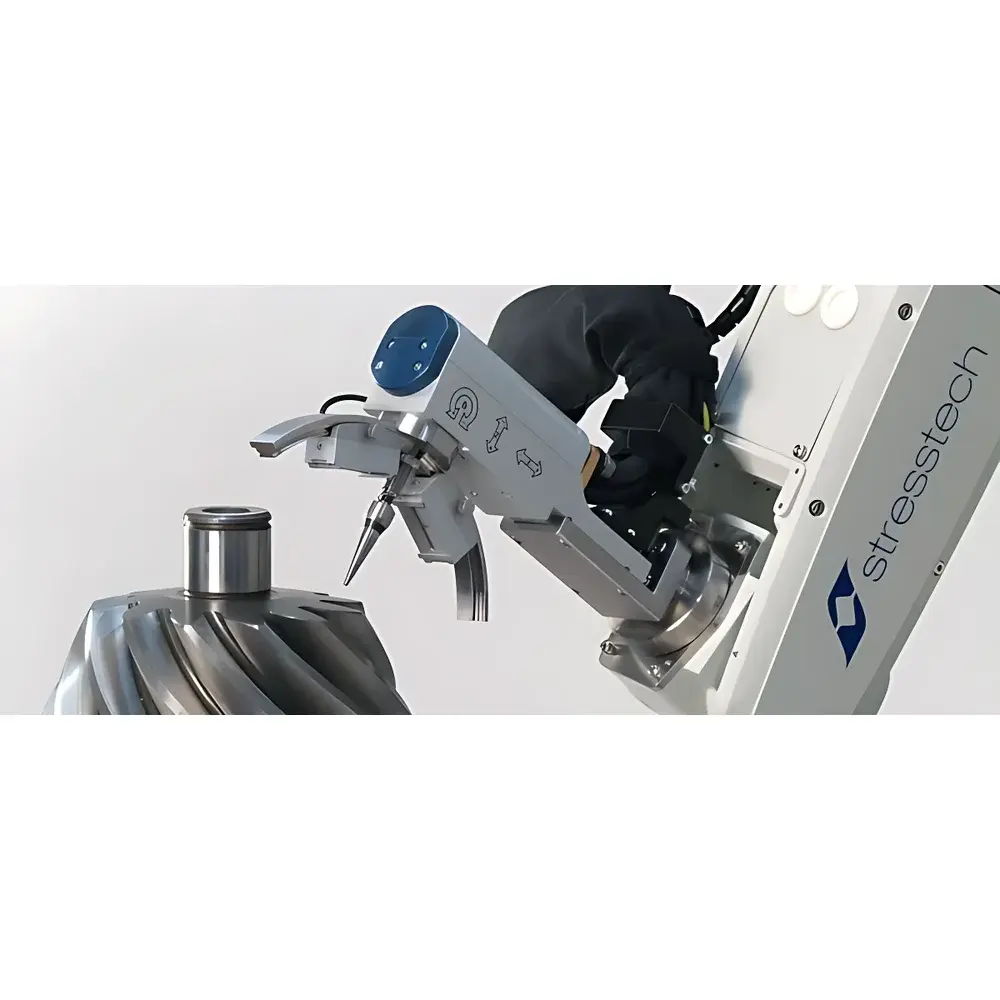
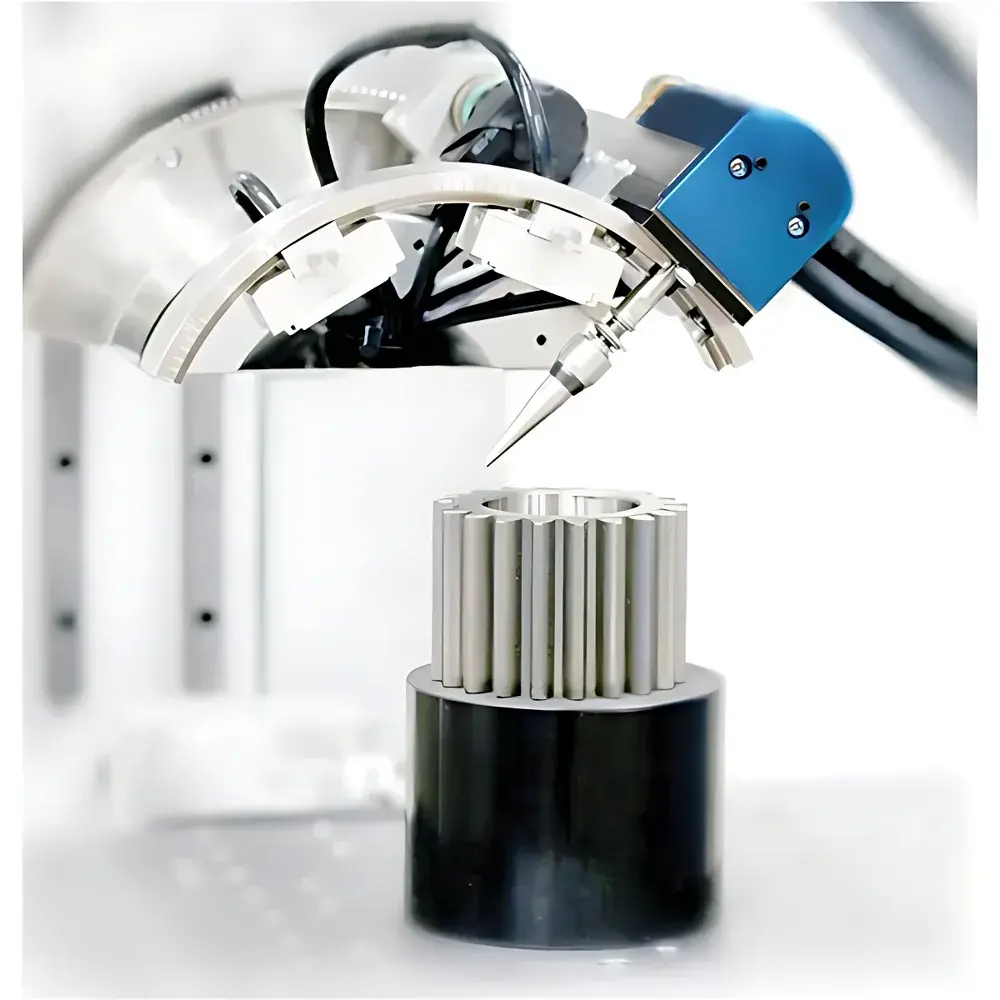
- Advanced y-geometry (side-inclination configuration) optimized for low-distortion measurements on curved, asymmetric, or hard-to-access surfaces—including gear teeth flanks, bearing races, turbine blades, and welded joints.
- Fully automated alignment and calibration sequence: real-time distance optimization, beam centering, and detector offset correction—achieving positional reproducibility < 0.003 mm without manual intervention.
- Multi-collimator turret supporting interchangeable apertures (Ø0.5 mm to Ø5.0 mm), including micro-collimators for localized analysis of fine features such as shot-peened zones or additive-manufactured lattice structures.
- Integrated closed-loop recirculating chiller with forced-air augmentation ensures stable anode temperature during extended duty cycles—critical for maintaining X-ray tube output consistency and long-term intensity stability.
- Radiation safety compliance: fully interlocked housing meeting IEC 61010-1 (electrical safety) and EN 62471 (photobiological safety); no external shielding required for routine operation.
Sample Compatibility & Compliance
The XStress 3000 accommodates ferrous alloys (steels, cast irons), nickel-based superalloys, titanium alloys, and select aluminum grades—provided they exhibit sufficient diffracting power and phase contrast between ferrite/martensite and retained austenite. Sample dimensions are unrestricted by internal chamber size; measurements are performed *in situ* via articulated arm or portable bench-mount configuration. The instrument supports ASTM E915-23 (Standard Test Method for Verifying the Alignment of X-Ray Diffraction Instrumentation for Residual Stress Measurement), ISO 21943:2020 (Non-destructive testing — X-ray diffraction methods for residual stress analysis), and EN 15305:2021 (Non-destructive testing — Test method for residual stress analysis by X-ray diffraction). Data acquisition and reporting workflows are structured to support GLP/GMP audit readiness, with optional 21 CFR Part 11-compliant electronic signature and audit trail modules available via licensed software extension.
Software & Data Management
The Windows-native XStress Control Suite provides unified control of X-ray generation, goniometer motion, detector readout, and real-time data processing. Key capabilities include: simultaneous live acquisition and stress calculation; customizable exposure protocols (time-based, intensity-thresholded, or step-scanned); automatic background subtraction using iterative polynomial fitting; peak search with Savitzky-Golay smoothing; and d-spacing refinement via Rietveld-assisted least-squares fitting. A built-in materials database contains over 1,200 pre-characterized phase references (ICDD PDF-4+ compatible), including metastable austenite variants in TRIP and Q&P steels. All raw frames, processed spectra, stress tensors, and phase fractions are stored in vendor-neutral HDF5 format with embedded metadata (sample ID, operator, timestamp, collimator ID, ψ angle, 2θ range), ensuring traceability and third-party interoperability.
Applications
The XStress 3000 serves as a metrology backbone across high-integrity manufacturing sectors. In aerospace, it validates stress relief efficacy after machining of landing gear forgings and quantifies austenite retention in carburized gear sets subjected to cryogenic treatment. In automotive powertrain production, it monitors surface compressive stress development in roller-burnished camshafts and verifies phase stability in induction-hardened crankshaft journals. For additive manufacturing, it characterizes thermal history-induced phase gradients in laser powder bed fusion (LPBF) Inconel 718 components. In nuclear and pressure vessel fabrication, it supports ASME Section VIII Division 2 compliance verification for post-weld heat treatment (PWHT) effectiveness. Universities and national labs deploy it for fundamental studies on transformation-induced plasticity (TRIP), deformation-induced martensitic nucleation kinetics, and fatigue crack initiation thresholds correlated with local austenite fraction.
FAQ
What standards does the XStress 3000 comply with for residual stress measurement?
It conforms to ASTM E915-23, ISO 21943:2020, and EN 15305:2021 for methodology, and its hardware design meets IEC 61010-1 and EN 62471 for electrical and radiological safety.
Can the system measure both residual stress and retained austenite in a single setup?
Yes—the dual-detector geometry and shared goniometer enable sequential or interleaved acquisition of stress and phase data without sample relocation or parameter reconfiguration.
Is operator certification required to run the instrument?
No formal radiation safety certification is needed due to Class I laser/X-ray product classification and full enclosure interlocking; however, users must complete Stresstech’s certified application training for method validation and result interpretation.
How is data integrity ensured for regulated environments?
With optional 21 CFR Part 11 software modules, the system provides electronic signatures, immutable audit trails, role-based access control, and encrypted HDF5 archival—fully aligned with FDA and EU Annex 11 requirements.
What maintenance intervals are recommended for sustained accuracy?
Annual performance verification (including collimator alignment, detector linearity, and 2θ calibration) is advised; the closed-loop cooling system requires biannual coolant replacement and filter inspection.




