
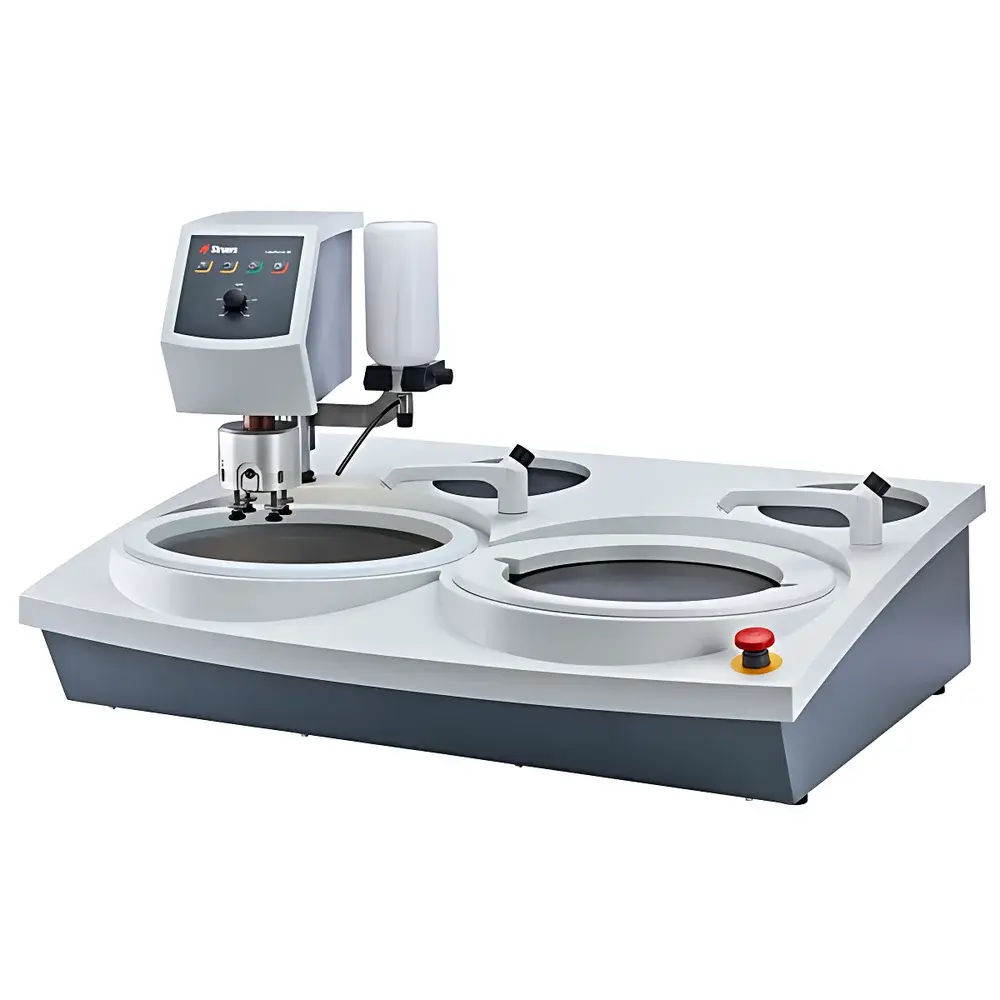
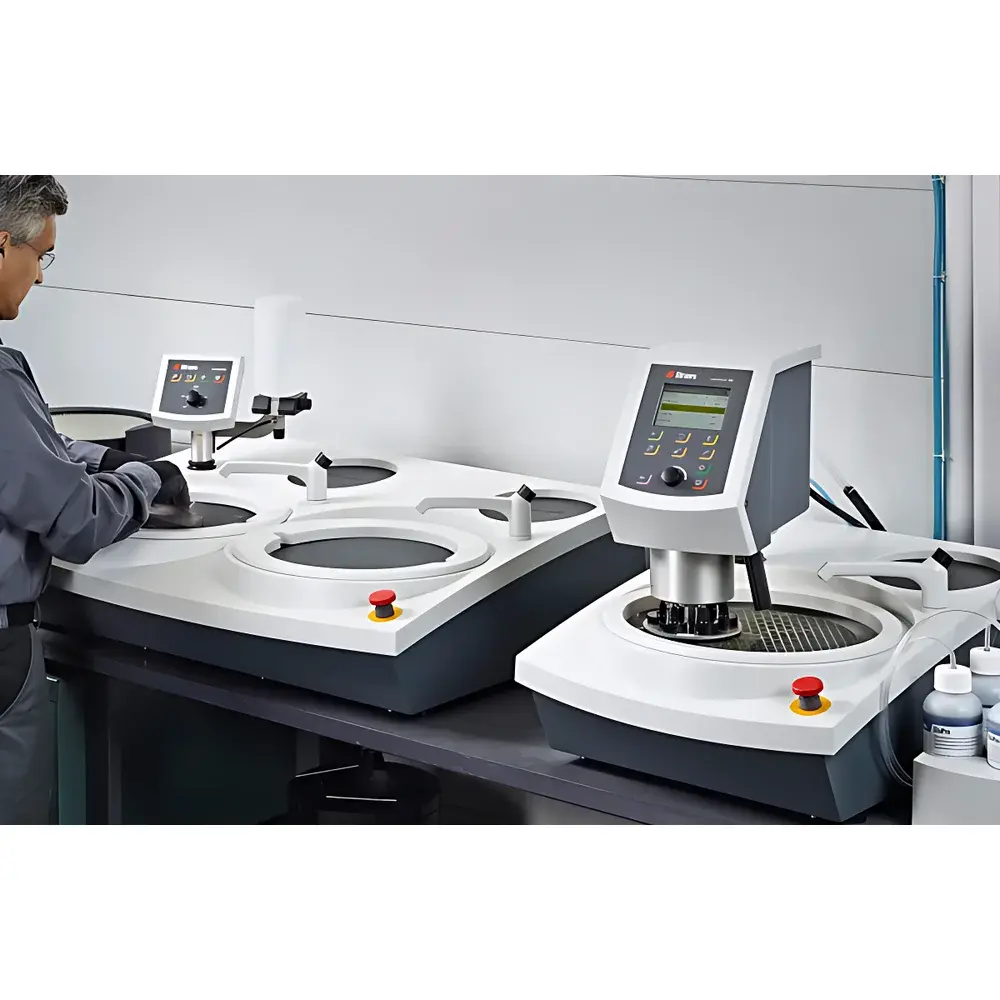
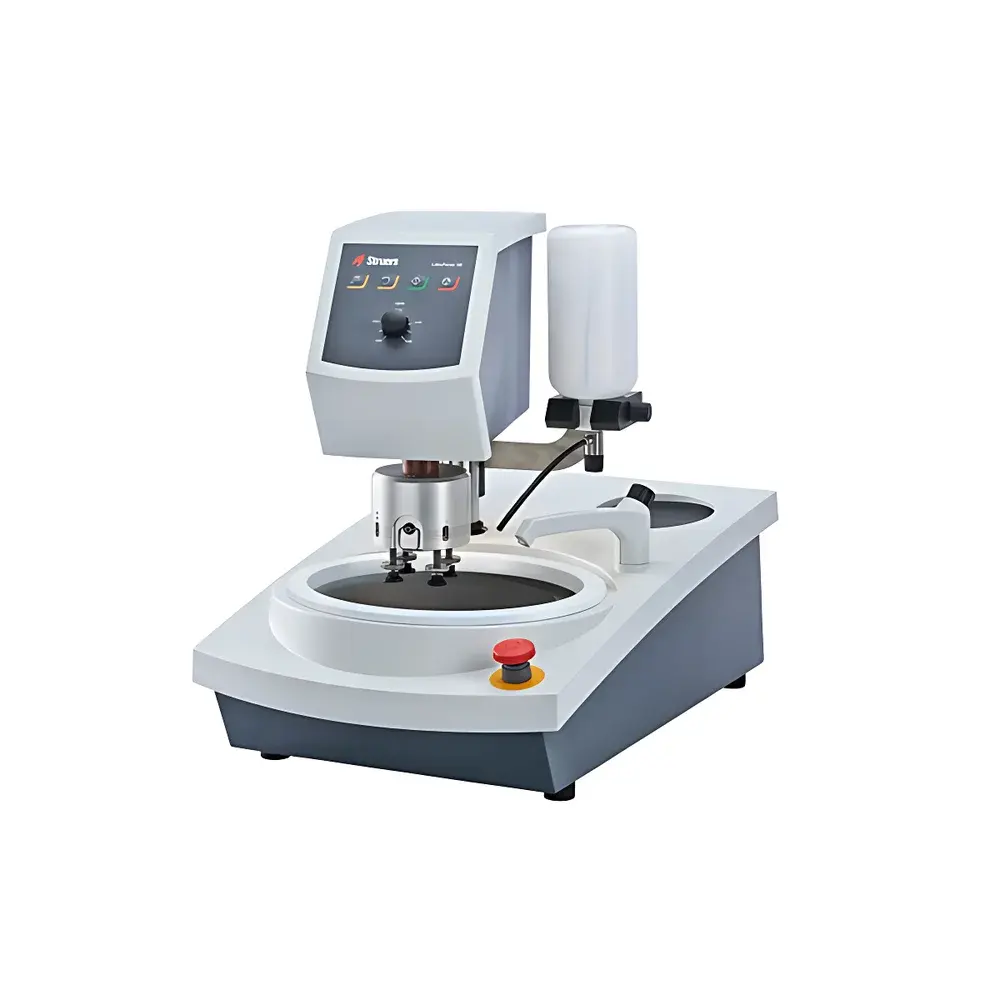
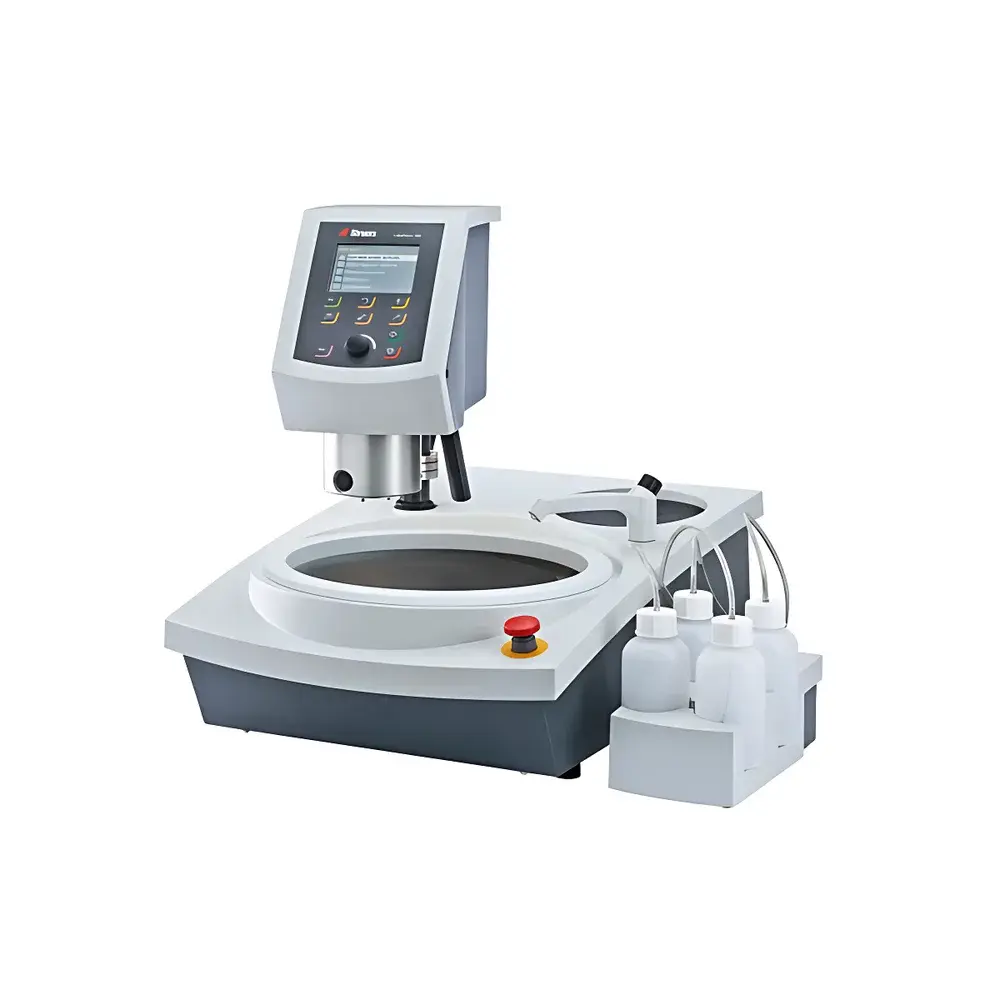
Struers LaboSystem Modular Grinding and Polishing System
| Brand | Struers |
|---|---|
| Origin | Denmark |
| Model | LaboSystem |
| Dimensions (L×W×D) | 250 × 510 × 765 mm |
| Number of Grinding/Polishing Plates | 1–2 |
| Plate Diameter | 200–300 mm |
| Rotational Speed Range | 50–500 rpm |
Overview
The Struers LaboSystem is a modular, high-reliability grinding and polishing platform engineered for precision sample preparation in metallurgical, materials science, and quality control laboratories. Built upon Struers’ decades of expertise in metallographic specimen preparation, the LaboSystem employs a robust mechanical drive architecture coupled with precisely controlled rotational motion to deliver consistent material removal rates and surface finish reproducibility. Its core design principle centers on modularity, durability, and operational flexibility—enabling seamless integration into both routine lab workflows and production-line adjacent environments where rapid, repeatable, and traceable sample preparation is critical. Unlike fixed-function polishers, the LaboSystem’s configurable architecture supports manual, semi-automated, and process-optimized operation modes without compromising mechanical stability or operator safety.
Key Features
- Modular system architecture comprising three interchangeable LaboPol grinding/polishing units (LaboPol-20, LaboPol-30, LaboPol-60), three LaboForce specimen carriers (LaboForce-50, -100, Mi), and two LaboDoser dispensing modules—enabling seven validated configuration combinations for diverse material types and throughput requirements.
- Variable-speed motor drive delivering precise rotational control from 50 to 500 rpm, optimized for sequential coarse grinding, fine grinding, and final polishing stages across metallic, ceramic, and composite specimens.
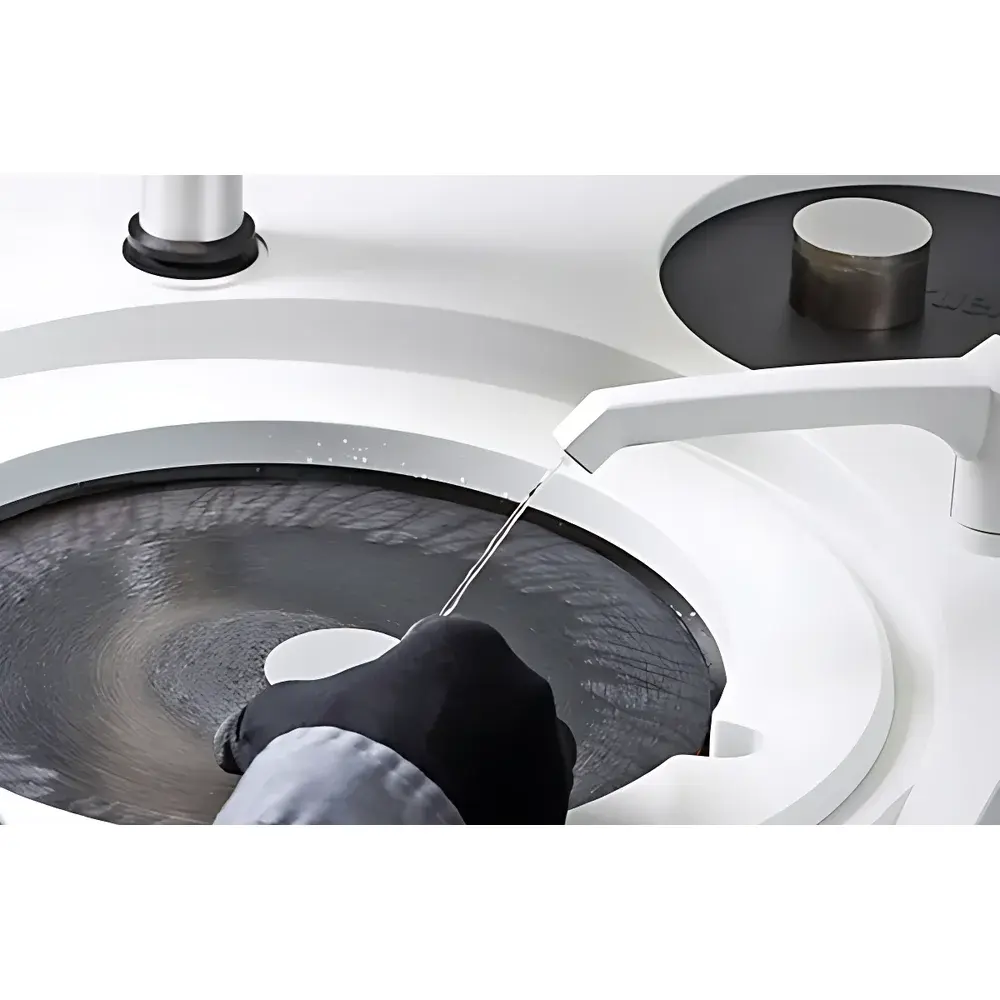
- Dual-plate capability (up to two independently operated 200–300 mm diameter plates) on LaboPol-60 models, each equipped with automated water valve actuation to ensure consistent coolant delivery and thermal management during extended operation.
- Corrosion-resistant, impact-tested housing constructed from reinforced polymer composites and stainless steel components; validated through 40,000-cycle endurance testing and six-month field trials across four countries under ISO 9001-certified laboratory conditions.
- Ergonomic elliptical splash guard and bowl-shaped liner design minimizes abrasive slurry dispersion, enhances operator visibility, and simplifies cleaning—reducing downtime between preparation cycles.
Sample Compatibility & Compliance
The LaboSystem accommodates a broad spectrum of specimen geometries—including round, rectangular, and irregularly shaped samples up to 50 mm in height—when used with compatible LaboForce carriers. It supports standard metallographic mounting resins (thermosetting and thermoplastic), as well as low-viscosity embedding media for soft or porous materials. All configurations comply with EN ISO 15510 (metallographic specimen preparation), ASTM E3 (Standard Guide for Preparation of Metallographic Specimens), and support GLP/GMP-aligned documentation when paired with Struers LaboUI control software. The system’s mechanical design meets CE marking requirements per Machinery Directive 2006/42/EC and electromagnetic compatibility standards per EN 61326-1.
Software & Data Management
While base LaboSystem units operate via manual controls or optional LaboUI touch-panel interface (sold separately), full digital integration is achieved through Struers’ LaboUI software suite. LaboUI enables method-based protocol storage, real-time speed/pressure/time logging, user access control, and audit-trail generation compliant with FDA 21 CFR Part 11 requirements. Process parameters—including rotational speed, dwell time per step, and dispensing volume (when LaboDoser is installed)—are programmable and exportable in CSV or PDF format for internal QA review or external accreditation audits.
Applications
- Metallurgical laboratories performing routine microstructure analysis of ferrous and non-ferrous alloys, welds, and heat-treated components.
- Automotive and aerospace R&D facilities requiring high-throughput, standardized preparation of turbine blades, bearing steels, and additive-manufactured parts.
- Failure analysis labs preparing cross-sections of electronic packages, PCBs, and solder joints for SEM/EDS inspection.
- Academic research groups conducting comparative studies on grain boundary behavior, phase distribution, or coating adhesion using reproducible surface finish metrics.
- Quality assurance departments implementing in-line sample prep stations adjacent to production lines for rapid verification of incoming raw materials or finished goods.
FAQ
Is the LaboSystem suitable for fully automated unattended operation?
No—the LaboSystem is designed for manual or semi-automated operation. While it supports programmable protocols via LaboUI, physical specimen loading/unloading and consumable replenishment require operator intervention.
Can LaboPol-20 accommodate 300 mm grinding plates?
No—LaboPol-20 is mechanically rated only for 200 mm diameter plates. For 250 mm or 300 mm plate compatibility, LaboPol-30 or LaboPol-60 units must be selected.
Are LaboForce specimen carriers interchangeable across all LaboPol models?
Yes—LaboForce carriers are mechanically and electronically compatible with all LaboPol units when used with appropriate mounting adapters and LaboUI firmware version 3.2 or later.
Does Struers provide validation documentation for GMP-regulated environments?
Yes—upon request, Struers supplies IQ/OQ documentation templates and can support installation qualification activities in accordance with ISO/IEC 17025 and ASTM E2918 guidelines.
What maintenance intervals are recommended for optimal performance?
Struers recommends biannual inspection of drive belts, splash guard seals, and water valve actuators; monthly calibration of rotational speed accuracy using an optical tachometer; and daily cleaning of slurry residue from the bowl liner and plate mounting surfaces.



