
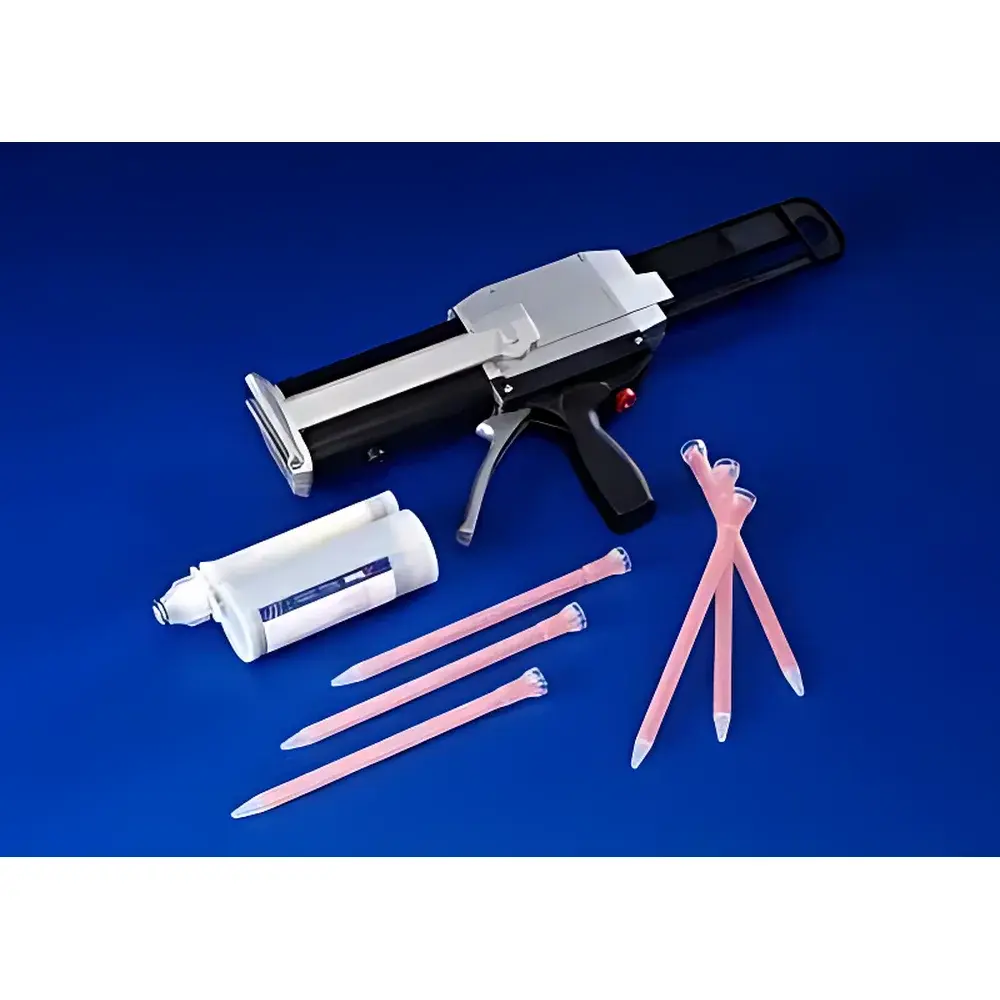
Struers RepliSet 3D Replication System
| Brand | Struers |
|---|---|
| Origin | Denmark |
| Manufacturer Type | Authorized Distributor |
| Country of Origin | Imported |
| Model | RepliSet |
| Pricing | Available Upon Request |
Overview
The Struers RepliSet 3D Replication System is a precision-engineered non-destructive surface replication technology designed for in-situ acquisition of high-fidelity topographic replicas of engineering surfaces. Based on vacuum-assisted silicone elastomer casting, RepliSet captures micro- and sub-micron-scale surface features—including roughness profiles, wear patterns, machining marks, corrosion morphology, and fracture surfaces—without altering or damaging the original substrate. The system operates on the principle of conformal negative molding: a low-viscosity, fast-curing polyvinylsiloxane (PVS) material is applied under controlled vacuum to eliminate air entrapment, ensuring faithful reproduction of surface geometry down to <0.1 µm lateral resolution. Replicas are dimensionally stable, exhibit negligible shrinkage (<0.05% volumetric), and retain true 3D topography for subsequent quantitative metrology or qualitative assessment under optical microscopy, scanning electron microscopy (SEM), white-light interferometry, or confocal laser scanning.
Key Features
- Sub-micron resolution replication: Capable of resolving surface features as small as 0.1 µm, enabling analysis of fine scratches, grain boundaries, and micro-pitting.
- Negligible dimensional drift: Engineered formulation ensures <0.05% volumetric shrinkage post-cure, preserving absolute height and lateral fidelity across the replica.
- Vacuum-assisted application: Integrated vacuum chamber eliminates voids and bubble formation, critical for replicating deep grooves, undercut geometries, and complex curvatures.
- Rapid polymerization: Dual-component PVS cures fully within 5–8 minutes at ambient temperature (15–30 °C), minimizing downtime during field inspections.
- Wide operational temperature range: Functional from –20 °C to +80 °C, supporting replication on hot turbine blades, cryogenically cooled components, or outdoor infrastructure.
- Operator-independent protocol: Standardized mixing ratio (1:1 by volume), no calibration required, and minimal training needed for consistent results.
- Geometry-agnostic replication: Adaptable to flat, convex, concave, threaded, or irregularly contoured surfaces without custom tooling.
- Non-contact compatibility: Replicas serve as stable, inert substrates for SEM sputter-coating, AFM tip scanning, or profilometer stylus traversal without risk of sample damage.
Sample Compatibility & Compliance
RepliSet is validated for use on metallic alloys (e.g., stainless steel, Inconel, aluminum), ceramics, hardened tool steels, composites, and coated substrates—including thermal barrier coatings (TBCs) and electroplated finishes. It complies with ASTM E112 (grain size analysis), ISO 4287/4288 (surface roughness characterization), and ISO 12781-2 (flatness measurement via indirect methods). Replicas are compatible with GLP-compliant documentation workflows and support audit-ready traceability when used with Struers’ optional digital logbook modules. While not an in-vivo medical device, its biocompatible PVS base chemistry meets ISO 10993-5 cytotoxicity requirements for incidental contact applications.
Software & Data Management
RepliSet itself is a hardware-based replication platform with no embedded firmware or onboard software. However, generated replicas integrate seamlessly into established metrology ecosystems: digitized optical micrographs may be processed using Struers’ STRUERS® Image Analysis Suite (v6.2+) for roughness parameter extraction (Ra, Rz, Rq); SEM datasets align with standard FEI/Thermo Fisher SmartSEM or JEOL JSM platforms; and interferometric scans comply with ISO 25178-2 surface texture data exchange formats (STL, XYZ, OPF). All raw replica images and metadata can be archived in accordance with FDA 21 CFR Part 11 requirements when paired with validated LIMS or ELN systems.
Applications
- Tribology & wear analysis: Quantifying abrasive wear scars on bearing races, gear teeth, and piston rings under service conditions.
- Failure analysis: Capturing fatigue crack initiation sites, stress corrosion cracking (SCC) morphology, and brittle fracture surfaces prior to destructive sectioning.
- Manufacturing process validation: Monitoring surface integrity after EDM, grinding, shot peening, or laser cladding.
- Forensic engineering: Documenting tamper evidence, toolmark impressions, or impact deformation on structural components.
- Power generation: Inspecting blade root fillets, weld heat-affected zones (HAZ), and steam turbine disc surfaces during outage inspections.
- Regulatory compliance reporting: Generating archival-grade surface records for ASME Section XI, NRC RG 1.157, or EN 13445-3 conformity assessments.
FAQ
What surface roughness parameters can be extracted from a RepliSet replica?
Ra, Rz, Rq, Rsk, Rku, and Abbott-Firestone curve parameters are quantifiable when replicas are analyzed via calibrated optical profilometry or interferometry.
Can RepliSet replicate vertical or inverted surfaces?
Yes—vacuum adhesion and thixotropic PVS rheology enable reliable replication on walls, ceilings, and overhead piping without sagging or slumping.
Is cleaning required before replication?
Yes: Surfaces must be free of loose particulates, oils, and oxides. Struers recommends solvent wiping (isopropanol) followed by dry nitrogen blow-off per ISO 8502-3.
How long do cured replicas remain dimensionally stable?
Under controlled lab storage (23 °C, 50% RH, dark), replicas retain metrological integrity for ≥24 months with no measurable creep or warpage.
Does RepliSet meet NDT certification standards for Level II personnel?
While RepliSet is not a standalone NDT method per ISO 9712, it is widely accepted as a complementary technique within certified Level II/III inspection procedures for surface condition documentation.



