
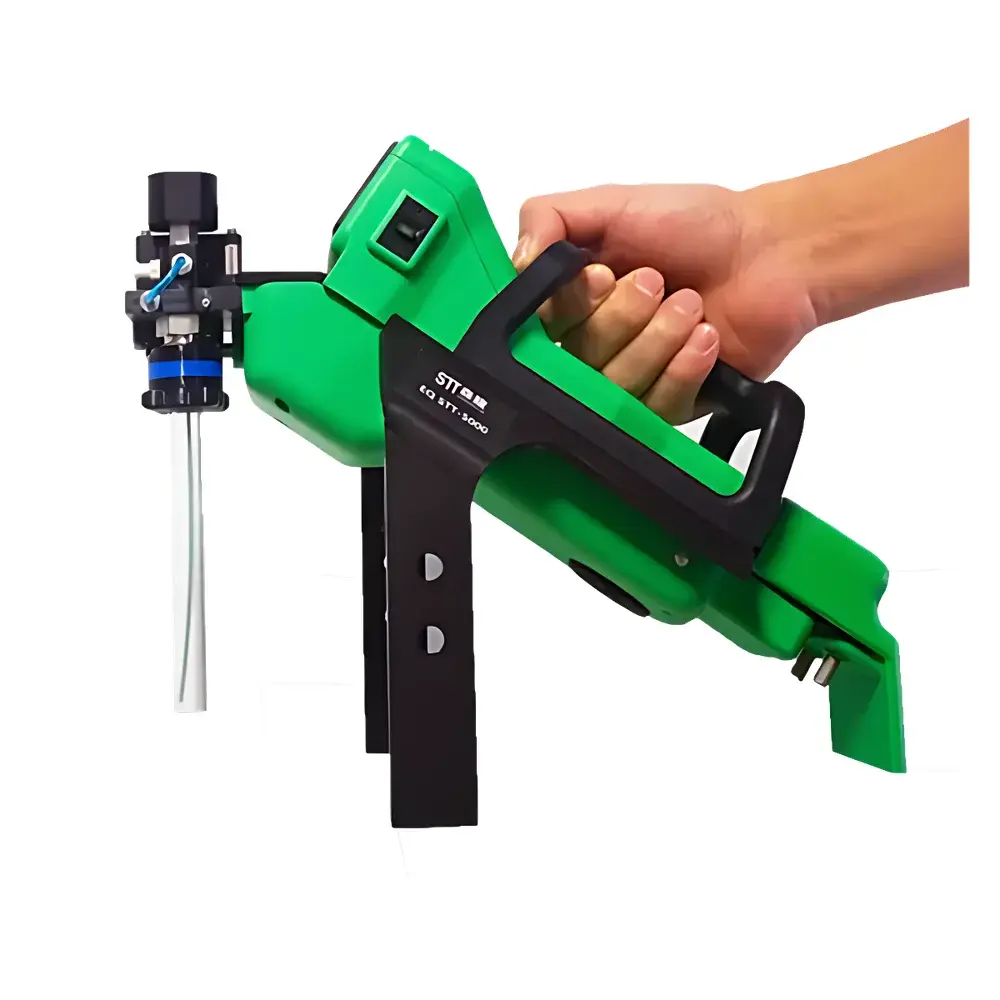
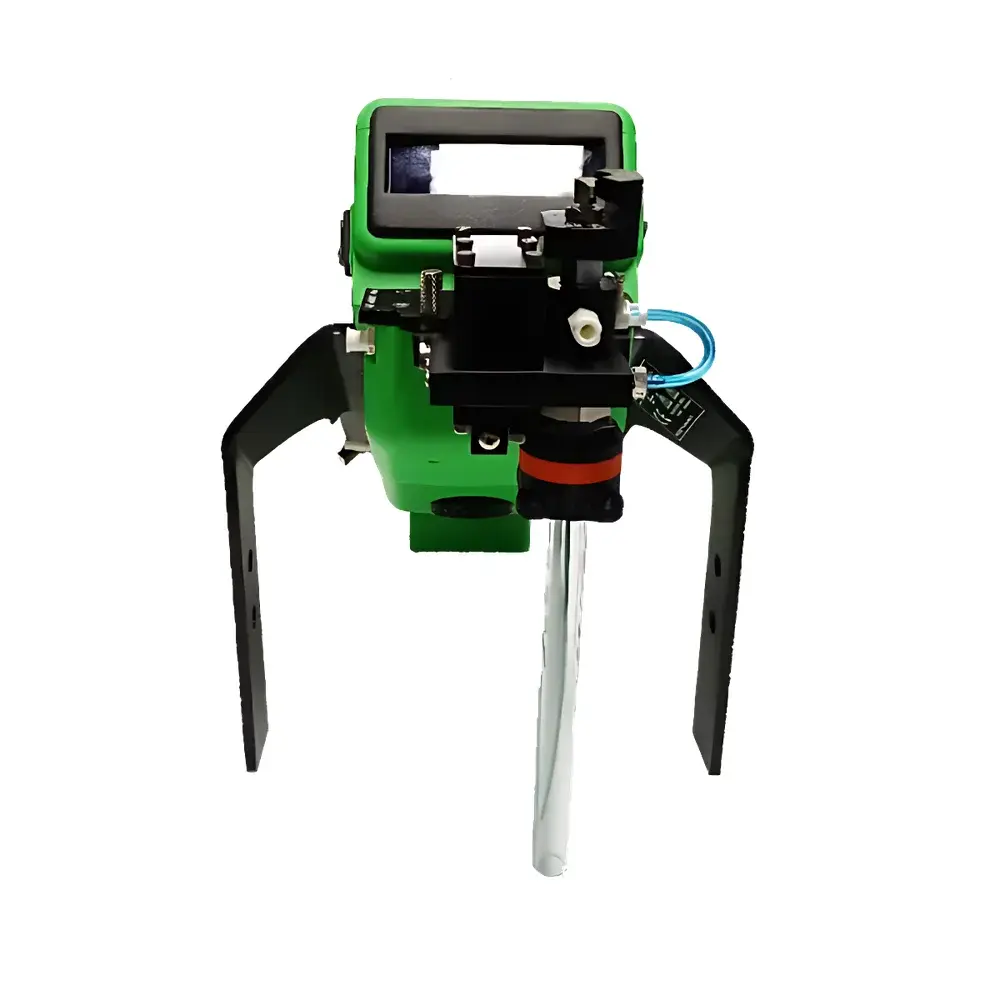
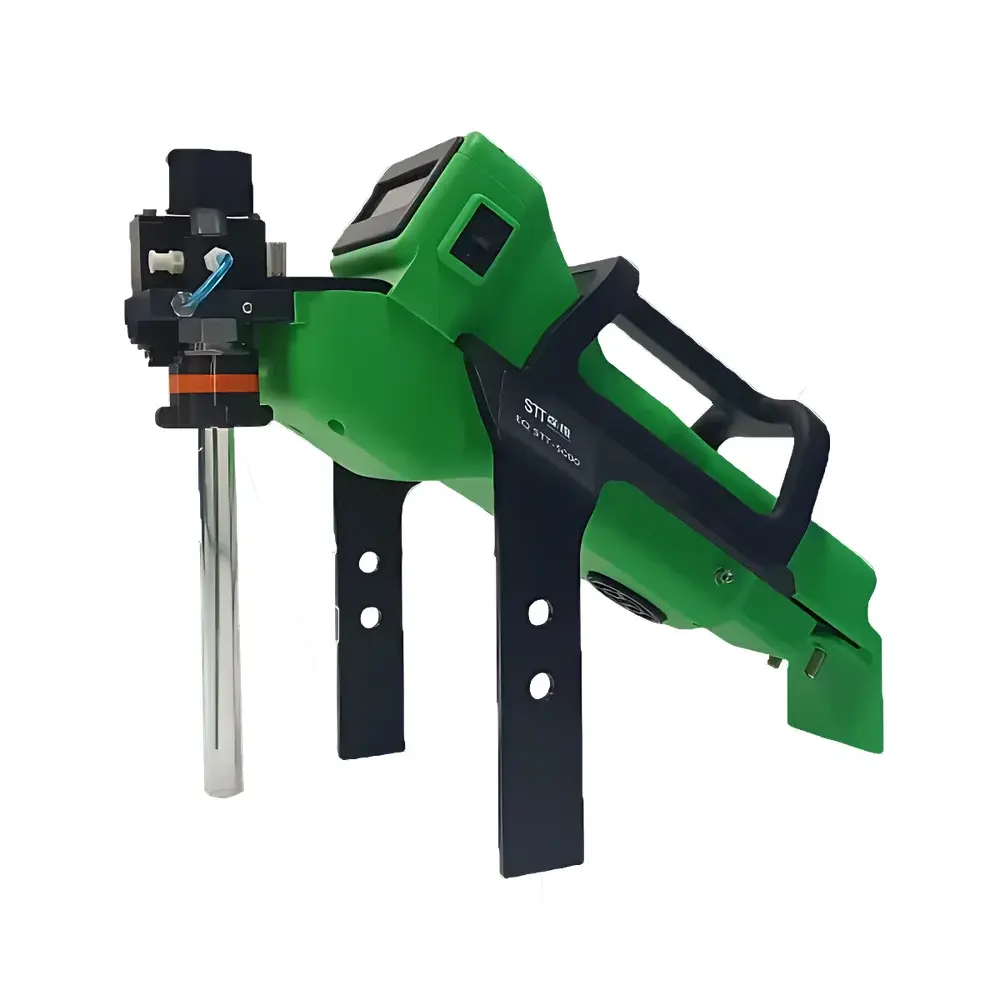
STT EQ-STT-5000 Portable Gas Chromatograph with PID Detector
| Brand | STT |
|---|---|
| Origin | Beijing, China |
| Manufacturer Type | Original Equipment Manufacturer (OEM) |
| Model | EQ-STT-5000 |
| Detection Limit | 0.1 ppb for benzene |
| Weight | 2.2 kg |
| Dimensions | 267 × 197 × 308 mm |
| Column Technology | MEMS microfabricated capillary column |
| Detector | 10.6 eV Photoionization Detector (PID) |
| Carrier Gas | Ambient air (with activated carbon + molecular sieve filtration) |
| Battery Life | >9 h |
| Measurement Range | 0.1–300 ppb (benzene, low-range mode) or 50 ppb–10 ppm (benzene, high-range mode) |
| Accuracy | ±1% FS |
| Sample Matrices | Air, water (with headspace module), soil (with thermal desorption accessory) |
Overview
The STT EQ-STT-5000 is a field-deployable, handheld gas chromatograph engineered for rapid, on-site qualitative and quantitative analysis of volatile organic compounds (VOCs) in complex environmental matrices. Built upon micro-electromechanical systems (MEMS) microfabricated capillary column technology and coupled with a 10.6 eV photoionization detector (PID), the instrument implements a miniaturized yet robust gas chromatographic separation principle—retention time-based compound identification and peak-area–calibrated quantification under controlled carrier gas flow and temperature programming. Its design adheres to recognized regulatory frameworks including GB/T 18883–2022 Annex C.3 (Portable GC Method for Indoor Air), U.S. EPA Method 5035 (VOCs in Soil and Water by Purge-and-Trap GC/PID), and EPA Method 8021B (Aromatic Hydrocarbons by GC/PID). The system operates without external power or laboratory infrastructure, making it suitable for indoor air quality assessments, emergency response deployments, industrial hygiene monitoring, and field-based environmental forensics.
Key Features
- True handheld form factor: Weighing only 2.2 kg and measuring 267 × 197 × 308 mm, the EQ-STT-5000 is operable with one hand and designed for extended field use.
- Integrated pre-concentration module: Enhances sensitivity for trace-level analytes; achieves a validated detection limit of 0.1 ppb for benzene in ambient air—equivalent to 0.0003 mg/m³ under standard conditions (25 °C, 1 atm).
- On-device data processing: Equipped with a high-resolution color LCD touchscreen interface; performs real-time chromatogram display, peak integration, calibration curve application, and result reporting—no PC or external software required.
- Dual-range measurement capability: Switchable between low-concentration (0.1–300 ppb) and high-concentration (50 ppb–10 ppm) modes for benzene, ensuring linearity and accuracy across four orders of magnitude.
- Multi-matrix adaptability: Supports direct air sampling, aqueous VOC analysis via optional headspace autosampler, and solid-phase VOC extraction from soil using an integrated thermal desorption accessory.
- Carrier gas autonomy: Uses filtered ambient air as carrier gas—conditioned in-line with activated carbon (for VOC removal) and molecular sieve (for moisture removal)—eliminating dependence on compressed gas cylinders.
Sample Compatibility & Compliance
The EQ-STT-5000 is validated for analysis of over 100 target VOCs, including but not limited to benzene, toluene, ethylbenzene, xylenes (BTEX), trichloroethylene, tetrachloroethylene, styrene, chloroform, and naphthalene derivatives such as 2-methylnaphthalene (MW 142.2, bp 244.7 °C). Its retention behavior accommodates compounds with boiling points ranging from −13.3 °C (vinyl chloride) to >240 °C, supported by column temperature ramp profiles up to 180 °C. Instrument performance meets the data quality objectives outlined in ISO 16000-6 (Indoor Air – Part 6: Determination of Volatile Organic Compounds), ASTM D5197 (Standard Test Method for Low-Level Analysis of Total VOCs in Air), and aligns with GLP-compliant field data capture requirements when used with audit-trail-enabled firmware versions.
Software & Data Management
Data acquisition, processing, and reporting are handled internally via embedded firmware compliant with IEC 62443-3-3 cybersecurity principles for field instrumentation. Raw chromatograms, calibrated concentration values, sample metadata (location, timestamp, operator ID), and instrument status logs are stored in encrypted binary format on internal flash memory (≥16 GB). Export options include CSV and PDF reports with embedded chromatograms, compatible with LIMS integration via USB-C or Bluetooth 5.0. Firmware supports user-defined calibration curves (single-point, multi-point, internal standard), method recall, and configurable alarm thresholds per analyte. While not FDA 21 CFR Part 11–certified out-of-the-box, audit trail functionality—including operator login history, method change logs, and result modification timestamps—is available in enterprise firmware variants.
Applications
- Indoor air quality (IAQ) screening per GB/T 18883–2022 and WHO guidelines—rapid BTEX assessment in residential, office, and school environments.
- Emergency response: On-scene identification and quantification of VOC releases during chemical spills, fire investigations, or industrial accidents.
- Occupational health monitoring: Real-time exposure assessment for workers in petrochemical, paint manufacturing, printing, and dry-cleaning facilities.
- Environmental site assessment: Field-based triage of soil and groundwater contamination at brownfield sites prior to lab confirmation.
- Regulatory compliance verification: Supporting Tier 1 screening under China’s HJ 639–2012 and U.S. EPA Region-specific VOC monitoring protocols.
FAQ
What VOCs can the EQ-STT-5000 reliably identify and quantify?
It delivers validated performance for ≥100 compounds, with primary focus on C₂–C₁₀ aromatic, chlorinated, and aliphatic VOCs—including benzene, toluene, xylenes, chloroform, trichloroethylene, and naphthalene homologs—based on retention time libraries and PID spectral response factors.
Does the instrument require carrier gas cylinders?
No. It uses conditioned ambient air as carrier gas, filtered through replaceable activated carbon and molecular sieve cartridges to ensure baseline stability and detector longevity.
How is calibration maintained in field conditions?
Calibration is performed using certified permeation tubes or dynamic dilution standards; the system supports multi-point calibration with automatic curve fitting and drift correction via periodic zero/span checks.
Can data be exported for regulatory submission?
Yes. Reports include instrument ID, calibration history, raw chromatograms, integration parameters, and uncertainty estimates—formatted to support technical review under ISO/IEC 17025-accredited workflows.
Is the detector sensitive to humidity or temperature fluctuations?
The PID incorporates active temperature stabilization and humidity compensation algorithms; operation is specified from 0 °C to 40 °C and 10–90% RH (non-condensing), with built-in diagnostics for signal drift detection.




