
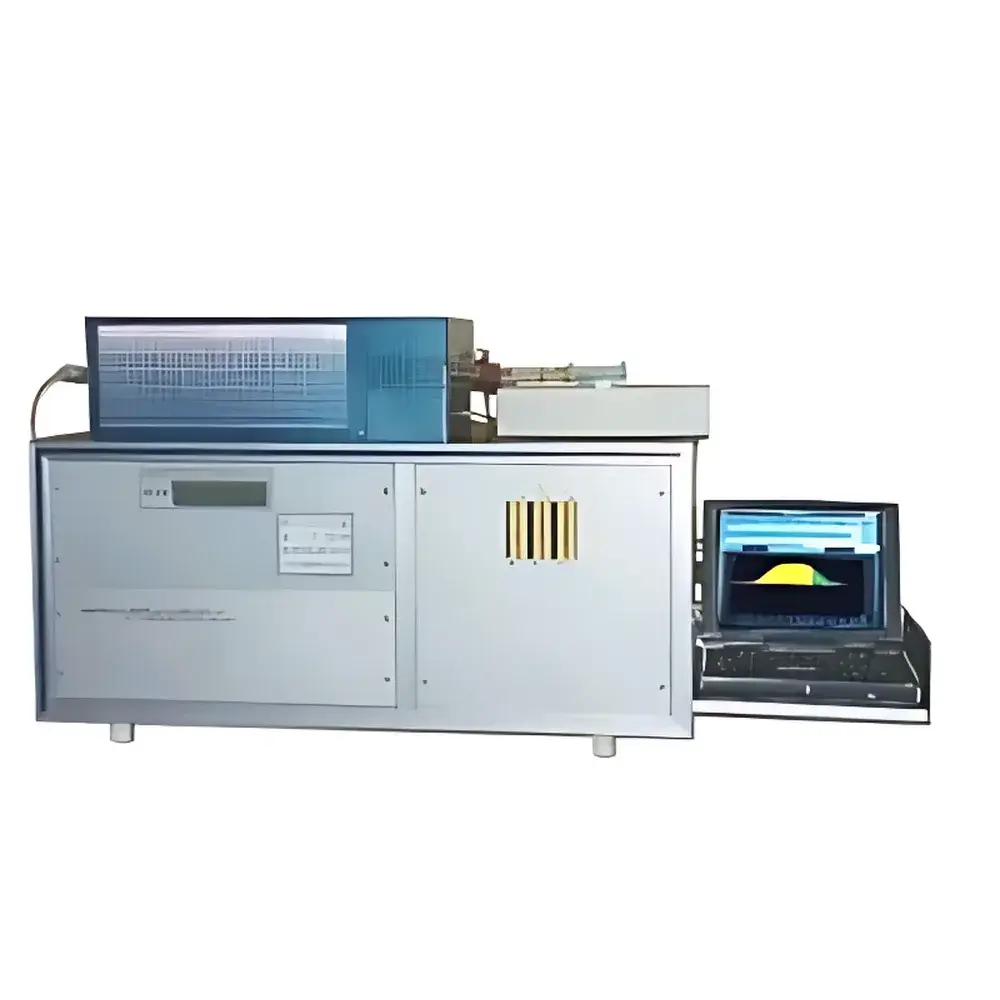
SULFUVL Total Sulfur and Nitrogen Analyzer
| Origin | France |
|---|---|
| Manufacturer Type | Authorized Distributor |
| Origin Category | Imported Instrument |
| Model | SULFUVL |
| Pricing | Upon Request |
Overview
The SULFUVL Total Sulfur and Nitrogen Analyzer is a high-precision, dual-detection elemental analyzer engineered for quantitative determination of total sulfur (S) and total nitrogen (N) in liquid, solid, and gaseous samples. It operates on two complementary, industry-standard detection principles: ultraviolet (UV) fluorescence for sulfur and chemiluminescence for nitrogen. In the sulfur channel, sample combustion at up to 1000 °C in an oxygen-rich environment quantitatively converts organic and inorganic sulfur species into sulfur dioxide (SO₂). The SO₂ molecules are excited by UV radiation and emit characteristic fluorescence upon relaxation; this emission is detected with high specificity and linearity using a photomultiplier tube (PMT)-based UV fluorescence detector. In the nitrogen channel, combustion generates nitric oxide (NO), which reacts stoichiometrically with ozone (O₃) in a dedicated reaction chamber to produce excited NO₂* that emits near-infrared chemiluminescence—also measured via PMT. This orthogonal dual-detection architecture ensures minimal spectral interference, robust matrix tolerance, and trace-level sensitivity across diverse sample types.
Key Features
- Simultaneous or sequential sulfur/nitrogen analysis via software-controlled mode switching—no hardware reconfiguration required for routine transitions
- Programmable high-temperature combustion furnace (up to 1000 °C) with quartz combustion tube and precise thermal ramping profiles for optimal sample mineralization
- Dual independent gas control system: helium or argon carrier gas (purity ≥99.9995%), high-purity oxygen (≥99.998%), and ozone generator for chemiluminescence detection
- Integrated autosampler-compatible liquid injection system (20–100 µL range) with programmable syringe speed and temperature-controlled injection port
- Real-time LCD display of SO₂ or NO peak intensity during analysis, enabling immediate signal diagnostics and baseline verification
- Automated data processing: peak integration, calibration curve application (linear or quadratic), blank subtraction, and result reporting with uncertainty estimation
- Low-maintenance design: no consumable optical filters or frequent detector alignment; PMT gain stabilization built into firmware
Sample Compatibility & Compliance
The SULFUVL accommodates a broad spectrum of industrial and research matrices—including crude oil, distillates, LPG, natural gas, polymers, synthetic rubbers, fibers, food extracts, and catalysts—without derivatization. Its performance conforms rigorously to internationally recognized test methods: for sulfur, ASTM D5453, ISO 20846, AFNOR M 07-059, and SH/T 0689; for nitrogen, ASTM D4629, D5176, D5762, NF EN 12260, NF M 07-058, and SH/T 0657. Instrument design supports GLP-compliant operation: audit-trail-enabled software logs all method parameters, calibration events, user actions, and raw signal files. Data integrity meets FDA 21 CFR Part 11 requirements when deployed with validated software configuration and networked authentication protocols.
Software & Data Management
Control and analysis are executed via Windows-based proprietary software featuring intuitive workflow navigation, multi-user permission levels, and customizable report templates (PDF/CSV/XLSX export). The software stores all raw chromatograms, calibration curves, QC check results, and instrument status logs on local SSD storage with optional network backup. Built-in statistical tools calculate repeatability (RSD ≤1.5% at 10 ppm S/N), intermediate precision, and method detection limits (MDL) per EPA 40 CFR Part 136 guidelines. Remote monitoring and diagnostic support are enabled via secure TLS-encrypted Ethernet connection.
Applications
Primary use cases include quality control in petroleum refining (e.g., ultra-low-sulfur diesel certification), petrochemical R&D (catalyst deactivation studies, feedstock screening), polymer manufacturing (nitrogen-containing stabilizers, flame retardants), environmental testing (soil digests, wastewater effluents), and academic research in geochemistry and materials science. Regulatory laboratories rely on the SULFUVL for compliance testing under EU Fuel Quality Directive (2009/30/EC), U.S. EPA Tier 3 gasoline standards, and ISO 8217 marine fuel specifications.
FAQ
What sample introduction methods does the SULFUVL support?
Liquid samples are introduced via programmable microsyringe injection; gases via calibrated loop injection; solids via ceramic boat loading into the combustion zone.
Is simultaneous S and N measurement possible?
Yes—when analyzing sub-5 ppm concentrations, both detectors operate concurrently using time-resolved signal discrimination; otherwise, sequential analysis is recommended for optimal accuracy.
What maintenance intervals are recommended?
Daily: carrier gas filter inspection, O₃ generator cleaning. Quarterly: quartz tube visual inspection, PMT voltage verification. Annually: full system performance qualification (SPQ) per ASTM D7183.
Can the instrument be integrated into a LIMS environment?
Yes—via ASTM E1394-compliant ASCII output or OPC UA server interface for bidirectional data exchange with laboratory information management systems.
Does the system meet explosion-proof requirements for refinery deployment?
The analyzer itself is rated for Class I, Division 2 hazardous locations when installed with certified gas cabinets and purge systems; site-specific ATEX/IECEx certification must be obtained per installation configuration.




