Sundy SDFPCH Intelligent Railcar Coal Acceptance & Supervisory Control System
| Brand | Sundy |
|---|---|
| Origin | Hunan, China |
| Manufacturer Type | Authorized Distributor |
| Origin Category | Domestic (China) |
| Model | SDFPCH Intelligent Railcar Coal Acceptance & Supervisory Control System |
| Pricing | Available Upon Request |
Overview
The Sundy SDFPCH Intelligent Railcar Coal Acceptance & Supervisory Control System is an integrated industrial automation solution engineered for precision, traceability, and operational continuity in bulk coal receipt operations at power plants, cement facilities, and large-scale industrial terminals. Built upon a modular architecture grounded in real-time data acquisition, edge-based AI vision processing, and system-level interoperability, the SDFPCH system implements a closed-loop control framework for railcar coal handling—from inbound train detection and dynamic weighing to unloading coordination and sampling integration. Its core measurement and control logic relies on synchronized multi-sensor fusion: optical recognition (via high-frame-rate industrial cameras), load-cell-based track scale telemetry, and programmable logic controller (PLC)-driven equipment interlocking. Designed for 24/7 unattended operation, it eliminates manual transcription errors, reduces personnel exposure to hazardous rail zones, and ensures full digital lineage from train arrival to batch assignment—meeting foundational requirements for ISO 9001 quality management and internal audit readiness.
Key Features
- AI-powered railcar identification: Real-time recognition of car number, car type, tare weight, gross weight, axle count, and direction of travel using proprietary deep learning algorithms deployed on ruggedized edge computing hardware.
- Automated track scale integration: Bi-directional data exchange with dynamic rail scales (track weighbridges) compliant with OIML R106 and JJG 781 standards; automatic association of weight records with recognized car IDs.
- End-to-end process orchestration: Coordinated workflow execution across inbound scheduling, weighing verification, rotary dumper sequencing, and sampling trigger logic—enabling fully automated acceptance without manual intervention.
- Third-party equipment interface layer: Standardized OPC UA and Modbus TCP interfaces for seamless integration with rotary dumpers, belt feeders, coal flow sensors, and laboratory information management systems (LIMS).
- Configurable audit trail: Time-stamped, immutable logs for all critical events—including train entry/stop/departure, weight capture, recognition confidence scores, operator overrides, and system configuration changes.
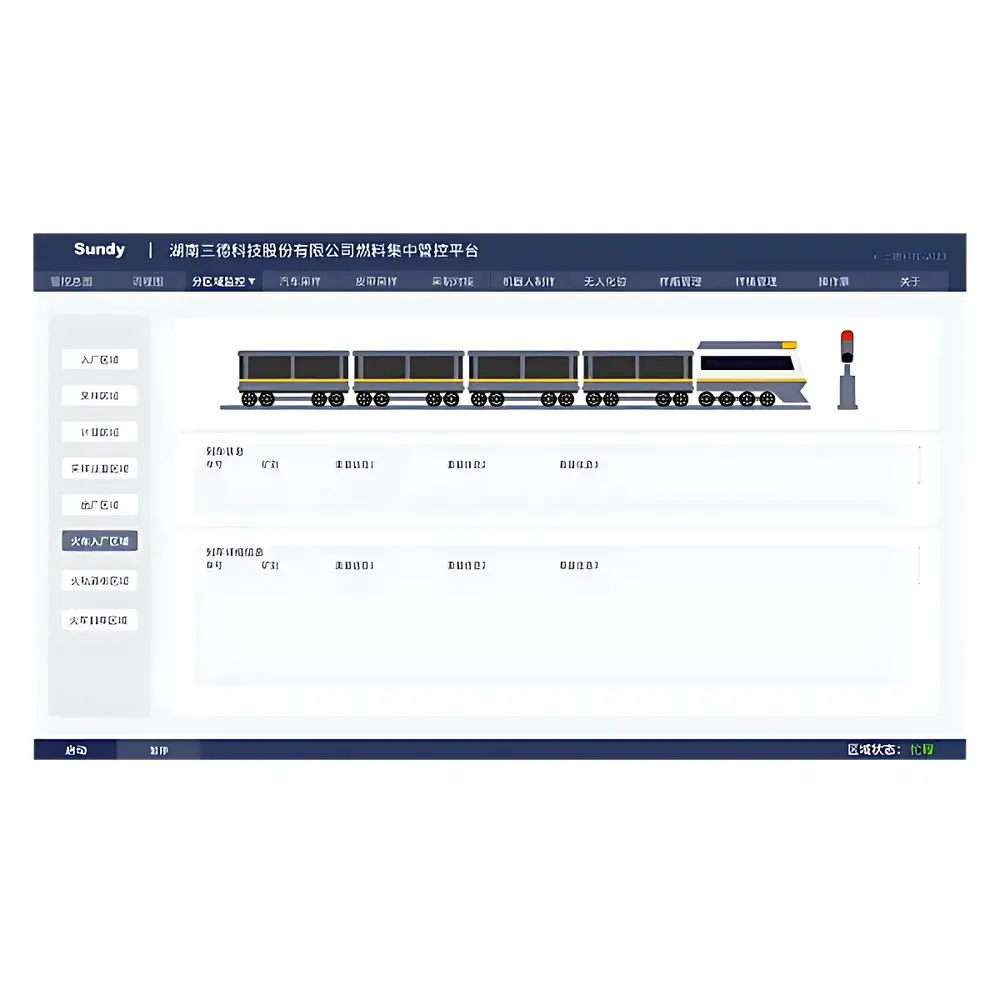
- Web-based HMI with role-based access: Responsive interface supporting real-time monitoring, historical query, batch reconciliation, and exception reporting—accessible via secure HTTPS from desktop or mobile clients.
Sample Compatibility & Compliance
The SDFPCH system does not perform physical sample analysis but governs the upstream sampling lifecycle within coal supply chain logistics. It ensures representative sub-sampling by synchronizing with automated mechanical samplers (e.g., cross-belt or falling-stream types) per ISO 13909-2 and ASTM D2234 protocols. All data transactions—including car ID, gross/net weight, time stamps, and location metadata—are structured to support GLP/GMP-aligned record retention. System architecture adheres to IEC 62443-3-3 for industrial cybersecurity fundamentals and supports optional 21 CFR Part 11-compliant electronic signature modules for regulated environments requiring formal approval workflows.
Software & Data Management
The system employs a centralized relational database (PostgreSQL) with ACID compliance for persistent storage of all operational records. Data ingestion follows a publish-subscribe model using MQTT for low-latency telemetry from edge devices. The embedded SDTAIS AI recognition engine provides configurable confidence thresholds, false-positive suppression rules, and image retention policies aligned with internal data governance policies. Export capabilities include CSV, Excel, and XML formats compatible with ERP (e.g., SAP MM), MES, and coal quality management platforms. Full API documentation (RESTful endpoints) is provided for custom integrations, including webhooks for event-driven notifications and OAuth 2.0–secured authentication.
Applications
- Thermal power generation plants requiring automated coal receipt verification against purchase orders and calorific value contracts.
- Cement manufacturing facilities managing multi-source coal deliveries under strict ash/sulfur specifications.
- Port terminals and transshipment hubs handling mixed-origin railcar consignments with concurrent customs and quality inspection mandates.
- Industrial conglomerates deploying centralized coal procurement dashboards across geographically distributed sites.
- Regulatory compliance units validating adherence to national coal trade standards (e.g., GB/T 18666, DL/T 520) through auditable digital evidence chains.
FAQ
Does the system support integration with existing ERP or LIMS platforms?
Yes—standard REST APIs, ODBC/JDBC connectors, and pre-built adapters for SAP, Oracle EBS, and Thermo Fisher SampleManager are available.
What level of recognition accuracy does the SDTAIS AI module achieve under adverse lighting or weather conditions?
Under typical industrial rail yard conditions (including partial occlusion, rain streaks, and low-contrast paint), average recognition accuracy exceeds 99.2% for car numbers and 97.8% for car type classification, validated across >50 million frames in field deployments.
Can the system operate without continuous internet connectivity?
Yes—the edge computing node runs autonomously with local database replication; synchronization with central servers occurs during scheduled maintenance windows or over resilient cellular backup links.
Is hardware calibration traceable to national metrology institutes?
All connected track scales must be independently certified per national legal metrology requirements; SDFPCH software logs calibration certificate expiry dates and triggers alerts prior to due dates.
How is system uptime ensured during scheduled maintenance or unplanned outages?
The architecture includes hot-swappable edge nodes, redundant network paths, and failover-aware service containers—achieving ≥99.95% operational availability in Tier-2 industrial deployments.