
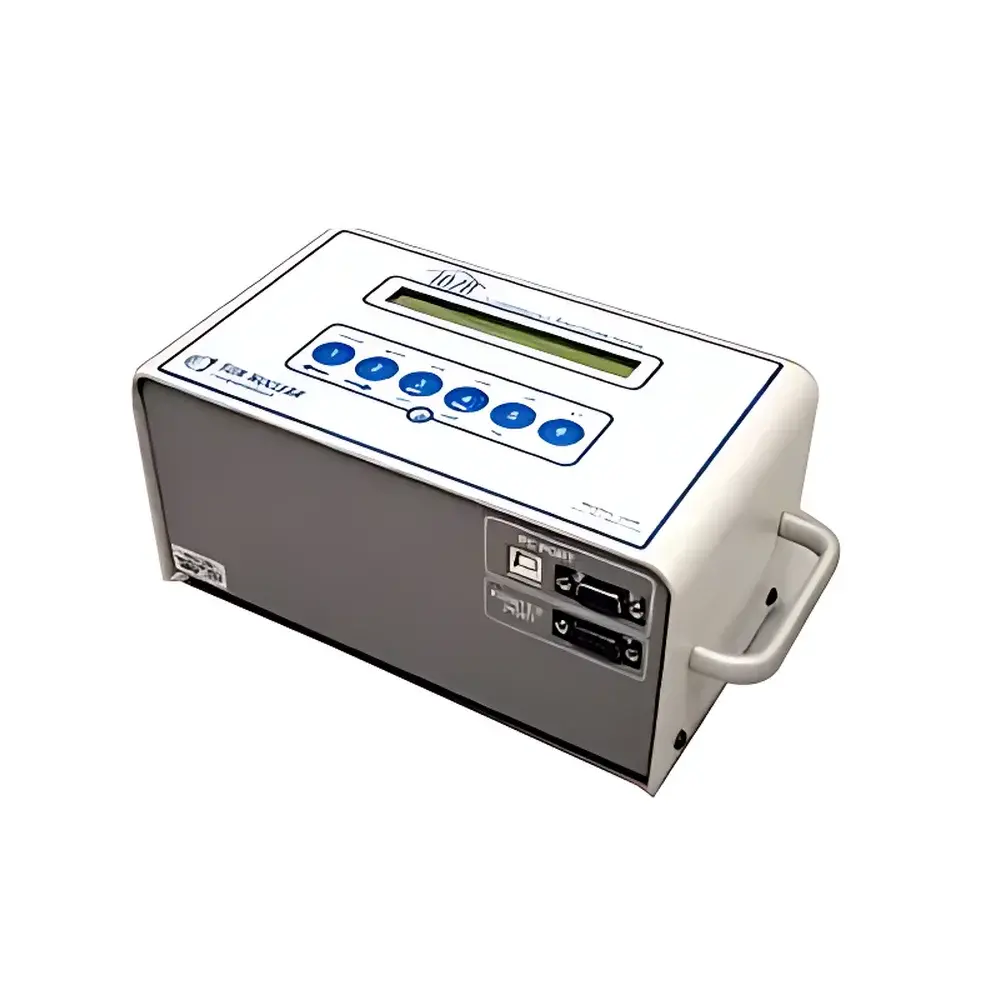
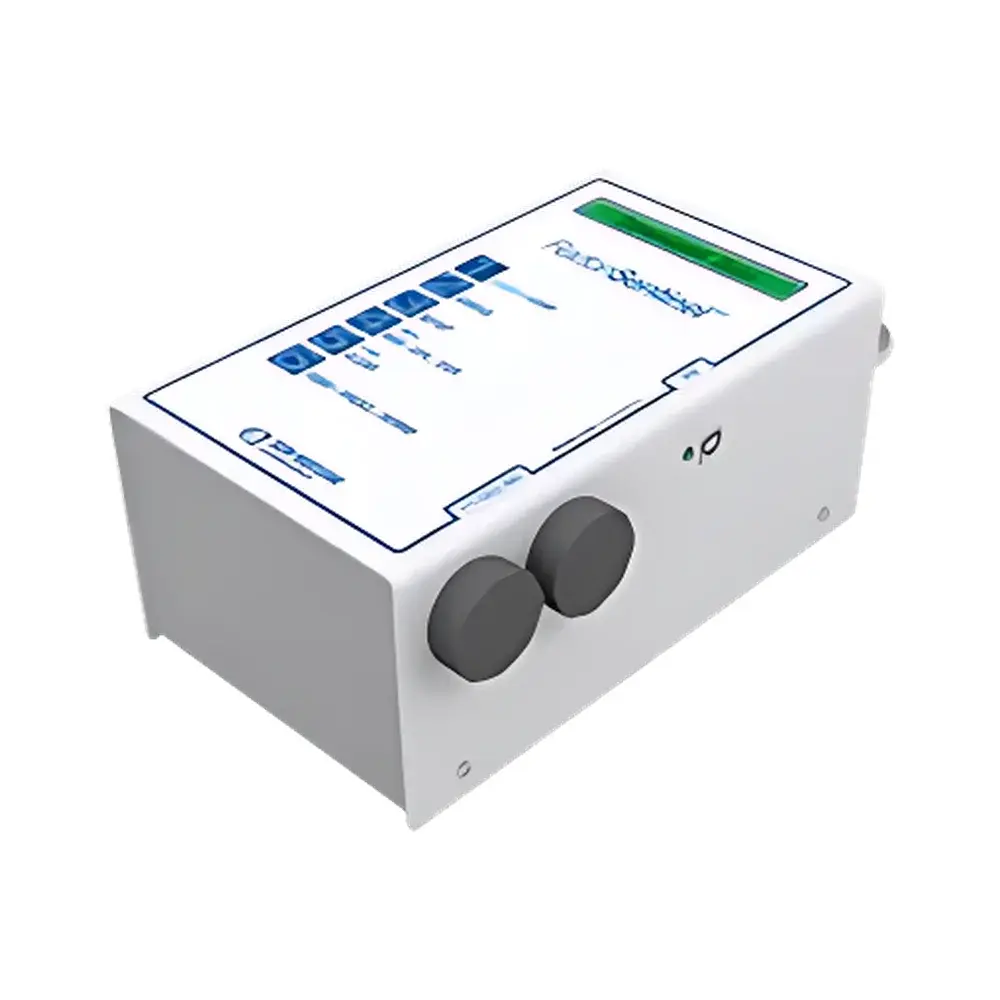
Sunnuclear Model 1030 Radon Detector
| Brand | Sunnuclear |
|---|---|
| Origin | USA |
| Model | 1030 |
| Detector Type | Diffusion-based silicon photodiode (6-channel) |
| Measurement Interval Options | 0.5, 1, 2, 4, 8, 12, 16, 20, 24 h |
| Delay Options | 0, 12, 24, 48 h |
| Duration Options | 1–100 days or long-term mode (up to 1650 measurement intervals |
| Sensitivity | 15 cph per pCi/L |
| Accuracy | ±20% relative to NIST SRM 4973 |
| Operating Temperature | 7–35 °C (45–95 °F) |
| Relative Humidity Range | 0–95% RH |
| Pressure Range | 69–103 kPa (20.4–30.5 inHg) |
| Radon Measurement Range | 0.1–9999 pCi/L (3.7–369,996 Bq/m³) |
| Display | 16-character LCD with 6-button interface |
| Power | 4× C-cell alkaline batteries (≥350 h runtime) or 5 V DC USB adapter (110–230 V AC, 50/60 Hz) |
| Dimensions (W×L×H) | 5.5×9.6×4.4 in |
| Weight | 3.75 lb |
| Environmental Sensors | Integrated temperature (±1 °C), humidity (±5% RH, 1% resolution), pressure (±3.4 kPa, 0.14 kPa resolution) |
| Certifications | NRSB, NRPP, and C-NRPP accredited |
| Data Interface | USB 2.0 (cable included) |
| Storage Slots | 2 independent test slots |
| Tamper Detection | Built-in sensor |
| Mounting | Standard tripod thread (¼"-20) |
Overview
The Sunnuclear Model 1030 Radon Detector is a field-deployable, passive diffusion-type radon monitoring instrument engineered for high-reproducibility environmental radon gas quantification in residential, commercial, and institutional settings. It operates on the principle of alpha-particle detection via solid-state silicon photodiodes positioned at diffusion junctions—eliminating the need for active air sampling pumps or scintillation cells. Each unit integrates six independent photodiode detectors, enabling statistical redundancy and enhanced signal-to-noise ratio for improved low-concentration sensitivity and reduced measurement variance across extended deployment periods. Designed for compliance with U.S. EPA guidance and international radon assessment protocols, the Model 1030 delivers traceable measurements calibrated against NIST Standard Reference Material 4973, supporting defensible data acquisition for regulatory reporting, real estate transaction testing, and long-term indoor air quality surveillance.
Key Features
- Six-channel solid-state photodiode detector array for statistically robust radon concentration estimation and minimized inter-measurement drift
- Integrated environmental compensation: onboard temperature (±1 °C), relative humidity (±5% RH), and barometric pressure (±3.4 kPa) sensors enable real-time correction of radon signal response per ASTM D6722 and ISO 11665-4
- Configurable operational parameters—including start delay (0–48 h), measurement interval (0.5–24 h), and total duration (1 day to >4.5 years in long-term mode)—support both short-term screening and year-round baseline characterization
- Dual-test memory architecture allows concurrent storage and retrieval of two independent measurement campaigns without data overwrite or manual export interruption
- Tamper-evident design with embedded mechanical sensor logs physical access events, satisfying GLP audit requirements for chain-of-custody integrity
- USB-powered or battery-operated (4× C-cell alkaline, ≥350 h continuous operation) for flexible deployment in unpowered or sealed environments—including crawlspaces, basements, and HVAC ducts
- Front-panel 16-character LCD with intuitive 6-button navigation permits full configuration and on-device summary review without external hardware
Sample Compatibility & Compliance
The Model 1030 is validated for use in indoor air matrices meeting EPA Protocol for Radon Testing (EPA 402-R-92-002) and ANSI/AARST Standard MA-100. Its diffusion-based detection geometry ensures representative integration of radon progeny equilibrium under typical residential ventilation conditions (ACH ≈ 0.3–1.0). No sample preparation, calibration gas, or consumables are required between deployments. The device holds active accreditation from the National Radon Proficiency Program (NRPP), the National Radon Safety Board (NRSB), and the Canadian National Radon Proficiency Program (C-NRPP), confirming adherence to ISO/IEC 17025 technical competence criteria for radon measurement laboratories. All firmware and calibration coefficients are traceable to NIST SRM 4973, and raw count data—including timestamped environmental metadata—is retained in non-volatile memory for retrospective reprocessing.
Software & Data Management
Data extraction is performed via standard USB 2.0 interface using Sunnuclear’s proprietary RadonView™ desktop application (Windows XP or later, Pentium-class CPU minimum). The software supports batch export to CSV, PDF summary reports, and XML formats compatible with LIMS integration. Audit trails record all user-initiated configuration changes, start/stop timestamps, and tamper events—meeting FDA 21 CFR Part 11 requirements for electronic records when enabled with password-protected operator roles. Cloud synchronization is optional via secure HTTPS API endpoints, allowing centralized dashboard monitoring across multi-site portfolios while maintaining local data sovereignty. No internet connectivity is required for core measurement functionality or on-device data review.
Applications
- Real estate transaction radon screening per ASTM E1465 and EPA Radon Risk Assessment Guidelines
- Long-term residential exposure assessment in accordance with WHO Handbook on Indoor Radon (2009) and ICRP Publication 126
- Post-mitigation verification testing following installation of sub-slab depressurization systems
- Occupational health monitoring in geologically susceptible workplaces (e.g., mines, caves, granite fabrication facilities)
- Academic and public health research requiring high-temporal-resolution radon time-series under variable microclimatic conditions
- Quality assurance auditing of passive alpha-track and electret ion chamber programs
FAQ
Is the Model 1030 suitable for outdoor or soil-gas measurements?
No. It is calibrated and validated exclusively for indoor air applications where radon concentrations remain within its specified dynamic range (0.1–9999 pCi/L) and environmental conditions comply with its operating envelope (7–35 °C, 0–95% RH).
Does the device require annual recalibration?
Per NRPP and NRSB requirements, field instruments must undergo performance verification every 12 months using a certified radon chamber or reference source. Sunnuclear recommends scheduled verification through an accredited laboratory; no user-serviceable calibration adjustments are provided.
Can measurement intervals be changed mid-deployment?
No. Interval, delay, and duration parameters are fixed at test initiation. To modify timing logic, the current test must be terminated and a new one initiated—preserving prior data in its allocated memory slot.
What happens if battery power depletes during a long-term test?
The device retains all accumulated counts and environmental metadata in non-volatile memory. Upon power restoration (battery or USB), it resumes normal operation without data loss—provided the interruption does not exceed 72 hours, beyond which clock drift may affect timestamp accuracy.







