
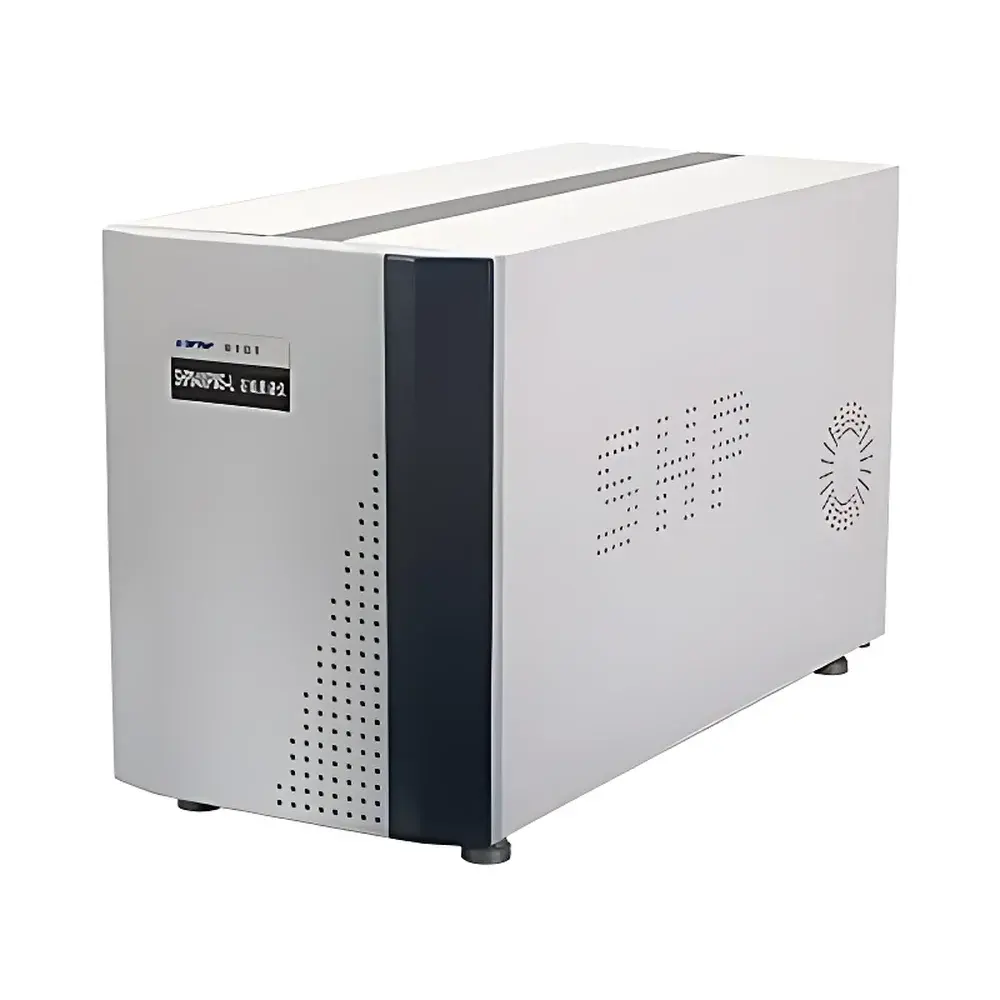
Sunny Hengping SHP8400PMS-Li Differential Electrochemical Mass Spectrometer for Lithium-Ion Battery Research
| Brand | Sunny Hengping Instrument |
|---|---|
| Origin | Shanghai, China |
| Manufacturer Type | Direct Manufacturer |
| Regional Category | Domestic (China) |
| Model | SHP8400PMS-Li |
| Pricing | Upon Request |
Overview
The Sunny Hengping SHP8400PMS-Li is a purpose-built differential electrochemical mass spectrometer (DEMS) engineered for real-time, quantitative gas evolution analysis during electrochemical cycling of lithium-ion battery materials. It operates on the fundamental principle of coupling controlled potentiostatic/galvanostatic electrochemical testing with highly sensitive, time-resolved mass spectrometric detection. By synchronizing charge/discharge current integration (Q) with transient ion current signals from evolved gases—such as H2, CO, CO2, C2H4, O2, and hydrocarbon fragments—the system enables stoichiometric correlation between Faradaic charge transfer and gaseous side-reaction pathways. This capability is essential for distinguishing reversible intercalation from irreversible parasitic reactions at electrode/electrolyte interfaces, particularly during formation cycles, overcharge, thermal runaway initiation, or long-term aging studies.
Key Features
- Integrated ultra-pure carrier gas conditioning: dual-stage trapping system (moisture and CO2 removal) upstream of precision mass flow controllers ensures baseline stability and eliminates background interference.
- Spiral-gradient gas flow chamber above the working electrode: engineered to suppress turbulent eddies and enhance laminar transport efficiency—critical for minimizing gas residence time dispersion and improving temporal resolution of gas evolution events.
- Programmable mass flow control: supports adjustable carrier gas flow rates (typically 5–50 sccm) optimized for specific cell configurations (Swagelok-type, coin cells, pouch cells with gas-tight adapters) and electrolyte volatility profiles.
- Cryogenic cold trap + PTFE membrane filter: selectively condenses volatile organic electrolyte vapors (e.g., EC, DMC, EMC) while permitting permanent and low-boiling-point gases to pass—preserving spectral fidelity and preventing source contamination.
- Heated capillary inlet assembly (temperature-controlled to ±0.5 °C): maintains consistent sample gas phase integrity from cell headspace to ion source, eliminating condensation artifacts and ensuring reproducible transmission efficiency.
- Thoriated iridium filament electron ionization (EI) source: delivers stable 70 eV electron beams with enhanced resistance to oxidation and hydrolysis—enabling continuous operation over multi-day DEMS experiments without filament degradation or recalibration drift.
Sample Compatibility & Compliance
The SHP8400PMS-Li is compatible with standard electrochemical test setups including three-electrode cells, Swagelok-type reactors, custom-built gas-tight coin cells, and modified commercial pouch cells equipped with sampling ports. It supports both aqueous and non-aqueous electrolytes (LiPF6/carbonate, LiTFSI/DOL-DME, solid polymer, and sulfide-based systems). The system architecture complies with GLP-aligned data integrity requirements: all raw ion current traces, timestamped electrochemical parameters (voltage, current, Q), and calibration metadata are stored in vendor-agnostic HDF5 format. Optional audit trail logging meets FDA 21 CFR Part 11 readiness when deployed in regulated R&D environments.
Software & Data Management
The proprietary DEMS Control Suite provides synchronized acquisition of MS ion currents (m/z 1–100, configurable dwell time down to 10 ms per mass), potentiostat data streams (via USB/RS232 or analog input), and real-time Faradaic efficiency calculation. Each acquired spectrum includes embedded calibration coefficients, filament emission current logs, and detector gain history. Quantitative analysis leverages internal standardization (e.g., Ar or N2 spiking) and response factor libraries traceable to NIST SRM-certified gas mixtures. Export options include CSV, MATLAB (.mat), and ASCII-compatible formats for third-party kinetic modeling (e.g., Python-based PyDMS, MATLAB Electrochem Toolbox).
Applications
- Quantification of gaseous byproducts during SEI formation on graphite anodes and silicon composites.
- Elucidating oxygen redox activity and lattice oxygen loss in Li-rich layered oxides (e.g., xLi2MnO3·(1−x)LiMO2).
- Tracking CO2 evolution from carbonate decomposition at high-voltage cathodes (NMC811, LNMO).
- Isotope-labeled DEMS (e.g., 13C-EC, D2O electrolyte) to resolve reaction mechanisms via fragment mass shifts.
- Correlating H2 evolution onset potentials with transition metal dissolution kinetics in Ni-rich cathodes.
- Supporting DOE and EU Battery 2030+ roadmap objectives through mechanistic validation of next-generation electrolytes and solid-state interfaces.
FAQ
What electrochemical workstations is the SHP8400PMS-Li compatible with?
It interfaces natively with Gamry, BioLogic, Metrohm Autolab, and Princeton Applied Research potentiostats via TTL synchronization triggers and analog voltage/current inputs.
Can the system perform isotope ratio monitoring (IRM) for mechanistic studies?
Yes—high mass resolution mode (unit mass resolution, M/ΔM ≈ 500) enables baseline separation of isotopic peaks (e.g., m/z 28/13C15N vs. 12C16O), supporting semi-quantitative IRM when coupled with labeled precursors.
Is vacuum system maintenance required by the user?
The turbomolecular pump and backing pump are sealed and service-interval rated; routine maintenance is limited to annual filament replacement and cold trap cleaning—no user-accessible oil changes or gauge recalibrations.
How is data time-synchronization accuracy achieved between MS and electrochemistry?
Hardware-level TTL pulse triggering (±100 ns jitter) locks MS scan start to potentiostat event markers (e.g., step initiation, hold start), ensuring sub-second alignment across multi-hour cycling protocols.







