
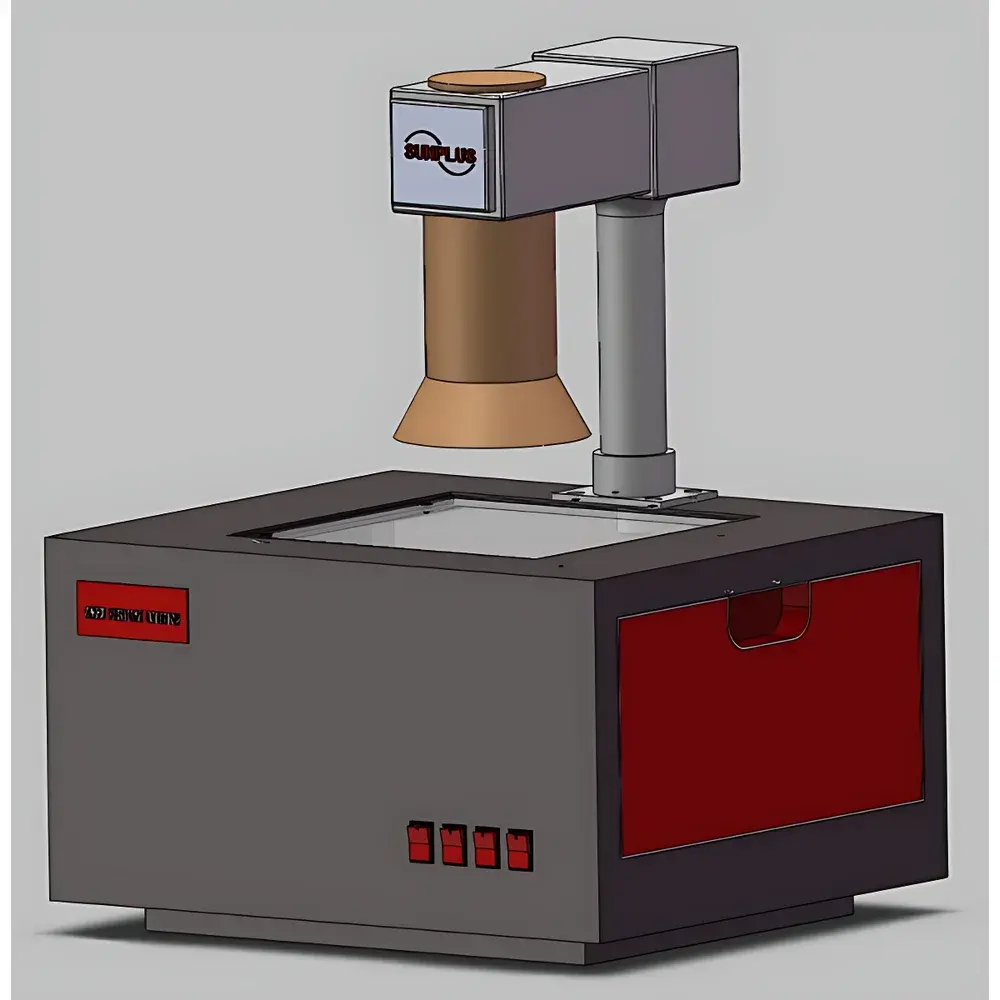
Sunplus SP-Y-1908 Automated Fish-Eye Analyzer
| Origin | Canada |
|---|---|
| Manufacturer Type | Authorized Distributor |
| Origin Category | Imported Instrument |
| Model | SP-Y-1908 |
| Pricing | Available Upon Request |
Overview
The Sunplus SP-Y-1908 Automated Fish-Eye Analyzer is a precision optical inspection system engineered for quantitative assessment of extraneous defects—specifically fish-eyes and gel-like inclusions—in polymeric films, sheets, and resin pellets. Operating on high-resolution digital imaging combined with calibrated backlight illumination and automated image segmentation algorithms, the instrument quantifies defect morphology based on ISO/IEC 17025-aligned measurement principles. Fish-eyes—localized translucent or opaque domains arising from incomplete polymer melting, cross-linking anomalies, or contamination—are measured per standardized light-scattering contrast thresholds. The system supports traceable dimensional metrology down to sub-millimeter resolution, enabling compliance-driven quality control in film extrusion, blow molding, and compounding facilities.
Key Features
- Fully automated detection and classification of fish-eyes and streaks using adaptive thresholding and morphological filtering
- Simultaneous measurement of individual defect dimensions: equivalent circular diameter (ECD), major/minor axis length, aspect ratio, and area coverage percentage
- Real-time spatial mapping of defect distribution across the sample surface, with coordinate-referenced localization
- Interactive zoom functionality (1× to 16× digital magnification) with pixel-level calibration for on-screen verification
- Batch processing capability for continuous film scanning with synchronized conveyor interface support
- Configurable pass/fail criteria per defect size bin, aligned with user-defined acceptance limits or regulatory thresholds
- Integrated audit trail logging for all measurement sessions, including operator ID, timestamp, instrument configuration, and raw image metadata
Sample Compatibility & Compliance
The SP-Y-1908 accommodates transparent to semi-transparent polymeric substrates including LDPE, HDPE, PP, PET, PVC, and PS films (thickness range: 12–250 µm) as well as granular resin samples placed on standardized glass carriers. It complies with measurement requirements specified in GB/T 4611–2008 (Plastic Films — Determination of Gel Content), GB/T 11115–2009 (Polyethylene Resins), GB 6595–86 (Determination of Fish-Eyes in Polyethylene Films), and ASTM D3351–93 (Standard Test Method for Fish-Eyes in Polyethylene Film). All measurement protocols are designed to meet GLP and GMP documentation standards, supporting 21 CFR Part 11-compliant electronic records when deployed with validated software configurations.
Software & Data Management
The proprietary FishEyePro™ analysis suite provides a Windows-based GUI with intuitive workflow navigation, multi-language support (English, Chinese, Spanish), and export-ready data output. Measurement results are stored in structured SQLite databases with immutable hash-verified entries. Reports generate in PDF/A-1b format with embedded calibration certificates, image thumbnails, statistical summaries (mean, median, standard deviation, histogram), and annotated defect maps. Custom report templates can be authored via drag-and-drop field editors and saved as reusable XML profiles. Data export options include CSV (for SPC integration), TIFF (lossless image archiving), and XML (for LIMS interoperability).
Applications
- Quality assurance in polyolefin film manufacturing lines for packaging, agricultural, and medical barrier applications
- In-process monitoring of melt filtration efficiency during extrusion and pelletizing operations
- Supplier qualification testing for incoming resin lots against contractual defect specifications
- R&D evaluation of thermal stability, shear sensitivity, and additive dispersion homogeneity in polymer formulations
- Root cause analysis of die lip buildup, screw wear, or thermal degradation events through longitudinal defect trend analysis
- Regulatory submission support for FDA, EU REACH, or JIS-compliant material dossiers requiring objective defect quantification
FAQ
What sample preparation is required prior to analysis?
Flat, wrinkle-free film specimens (minimum 100 mm × 100 mm) or resin pellets evenly dispersed on a 75 mm Ø quartz carrier are recommended. No staining or coating is necessary.
Does the system require external calibration standards?
Yes — NIST-traceable stage micrometers and certified defect reference films (e.g., PTB-100 series) are used during initial validation and periodic performance verification.
Can the SP-Y-1908 integrate with factory MES or SCADA systems?
Via OPC UA or Modbus TCP interfaces (optional hardware module), enabling real-time defect KPI streaming to central manufacturing intelligence platforms.
Is the software validated for regulated environments?
A full IQ/OQ/PQ validation package—including risk assessment, test scripts, and summary reports—is available upon request for pharmaceutical or medical device clients.
What is the typical throughput for film scanning?
At 100 mm/s conveyor speed and 0.1 mm/pixel resolution, up to 12 m²/h of 50 µm-thick film can be fully characterized with ≥98.5% detection sensitivity for features ≥0.15 mm in diameter.



