
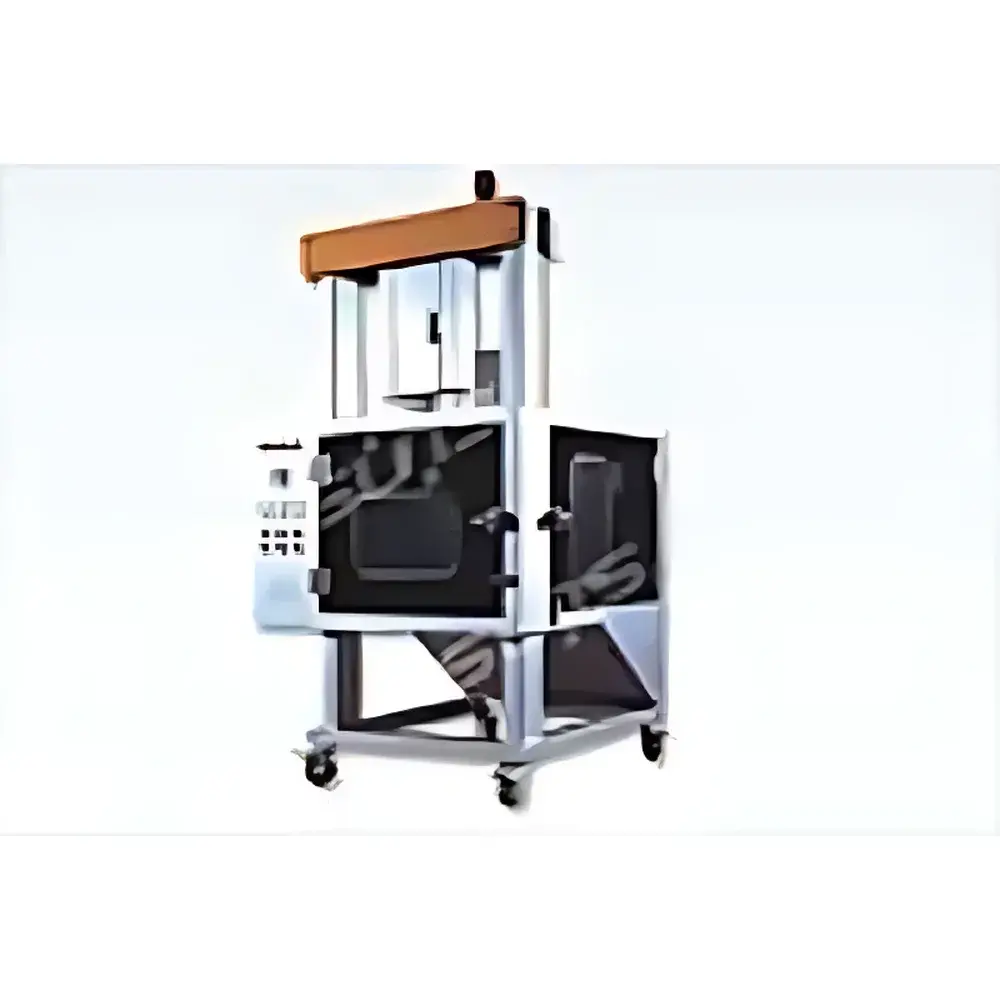
SUNS CMT-GT Automotive Sunroof Adhesive Bond Strength Testing System
| Key | Brand: SUNS |
|---|---|
| Origin | Shenzhen, China |
| Manufacturer Type | Direct Manufacturer |
| Country of Origin | China |
| Model | CMT-GT |
| Max Test Load | 5 kN |
| Accuracy Class | 0.5 |
| Temperature Range | Ambient to +150 °C |
| Temp. Stability | ≤±0.5 °C |
| Temp. Uniformity | ≤±2.0 °C |
| Environmental Chamber Internal Dimensions | 1060 mm (D) × 880 mm (W) × 700 mm (H) |
Overview
The SUNS CMT-GT Automotive Sunroof Adhesive Bond Strength Testing System is an integrated electromechanical testing platform engineered for the quantitative evaluation of structural adhesive bond integrity between automotive sunroof glass and metal framing assemblies. It operates on a servo-controlled uniaxial tensile principle, combining high-precision force measurement with thermally regulated environmental simulation to replicate real-world service conditions—including thermal cycling, elevated temperature dwell, and static load retention. Unlike generic universal testers, the CMT-GT incorporates purpose-built fixtures, dual-side optical access, and chamber-integrated safety containment specifically designed for full-assembly sunroof testing per OEM engineering specifications. The system complies with fundamental mechanical test principles outlined in ISO 6892-1 (tensile testing of metallic materials), ASTM D3330 (peel adhesion), and ISO 11339 (adhesive bond strength under thermal stress), serving as a critical verification tool in Tier-1 supplier quality assurance and automotive R&D validation workflows.
Key Features
- Servo-driven loading frame with 5 kN maximum capacity and 0.5-class force accuracy, traceable to national metrological standards
- Integrated environmental chamber enabling precise thermal conditioning from ambient to +150 °C, with stability ≤±0.5 °C and uniformity ≤±2.0 °C across full internal volume (1060 × 880 × 700 mm)
- Dual transparent observation windows fitted with laminated safety mesh to contain glass fragmentation during catastrophic bond failure—meeting ISO 13857 safety clearance requirements
- Dedicated sunroof mounting fixture set accommodating variable roof curvature, hinge geometry, and rail interface configurations without retooling
- Automated test sequence execution via Windows-based control software, supporting programmable ramp-hold-relax profiles, multi-stage temperature-force coupling, and real-time load-displacement-temperature synchronization
- Front-access debris ejection port with sealed gasket interface for rapid post-test cleanup of glass shards and adhesive residue—minimizing chamber downtime
Sample Compatibility & Compliance
The CMT-GT accommodates complete production-intent sunroof modules—including tempered glass, laminated glass, aluminum or steel frames, and polyurethane or silicone structural adhesives—without disassembly. Sample mounting preserves original joint geometry and boundary constraints, ensuring test validity reflects actual field performance. The system supports compliance documentation generation aligned with IATF 16949 clause 8.5.1.2 (validation of manufacturing processes), and its data acquisition architecture meets auditability requirements for GLP and GMP environments. All thermal calibration records, force transducer certifications, and software validation protocols are retained in accordance with ISO/IEC 17025:2017 Annex A.2.
Software & Data Management
Control and analysis are performed using SUNS TestMaster v4.2—a deterministic real-time application built on a deterministic Windows OS configuration. The software provides configurable test method templates compliant with VW PV 3905 (adhesive bonding strength), GMW 15301 (structural adhesive durability), and Ford CETP 00.00-L-467 (sunroof assembly qualification). Raw data streams (load, displacement, temperature, time) are logged at ≥100 Hz with embedded metadata (operator ID, sample lot, environmental setpoint, calibration expiry). Export formats include CSV, XML, and PDF reports with digital signatures, electronic audit trails, and user-level permission controls satisfying FDA 21 CFR Part 11 requirements for electronic records and signatures.
Applications
- Quantitative assessment of adhesive bond strength degradation after thermal aging (e.g., 120 °C / 1000 h per ISO 11339)
- Static load retention testing at elevated temperatures to evaluate creep resistance and interfacial relaxation
- Comparative evaluation of alternative adhesive chemistries (e.g., PU vs. MS polymer) under identical thermal-mechanical stress profiles
- OEM qualification testing for new sunroof designs prior to production launch
- Root cause analysis of field failures through controlled replication of suspected thermal–mechanical loading scenarios
- Process capability studies for adhesive dispensing, clamping pressure, and cure cycle optimization
FAQ
Does the CMT-GT support dynamic fatigue testing?
No—the system is configured for quasi-static tensile, hold, and relaxation tests only. It does not provide cyclic loading capability.
Can third-party calibration certificates be imported into the software?
Yes—TestMaster v4.2 accepts NIST-traceable calibration files in .cal format with timestamp, uncertainty budget, and technician signature fields.
Is the environmental chamber compatible with humidity control?
Not by default; the standard CMT-GT chamber is dry-air heated only. Optional RH control module (up to 85% RH at 85 °C) is available upon request.
What is the minimum sample thickness the fixture can accommodate?
The adjustable fixture jaw range supports sunroof assemblies from 25 mm to 120 mm total height, including frame flange and glass overhang.
How is software validation documented for regulated environments?
SUNS provides a full IQ/OQ/PQ protocol package, including installation checklists, operational boundary tests, and performance verification runs against reference standards—delivered with each system shipment.



