
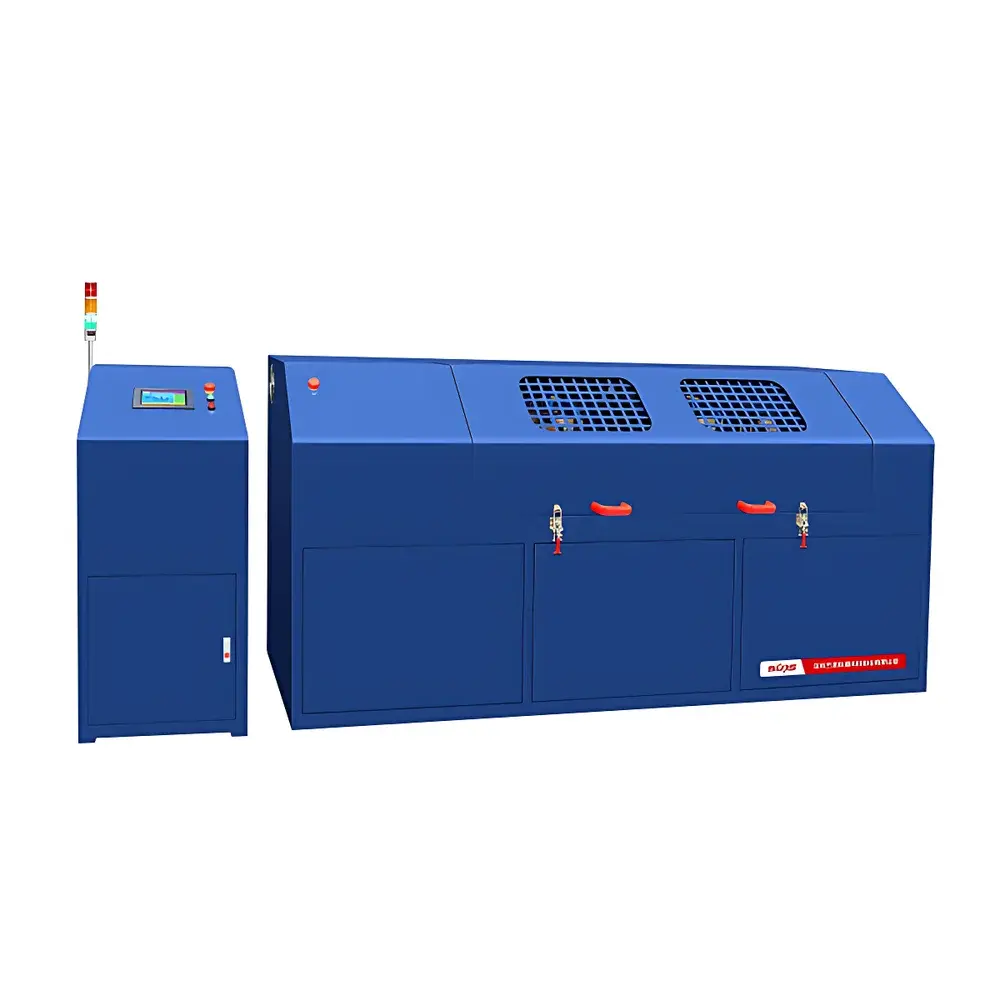
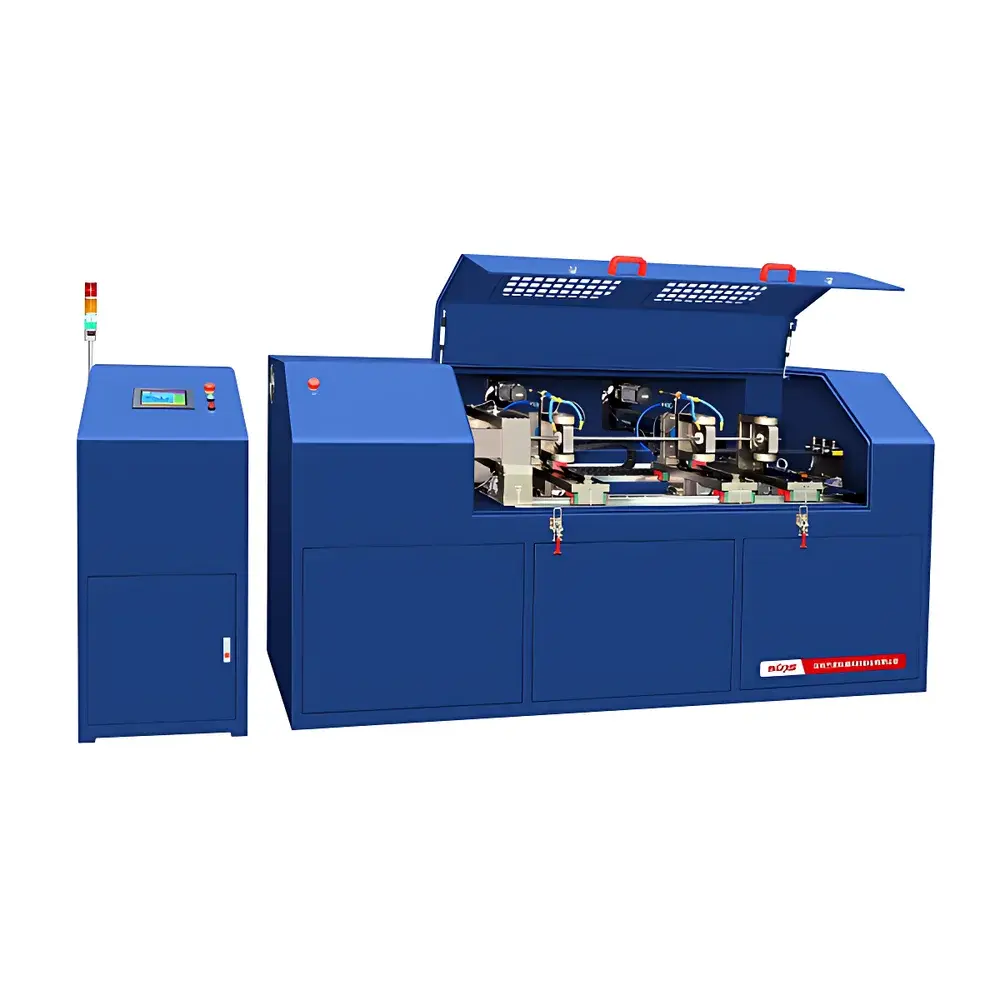
SUNS SANSUN WZW-600P Horizontal Rotating Bending Fatigue Testing Machine
| Brand | SUNS SANSUN |
|---|---|
| Origin | Guangdong, China |
| Manufacturer Type | Direct Manufacturer |
| Product Category | Domestic |
| Model | WZW-600P |
| Price Range | USD 14,000 – 42,000 |
| Instrument Type | Rotary Bending Fatigue Tester |
| Maximum Test Load | 20 kN |
| Load Range | 1–100% Full Scale (FS) |
| Rotational Speed | 300–6000 rpm |
| Specimen Diameter | Φ8–Φ20 mm |
| Specimen Length | 1200–1500 mm |
| Support Span Adjustment | Inner span 200–400 mm |
| Load Resolution | 1/250,000 of full scale (constant resolution, no range switching) |
| Load Accuracy | ±0.5% of reading |
| Force Stability | ±5 N (10–50 N), ±10% (50–100 N), ±5% (100–10,000 N) |
| Motor Configuration | 5.5 kW main drive motor + dual 1 kW loading motors |
| Overall Dimensions (W×D×H) | ≈2100×1500×1600 mm |
Overview
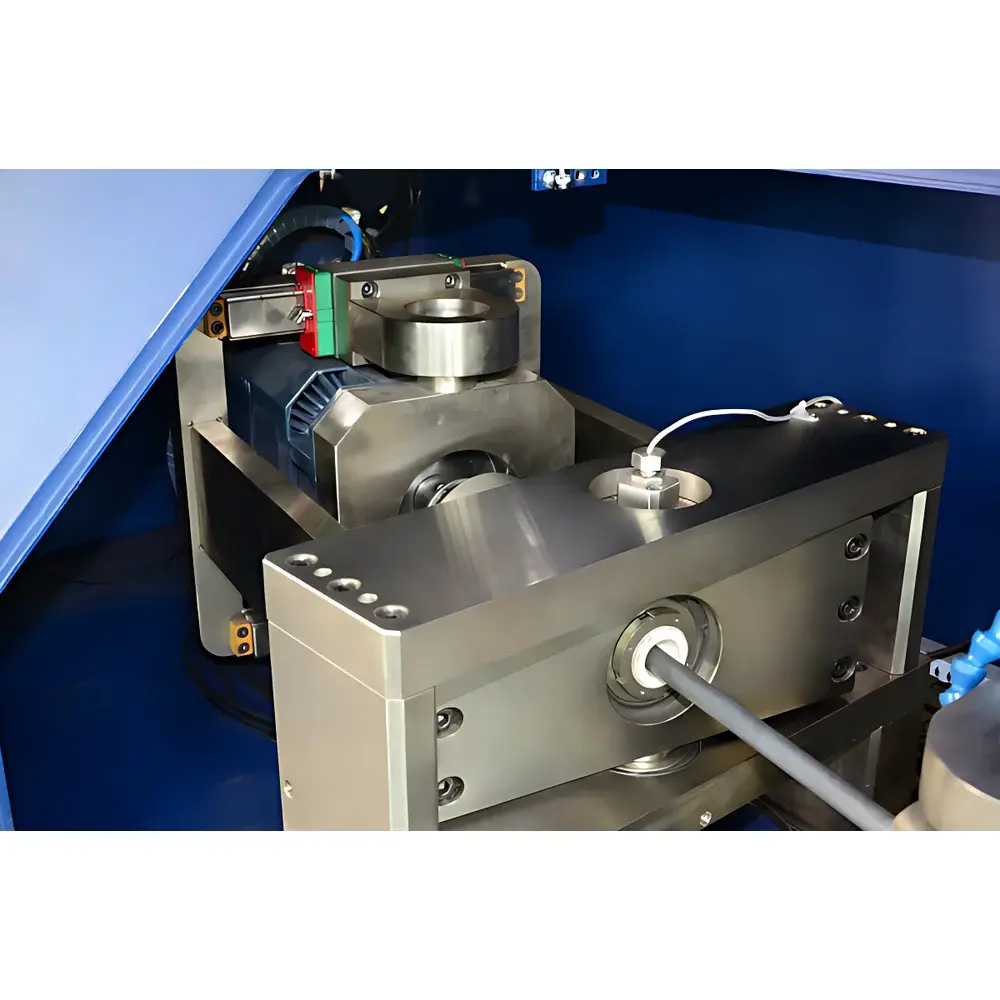
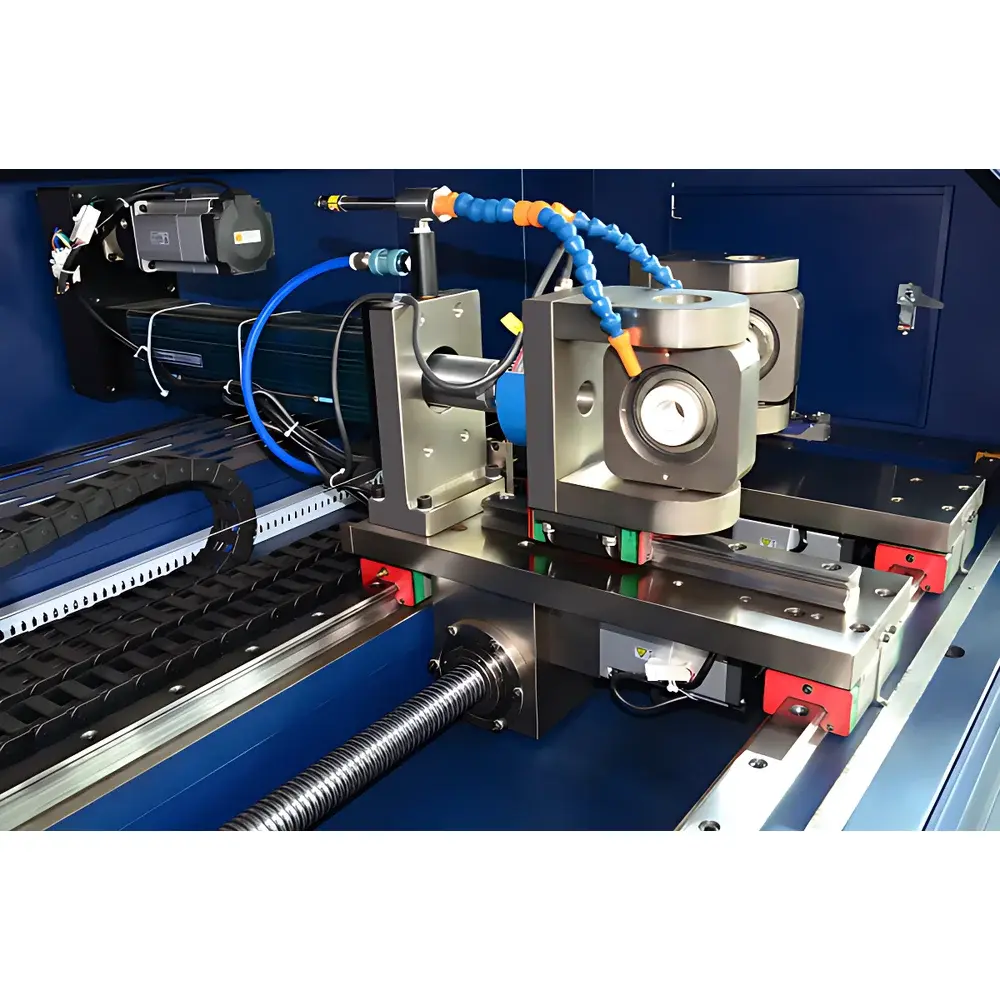
The SUNS SANSUN WZW-600P Horizontal Rotating Bending Fatigue Testing Machine is an engineered solution for high-precision rotary bending fatigue evaluation of metallic materials under controlled cyclic stress conditions. Designed in accordance with ASTM E466 and ISO 1099 standards for axial and bending fatigue testing, this system implements a four-point bending configuration to subject cylindrical specimens to fully reversed bending moments while rotating at precisely regulated speeds. Unlike axial or torsional fatigue testers, the WZW-600P replicates service-induced bending fatigue failure modes commonly observed in shafts, axles, turbine blades, and structural components subjected to rotating loads. The horizontal layout enables stable long-duration testing of extended-length specimens (up to 1500 mm), minimizing gravitational sag and ensuring uniform stress distribution across the critical gauge section. Its rigid frame, precision-machined bearing-supported support points, and dual-motor actuation architecture ensure mechanical stability, minimal parasitic vibration, and high reproducibility across thousands of cycles.
Key Features
- Four-point bending configuration with adjustable inner and outer support spans (200–400 mm and 1200–1500 mm respectively) to accommodate diverse specimen geometries and standardized test configurations.
- High-resolution load measurement system with 1/250,000 full-scale resolution—maintained continuously across the entire 1–100% FS range without range switching or recalibration.
- Dual independent loading motors (1 kW each) enable dynamic real-time load adjustment during rotation, supporting variable-amplitude and step-load fatigue protocols.
- High-torque, low-vibration 5.5 kW main drive motor ensures stable rotational speeds from 300 to 6000 rpm, with speed control accuracy better than ±0.2% of setpoint.
- Bearing-and-bushing support assemblies eliminate wire rope or belt wear and prevent localized surface damage to specimens during prolonged testing.
- Integrated force stability monitoring with documented repeatability: ±5 N deviation in the 10–50 N range; ±10% in 50–100 N; ±5% in 100–10,000 N—verified per ISO 7500-1 Class 0.5 calibration requirements.
Sample Compatibility & Compliance
The WZW-600P accommodates cylindrical metallic specimens with diameters from Φ8 mm to Φ20 mm and lengths between 1200 mm and 1500 mm—covering standard test specimens defined in ASTM E466 Annex A1 and GB/T 21139. It supports materials with ultimate tensile strength up to 2200 MPa, including high-strength steels, titanium alloys, and nickel-based superalloys. All mechanical and electrical subsystems comply with CE machinery directive (2006/42/EC) and IEC 61000-6-2/6-4 electromagnetic compatibility standards. The machine’s load frame and safety interlock design meet ISO 12100 risk assessment requirements. For regulated environments, optional audit-trail-enabled firmware supports GLP/GMP-aligned operation and 21 CFR Part 11-compliant electronic records when paired with validated data acquisition software.
Software & Data Management
The system operates via a dedicated Windows-based control interface supporting real-time torque, rotational speed, cycle count, and load waveform visualization. Data logging occurs at configurable sampling rates (up to 1 kHz) and is stored in ASCII-compatible .csv and binary .dat formats for post-processing in MATLAB, Python (NumPy/Pandas), or commercial fatigue analysis tools such as nCode DesignLife. The software includes built-in S–N curve generation, Goodman diagram plotting, and statistical life prediction modules compliant with ASTM E739 and ISO 12107 methodologies. Optional API integration allows bidirectional communication with LIMS platforms and enterprise MES systems via TCP/IP or OPC UA protocols.
Applications
- Rotary bending fatigue life assessment of automotive crankshafts, camshafts, and drive axles.
- Qualification testing of aerospace engine components—including compressor and turbine disks—under simulated operational bending spectra.
- Material development studies for high-strength alloy steels and additively manufactured metallic parts, where surface integrity and subsurface defect sensitivity are critical.
- Quality assurance validation of heat-treated batches per ASTM A370 and ISO 6892-1 mechanical property specifications.
- Research into crack initiation and propagation mechanisms in notched specimens under multiaxial bending states.
FAQ
What standards does the WZW-600P support for fatigue testing?
It conforms to ASTM E466, ISO 1099, ISO 12107, and GB/T 21139 for rotating bending fatigue methodology and data reporting.
Can the machine perform variable-amplitude fatigue tests?
Yes—dual loading motors and real-time closed-loop control allow programmable load modulation synchronized with rotational phase.
Is specimen alignment automated?
No—manual centering and leveling are required prior to test initiation; however, precision-ground support rails and micrometer-adjustable mounts ensure sub-0.05 mm alignment repeatability.
What is the maximum recommended test duration per run?
Uninterrupted operation is rated for ≥100 hours at 3000 rpm and 50% FS load, contingent on ambient temperature ≤25°C and adequate ventilation.
Does the system include calibration certification?
A factory-issued ISO/IEC 17025-accredited calibration certificate for load cell and encoder is provided with each unit; annual recalibration is recommended per ISO 9001 clause 7.1.5.2.



