
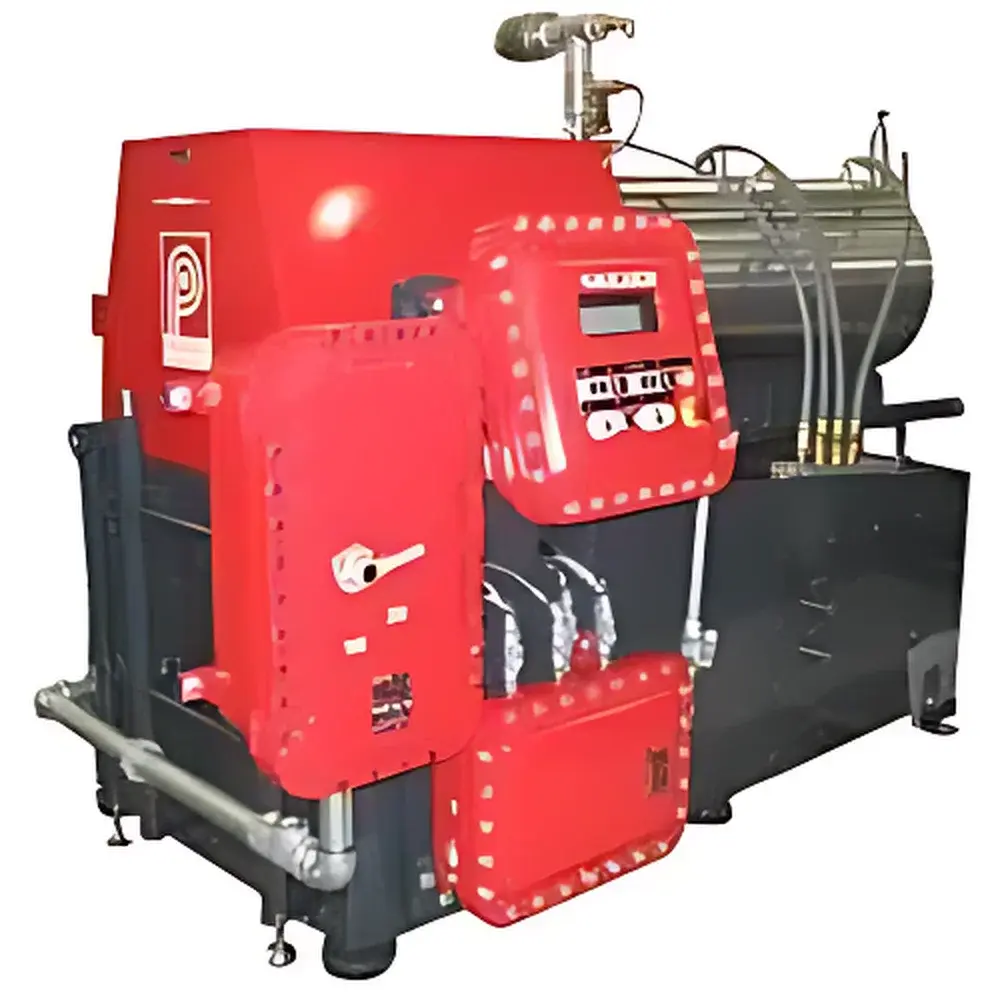
SuperFLX Laboratory High-Shear Wet Milling Grinder
| Origin | USA |
|---|---|
| Manufacturer Type | Authorized Distributor |
| Origin Category | Imported Equipment |
| Model | SuperFLX |
| Pricing | Available Upon Request |
Overview
The SuperFLX Laboratory High-Shear Wet Milling Grinder is an engineered solution for controlled particle size reduction of high-viscosity suspensions and pastes in research, quality control, and pilot-scale development environments. Based on the principle of rotor-stator high-shear homogenization, the system generates intense hydrodynamic cavitation and mechanical shear forces within a precisely engineered grinding chamber. Unlike conventional ball mills or jaw crushers, the SuperFLX operates continuously or in batch mode under fully adjustable process parameters—including rotor speed (0–6,000 rpm), flow rate, and temperature-controlled jacketing—enabling reproducible micronization of thermally sensitive or rheologically complex materials. Its design conforms to fundamental fluid mechanics principles governing dispersion efficiency in non-Newtonian media, making it particularly suited for applications where narrow particle size distribution (PSD) and minimal thermal degradation are critical.
Key Features
- Robust stainless-steel rotor-stator assembly with interchangeable grinding geometries (fine, medium, coarse) for tailored shear intensity and throughput optimization
- Integrated cooling jacket compatible with external chillers (−10 °C to +60 °C) to maintain sample integrity during extended operation
- Digital speed control with real-time RPM feedback and programmable ramp profiles for method reproducibility
- Sealed, leak-proof processing chamber rated for pressures up to 10 bar, supporting closed-loop recirculation systems
- CE-compliant electrical architecture with IP54 enclosure rating for laboratory-grade safety and durability
- Modular feed system accommodating both gravity-fed and positive-displacement pump integration
Sample Compatibility & Compliance
The SuperFLX accommodates a broad spectrum of suspension-based formulations across regulated and non-regulated industries. It processes aqueous and solvent-based slurries containing solids loading from 5% to 75% w/w, including pigment dispersions (e.g., TiO₂, carbon black), pharmaceutical nanosuspensions, agrochemical concentrates, food-grade emulsions (e.g., chocolate liquor, nut pastes), and mineral ore pulps. The wet-milling configuration ensures compliance with ISO 13320 (laser diffraction particle sizing) sample preparation requirements and supports GLP/GMP-aligned documentation when paired with validated SOPs. All wetted parts meet USP Class VI biocompatibility standards and are certified per FDA 21 CFR 177.2600 for indirect food contact.
Software & Data Management
While the base SuperFLX operates via standalone digital interface, optional Ethernet-enabled firmware supports integration into centralized lab data management platforms. Process parameters—including actual RPM, inlet/outlet temperatures, total runtime, and cumulative energy input (kWh)—are timestamped and exportable in CSV format. Audit trail functionality complies with FDA 21 CFR Part 11 requirements when deployed with user-access controls and electronic signature modules. Data logging intervals are configurable from 1 second to 5 minutes, enabling correlation with downstream analytical techniques such as dynamic light scattering (DLS) or scanning electron microscopy (SEM) validation.
Applications
- Development and scale-up of stable pigment dispersions in architectural and automotive coatings
- Reduction of API particle size for enhanced dissolution kinetics in oral solid dosage forms
- Homogenization of nanostructured ceramic precursors for additive manufacturing feedstocks
- Preparation of uniform colloidal suspensions for rheological benchmarking per ASTM D445 and ISO 3219
- Disagglomeration of heat-sensitive biological extracts without denaturation
- Recycling and reprocessing of post-consumer polymer composites prior to extrusion
FAQ
What is the minimum achievable D90 particle size using the SuperFLX?
Typical D90 values range from 0.8 µm to 3.5 µm depending on formulation viscosity, solid loading, and number of recirculation passes; final size distribution must be verified by independent laser diffraction or sedimentation analysis.
Can the SuperFLX handle abrasive mineral slurries?
Yes—optional tungsten carbide-coated rotors and stators are available for extended service life when processing quartz, alumina, or silicon carbide suspensions.
Is cleaning validation supported?
The unit features full drainability, CIP-compatible geometry, and surface roughness Ra ≤ 0.4 µm on all wetted components, facilitating residue testing per ICH Q5C and EU GMP Annex 15 guidelines.
Does it support ATEX-certified operation?
ATEX Zone 22 configurations (gas/dust) are available upon request with customized motor enclosures and grounding protocols.
What maintenance intervals are recommended?
Routine inspection every 200 operational hours; rotor-stator alignment verification and bearing lubrication every 1,000 hours; full seal kit replacement every 3,000 hours under standard use conditions.



