SURFACE PLD-Workstation Ultra-High Vacuum Pulsed Laser Deposition System
| Origin | Germany |
|---|---|
| Manufacturer Type | Authorized Distributor |
| Origin Category | Imported |
| Model | PLD-Workstation |
| Price Range | USD 650,000 – 13.5 million |
Overview
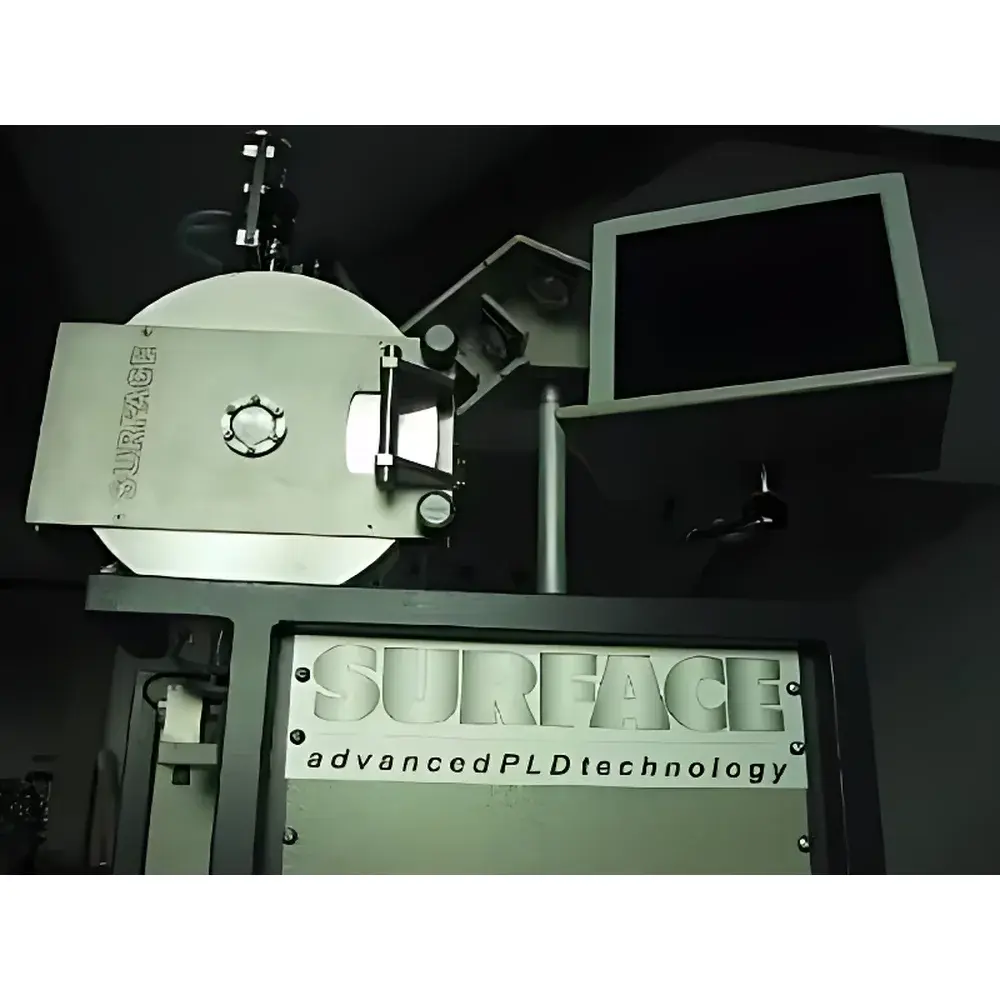
The SURFACE PLD-Workstation is a fully integrated ultra-high vacuum (UHV) pulsed laser deposition system engineered for atomic-precision thin-film growth and epitaxial synthesis of complex oxides, nitrides, chalcogenides, and multilayer heterostructures. Based on the fundamental principle of laser ablation—where high-energy nanosecond pulses (typically 248 nm KrF or 193 nm ArF excimer lasers) irradiate solid targets to generate transient plasma plumes—the system enables stoichiometric transfer of material onto heated substrates under controlled background gas environments (O₂, N₂, Ar, or mixtures). Operating at base pressures ≤5×10⁻¹⁰ mbar (achieved via ion pumps, cryopanels, and non-evaporable getter (NEG) strips), the PLD-Workstation meets stringent UHV requirements for surface-sensitive epitaxy, interfacial engineering, and in-situ characterization compatibility. Its design prioritizes reproducibility, thermal stability, and process scalability—making it suitable for R&D labs developing next-generation semiconductor devices, quantum materials, ferroelectric tunnel junctions, and high-temperature superconducting films.
Key Features
- Modular UHV Architecture: Configurable single-chamber or multi-chamber layouts with load-lock integration; expandable with MBE, sputtering, or in-situ XRD/ARPES modules without vacuum break.
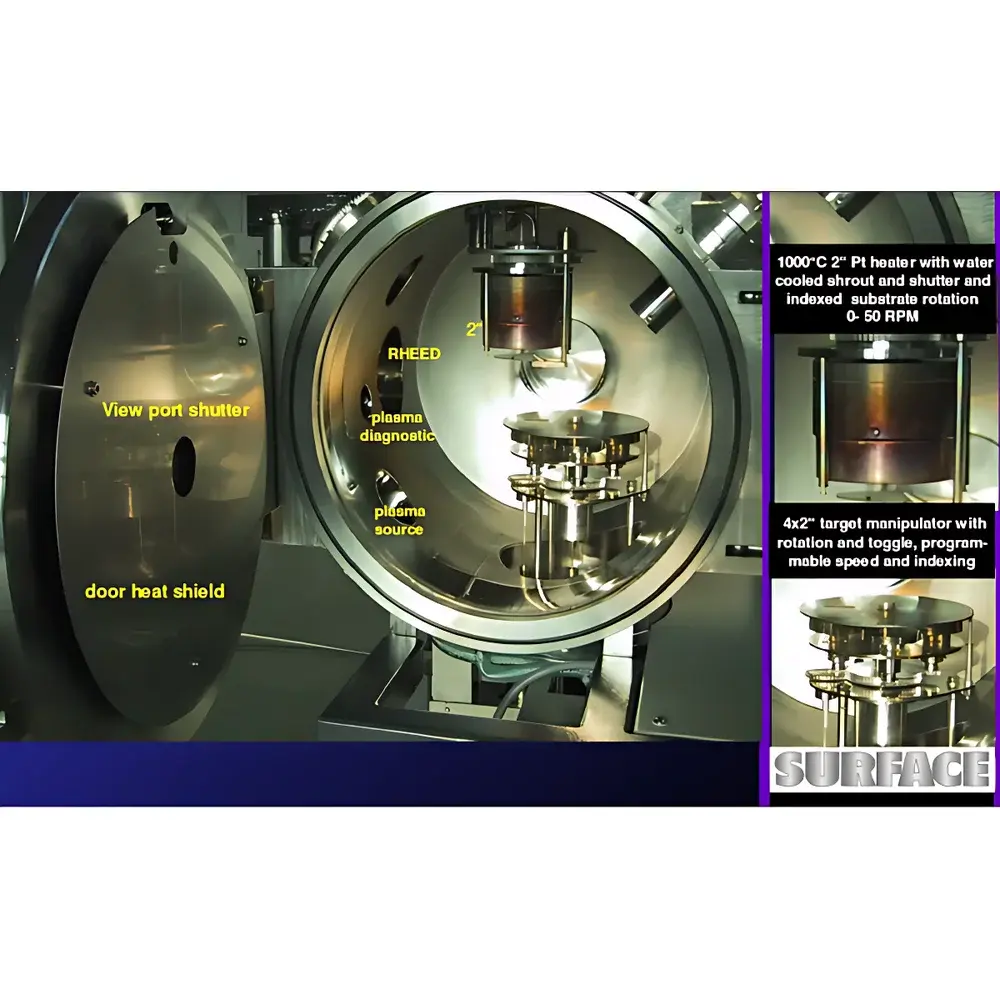
- Integrated Substrate Manipulation: Precision resistive-heated substrate holder (up to 1000 °C) with embedded Type-K thermocouple directly calibrated at the 30 mm central zone; compatible with Omicron AFM-compatible clamping and silver-paste mounting.
- Automated Target Carousel: Motorized 6–12 position target rotator with magnetic coupling and vacuum-compatible shuttering; each target shielded by removable thermal baffles to prevent cross-contamination and thermal back-transfer.
- Laser Integration Framework: Top-mounted laser bay accommodating excimer (KrF/ArF) or solid-state UV lasers (e.g., frequency-tripled Nd:YAG); optical path optimized for uniform fluence distribution and minimal beam walk-off.
- Real-Time Process Monitoring: Dual-camera surveillance system (monochrome + color CCD) synchronized with process logs; all images timestamped and archived automatically to the control HDD with metadata tagging (laser shots, pressure, temperature, shutter status).
- Turnkey Commissioning: Includes full site preparation support, crane-assisted installation, UHV bakeout validation, base pressure certification, and final performance qualification per ASTM F1879-22 (Standard Practice for UHV System Leak Testing).
Sample Compatibility & Compliance
The PLD-Workstation accommodates standard wafer formats (1″–4″ diameter) and custom-shaped substrates (e.g., STO, LAO, MgO, Si, sapphire, graphene-on-Cu). All internal surfaces are electropolished 316L stainless steel with low-outgassing seals (metal C-seals or helium-leak-tested Viton® where appropriate). The system complies with ISO 14644-1 Class 5 cleanroom handling protocols during assembly and is designed for GLP/GMP-aligned operation—supporting audit-ready electronic logbooks, user-access controls, and FDA 21 CFR Part 11-compliant data integrity features via optional S3 software licensing. Vacuum components conform to PED 2014/68/EU and CE marking requirements for pressure equipment.
Software & Data Management
Control is managed through SURFACE’s proprietary S3 (Smart Synthesis Suite) platform—a Windows-based real-time operating system with deterministic I/O response (<10 ms loop time). S3 provides unified scripting (Python API), recipe-driven automation, and synchronized acquisition of laser energy, chamber pressure, substrate temperature, shutter timing, and camera feeds. Remote diagnostics and live screen-sharing are enabled via TLS-encrypted VNC, allowing SURFACE engineers to perform troubleshooting, parameter optimization, or calibration verification without on-site visits. All raw process data—including pulse-by-pulse fluence logs and thermal transients—are stored in HDF5 format with embedded metadata (ISO/IEC 11179 compliant), ensuring long-term traceability and interoperability with MATLAB, Python, or LabVIEW analysis pipelines.
Applications
- Growth of atomically sharp heterostructures (e.g., LaAlO₃/SrTiO₃ oxide interfaces for 2DEG studies)
- Epitaxial synthesis of high-Tc cuprates (YBCO, LSCO) and iron-based superconductors
- Deposition of transparent conducting oxides (ITO, AZO) for flexible electronics
- In-situ fabrication of van der Waals heterostructures using sequential PLD and transfer stages
- Development of ferroelectric/antiferroelectric multilayers for neuromorphic memory prototypes
- Combinatorial library synthesis with spatially resolved stoichiometry mapping
FAQ
What vacuum level can the PLD-Workstation achieve, and how is it validated?
Base pressure ≤5×10⁻¹⁰ mbar is verified using calibrated Bayard-Alpert and cold cathode gauges, with residual gas analysis (RGA) confirming H₂, H₂O, and CO partial pressures below 1×10⁻¹¹ mbar post-bakeout.
Is the system compatible with in-situ reflection high-energy electron diffraction (RHEED)?
Yes—optional RHEED port (CF-63 or CF-100 flange) with differential pumping stage and phosphor screen imaging module is available as an add-on.
Can the target carousel be upgraded post-purchase?
Yes—modular drive electronics and mechanical interface allow field upgrades from 6- to 12-position configurations without chamber venting.
Does SURFACE provide training and documentation in English?
All operational manuals, safety protocols, maintenance schedules, and SOP templates are delivered in English and aligned with ISO/IEC 17025 documentation standards.
What laser specifications are required for optimal ablation performance?
Recommended: KrF excimer (248 nm, 10–30 Hz, 0.5–2 J/cm² fluence); system supports external triggering and energy monitoring via photodiode feedback loop.