
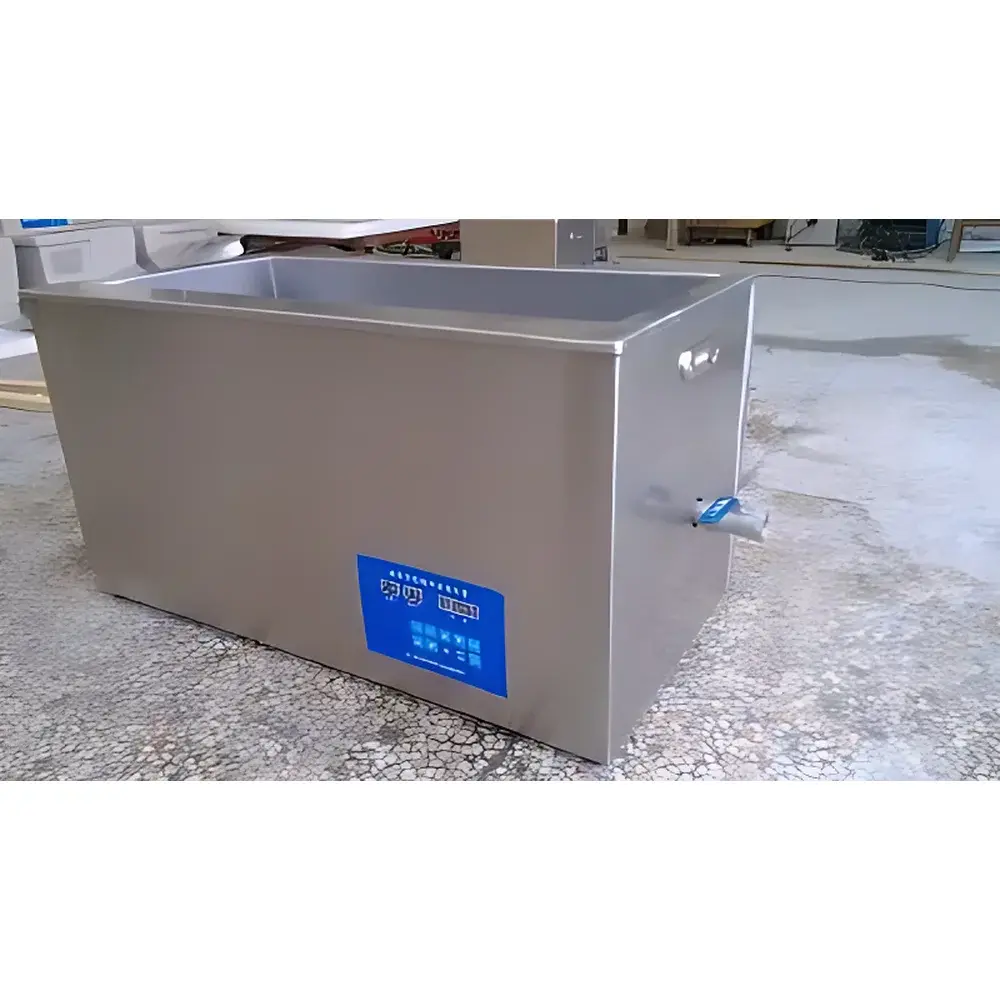
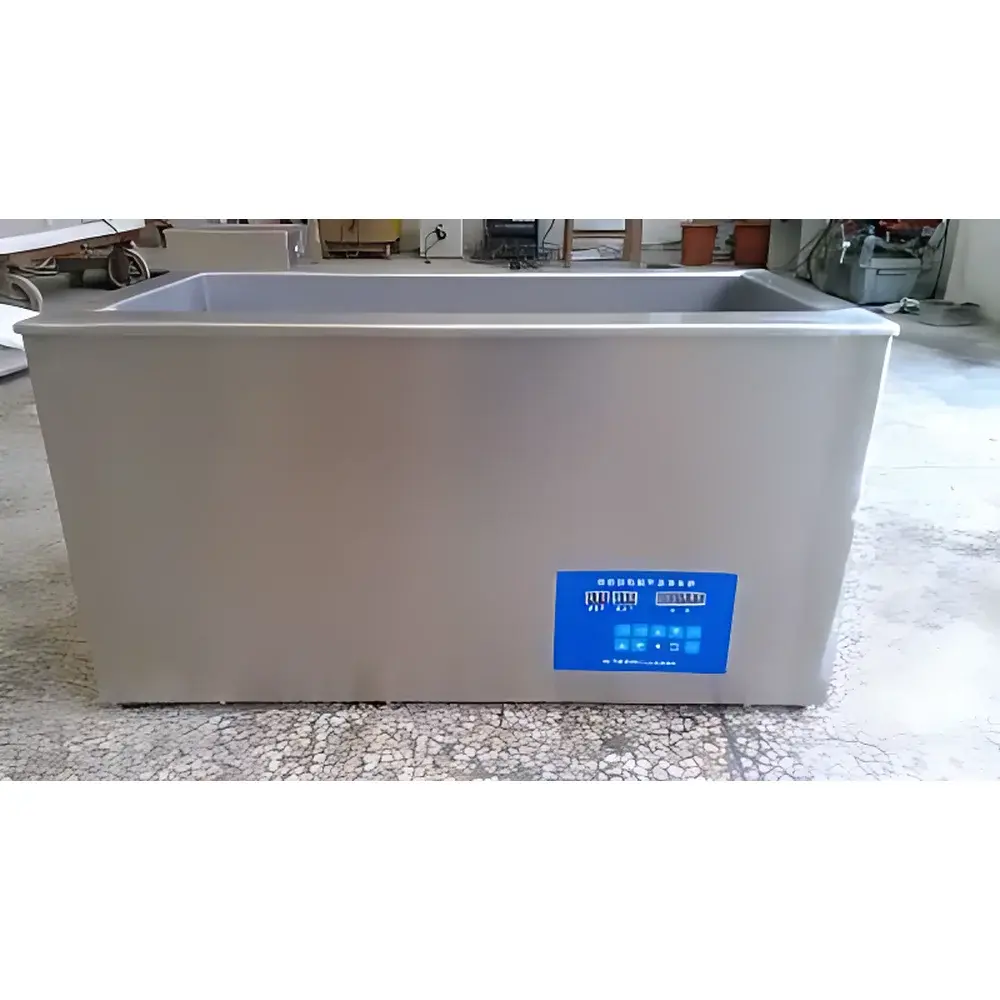
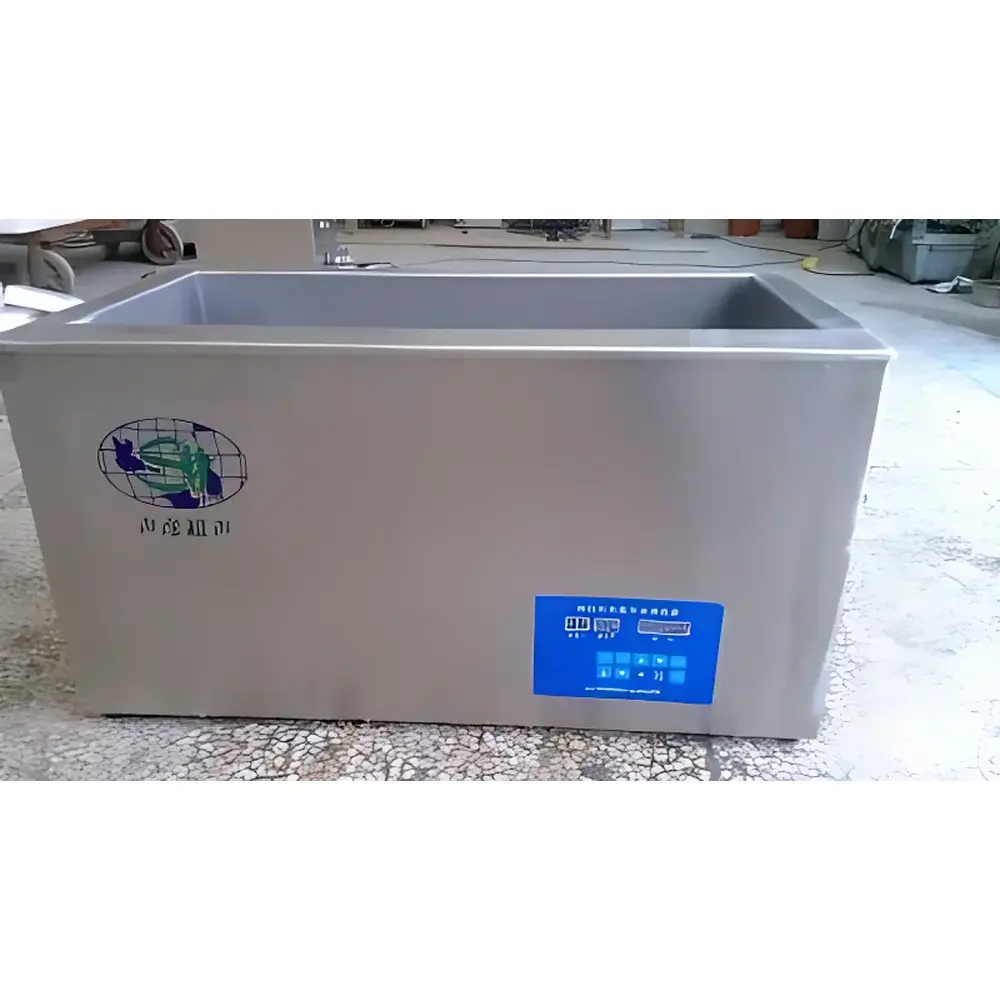
SYC Sycs SCQ-8201E Dual-Frequency Adjustable-Power Ultrasonic Cleaner
| Brand | SYC Sycs |
|---|---|
| Origin | Shanghai, China |
| Model | SCQ-8201E |
| Tank Capacity | 22.5 L |
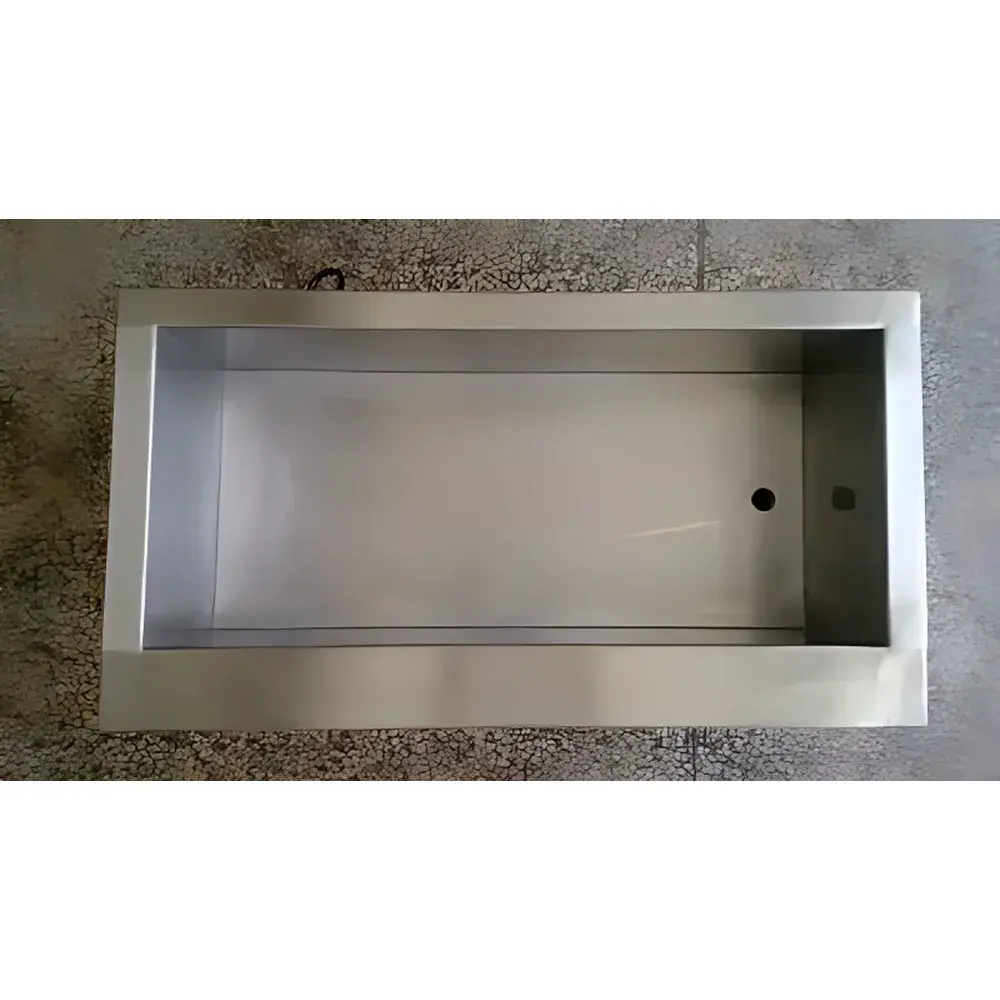
| Internal Tank Dimensions | 500 × 300 × 150 mm |
| Ultrasonic Frequencies | 25 kHz / 28 kHz / 40 kHz / 60 kHz / 80 kHz / 100 kHz (single-frequency selection per operation) |
| Ultrasonic Power Output | 500 W |
| Power Adjustment Range | 10–100% (continuously variable) |
| Heating Power | 1200 W |
| Temperature Control Range | Ambient to 100 °C |
| Timer Range | 1–600 min |
| Insulated Lid | Yes |
| Manual Fill/Drain | Yes |
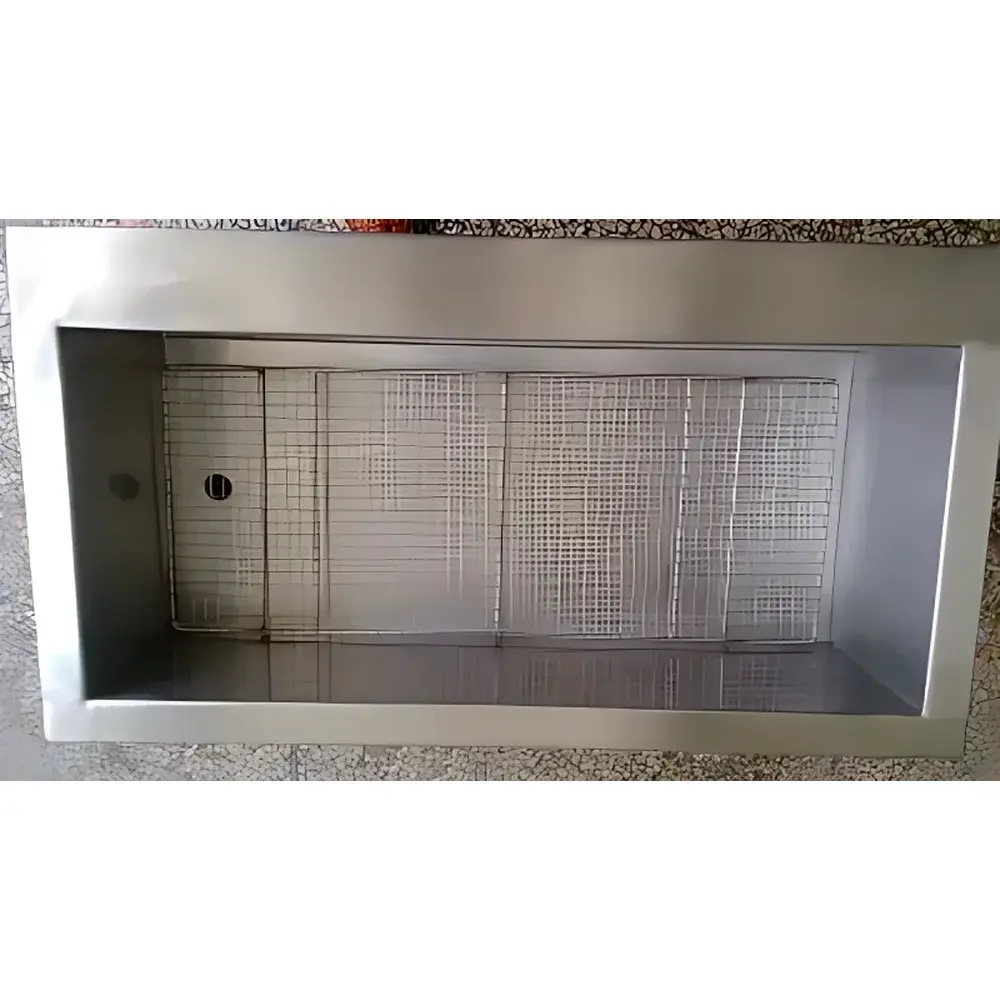
| Construction Material | SUS304 stainless steel tank and basket |
| Safety Features | Overheat protection, overload protection, dry-run alarm (activated when water level is insufficient) |
Overview
The SYC Sycs SCQ-8201E is a laboratory-grade dual-frequency adjustable-power ultrasonic cleaner engineered for reproducible, high-efficiency cleaning across diverse sample types and contamination profiles. It operates on the principle of acoustic cavitation—where high-frequency sound waves generate transient microbubbles in liquid media that collapse violently upon implosion, producing localized shockwaves and microstreaming forces capable of dislodging particulate matter, organic residues, biofilms, oxides, and lubricants from complex geometries. Unlike fixed-frequency units, the SCQ-8201E allows users to select one of six discrete ultrasonic frequencies (25, 28, 40, 60, 80, or 100 kHz) depending on application requirements: lower frequencies (e.g., 25–28 kHz) deliver higher cavitation intensity suited for robust industrial parts with heavy oil, rust, or carbon deposits; higher frequencies (e.g., 60–100 kHz) provide finer, more uniform energy distribution ideal for delicate optics, semiconductor wafers, microfluidic devices, and biological samples where surface integrity must be preserved. Its 22.5 L capacity and SUS304 stainless steel construction support routine QC/QA workflows in regulated environments—including pharmaceutical manufacturing, medical device reprocessing, and analytical sample preparation.
Key Features
- Multi-frequency flexibility: Six selectable frequencies (25/28/40/60/80/100 kHz) optimized for varying substrate hardness, contaminant adhesion strength, and part geometry.
- Precise power control: Continuous 10–100% ultrasonic power adjustment enables method optimization without compromising transducer longevity or solution stability.
- Integrated heating system: 1200 W heater with ±1 °C temperature stability across 0–100 °C range supports temperature-enhanced cleaning protocols (e.g., enzymatic digestion, solvent-assisted degreasing).
- Programmable timer: Digital 1–600 minute timer with auto-shutdown ensures process repeatability and operator safety.
- Safety-engineered architecture: Dry-run detection prevents transducer damage during low-fluid conditions; thermal cutoff and current-limiting circuitry comply with IEC 61000-6-3 EMC and IEC 61010-1 safety standards.
- Acoustically damped enclosure: Removable insulated lid reduces airborne noise to ≤65 dB(A) at 1 m distance, meeting ISO 7779 requirements for laboratory ambient noise control.
- Corrosion-resistant construction: Full SUS304 stainless steel tank, basket, and rack—distinct from industry-standard SUS201/SUS202—ensures compatibility with aggressive solvents (e.g., isopropanol, acetone, alkaline detergents) and long-term resistance to pitting and stress corrosion cracking.
Sample Compatibility & Compliance
The SCQ-8201E accommodates a broad spectrum of sample formats: glassware (vials, flasks, cuvettes), metal components (surgical instruments, precision gears), optical elements (lenses, prisms), electronic assemblies (PCBs, connectors), and porous substrates (filters, membranes). Its design supports cleaning validation per ASTM D4169, ISO 15883-1 (for washer-disinfectors), and USP “Ultrasonic Cleaning.” While not classified as a medical device under FDA 21 CFR Part 820, it meets GLP/GMP-aligned operational criteria when integrated into documented cleaning SOPs—including traceable parameter logging (via optional RS232/USB interface), audit-ready cycle records, and compatibility with IQ/OQ/PQ qualification packages. All electrical components adhere to RoHS 2011/65/EU and CE marking directives.
Software & Data Management
The SCQ-8201E features an embedded microcontroller-based interface with LED display and tactile membrane keys. Though standalone by default, it supports external data acquisition via RS232 serial port (optional adapter) for integration into LabVantage, Thermo Fisher SampleManager, or custom LIMS platforms. Parameter settings—including frequency selection, power level, temperature setpoint, and duration—are retained in non-volatile memory after power cycling. For regulated laboratories, optional firmware upgrade enables timestamped event logging (start/stop, fault codes, temperature deviations) compliant with FDA 21 CFR Part 11 requirements when paired with validated third-party software and electronic signature modules.
Applications
- Pharmaceutical: Pre-sterilization cleaning of glass vials, stoppers, and stainless-steel reactors per USP and .
- Medical device reprocessing: Removal of blood residue, tissue debris, and bioburden from endoscopes, laparoscopic tools, and orthopedic implants prior to autoclaving.
- Electronics manufacturing: Residue removal from SMT assemblies, wafer carriers, and MEMS sensors without damaging fine-pitch interconnects.
- Materials science: Degassing of nanoparticle suspensions, dispersion of CNTs/graphene in solvents, and surface activation of polymer substrates prior to coating.
- Analytical chemistry: Decontamination of HPLC autosampler vials, GC liners, and ICP-MS nebulizers to minimize carryover and spectral interference.
- Research labs: Cell culture flask cleaning, electrophoresis comb decontamination, and TEM grid preparation requiring particle-free surfaces.
FAQ
What frequency should I select for cleaning delicate optical lenses?
For optical components, 60–100 kHz is recommended to minimize surface pitting while maintaining effective particulate removal.
Does the unit support continuous operation over multiple cycles?
Yes—thermal management and duty-cycle-rated transducers allow uninterrupted operation up to 8 hours per day under nominal load conditions.
Can I use flammable solvents such as acetone or ethanol in this cleaner?
No. The SCQ-8201E is rated for aqueous and mild detergent solutions only. Flammable solvents require explosion-proof certified units (e.g., Class I, Division 1 rated enclosures).
Is the heating function independent of ultrasonic activation?
Yes—temperature can be set and maintained without concurrent ultrasonic output, enabling controlled pre-wetting or post-cleaning rinse stabilization.
How often should the transducers be serviced or replaced?
Under normal use with deionized or distilled water and periodic descaling, transducer service life exceeds 10,000 operating hours. Visual inspection for delamination or ceramic chip cracks is advised annually.



