
Sykam S-150 Ion Chromatograph
| Brand | Sykam |
|---|---|
| Origin | Germany |
| Model | S-150 |
| Instrument Type | Laboratory |
| Pump Pressure Range | 0–40 MPa |
| Flow Rate Range | 0.000–10.000 mL/min |
| Eluent Flow Rate Range | 0.000–10.000 mL/min |
| Maximum Operating Pressure | 35 MPa |
| Operating Temperature Range | 5–35 °C |
| Temperature Reproducibility | ±0.01 °C |
| Eluent Concentration Range | Application-dependent (compatible with common carbonate/bicarbonate, hydroxide, methanesulfonic acid, and other IC eluents) |
Overview
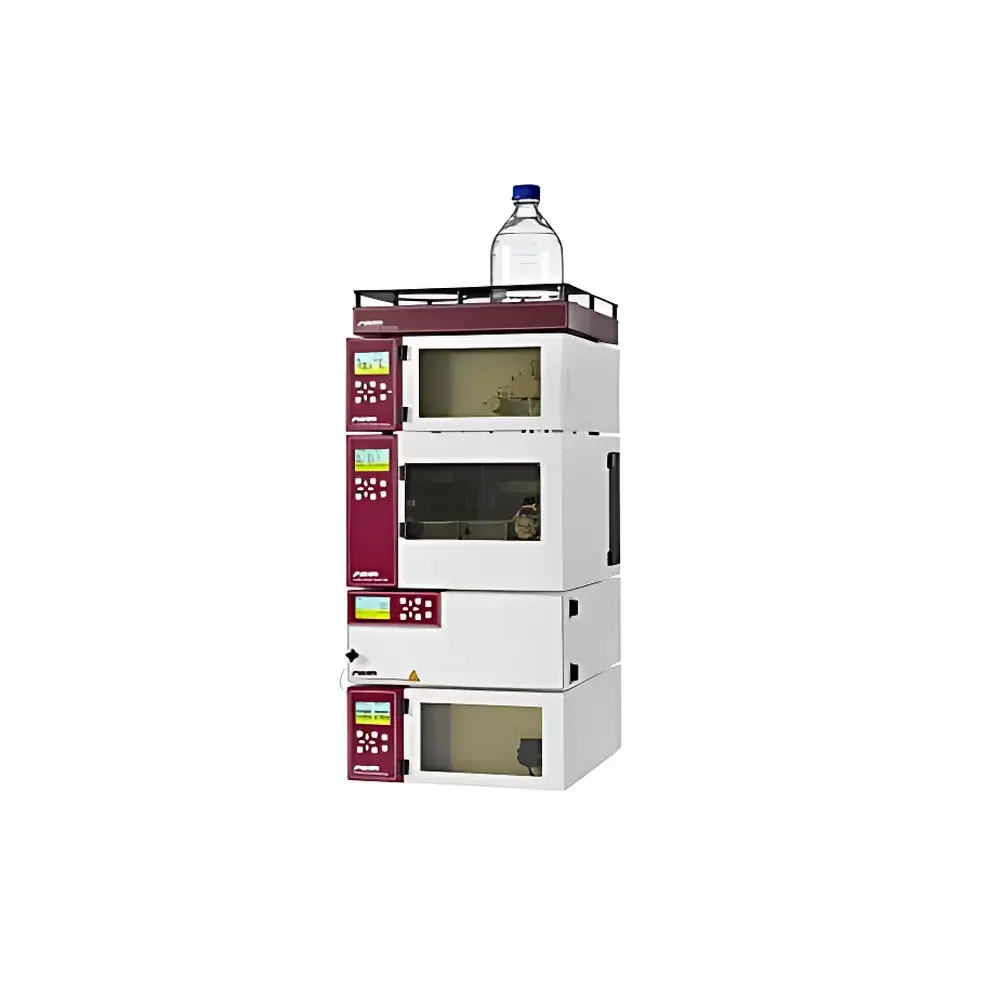
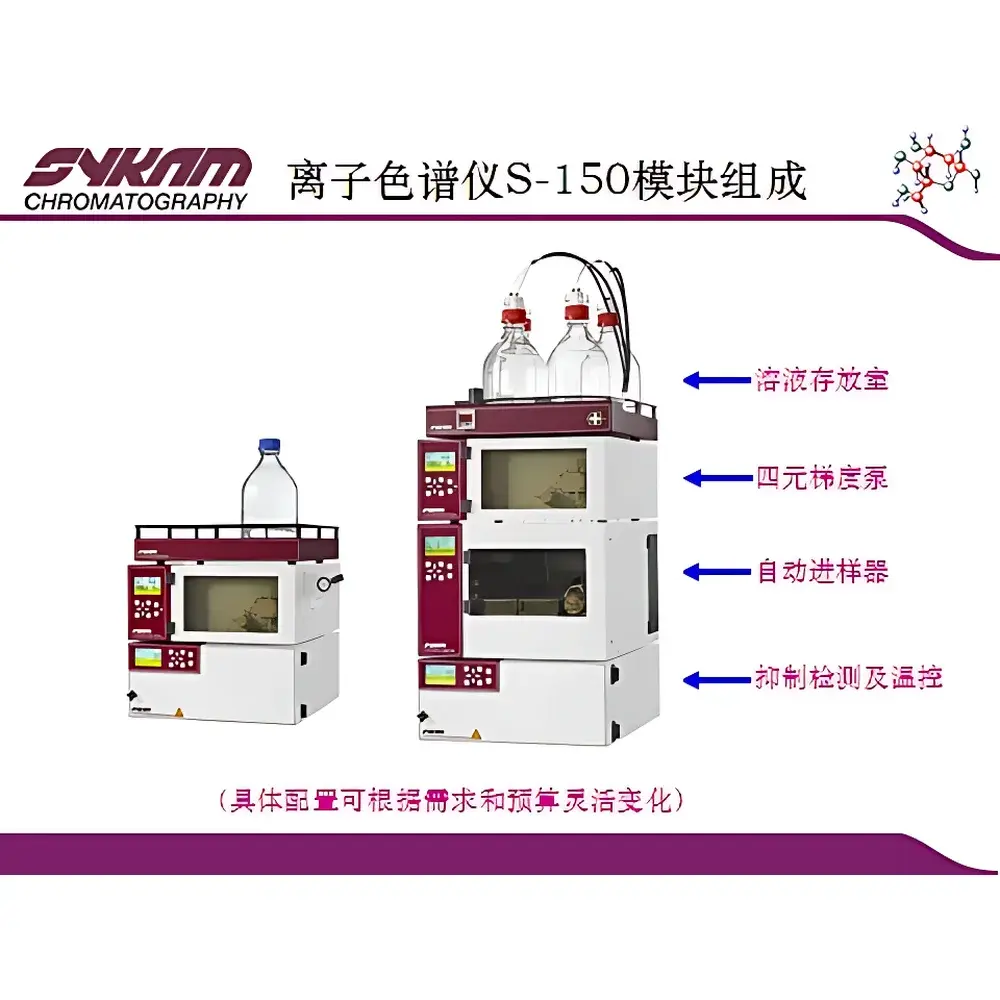
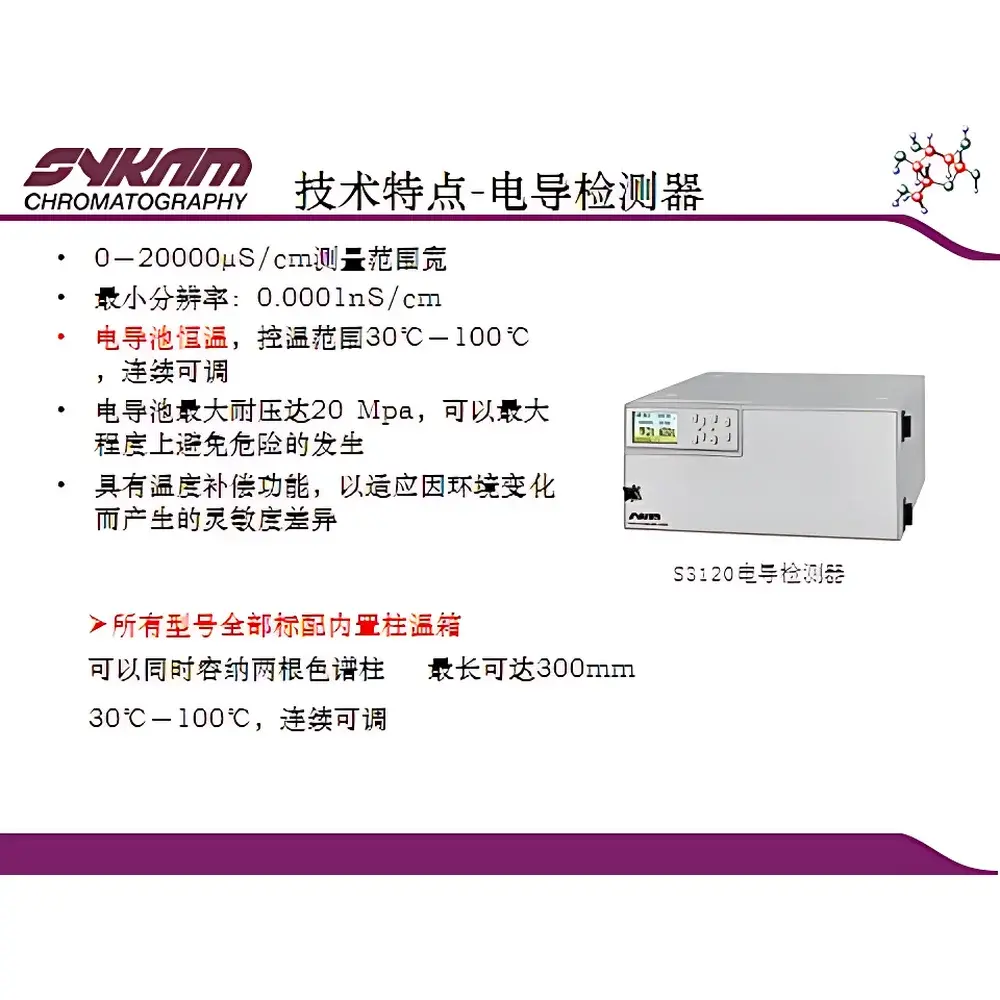
The Sykam S-150 Ion Chromatograph is a modular, compact, high-precision analytical system engineered for routine and advanced anion and cation analysis in regulated and research laboratories. Based on suppressed conductivity detection and utilizing continuous electrochemical regeneration of tubular membrane suppressors, the S-150 delivers exceptional sensitivity, baseline stability, and quantitative reproducibility—particularly critical for low-concentration analytes such as fluoride, chloride, nitrate, sulfate, sodium, potassium, calcium, and magnesium. Its integrated column oven maintains precise thermal control (±0.01 °C) across the guard column, analytical column, and detector cell, ensuring retention time stability and minimizing drift during extended sequences. The system employs PEEK-based dual-piston, short-stroke pumps with ultra-low pulsation (<0.1% RSD), enabling stable flow delivery across the full 0.000–10.000 mL/min range—even at elevated backpressures up to 35 MPa. Designed for compatibility with both single-column (non-suppressed) and suppressed IC methodologies, the S-150 supports flexible method development without hardware reconfiguration.
Key Features
- Integrated column oven with active temperature control (5–35 °C, ±0.01 °C reproducibility) for guard column, separation column, and conductivity cell
- Tubular automatic continuous regeneration membrane suppressor—no external regenerant required, no electrolytic current interference, dry-tolerant, pressure-rated up to 35 MPa
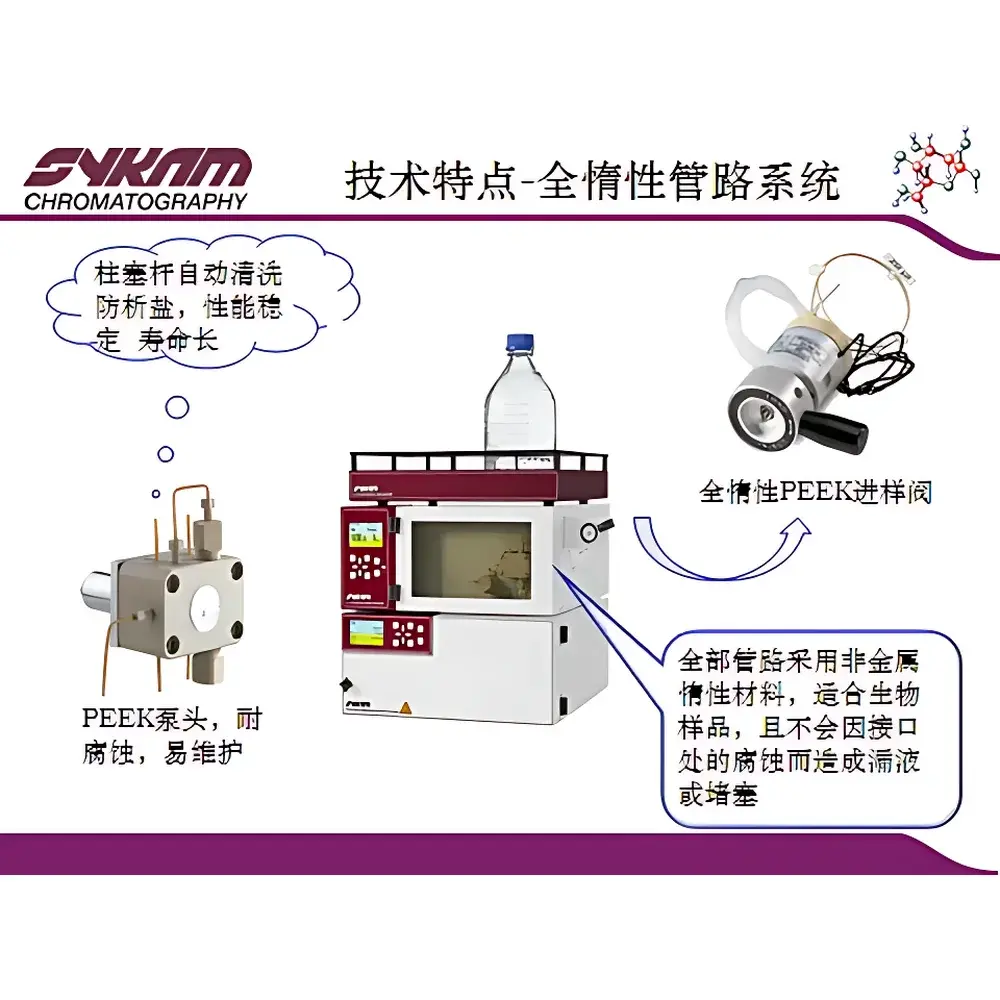
- Chemically inert PEEK pump head with dual-piston short-stroke design; flow accuracy ±0.1% RSD over 0.001–10.000 mL/min
- Standard vacuum degasser, automatic piston seal wash module, and full-flow-path PEEK/PEEK-lined components for long-term chemical compatibility
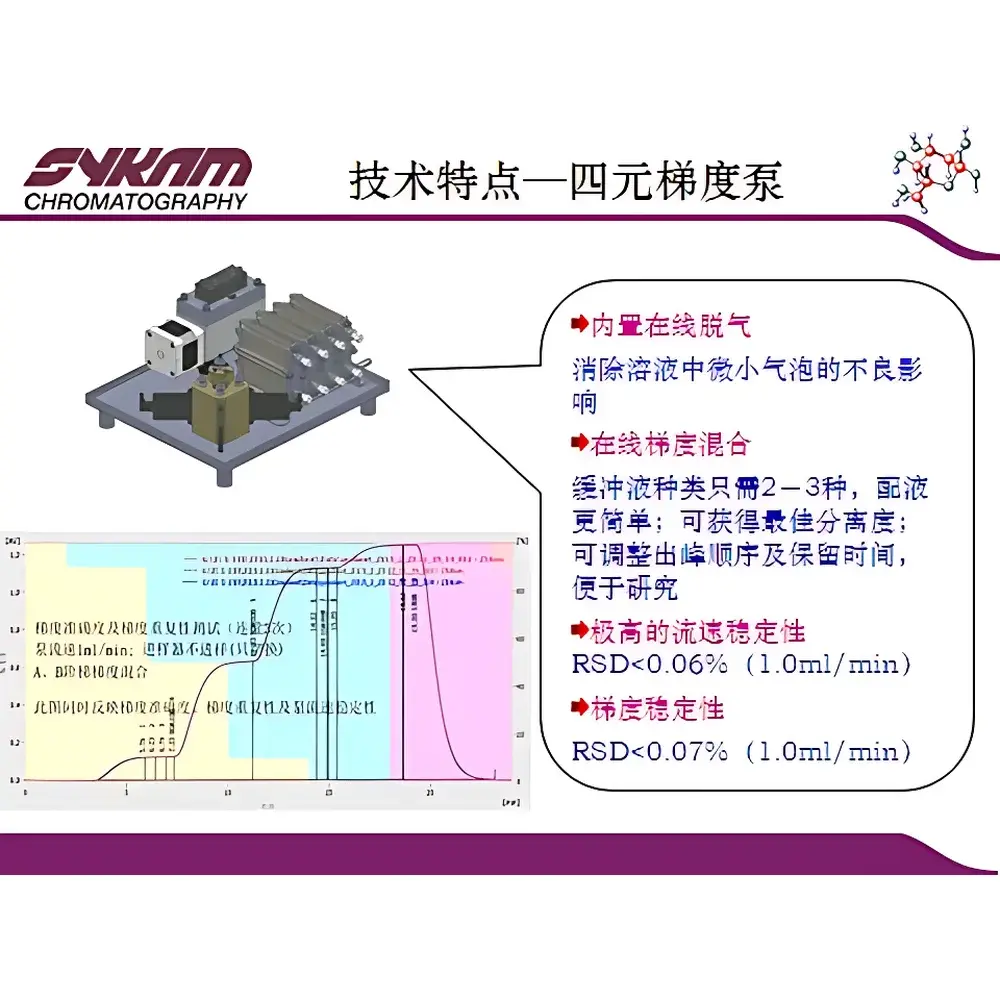
- Gradient capability via optional binary high-pressure mixing module (RSD < 0.07% for gradient composition)
- Overpressure protection system with automatic pressure-relief valve safeguarding suppressor membrane integrity
- Conductivity detector with wide linear dynamic range (>10⁴), low noise (95%)
Sample Compatibility & Compliance
The S-150 accommodates aqueous samples across environmental, pharmaceutical, food, and industrial quality control applications—including drinking water, wastewater, pharmaceutical excipients, battery electrolytes, and semiconductor process chemicals. It complies with key international standards for ion analysis, including ASTM D4327 (anions in water), ISO 10304-1 (determination of dissolved anions), USP (conductivity of purified water), and EPA Methods 300.0, 300.1, and 317.0. All hardware and software components support GLP/GMP workflows: audit-trail-enabled data acquisition, user-access controls, electronic signatures (per FDA 21 CFR Part 11 when paired with validated software configuration), and instrument calibration logging with timestamped metadata.
Software & Data Management
Control and data processing are managed via Sykam’s proprietary ChromoStar® software—a Windows-based, graphical interface supporting method creation, sequence definition, real-time chromatogram visualization, peak integration, and automated report generation. Templates enable consistent formatting across batches; each sequence handles ≥100 samples with auto-injection scheduling, retention time locking, and system suitability checks (e.g., resolution, tailing factor, %RSD of area). Raw data files (.chd) are stored in vendor-neutral formats compatible with third-party chemometric tools. Software supports export to CSV, PDF, and XML for LIMS integration and regulatory submission packages. Optional modules include compliance-ready e-signature workflows, electronic lab notebook (ELN) synchronization, and automated calibration curve validation per ICH Q2(R2).
Applications
- Environmental monitoring: Quantification of F⁻, Cl⁻, NO₂⁻, NO₃⁻, PO₄³⁻, SO₄²⁻, Br⁻, and AsO₄³⁻ in surface water, groundwater, and effluent per EPA and EU WFD requirements
- Pharmaceutical QC: Counter-ion profiling (Na⁺, K⁺, Ca²⁺, Mg²⁺) in APIs and excipients; residual acetate or citrate in biologics formulations
- Food & beverage safety: Nitrite/nitrate in cured meats; sulfite in wines; phosphate additives in dairy products
- Electrolyte analysis: Li⁺, Na⁺, K⁺, NH₄⁺, and anions in lithium-ion battery electrolytes and fuel cell membranes
- High-sensitivity trace analysis: Sub-ppb detection of halides and oxyanions using optional online preconcentration module
- Multi-detection workflows: Integration with UV/Vis (190–800 nm) or pulsed amperometric detection (PAD) for carbohydrates, cyanide, or transition metals after post-column derivatization
FAQ
What suppressor technology does the S-150 use, and how does it differ from traditional resin-based suppressors?
The S-150 employs a tubular, continuously regenerated membrane suppressor—electrochemically driven with no external regenerant acid/base required. Unlike packed-bed suppressors, it eliminates electrolyte carryover, avoids pressure spikes during regeneration cycles, and exhibits superior longevity (>5,000 injections) under variable eluent concentrations.
Can the S-150 perform gradient elution, and what is its gradient precision?
Yes—when equipped with the optional binary high-pressure gradient module, the system achieves gradient composition repeatability of <0.07% RSD, enabling robust separation of complex matrices such as mixed organic/inorganic anion samples or multi-cation systems.
Is the S-150 compliant with 21 CFR Part 11 for electronic records and signatures?
The hardware platform is inherently Part 11–capable; full compliance requires deployment of validated ChromoStar® software with configured audit trails, role-based access control, and electronic signature enforcement—validated per laboratory-specific SOPs.
What maintenance intervals are recommended for the pump and suppressor?
Pump seals require inspection every 6 months under typical use; suppressor lifetime exceeds 2 years with standard carbonate eluents and proper filtration (0.22 µm inline filter mandatory). No periodic electrolyte refills or membrane drying precautions are needed.
Does the system support unattended operation overnight or over weekends?
Yes—the S-150 supports fully automated sequences with temperature-stabilized column oven, integrated autosampler cooling (optional), and fault-tolerant error handling (e.g., pressure shutdown, leak detection, flow interruption recovery).




