
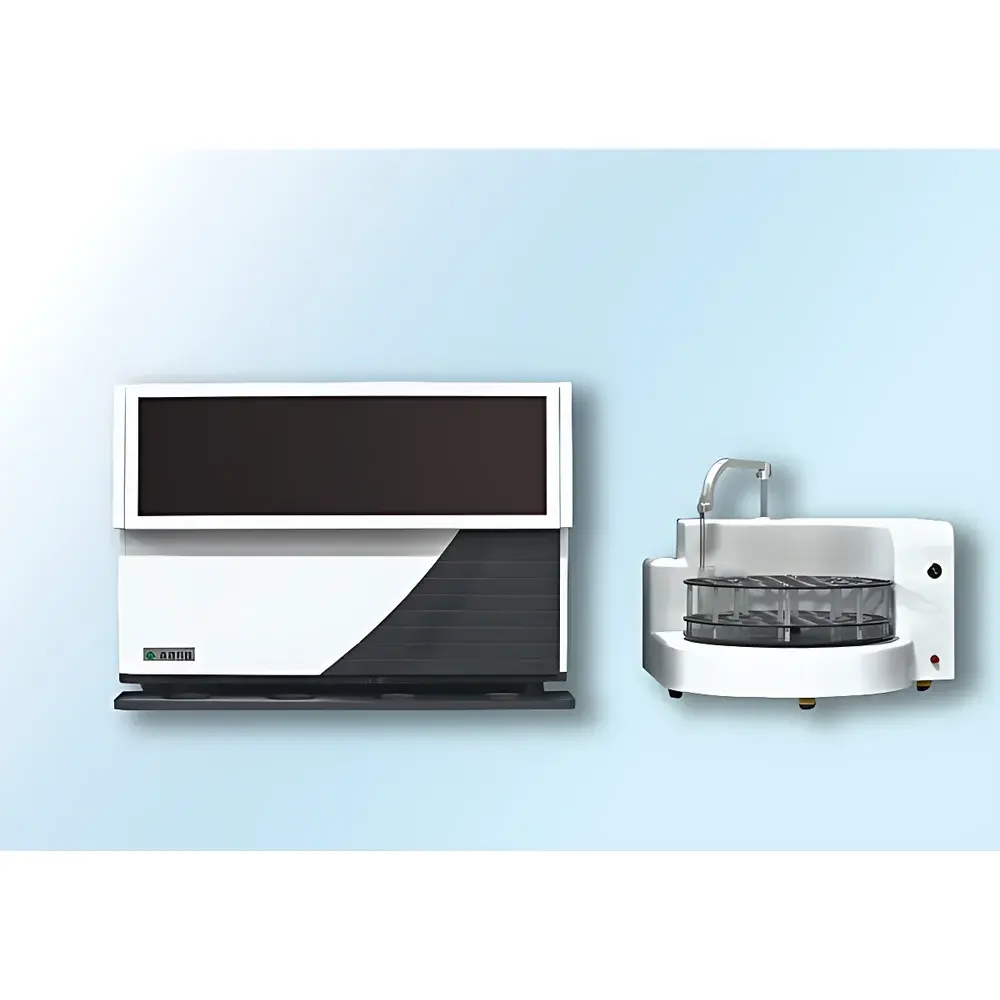
Synpec GMA3500 Gas Phase Molecular Absorption Spectrometer
| Brand | Synpec |
|---|---|
| Origin | Shanghai, China |
| Manufacturer Type | Direct Manufacturer |
| Model | GMA3500 |
| Detector | Photomultiplier Tube (PMT) |
| Wavelength Range | 190–900 nm |
| Spectral Bandwidth | 0.1 / 0.2 / 0.4 / 0.7 / 1.0 / 2.0 nm (6-step auto-switching) |
| Wavelength Accuracy | ±0.1 nm |
| Wavelength Repeatability | ±0.1 nm |
Overview
The Synpec GMA3500 Gas Phase Molecular Absorption Spectrometer is a fully automated analytical instrument engineered for trace-level quantification of nitrogen- and sulfur-containing species—and select heavy metals—in aqueous matrices using gas-phase molecular absorption spectroscopy (GPMAS). Unlike conventional liquid-phase UV-Vis spectrometers, the GMA3500 converts target analytes—such as ammonia, nitrate, nitrite, Kjeldahl nitrogen, total nitrogen, sulfide, and mercury—into volatile molecular forms (e.g., NH3, NO, NO2, H2S, Hg0) via controlled chemical derivatization. These gaseous species are then swept into a long-path, temperature-stabilized optical cell where absorbance is measured at characteristic UV–Vis wavelengths. This phase-separation strategy eliminates matrix interferences from turbidity, color, or suspended solids, delivering high specificity and low detection limits in complex environmental and industrial water samples.
Key Features
- Patented extended-path absorption cell: Optimized optical path length enhances sensitivity and lowers method detection limits (MDLs) by up to 3× compared to standard configurations.
- Dual-beam energy compensation system: Maintains photometric stability over extended operation (>180 min), enabling reliable unattended analysis and supporting integration into continuous monitoring workflows.
- Fiber-optic lamp alignment: Simplifies element lamp positioning and improves long-term wavelength reproducibility (±0.1 nm).
- Integrated thermal control: TCS (Thermal Control System) maintains reaction and detection zone temperatures within ±0.5 °C, critical for kinetic consistency across sequential analyses.
- EPC-driven gas regulation: Electronic Pressure Control ensures sub-second (<1 s) response during carrier gas (N2) flow modulation—essential for precise purge-and-trap timing and VOC interference suppression.
- 45+ position autosampler: Removable PTFE-coated sample tray with 50 mL capacity per vial; random-access sampling logic eliminates sequential constraints; 4-directional needle rinsing prevents carryover.
- Onboard reagent handling: Automated dilution (up to 40×), online UV digestion (for total nitrogen; ~5 min/sample), and programmable solution preparation (50–1000 mL) with temperature-compensated volumetric accuracy.
Sample Compatibility & Compliance
The GMA3500 is validated for regulatory compliance with multiple Chinese Ministry of Ecology and Environment (MEE) standard methods—including HJ/T 195–2005 (ammonia-N), HJ/T 196–2005 (Kjeldahl N), HJ/T 197–2005 (nitrite-N), HJ/T 198–2005 (nitrate-N), HJ/T 199–2005 (total N), and HJ/T 200–2005 (sulfide)—as well as GB/T 7468–87 (mercury). Its design supports GLP/GMP-aligned workflows: audit trails, electronic signatures, and data integrity safeguards align with FDA 21 CFR Part 11 requirements when deployed with compliant software configuration. The instrument accommodates raw surface water, wastewater effluents, drinking water, industrial process streams, soil leachates, and marine samples without pre-filtration in most cases—provided organic load remains within digestion capacity.
Software & Data Management
The GMA3500 operates under a dedicated Windows-compatible application (XP/7/10/11) providing full remote instrument orchestration. Software modules support real-time feedback control of temperature zones, EPC pressure profiles, autosampler sequencing, and UV digestion cycles. Quantitative outputs include instantaneous absorbance, peak height, peak area, and integrated signal values—with selectable 4- or 5-digit resolution for trace-level applications. Calibration routines implement linear regression, polynomial curve fitting, and multi-point standard addition. All spectra and numerical results are stored with timestamped metadata; reports export natively to Excel (.xlsx) or Word (.docx) formats. Optional audit trail logging records user actions, parameter changes, and calibration events—supporting ISO/IEC 17025 laboratory accreditation requirements.
Applications
Primary deployment domains include municipal drinking water treatment plants (compliance monitoring per GB 5749), environmental monitoring stations (surface water, groundwater, estuarine systems), wastewater treatment facilities (influent/effluent nutrient tracking), petrochemical refineries (cooling water sulfide control), pharmaceutical manufacturing (cleaning validation, rinse water testing), food & beverage QC labs (nitrate in irrigation water, sulfide in seafood processing effluents), and academic research laboratories investigating biogeochemical nitrogen cycling. The system’s ability to resolve co-occurring nitrogen species—e.g., simultaneous ammonia-N and nitrite-N from a single injection—reduces sample volume demand and analytical turnaround time in high-throughput settings.
FAQ
Does the GMA3500 require hazardous digestion reagents such as persulfate or strong acid at elevated temperature?
No. Total nitrogen determination uses a low-pressure, ambient-temperature UV/persulfate catalytic digestion module—eliminating autoclave use, high-pressure vessels, and associated safety protocols.
Can the instrument quantify both ammonia-N and nitrite-N in one run without manual intervention?
Yes. Method sequencing enables dual-species measurement from a single sample introduction, leveraging differential derivatization chemistry and wavelength-specific detection.
Is the autosampler compatible with standard 50-mL polypropylene or glass vials?
Yes. The tray accepts ANSI/SLAS-compliant 50-mL tubes; custom adapters accommodate alternative formats upon request.
What maintenance intervals are recommended for the PMT detector and gas delivery system?
PMT gain calibration is advised every 6 months; EPC valves and N2 filters require inspection quarterly. Full optical alignment verification is recommended annually or after instrument relocation.
Does the system support remote diagnostics and firmware updates?
Yes. Secure TCP/IP connectivity enables encrypted remote access for troubleshooting, parameter adjustment, and over-the-air firmware upgrades—subject to network security policy approval.






