
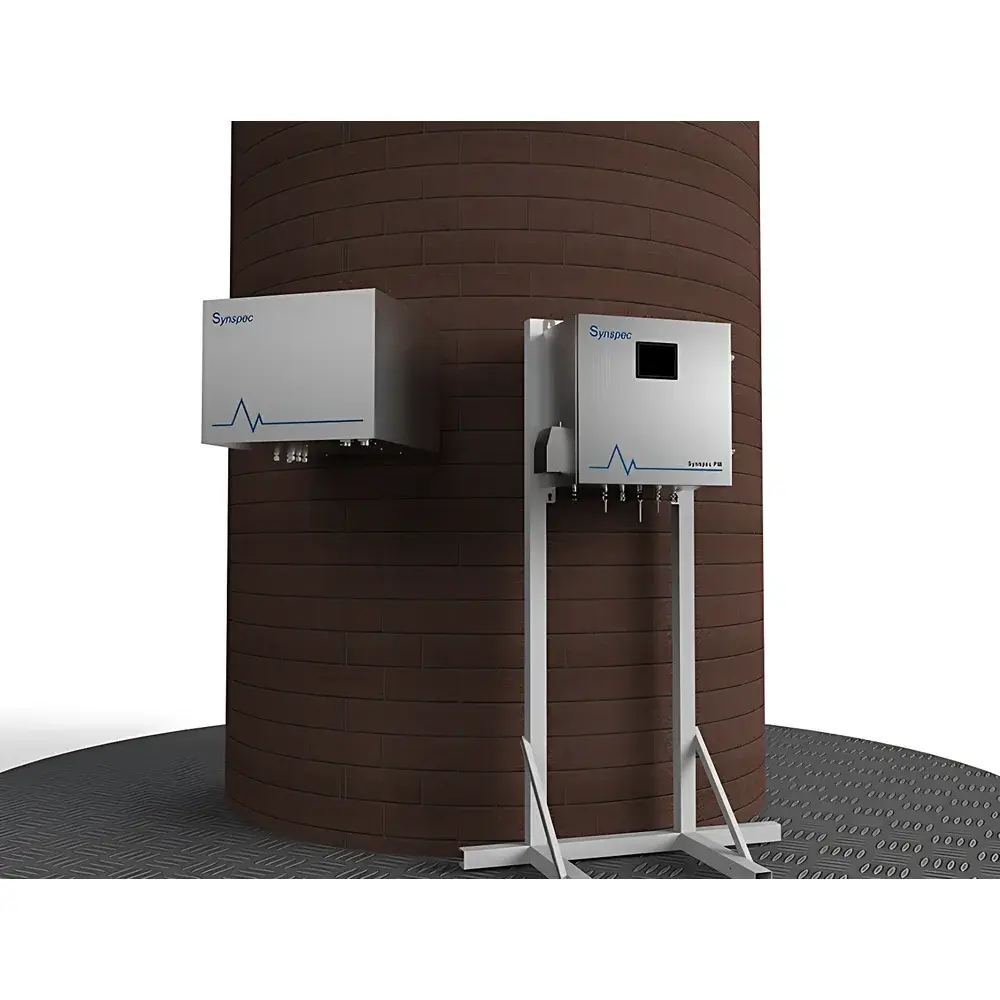
Synspec PM Series Particulate Matter Online Monitoring System
| Origin | Netherlands |
|---|---|
| Manufacturer Type | Authorized Distributor |
| Origin Category | Imported |
| Model | PM Series |
| Pricing | Upon Request |
| Measurement Principle | Extractive Nephelometry (Scattered Light Detection) |
| Measurable Parameters | Mass Concentration of Ambient and Flue Gas Particulate Matter (PM₁₀, PM₂.₅, TSP) |
| Detection Limit | 0.1 µg/m³ (as PM₁₀ equivalent) |
| Sampling Method | Heated Extractive Probe with Return-Line Conditioning |
| Optical Maintenance | Purge-Gas–Assisted Lens Cleaning |
| Calibration | In-Situ Auto-Zero and Span Calibration via Patented Reference Path Technology |
| Compliance | Designed to meet EN 15267-3, EN 14181 (QAL1/QAL2), and EPA Method 9/PS-11 requirements for continuous emission monitoring systems (CEMS) |
Overview
The Synspec PM Series Particulate Matter Online Monitoring System is a high-sensitivity, extractive nephelometric analyzer engineered for continuous, real-time measurement of low-concentration particulate matter in flue gas streams—particularly downstream of wet flue gas desulfurization (WFGD) and wet electrostatic precipitators (WESPs) in coal-fired power plants. Unlike optical opacity or beta attenuation methods, the Synspec PM Series employs a precisely calibrated, temperature-controlled extractive scattering principle: a representative sample stream is drawn through a heated probe (maintained above dew point), conditioned via a return-line heating system to prevent condensation, and delivered to a dual-wavelength (e.g., 650 nm and 850 nm) scattering chamber. The angularly resolved scattered light intensity is converted into mass concentration using Mie theory-based calibration curves traceable to NIST-traceable aerosol standards. This architecture ensures stable performance under high-relative-humidity conditions (>90% RH) without signal drift due to water droplet interference—a critical requirement for ultra-low-emission compliance monitoring in China and EU CEM regimes.
Key Features
- Extractive heated sampling system with integrated return-line thermal management, maintaining sample temperature ≥120 °C throughout transport to eliminate condensation and wall loss artifacts.
- Dual-wavelength nephelometric detection (650 nm + 850 nm) enabling compensation for particle size distribution effects and improved specificity for fine-mode aerosols (PM₂.₅).
- Patented in-situ auto-calibration technology: zero-point verification via clean-air purge cycle; span validation using certified reference aerosol injection at full optical path—no manual intervention required.
- Purge-gas–driven optical window cleaning mechanism (N₂ or instrument air), minimizing maintenance frequency and preserving long-term photometric stability (>12 months between service intervals).
- Compact modular chassis (W × D × H: 483 × 500 × 177 mm, weight <22 kg), designed for rack-mount or wall-mount installation in limited-space CEMS shelters.
- Embedded microprocessor with real-time diagnostics, fault logging, and self-test routines compliant with EN 14181 QAL3 requirements.
Sample Compatibility & Compliance
The Synspec PM Series is validated for use with flue gases containing up to 15% v/v moisture, SO₂ ≤ 2,000 mg/m³, NOₓ ≤ 1,000 mg/m³, and dust loading ≤ 50 mg/m³. It meets the functional specifications of EN 15267-3 for automated monitoring systems and supports QAL1 certification per EN 14181. Data output adheres to Modbus TCP and optional Profibus DP protocols, with analog outputs (4–20 mA) fully configurable for PM₁₀, PM₂.₅, or total suspended particulates (TSP). All firmware and data handling logic are structured to support audit-ready records under GLP/GMP and FDA 21 CFR Part 11 environments when integrated with validated SCADA platforms.
Software & Data Management
The system operates with Synspec’s embedded CEMS Manager software (v3.2+), providing local touchscreen interface and remote web-based access (HTTPS/TLS 1.2). Key capabilities include: real-time scatter signal visualization with spectral deconvolution overlays; automated calibration log generation with digital signature and timestamp; configurable alarm thresholds (e.g., >5 mg/m³ for ultra-low-emission alerts); and raw scatter intensity export in CSV/NetCDF format for third-party QA/QC validation. Audit trails record all user actions—including parameter changes, calibration events, and firmware updates—with immutable timestamps and operator ID linkage.
Applications
- Continuous emission monitoring (CEM) of particulate matter from coal-fired power plants post-WFGD/WESP.
- Compliance verification for national ultra-low-emission standards (e.g., China’s GB 13223–2011, EU BREF LCP Annex VIII).
- Process optimization in industrial boilers, cement kilns, waste incinerators, and iron & steel sintering lines.
- Research-grade ambient air quality monitoring where high temporal resolution (<60 s cycle time) and sub-µg/m³ detection are required.
- Stack testing support during periodic performance audits and QAL2 verification campaigns.
FAQ
What is the certified lower detection limit for this system under field conditions?
The verified method detection limit is 0.1 µg/m³ (PM₁₀-equivalent) at 1σ confidence level over a 1-hour averaging period, as demonstrated during QAL1 testing per EN 14181.
Does the system require periodic manual optical cleaning?
No—continuous purge-gas flow across optical surfaces eliminates routine manual cleaning; only annual inspection of purge filters and heater elements is recommended.
Can it be integrated into existing CEMS infrastructure with Siemens Desigo or Honeywell Experion?
Yes—Modbus TCP and optional Profibus DP gateways ensure seamless integration; configuration templates for major DCS/SCADA vendors are available upon request.
Is factory calibration traceable to international standards?
All factory calibrations are performed using NIST-traceable polydisperse PSL and ammonium sulfate aerosols, with uncertainty budgets documented per ISO/IEC 17025.
What environmental certifications does the enclosure meet?
The analyzer housing conforms to IP54 ingress protection and operates continuously within –20 °C to +50 °C ambient ranges, meeting IEC 61260 Class 1 and EN 61326-1 EMC requirements.







