
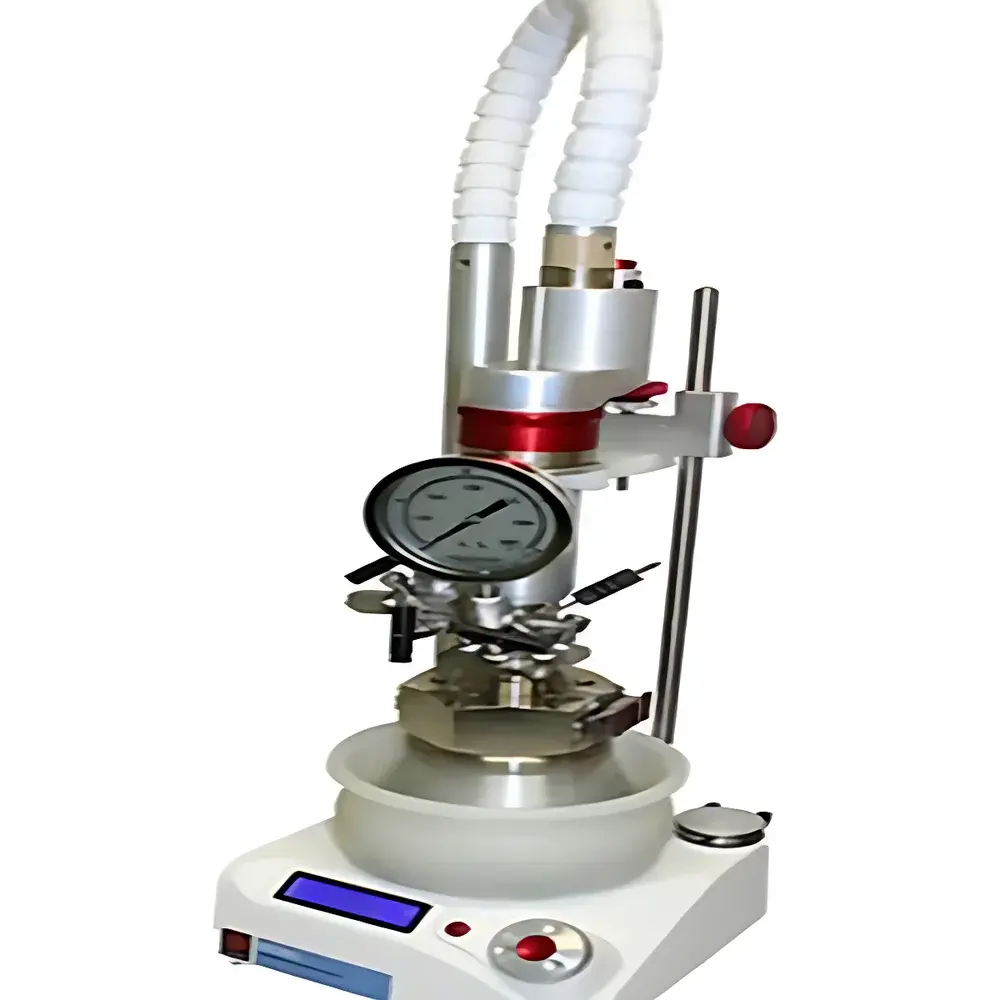
Syrris Atlas-sodium High-Temperature High-Pressure Reactor
| Brand | Syrris |
|---|---|
| Origin | United Kingdom |
| Model | Atlas-sodium |
| Vessel Capacities | 100, 160, 300, 450 mL |
| Construction Material | Stainless Steel 316 (standard), optional Hastelloy or Titanium |
| Maximum Operating Pressure | 200 bar |
| Maximum Temperature | 250 °C |
| Mechanical Stirring Speed | up to 800 rpm |
| Magnetic Stirring Speed | up to 1200 rpm |
| Pressure Control | Automated via integrated pressure control module |
| Gas Selection | Up to 3 gases, switchable via front panel or PC software |
| Safety Certification | PED 2014/68/EU and ASME Section VIII compliant |
| Data Logging | Real-time recording of temperature, pressure, stirring speed, gas selection status, and event timestamps |
Overview
The Syrris Atlas-sodium is a modular, benchtop high-temperature and high-pressure reactor system engineered for precise control of demanding synthetic and catalytic reactions under extreme process conditions. Based on the Couette-type stirred autoclave principle, it integrates robust pressure containment with active thermal management, programmable gas handling, and closed-loop process monitoring—enabling reproducible execution of reactions requiring elevated temperatures (up to 250 °C), pressures (up to 200 bar), and inert or reactive atmospheres. Its architecture conforms to the fundamental requirements of process intensification and reaction safety assessment, making it suitable for R&D laboratories in pharmaceutical, fine chemical, energy storage, and heterogeneous catalysis research where scalability, data traceability, and regulatory compliance are critical.
Key Features
- Modular reactor platform supporting interchangeable vessel sizes (100, 160, 300, and 450 mL) constructed from ASTM-certified stainless steel 316; optional Hastelloy C-276 or Grade 2 titanium vessels available for highly corrosive or halogenated media.
- Dual stirring configurations: high-torque mechanical stirring (0–800 rpm, with real-time torque feedback) and high-speed magnetic stirring (0–1200 rpm), both compatible with sealed high-pressure operation.
- Integrated heating/cooling capability via precision-controlled heating block or dry bath, enabling ramp rates from 0.1 to 10 °C/min and stable isothermal holds within ±0.5 °C.
- Automated pressure regulation using a dedicated pressure control module with fast-response solenoid valves and digital PID tuning; supports both constant-pressure mode and programmed pressure ramps.
- Gas selection module permitting sequential or simultaneous introduction of up to three pre-connected gases (e.g., N₂, H₂, CO, O₂, or custom mixtures) with timing resolution down to 1 second—fully programmable via front-panel interface or Syrris Atlas software.
- Comprehensive safety architecture including rupture disc protection, dual independent overtemperature cut-off circuits, pressure relief venting with user-definable thresholds, and full PED 2014/68/EU and ASME Section VIII Div. 1 certification.
Sample Compatibility & Compliance
The Atlas-sodium accommodates a broad range of liquid-phase, slurry-phase, and gas–liquid–solid multiphase reactions—including hydrogenations, oxidations, hydrothermal syntheses, supercritical fluid processing, and polymerization kinetics studies. All wetted components comply with FDA-relevant material standards (e.g., ASTM A240 for SS316), and surface finish meets ≤0.8 µm Ra for cleanability. The system supports GLP/GMP-aligned workflows through audit-trail-enabled software logging (21 CFR Part 11 compliant when deployed with Syrris’ validated software suite), and all pressure-containing parts undergo hydrostatic testing at 1.5× MAWP prior to shipment. Optional vacuum-rated variants (down to 60 mbar abs) and extended-temperature configurations (up to 350 °C) are available under custom engineering specifications.
Software & Data Management
The Syrris Atlas software provides a unified interface for experiment design, real-time supervision, and post-run analysis. It supports creation of multi-step protocols incorporating temperature ramps, pressure setpoints, gas switching events, stirring profiles, and timed sampling triggers. All process variables—including absolute pressure (±0.2% FS), vessel temperature (±0.3 °C), stirring speed (±1 rpm), and gas valve states—are time-stamped and logged at user-defined intervals (default: 1 Hz). Raw data exports to CSV or HDF5 format; trend visualization includes synchronized overlay of multiple parameters, derivative calculations (e.g., dP/dt), and event annotation. Software validation documentation (IQ/OQ/PQ templates) and electronic signature support are provided for regulated environments.
Applications
- Catalytic hydrogenation screening under controlled H₂ partial pressure and temperature gradients.
- Hydrothermal carbonization and biomass conversion studies requiring sustained subcritical water conditions.
- High-pressure kinetic investigations of CO₂ capture and utilization (CCU) reactions in amine-based solvents.
- Safety testing of exothermic reactions via adiabatic calorimetry (using optional heat-flow compensation mode).
- Development of metal–organic frameworks (MOFs) and covalent organic frameworks (COFs) under solvothermal conditions.
- Reaction calorimetry integration for enthalpy determination and thermal hazard evaluation (e.g., RC1-style analysis).
FAQ
What materials are approved for use with aggressive reagents such as HF or hot concentrated acids?
Standard SS316 vessels are unsuitable for hydrofluoric acid or hot chlorides. For such applications, Hastelloy C-276 or titanium Grade 2 vessels are recommended and supplied with compatible gasket materials (e.g., silver-jacketed graphite or PEEK encapsulated seals).
Can the Atlas-sodium perform automated liquid addition during a reaction?
Yes—via optional syringe pump modules or mass flow-controlled liquid dosing units, both fully integrated into the Atlas software timeline and synchronized with pressure/temperature events.
Is remote monitoring and control supported over Ethernet or Wi-Fi?
The system features a native Ethernet port and supports secure remote access via TLS-encrypted HTTP API; Wi-Fi operation requires an external industrial-grade bridge device conforming to IEEE 802.11ac standards.
How is calibration traceability maintained for pressure and temperature sensors?
All transducers are supplied with UKAS-accredited calibration certificates (traceable to NPL standards); field recalibration procedures and verification checklists are included in the maintenance manual.
Are explosion-proof versions available for Zone 1 hazardous area installation?
ATEX-certified variants (II 2G Ex db IIB T4 Gb) are available as factory-engineered options, including purged enclosures, intrinsically safe signal conditioning, and flameproof motor housings.



