
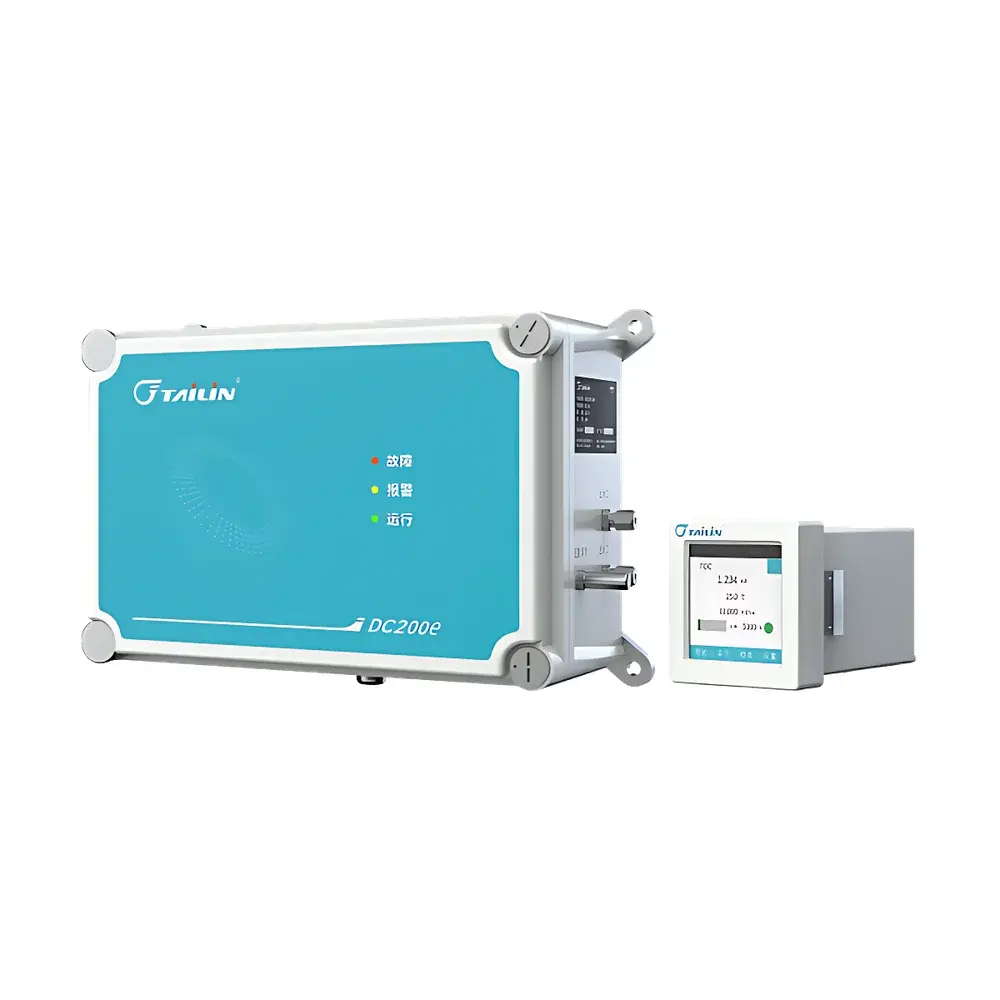
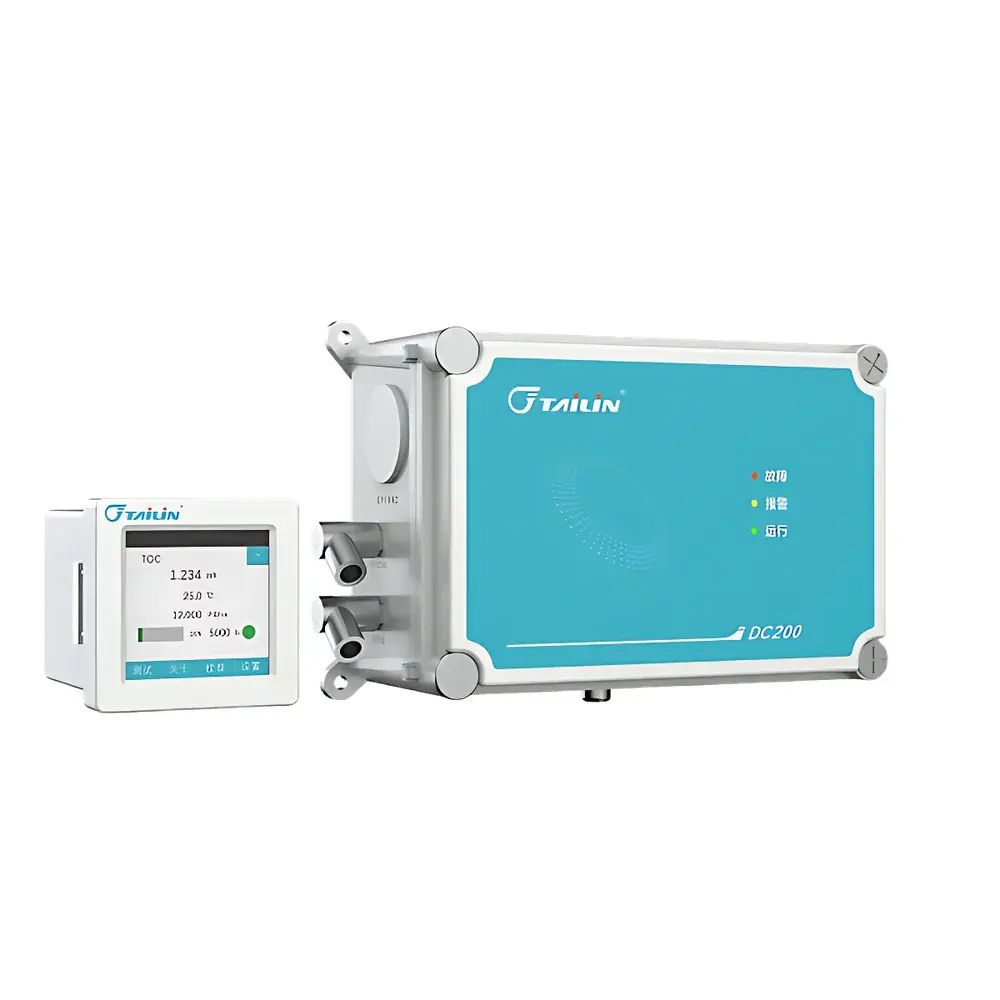
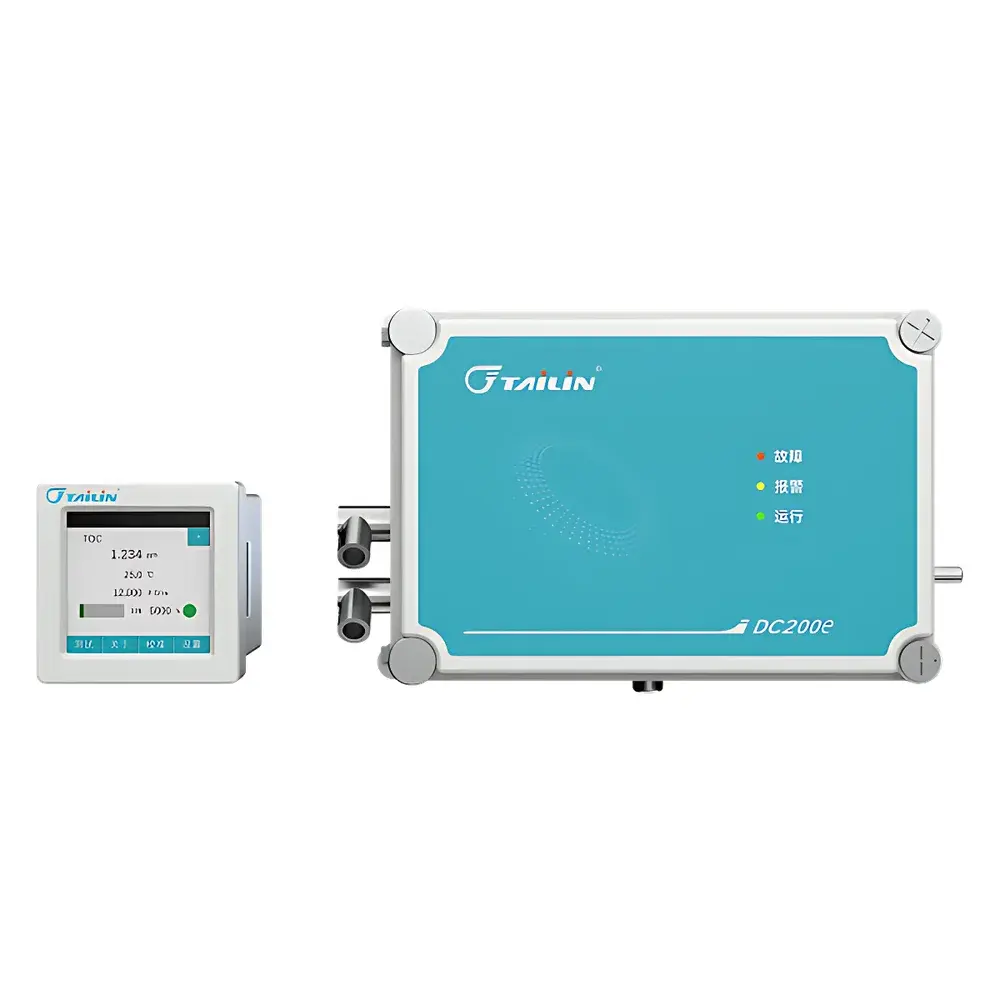
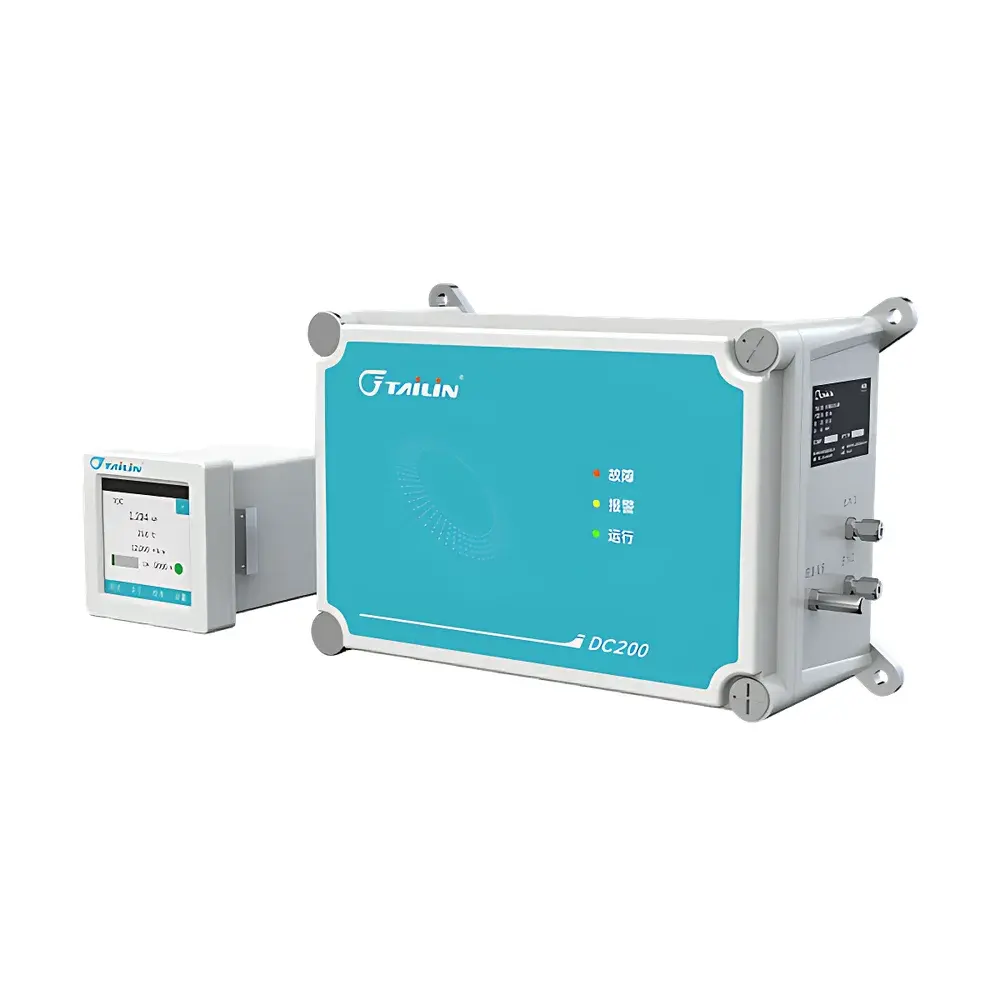
Tailin Biotech DC200/DC200e Online Ultra-Low-Range Total Organic Carbon Analyzer
| Brand | Tailin Biotech |
|---|---|
| Origin | Zhejiang, China |
| Manufacturer Type | Direct Manufacturer |
| Product Category | Domestic |
| Model | DC200 / DC200e |
| Instrument Type | Online TOC Analyzer |
| Detection Principle | Direct Conductivity Method |
| Oxidation Method | UV Photolysis (185/254 nm) |
| Measurement Range | 0.030–2000 ppb |
| Accuracy | ±0.1 ppb (0.100–1.99 ppb, water resistivity >15 MΩ·cm) |
| Detection Limit | 0.030 ppb |
Overview
The Tailin Biotech DC200 and DC200e are online ultra-low-range total organic carbon (TOC) analyzers engineered for continuous, real-time monitoring of ultrapure water (UPW) systems in semiconductor fabrication, pharmaceutical manufacturing, and biotechnology clean utilities. These instruments employ a dual-wavelength ultraviolet (UV) photolysis oxidation method—utilizing both 185 nm (for hydroxyl radical generation) and 254 nm (for direct organic bond cleavage)—followed by high-sensitivity differential conductivity detection. Unlike combustion-based or persulfate-oxidation systems, this non-reagent, UV-only oxidation architecture eliminates chemical carryover, baseline drift, and calibration dependency on external standards—critical for sub-ppb stability in Grade A water loops per USP , EP 2.2.44, and ASTM D5905. The system is designed to operate continuously within resistivity ranges from 0.5 to 18.2 MΩ·cm, with optimal performance verified at >15 MΩ·cm, meeting the stringent requirements of ISO 14644-1 Class 1–3 environments.
Key Features
- Sub-ppb detection capability: 0.030 ppb method detection limit (MDL) and 0.100 ppb quantitation limit (QL), validated per ICH Q2(R2) guidelines for trace-level water quality verification.
- Fully domesticated core modules: UV oxidation chamber, dual-electrode conductivity sensor, precision microfluidic flow control manifold, and embedded firmware—all developed and manufactured in-house by Tailin Biotech.
- Reagent-free operation: No acid, persulfate, or catalyst consumables required; eliminates reagent storage, handling risks, and associated validation burden under FDA 21 CFR Part 11 and EU GMP Annex 11.
- High temporal resolution: 1-second measurement update rate enables dynamic response to transient TOC excursions during point-of-use (POU) sampling or loop integrity challenges.
- Compact modular architecture: Main analyzer unit (335 × 204 × 130 mm) integrates with wall-mountable transmitter (102 × 102 × 150 mm), supporting DIN-rail or panel installation in utility corridors and cleanroom utility skids.
- Environmental robustness: Operational range of 5–50 °C ambient temperature and 5–90% RH (non-condensing), certified for deployment in controlled ambient and classified spaces without additional climate conditioning.
Sample Compatibility & Compliance
The DC200/DC200e is validated for continuous analysis of ultrapure water, purified water (PW), and water for injection (WFI) streams per pharmacopeial specifications. It complies with key regulatory frameworks including USP “Total Organic Carbon”, EP 2.2.44 “Water for Pharmaceutical Use”, JP 17 “Purified Water”, and ASTM D5905-22 “Standard Test Method for Total Organic Carbon in Water”. Its differential conductivity algorithm corrects for inorganic carbonate interference and compensates for temperature-induced conductivity drift, ensuring linearity across the full 0.030–2000 ppb range without manual slope adjustment. The instrument supports GLP/GMP audit trails, user-access logging, and electronic signature workflows aligned with 21 CFR Part 11 Annex 11 requirements.
Software & Data Management
Embedded firmware includes a web-based configuration interface accessible via HTTPS (TLS 1.2+), supporting remote calibration verification, diagnostic logs, and event-triggered data export (CSV/JSON). All measurements are timestamped with NTP-synchronized clocks and stored locally for ≥30 days. Optional integration with SCADA, MES, or LIMS platforms is enabled through Modbus TCP (RTU over TCP/IP) and OPC UA (compliant with IEC 62541). Data integrity controls include write-once memory allocation, checksummed firmware updates, and immutable audit trail records for all parameter changes, calibration events, and maintenance interventions.
Applications
- Real-time TOC surveillance in UPW distribution loops for 300 mm wafer fabs and advanced packaging facilities.
- Continuous verification of WFI quality at stillage points and POU locations in sterile pharmaceutical manufacturing.
- TOC trending during purification system regeneration cycles (e.g., post-RO, post-EDI, post-UV) to support preventive maintenance scheduling.
- Validation support for PQ protocols requiring ≤0.5 ppb TOC stability over 72-hour challenge runs.
- Monitoring of reclaimed water reuse circuits where low-level organic breakthrough must be detected prior to membrane fouling onset.
FAQ
What oxidation method does the DC200/DC200e use, and why is it suitable for ultrapure water applications?
It uses dual-wavelength UV photolysis (185 nm + 254 nm) without chemical oxidants—ensuring zero reagent contamination risk and stable baseline performance in high-resistivity water.
Is the analyzer compliant with 21 CFR Part 11 for electronic records and signatures?
Yes—audit trails, role-based access control, electronic signatures, and secure firmware updates meet Part 11 and EU Annex 11 technical requirements.
How often does the system require calibration or maintenance?
Zero routine calibration is required; only annual verification using certified TOC standards (NIST-traceable) is recommended per ASTM D5905.
Can the DC200e output analog signals for integration into existing DCS systems?
Yes—it provides isolated 4–20 mA outputs (HART-enabled) for primary TOC value and status flags (e.g., alarm, maintenance due, sensor fault).
Does the instrument support automatic temperature compensation for conductivity measurements?
Yes—built-in Pt100 RTD and proprietary thermal modeling compensate conductivity readings across 5–50 °C ambient conditions with ≤±0.005 µS/cm residual error.







