
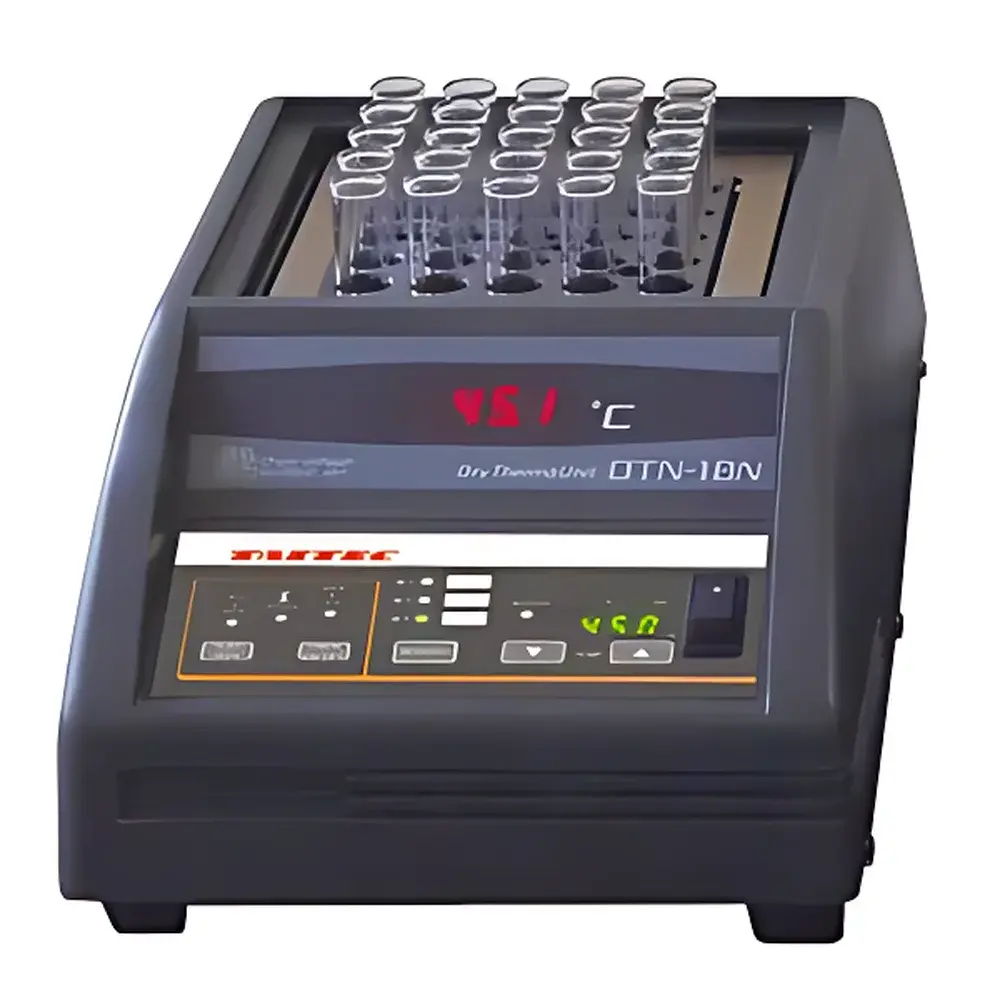
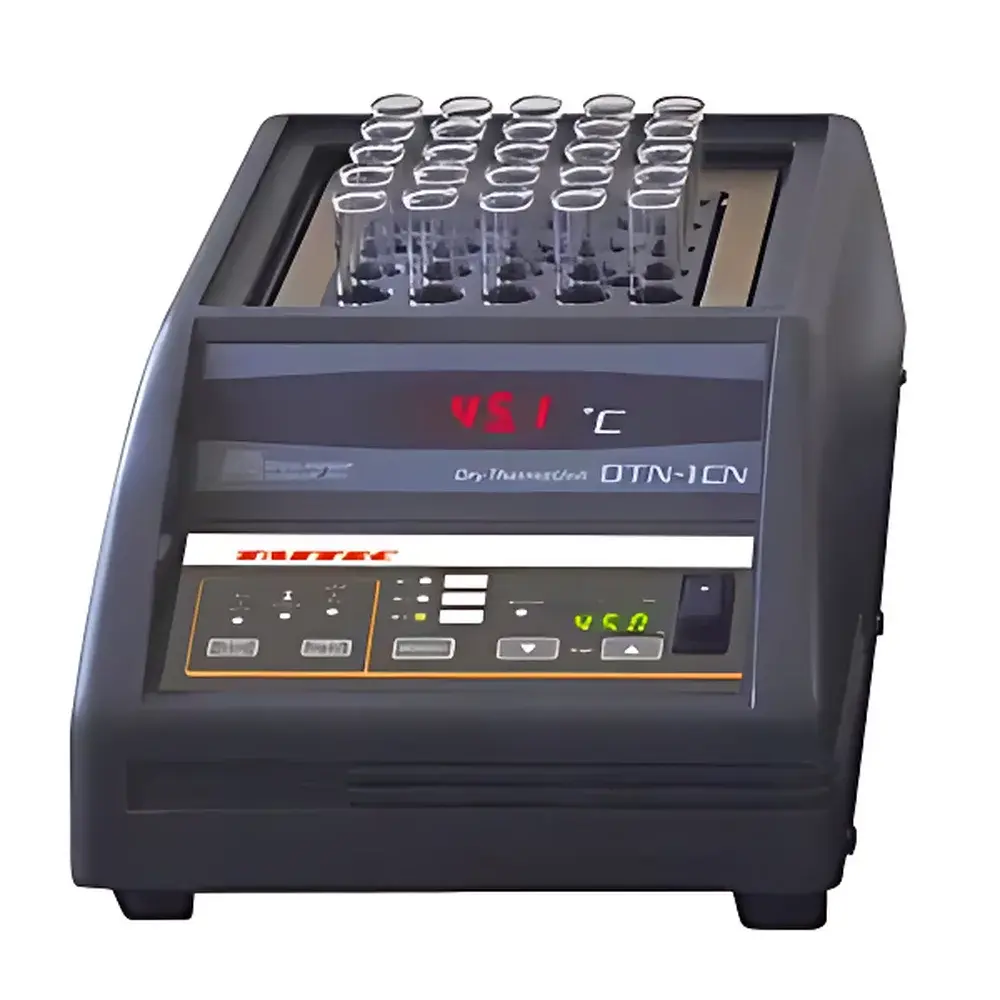
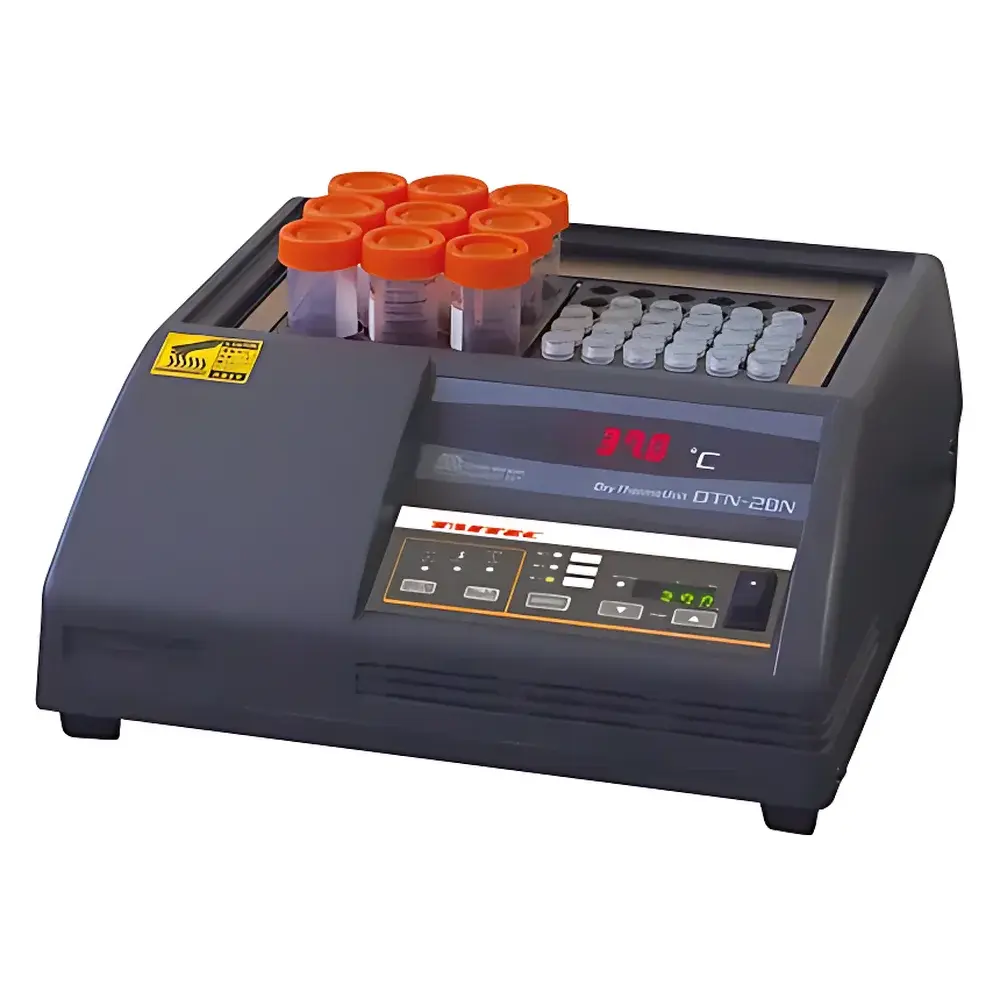
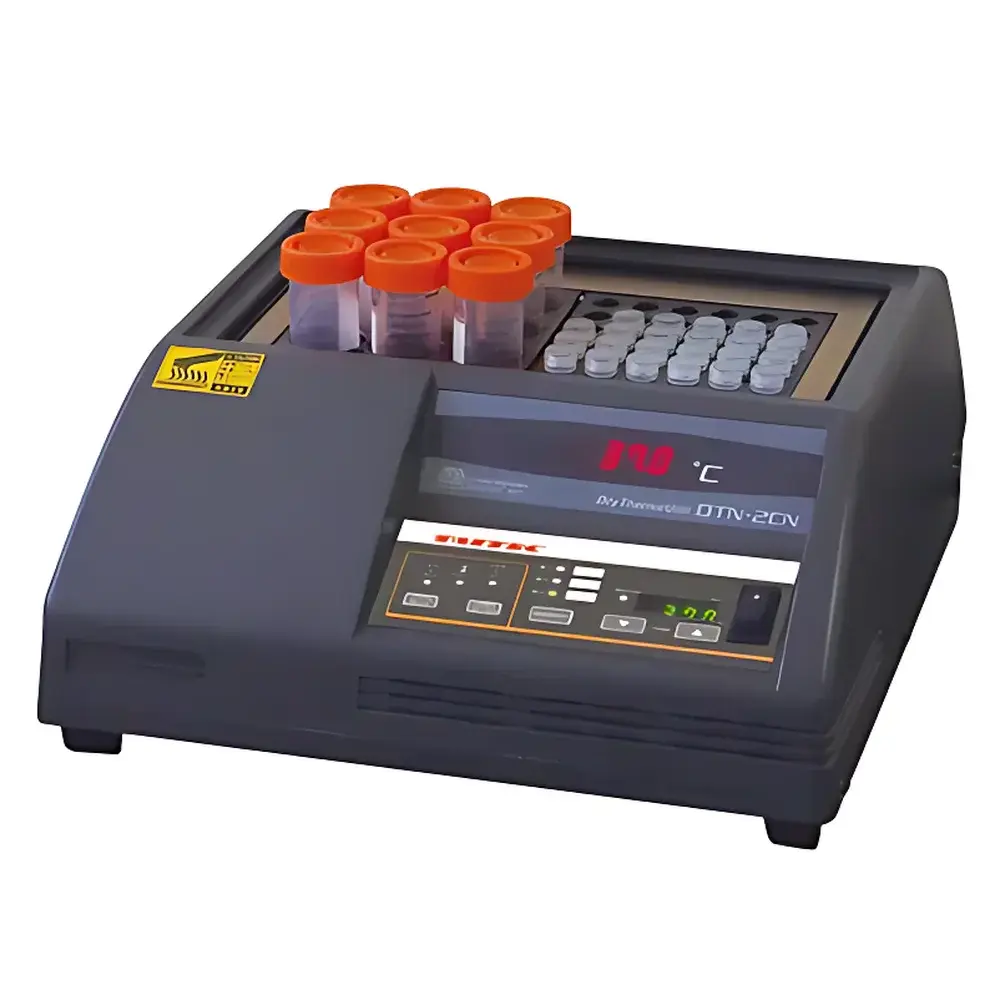
TAITEC DTU-1BN/2BN/1CN/2CN Precision Metal Block Dry Bath with Nitrogen Concentration Capability
| Brand | TAITEC |
|---|---|
| Origin | Japan |
| Model | DTU-1BN / DTU-2BN / DTU-1CN / DTU-2CN |
| Temperature Range | Ambient +5°C to +110°C (B-series) or +200°C (C-series) |
| Temperature Accuracy | ±0.1°C |
| Heating Time to 100°C | ≤15 min |
| Dimensions (W×D×H) | 210×318×130 mm (DTU-1BN/1CN), 318×318×130 mm (DTU-2BN/2CN) |
| Net Weight | 4 kg (DTU-1BN/1CN), 6 kg (DTU-2BN/2CN) |
| Power Supply | AC 100 V, 1.3–2.8 A |
| Heating Power | 100 W (DTU-1BN), 150 W (DTU-2BN), 180 W (DTU-1CN), 250 W (DTU-2CN) |
| Timer Range | 1 min – 99 h 59 min |
| Safety Features | Auto-reset high-temp cutoff, overcurrent protection, overheat protection, sensor fault detection (open/short circuit) |
| Display | Dual-digit LED (setpoint & real-time temperature) |
| Optional Accessories | Interchangeable deep-well aluminum blocks (AL-xxx series), nitrogen blow-down heads (E1/E2 series, 5–72 nozzles) |
Overview
The TAITEC DTU Series Precision Metal Block Dry Bath is an engineered thermal platform designed for reproducible, contamination-free heating and sample concentration in molecular biology, biochemistry, and analytical chemistry laboratories. Unlike water baths, this dry bath utilizes a solid aluminum heating block—thermally coupled to a high-stability PID-controlled resistive heater and a precision Pt100-type sensor (PAT.P technology)—to deliver uniform temperature distribution across the entire block surface. Its core operating principle relies on direct conductive heat transfer from the heated metal block to sample vessels, eliminating evaporation loss, microbial growth risk, and bath fluid maintenance. The B-series (DTU-1BN/2BN) operates up to +110°C and is optimized for enzymatic assays, nucleic acid denaturation (e.g., PCR setup, restriction digests), and controlled hydrolysis of biomolecules. The C-series (DTU-1CN/2CN) extends the upper limit to +200°C, enabling applications such as solvent evaporation, thermal degradation studies, small-scale synthesis, and accelerated drying of heat-stable analytes. All models comply with IEC 61010-1 safety standards for laboratory electrical equipment and are CE-marked for use in EU-regulated environments.
Key Features
- High-precision temperature control: ±0.1°C accuracy across the full range, achieved via dual-sensor feedback (block surface + ambient reference) and adaptive PID algorithm.
- Modular aluminum block architecture: Deep-well blocks (e.g., AL-2909F for 50 mL tubes, AL-1136B for 2.0 mL microcentrifuge tubes) ensure secure vessel immersion and minimal thermal gradient between wells.
- Dual-format capability: DTU-1x models accommodate one standard block; DTU-2x models support two independent blocks—ideal for parallel processing of heterogeneous sample sets.
- Programmable ON/OFF timer: Enables unattended operation with start/stop scheduling from 1 minute to 99 hours 59 minutes—critical for overnight enzymatic incubations or timed concentration protocols.
- Nitrogen-assisted concentration: Compatible with E1 (single-block) and E2 (dual-block) nitrogen blow-down manifolds (sold separately), delivering laminar, low-velocity N₂ flow through calibrated stainless-steel nozzles (ID 1.5 mm, OD 2.0 mm) to accelerate solvent removal without splashing or cross-contamination.
- Robust safety system: Integrated redundant protections include auto-reset thermal cutoff (>220°C), current-limiting circuitry, real-time sensor diagnostics (open/short detection), and fail-safe power interruption on fault condition.
Sample Compatibility & Compliance
The DTU Series supports a broad spectrum of sample containers—including polypropylene and glass tubes (0.5–35 mL), microcentrifuge tubes, PCR strips, vials, and scintillation vials—via over 20 interchangeable aluminum blocks (AL-xxx series). Each block is CNC-machined from high-purity 6061-T6 aluminum, anodized for corrosion resistance and thermal stability. Blocks designated with “V” suffix (e.g., AL-1336V) feature extended depth (≥45 mm) and tighter tolerances for volatile solvent handling during nitrogen-assisted concentration. The system meets ISO/IEC 17025 requirements for equipment qualification when used within validated laboratory workflows. For regulated environments (e.g., pharmaceutical QC labs), optional audit-trail-capable software integration (via RS-232/USB interface) supports 21 CFR Part 11-compliant electronic records when paired with TAITEC’s certified data acquisition module.
Software & Data Management
While the DTU Series operates as a standalone instrument with intuitive front-panel controls (UP/DOWN keys, LED display), it includes an RS-232 serial port for external monitoring and logging. When connected to a PC running TAITEC’s optional DTU Control Suite (v3.2+), users can configure multi-step temperature ramps, export timestamped temperature logs (CSV), generate calibration reports traceable to NIST-certified references, and enforce user-access levels (operator, supervisor, administrator). All logged data include metadata: date/time stamp, setpoint, actual block temperature, elapsed time, and alarm event codes. The software supports GLP/GMP documentation requirements, including electronic signatures and change history tracking for method parameters.
Applications
- Molecular biology: DNA/RNA denaturation (95°C hold), enzyme inactivation (e.g., alkaline phosphatase at 65°C), ligase incubation (16°C), and cDNA synthesis (42°C).
- Proteomics & metabolomics: Controlled hydrolysis of glycoproteins (acidic/alkaline conditions at 60–100°C), fatty acid methyl ester (FAME) derivatization, and peptide cleavage kinetics.
- Environmental & food testing: Solvent evaporation from EPA Method 505/525 extracts prior to GC-MS analysis; residue concentration from QuEChERS supernatants.
- Pharmaceutical development: Forced degradation studies (thermal stress per ICH Q1A), excipient compatibility screening, and lyophilization pre-concentration steps.
- Clinical diagnostics: Sample prep for ELISA, immunoassays, and rapid antigen tests requiring precise thermal activation or stabilization.
FAQ
What is the difference between DTU-B and DTU-C models?
The B-series (DTU-1BN/2BN) uses a lower-power heating element and thermal insulation rated for continuous operation up to +110°C—sufficient for most biological applications. The C-series (DTU-1CN/2CN) features enhanced heating capacity, high-temp insulation, and a reinforced block design rated for sustained operation at +200°C, making it suitable for organic solvent removal and synthetic chemistry workflows.
Can I use the same aluminum block across all DTU models?
Yes—blocks are mechanically and thermally compatible across the DTU-1x and DTU-2x platforms. However, DTU-2x units require two identical blocks for symmetrical loading; mixing block types on a dual-block unit is not recommended due to differential thermal mass and potential calibration drift.
Is nitrogen gas supply pressure regulated internally?
No—the DTU system does not regulate inlet pressure. Users must supply clean, oil-free nitrogen at 0.1–0.3 MPa (1–3 bar) via an external pressure regulator. Excessive pressure may cause nozzle deformation or sample splatter.
How often should the unit be calibrated?
TAITEC recommends annual calibration using a traceable NIST-standard thermometer (e.g., Fluke 1523 with probe) inserted into a representative well. Calibration verification should be performed before critical experiments or after mechanical shock or prolonged high-temperature operation.
Are replacement fuses and sensors available as spare parts?
Yes—TAITEC supplies certified spare fuses (T1.6A L 250V), Pt100 sensor assemblies (P/N SEN-DTU-PATP), and heater cartridges (P/N HTR-DTU-250W) with full technical documentation and RoHS-compliant material declarations.



