
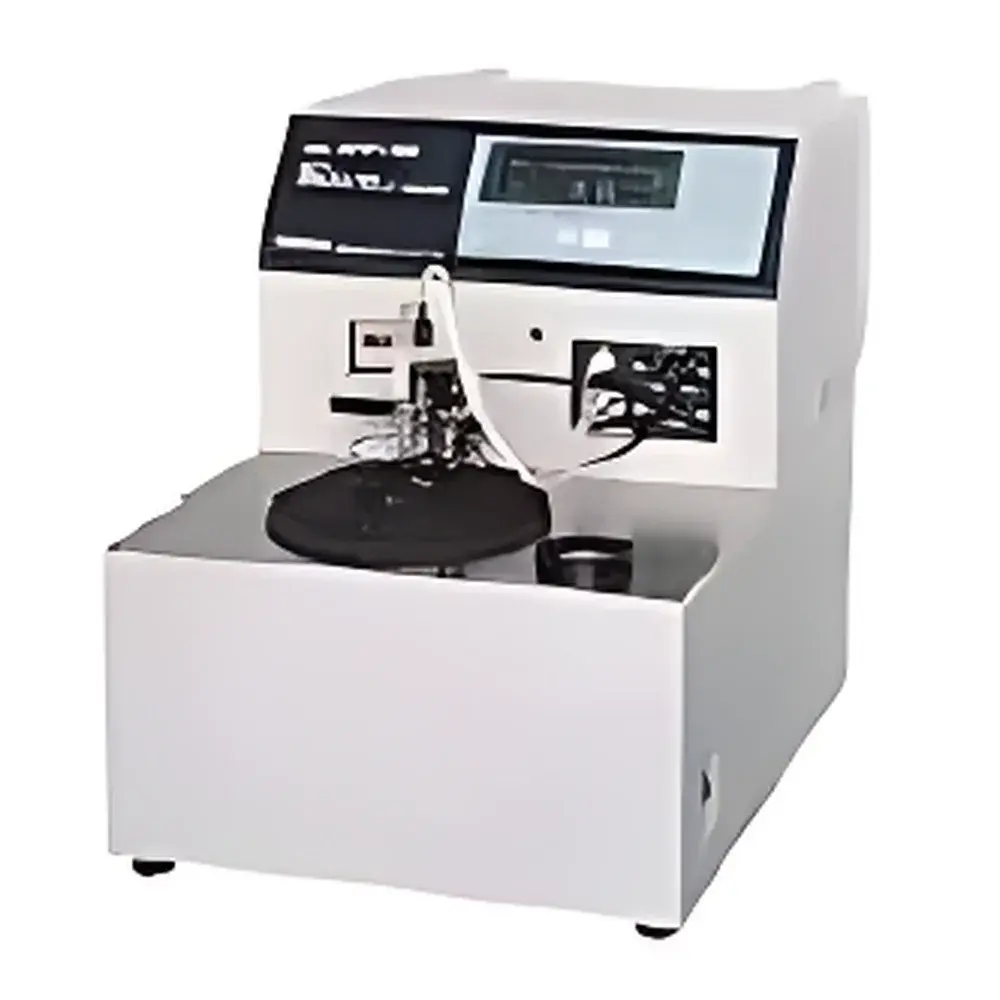
TANAKA AFP-102 Automatic Cold Filter Plugging Point Tester
| Brand | TANAKA |
|---|---|
| Origin | Japan |
| Model | AFP-102 |
| Standards Compliance | ASTM D6371, IP 309, EN 116, JIS K2288, SH/T 0248 |
| Cooling Method | Integrated Peltier thermoelectric module (no formaldehyde or external chiller required) |
| Temperature Range | Ambient to –60 °C |
| Temperature Resolution | 0.1 °C |
| Cooling Modes | Linear ramp and stepwise (isothermal) cooling |
| Detection Principle | Dual-point optical meniscus tracking via LED-photodiode system with dedicated mechanical mounting bracket |
| Sample Compatibility | Diesel fuels, heating oils, biodiesel blends, and other middle distillates |
Overview
The TANAKA AFP-102 Automatic Cold Filter Plugging Point (CFPP) Tester is a precision-engineered laboratory instrument designed for the standardized determination of the Cold Filter Plugging Point of petroleum distillates—primarily diesel fuel, heating oil, and biodiesel blends—according to internationally recognized test methods including ASTM D6371, IP 309, EN 116, JIS K2288, and SH/T 0248. CFPP is a critical low-temperature performance parameter that indicates the lowest temperature at which a given fuel can pass through a standardized wire mesh filter under specified vacuum conditions within a defined time interval. Unlike cloud point or pour point measurements, CFPP directly correlates with real-world operability in cold ambient conditions, particularly for modern high-pressure common-rail diesel engines equipped with fine-mesh fuel filters. The AFP-102 employs a closed-loop Peltier-based thermoelectric cooling and heating system, eliminating reliance on hazardous formaldehyde-based coolant baths or bulky external refrigeration units. Its fully automated operation—from sample conditioning and controlled cooling to dynamic meniscus detection and endpoint determination—is built upon over three decades of TANAKA’s specialization in petroleum property analyzers.
Key Features
- Integrated Peltier thermoelectric module enables rapid, precise, and environmentally safe temperature control from ambient down to –60 °C without formaldehyde, dry ice, or external chillers—only a standard recirculating coolant bath (e.g., 15–25 °C water/glycol mixture) is required.
- Dual-mode cooling protocol: Selectable linear ramp cooling (for method-compliant gradient control per ASTM D6371 Annex A1) or stepwise isothermal cooling (per IP 309/EN 116), each fully programmable and reproducible.
- Optical meniscus detection system featuring high-stability LED illumination and photodiode sensing, mounted on a rigid, vibration-damped mechanical bracket independent of the sample tube holder—ensuring reliable detection of both upper and lower meniscus positions even under heavy frost formation on the sampling tube surface.
- High-resolution temperature monitoring with ±0.1 °C display resolution and NIST-traceable Pt100 sensor embedded in the test cell wall for accurate thermal profiling during filtration cycles.
- Intuitive front-panel interface with tactile membrane keys and backlit LCD; all test parameters—including cooling rate, hold times, vacuum setpoint, and pass/fail criteria—are configured without software dependency.
- Robust stainless-steel construction, CE-marked electrical architecture, and fail-safe thermal cutoffs ensure long-term reliability in regulated QC laboratories operating under GLP or ISO/IEC 17025 frameworks.
Sample Compatibility & Compliance
The AFP-102 is validated for use with ASTM D975-grade diesel fuels, ASTM D396 heating oils, EN 590 automotive diesel, EN 14214 biodiesel (FAME), and blended fuels up to B20. It accommodates standard 45-mm diameter glass test tubes (ASTM D6371-compliant) and supports manual or semi-automated sample loading. All operational sequences adhere strictly to the procedural requirements of ASTM D6371 (including vacuum regulation at 20 kPa ±0.5 kPa, 20-mL sample volume, and 45-µm stainless-steel test filter). Instrument validation documentation—including as-delivered calibration certificates, temperature uniformity maps, and repeatability reports per ASTM D6300—is supplied with each unit. The system meets electromagnetic compatibility (EMC) requirements per IEC 61326-1 and safety standards per IEC 61010-1, supporting audit readiness for FDA 21 CFR Part 11–aligned environments when paired with optional secure data logging modules.
Software & Data Management
While the AFP-102 operates autonomously via its embedded controller, optional USB- or RS-232–enabled communication permits integration into centralized LIMS or ELN platforms. Raw temperature-time profiles, vacuum pressure logs, meniscus transit timestamps, and final CFPP determinations are exportable in CSV format. Audit trail functionality—including user ID, timestamp, parameter changes, and result approvals—can be enabled through TANAKA’s optional CFPP-Link software suite, compliant with ALCOA+ principles and supporting 21 CFR Part 11 electronic signature requirements when deployed with role-based access controls and encrypted local storage.
Applications
- Quality control of refinery-produced diesel and heating oil batches prior to shipment.
- Formulation development and cold-flow improver (CFI) efficacy testing in R&D labs.
- Third-party certification testing for EN 590, ASTM D975, and GB 19147 compliance.
- Field laboratory deployment in arctic or alpine distribution terminals requiring on-site cold-weather operability verification.
- Academic research on wax crystallization kinetics and filter plugging mechanisms in paraffinic biofuels.
FAQ
Does the AFP-102 require formaldehyde or other hazardous coolants?
No. It uses a solid-state Peltier module with no consumable refrigerants, eliminating exposure risks and disposal liabilities associated with formaldehyde baths.
Can the instrument perform both ASTM D6371 and IP 309 methods without hardware modification?
Yes. Method selection is software-configurable via the front panel; cooling profile, vacuum timing, and endpoint logic adapt automatically to the chosen standard.
How is meniscus detection maintained when frost accumulates on the sample tube?
The optical detector is mechanically isolated and aligned to view the meniscus through a dedicated quartz viewport; its dual-sensor design compensates for refractive distortion caused by surface frost.
What is the typical repeatability of CFPP results using the AFP-102?
Under controlled lab conditions (per ASTM D6300), repeatability is ≤1.0 °C for homogeneous samples, consistent with interlaboratory precision limits of the reference methods.
Is preventive maintenance required between tests?
No routine maintenance is needed. The system performs automatic self-diagnostic checks at power-on; only periodic cleaning of the filter holder and optical window is recommended per 50 test cycles.






