
Tannas TanEV CDT Conductive Deposit Tester
| Brand | Tannas&King |
|---|---|
| Origin | USA |
| Manufacturer Status | Authorized Distributor |
| Origin Category | Imported |
| Model | TanEV CDT |
| Product Type | Laboratory Instrument |
| Compliance Standards | ASTM D8544, SAE J3200 |
Overview
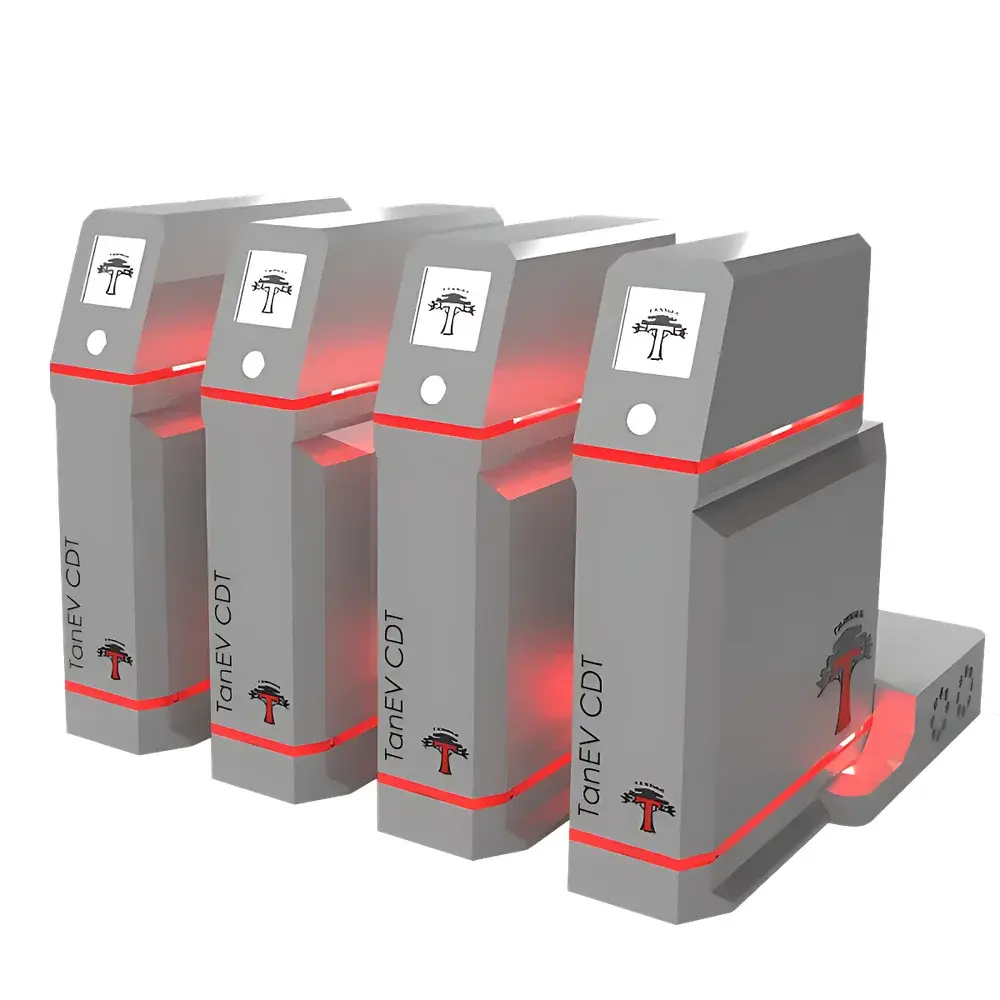
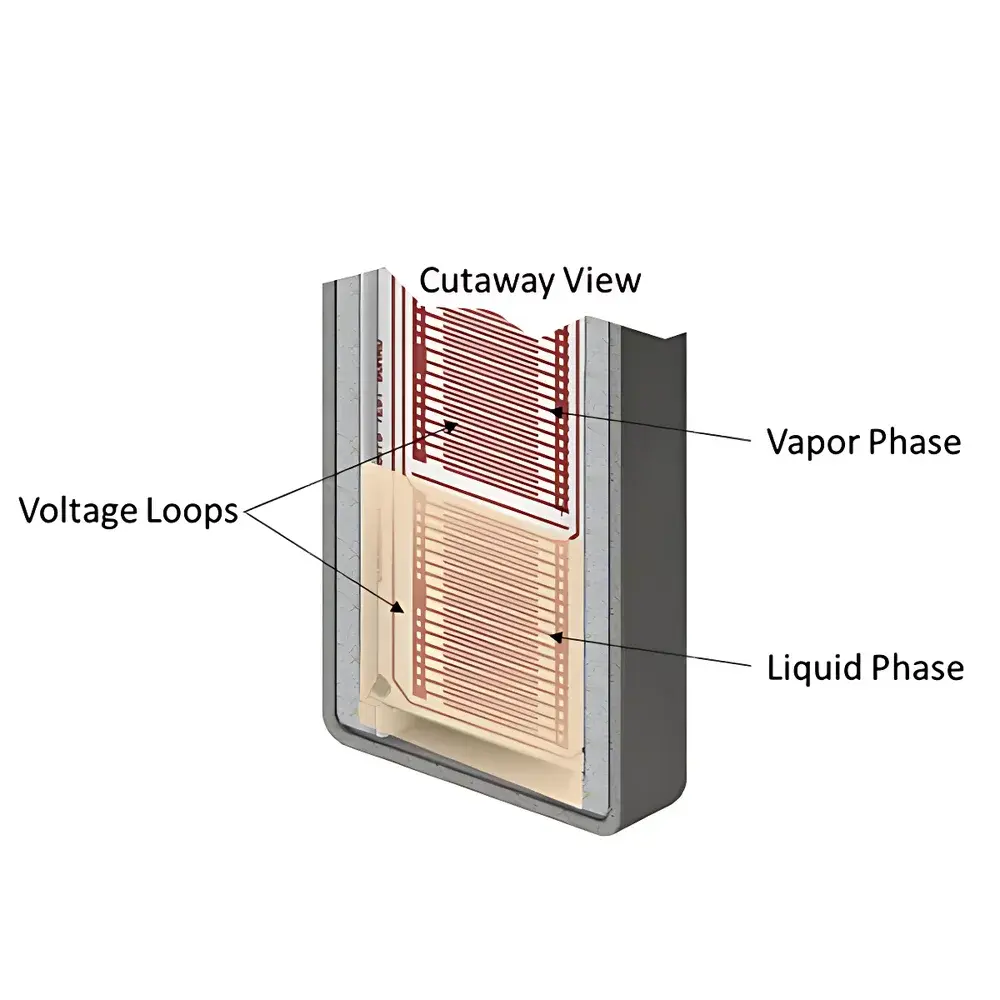
The Tannas TanEV CDT Conductive Deposit Tester is an engineered laboratory instrument designed specifically to evaluate the propensity of electric vehicle (EV) transmission fluids to form electrically conductive deposits under thermally accelerated, electrochemically active conditions. Unlike conventional oxidation or corrosion tests, the TanEV CDT replicates the unique failure mechanism observed in high-voltage EV powertrain systems: the electrochemical migration and deposition of metallic species—primarily copper—from motor windings, busbars, and connectors onto insulating surfaces, leading to leakage current paths and potential short-circuit events. The test operates at a controlled temperature of 150 °C for 500 hours, with a constant 5 V DC bias applied across dual voltage circuits on a standardized printed circuit board (PCB) substrate immersed in 20 mL of test fluid. Real-time resistance monitoring in both liquid and vapor phases enables quantitative tracking of insulative degradation and conductive pathway formation—providing direct correlation to field-relevant failure modes in traction motor cooling and lubrication circuits.
Key Features
- Thermally stable test chamber with ±0.5 °C temperature uniformity at 150 °C, validated per ASTM D8544 thermal profiling requirements
- Dual-channel DC bias supply (5 V, <1 mA per circuit) with galvanically isolated outputs to prevent cross-coupling between liquid- and vapor-phase measurement zones
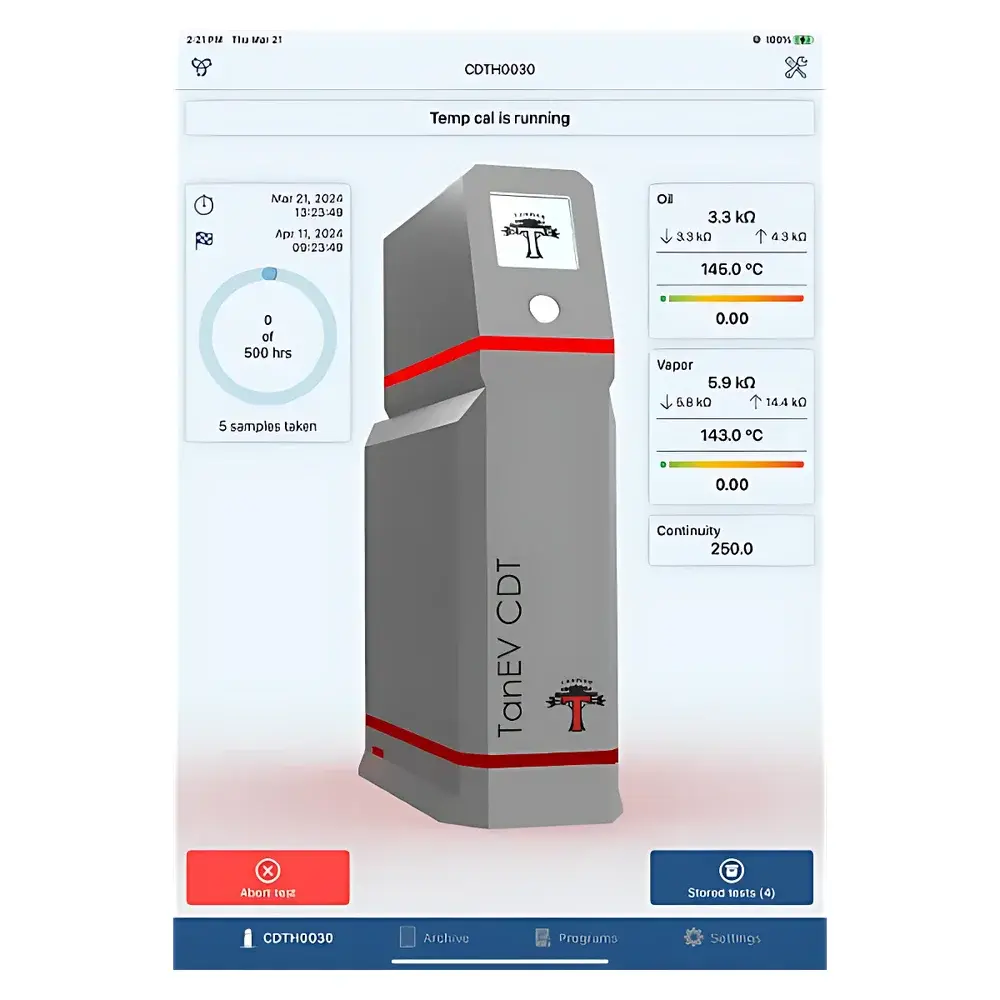
- Integrated high-impedance resistance monitoring system (10⁶–10¹² Ω range) with 16-bit resolution and automated logging at user-defined intervals (1 min to 24 h)
- Standardized FR-4 PCB substrate with defined copper trace geometry, surface finish, and edge isolation—fully compliant with SAE J3200 mechanical and dimensional specifications
- Sealed, inert-gas compatible test cell design enabling optional nitrogen purge to suppress oxidative side reactions during extended testing
- Modular hardware architecture supporting parallel operation of up to four independent test stations under synchronized environmental control
Sample Compatibility & Compliance
The TanEV CDT is validated for use with formulated EV transmission fluids, gear oils, and dielectric coolants intended for integrated e-motor/lubrication systems. It accommodates both neat base stocks and fully formulated fluids—including those containing copper deactivators, anti-wear additives (e.g., ZDDP derivatives), and novel ester- or polyalkylene glycol (PAG)-based chemistries. All test protocols and acceptance criteria align strictly with ASTM D8544 “Standard Test Method for Evaluating Conductive Deposit Formation in Electric Vehicle Transmission Fluids” and SAE J3200 “Recommended Practice for Conductive Deposit Testing of EV Powertrain Lubricants.” The instrument’s measurement traceability, calibration procedures, and data integrity controls support GLP-compliant testing environments and are structured to meet audit requirements under FDA 21 CFR Part 11 for electronic records and signatures when paired with validated software.
Software & Data Management
The TanEV CDT operates with Tannas’ proprietary CDT Control Suite v3.x—a Windows-based application certified for IEC 62304 Class B medical device software development standards, reflecting its robustness for regulated R&D workflows. The suite provides real-time resistance trend visualization, automatic pass/fail classification based on user-defined conductivity thresholds (e.g., 10 min), and time-stamped event logging with SHA-256 hash verification. Raw resistance vs. time datasets export in CSV and HDF5 formats; metadata fields include ambient humidity, chamber pressure, operator ID, and calibration certificate IDs. Audit trails record all parameter changes, test start/stop events, and data export actions—enabling full traceability for internal QA reviews or regulatory submissions.
Applications
- Failure Mode Prevention: Identifying formulation vulnerabilities that lead to copper-rich deposit formation on stator windings or connector interfaces—critical for OEMs validating long-term reliability of 800-V platform lubricants
- Formulation Screening: Accelerated comparative assessment of additive packages targeting suppression of electrochemical metal dissolution and redeposition kinetics
- Material Compatibility Studies: Evaluating interactions between lubricants and emerging conductor materials (e.g., silver-plated copper, aluminum alloys) used in next-generation inverters and motor housings
- Regulatory Documentation Support: Generating standardized test reports required by Tier 1 suppliers for OEM technical release packages under SAE J3200 compliance programs
- Root-Cause Analysis: Differentiating between liquid-phase ionic conduction (e.g., acid-induced copper leaching) and vapor-phase condensate-mediated bridging—enabling targeted reformulation strategies
FAQ
What distinguishes TanEV CDT from ASTM D130 copper strip corrosion testing?
ASTM D130 assesses general sulfur-induced tarnishing under static, non-biased conditions and does not replicate the electrochemically driven deposition mechanisms prevalent in high-voltage EV systems. TanEV CDT introduces controlled electrical bias and thermal stress to model actual field failure physics.
Can the TanEV CDT be used for non-EV lubricants such as engine oils or hydraulic fluids?
While technically operable, its test protocol, failure criteria, and interpretation framework are purpose-built for EV transmission fluids per ASTM D8544 and SAE J3200. Use outside this scope requires method validation and is not supported by Tannas’ regulatory documentation.
Is the PCB substrate reusable?
No. Each PCB is a single-use, pre-qualified consumable calibrated to SAE J3200 dimensional and metallurgical tolerances. Reuse invalidates test compliance and introduces uncontrolled surface contamination variables.
Does the system support remote monitoring and alarm notification?
Yes—via optional Ethernet-connected gateway module enabling SNMP-based alerts for out-of-spec resistance events, temperature excursions, or power interruption, with integration into enterprise LIMS platforms via RESTful API.






