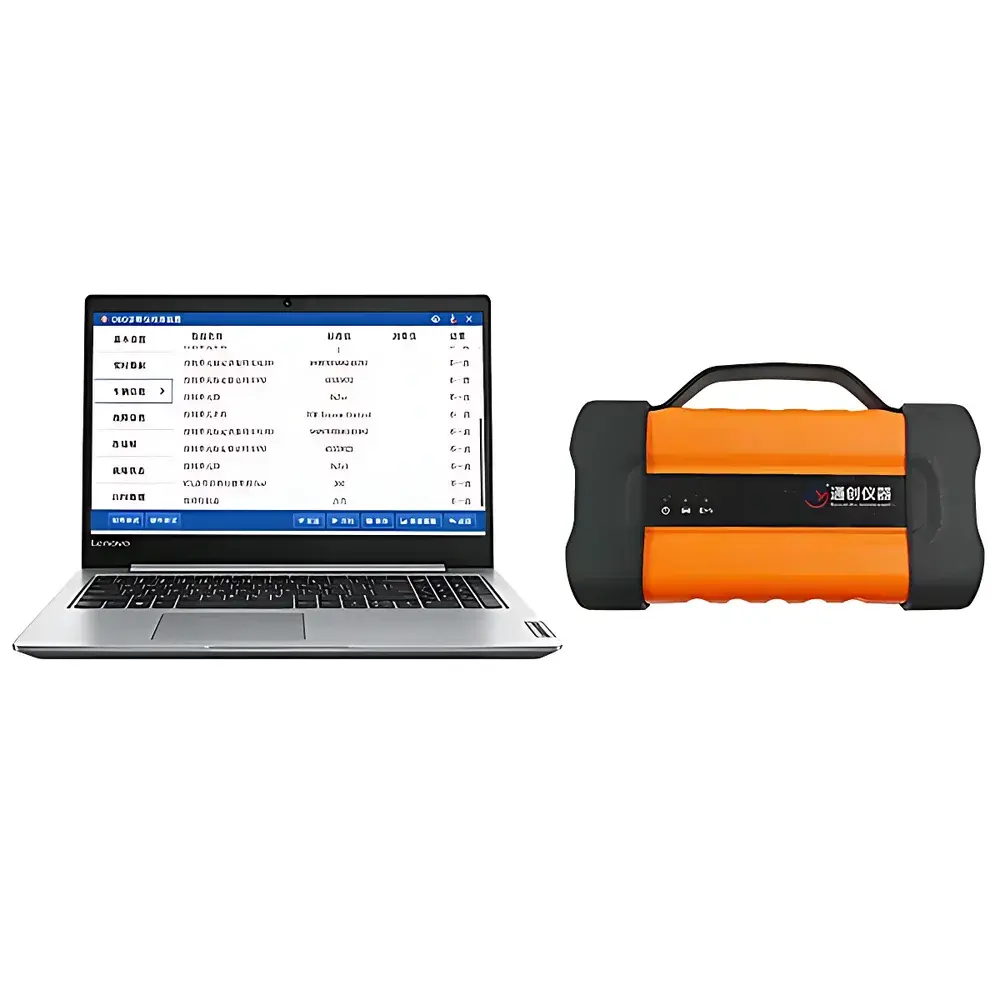
TCT Handset OBD-DCD OBD Diagnostic Tool Calibration Standard Test System
| Brand | TCT |
|---|---|
| Origin | Fujian, China |
| Manufacturer Type | Authorized Distributor |
| Country of Origin | China |
| Model | Handset OBD-DCD |
| Service Type | Instrument Calibration |
| Calibration Scope | OBD Diagnostic Tools for Motor Vehicle Emission Testing |
| Compliance Standards | GB 18285–2018, GB 3847–2018, HJ 1237–2021, Draft JJF (Eco-Env) XXX–202X “Calibration Specification for OBD Diagnostic Tools Used in Motor Vehicle Emission Inspection” |
| Supported Protocols | ISO 14230 (KWP2000), ISO 9141-2, ISO 15765 (CAN), SAE J1850 VPW/PWM, SAE J1939, ISO 27145 (WWH-OBD), ISO 13400 (DoIP) |
| Operating Voltage Simulation | 12 V DC / 24 V DC |
| Data Modes | Auto-random generation & Manual parameter configuration |
| Data Export | CSV/Excel report generation with timestamped audit trail |
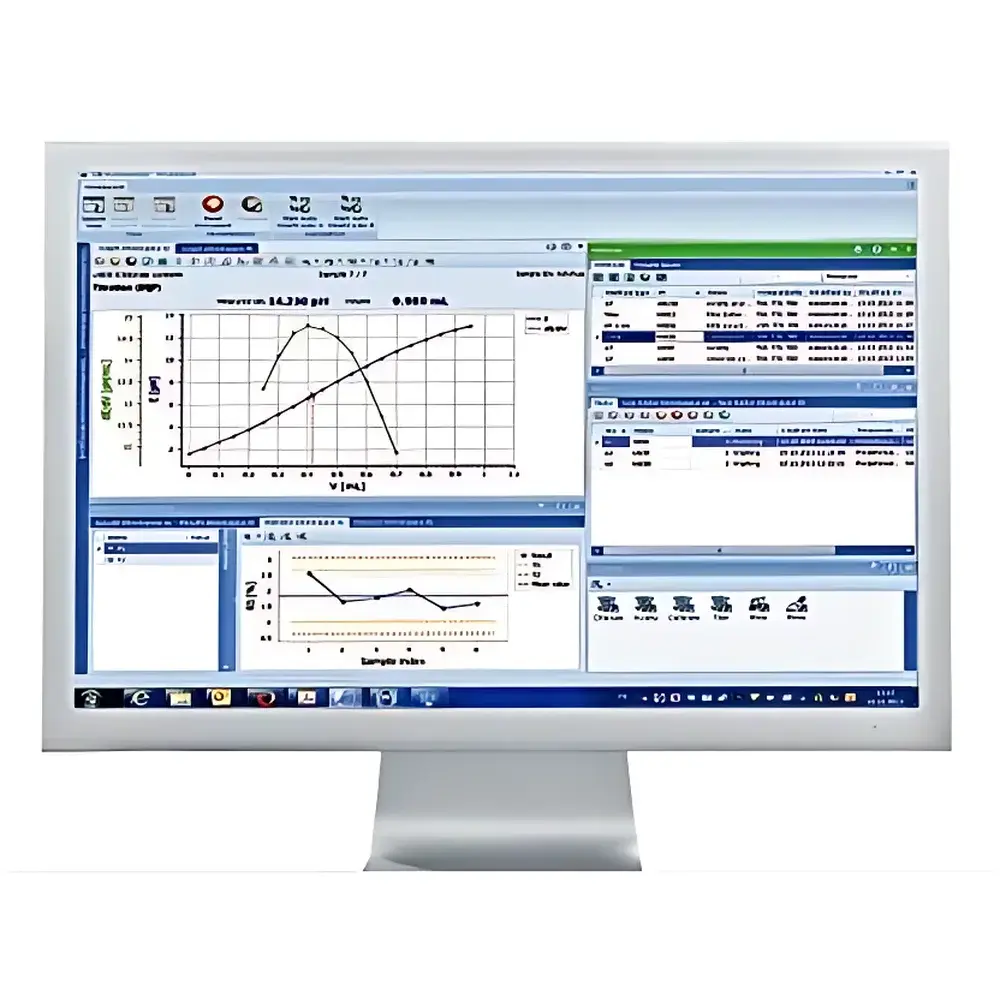
| Software Interface | PC-based calibration management software with GLP-compliant data logging |
Overview
The TCT Handset OBD-DCD is a metrologically traceable calibration standard test system engineered for the periodic verification and calibration of On-Board Diagnostics (OBD) diagnostic tools used in motor vehicle emission inspection laboratories, official testing stations, and environmental enforcement agencies. It operates on the principle of protocol-level stimulus-response emulation: by precisely replicating standardized electronic communication sequences—defined in ISO, SAE, and national regulatory frameworks—the system generates repeatable, deterministic OBD message traffic across all mandated vehicle communication protocols. This enables objective assessment of a subject OBD tool’s ability to correctly interpret physical layer signaling, decode protocol-specific message structures, extract standardized PIDs (Parameter IDs), identify DTCs (Diagnostic Trouble Codes), validate readiness monitor status, and compute IUPR (In-Use Performance Ratio) metrics per GB 18285–2018 and HJ 1237–2021. Unlike generic CAN bus simulators, the Handset OBD-DCD integrates certified timing parameters, voltage-level fidelity (12 V/24 V DC), and message sequence logic aligned with real-world ECU behavior under cold-start, warm-idle, and transient driving conditions.
Key Features
- Protocol-Accurate Emulation: Fully implements message timing, arbitration, error frame handling, and session control logic for ISO 14230, ISO 9141-2, ISO 15765 (CAN 11-bit & 29-bit), SAE J1850 VPW/PWM, SAE J1939, ISO 27145 (WWH-OBD), and ISO 13400 (DoIP) — validated against reference implementations from ISO/SAE specifications.
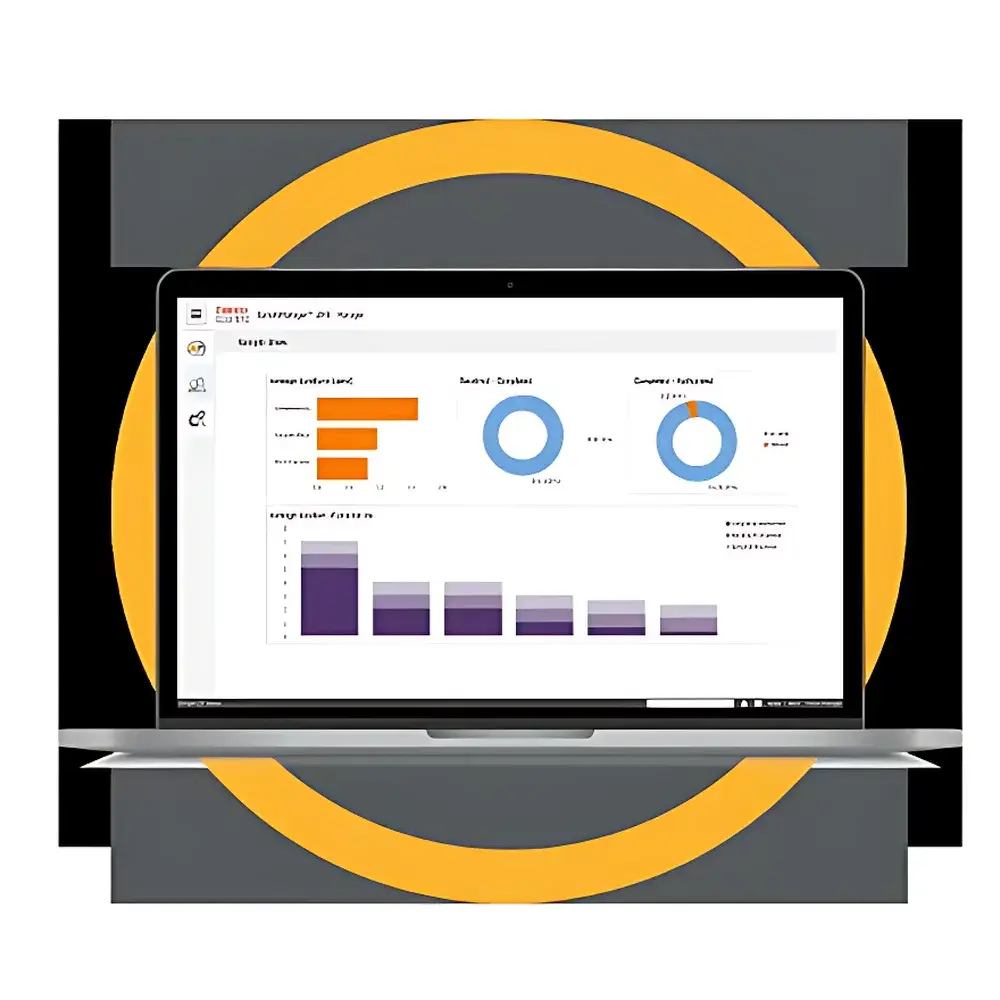
- Automated Calibration Workflow: Integrated PC software guides users through selection of target protocol, DUT (Device Under Test) interface configuration, and execution of pre-defined calibration sequences; automatically captures raw CAN/ISO frames, decodes them per protocol specification, and compares against expected values.
- Dual-Mode Data Generation: Supports both deterministic manual configuration (e.g., setting specific DTCs, readiness bits, or PID values) and statistically representative random generation for stress-testing protocol parser robustness and edge-case handling.
- Comprehensive Data Logging & Traceability: Records full frame-level communication logs with microsecond timestamping, including physical layer voltage transitions (via optional analog front-end), enabling root-cause analysis of interoperability failures between DUT and simulated ECU.
- Regulatory Alignment Engine: Embedded rule sets enforce mandatory message sequences required by GB 3847–2018 (diesel vehicles) and GB 18285–2018 (gasoline vehicles), including IUPR calculation logic, MIL activation thresholds, and freeze-frame data structure validation.
- Portable Metrology Platform: Compact form factor with USB-C and DB9 interfaces; requires only a Windows 10/11 host PC with .NET Framework 4.8+; no external power supply needed beyond USB bus power for basic operation.
Sample Compatibility & Compliance
The Handset OBD-DCD is designed exclusively for calibrating handheld and benchtop OBD diagnostic tools deployed in accredited emission testing facilities. It complies with the draft national metrological calibration specification JJF (Eco-Env) XXX–202X, which defines traceability pathways to national primary standards maintained by the China National Institute of Metrology (NIM). All protocol timing parameters are verified using calibrated oscilloscopes and CAN analyzers traceable to NIM. The system supports verification of electromagnetic compatibility (EMC) immunity during OBD communication—consistent with IEC 61000-4-3 and GB/T 17626.3 requirements for test equipment used in statutory inspection environments. Its firmware and calibration software undergo version-controlled release management with documented change history, satisfying GLP audit requirements for calibration infrastructure.
Software & Data Management
The proprietary TCT OBD-CalSuite software provides a secure, auditable environment for calibration execution and reporting. Each calibration session generates a digitally signed PDF report containing: operator ID, calibration date/time, DUT identification (serial number, firmware version), selected protocol and test case ID, raw frame capture (hex dump), decoded parameter tables, pass/fail status per test item, and deviation analysis where applicable. All data is stored locally in an encrypted SQLite database with SHA-256 hash integrity verification. Audit trails meet FDA 21 CFR Part 11 requirements for electronic records, including user authentication, action logging, and prevention of record deletion or modification post-signature. Export formats include CSV (for LIMS integration), XML (for automated compliance reporting), and printable PDF with embedded digital signature.
Applications
- Accredited calibration laboratories performing ISO/IEC 17025-compliant calibration of OBD diagnostic tools for CNAS recognition.
- Municipal and provincial motor vehicle inspection stations conducting internal verification prior to annual statutory inspection cycles.
- Ecological and environmental protection bureaus executing field audits of inspection station compliance with HJ 1237–2021 technical requirements.
- OEM and Tier-1 supplier R&D labs validating OBD tool interoperability across diverse ECU platforms before deployment in after-market diagnostic networks.
- National metrology institutes developing reference methods for OBD tool performance evaluation and uncertainty budgeting per GUM (Guide to the Expression of Uncertainty in Measurement).
FAQ
Does the Handset OBD-DCD support DoIP (ISO 13400) over Ethernet?
Yes — it includes a dedicated RJ45 interface with TCP/IP stack implementation compliant with ISO 13400-2:2012, supporting both DoIP vehicle discovery and diagnostic session initiation.
Can calibration results be imported into a LIMS?
Yes — CSV and XML export formats include all metadata required for direct ingestion into common laboratory information management systems (LIMS), including sample ID mapping and instrument calibration status flags.
Is firmware update capability included?
Yes — firmware updates are delivered via signed binary packages through the TCT OBD-CalSuite software; each update includes version-signed release notes and regression test reports.
What is the measurement uncertainty contribution of the Handset OBD-DCD itself?
Per JJF (Eco-Env) XXX–202X Annex B, the combined standard uncertainty for protocol timing verification is ≤ ±1.2 µs (k=2), derived from internal oscillator stability and timestamping hardware characterization.
Does it support bi-directional control (e.g., MIL activation, DTC clearing)?
No — it functions strictly as a stimulus-response verification platform for read-only diagnostic functions defined in GB 18285–2018; active command execution is excluded to maintain metrological isolation and prevent unintended ECU state changes.
Related Products