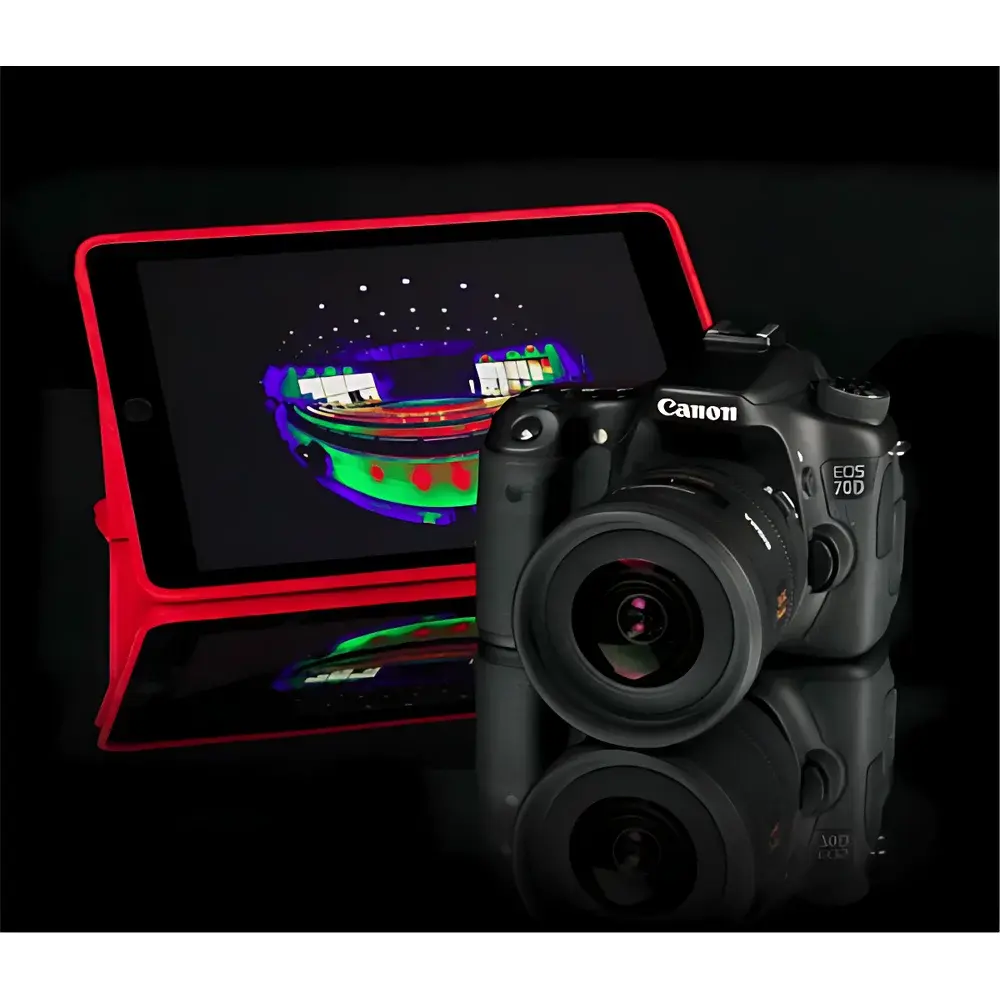
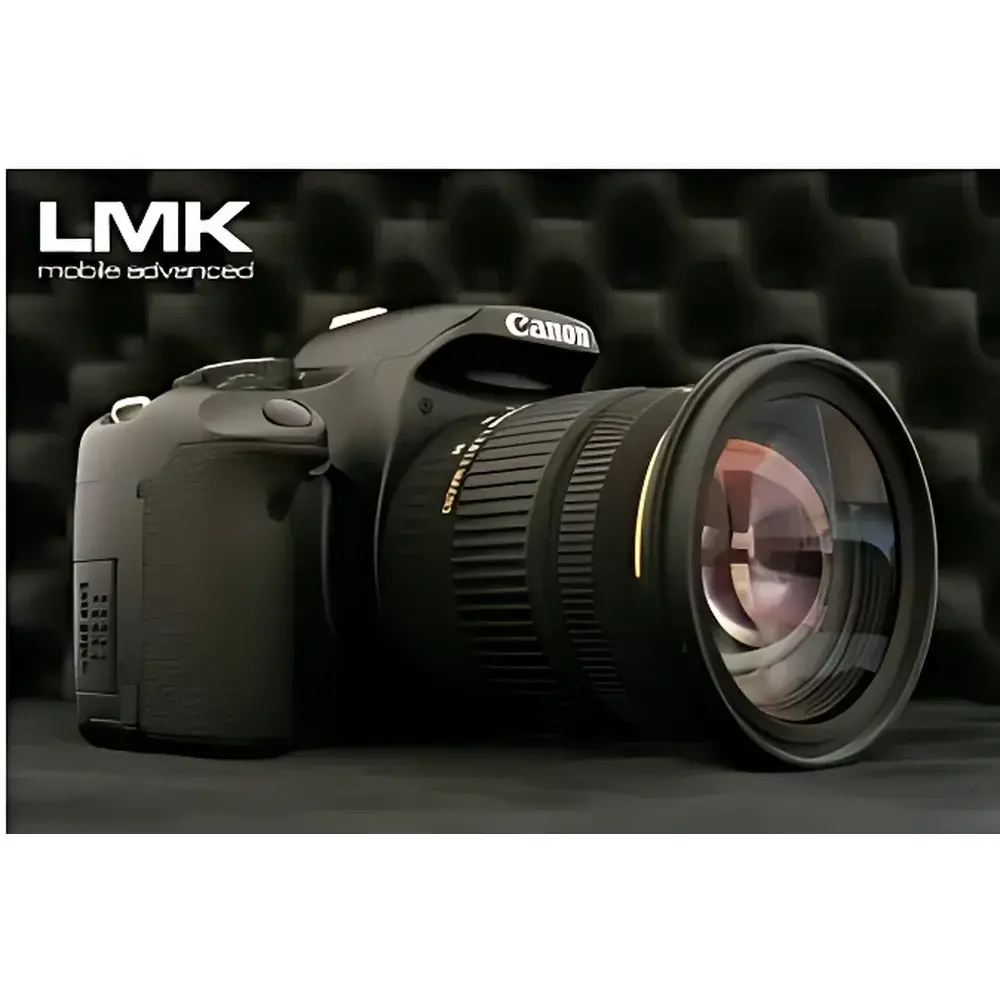
TechnoTeam LMK Mobile Advanced Portable Digital Luminance Camera & Glare Analyzer
| Brand | TechnoTeam |
|---|---|
| Origin | Germany |
| Model | LMK Mobile Advanced |
| Calibration Standard | CIE Illuminant A |
| Power Supply | Integrated Rechargeable Battery (No External Power Required) |
| Operation Mode | Standalone Imaging Luminance Meter with Onboard Storage |
| Image Resolution | Up to 5 MP (Configurable) |
| Dynamic Range | ≥1,000,000:1 (logarithmic response) |
| Measurement Range | 0.01 cd/m² to 10⁷ cd/m² |
| Lens Correction | Pixel-wise Vignetting (Shading), Geometric Distortion & Chromatic Aberration Compensation |
| Output Format | Radiometric TIFF, CSV, XML (EN 13201-3 Compliant) |
| Glare Metrics | UGR (Unified Glare Rating), TI (Threshold Increment), Veiling Luminance (L<sub>v</sub>), Surround Ratio, S/P Ratio |
| Software Compatibility | LMK LabSoft v6.x (Windows-based, FDA 21 CFR Part 11 Ready) |
Overview
The TechnoTeam LMK Mobile Advanced is a fully self-contained, portable digital luminance camera engineered for field-deployable photometric analysis of lighting installations. Unlike conventional spot meters or tethered imaging systems, it operates autonomously—requiring no external power source, laptop, or real-time data link. Its core measurement principle is based on calibrated digital radiometry: each pixel in the captured image is converted into absolute luminance values (cd/m²) via traceable CIE Illuminant A spectral weighting and spatially resolved photometric calibration. The system applies rigorous non-linear correction algorithms for exposure time, aperture, focal length, and zoom-induced intensity falloff—ensuring metrological consistency across variable optical configurations. Crucially, it implements per-pixel shading correction (vignetting compensation) and lens distortion mapping, eliminating systematic errors inherent in uncorrected imaging photometers. Designed for rapid deployment in outdoor and semi-outdoor environments—including roadways, urban plazas, tunnels, and architectural façades—it delivers EN 13201-3:2003–compliant brightness metrics from a single exposure.
Key Features
- True standalone operation: integrated rechargeable battery, onboard storage (≥32 GB), and intuitive touchscreen interface eliminate dependency on PCs or AC power.
- CIE Illuminant A spectral response calibration certified by PTB-accredited reference standards; traceability documented per ISO/IEC 17025.
- Real-time geometric and photometric correction: includes pixel-level vignetting compensation, radial distortion mapping, and chromatic aberration correction.
- Direct computation of EN 13201-3:2003 parameters: mean luminance (Lav), overall uniformity (U1), longitudinal uniformity (U2), and surround ratio (SR).
- Comprehensive glare evaluation suite: automated calculation of Unified Glare Rating (UGR), Threshold Increment (TI), veiling luminance (Lv), and disability glare indices aligned with CIE 117 and EN 12464-1.
- Radiometric TIFF output with embedded EXIF metadata (exposure, f-number, focal length, GPS, timestamp) for audit-ready documentation.
Sample Compatibility & Compliance
The LMK Mobile Advanced is optimized for measuring extended light sources and luminous surfaces under ambient daylight or artificial illumination. It supports dynamic scene capture across automotive headlights, LED streetlamps, tunnel portals, sports arena floodlights, and interior office lighting. All measurements adhere to international photometric standards including CIE S 014/E:2006 (photometer classification), DIN 5032-7 (luminance meter accuracy classes), and EN 13201-3:2003 (road lighting assessment). Data export formats comply with ISO 15768 (digital photometric data exchange) and support GLP/GMP-aligned workflows through optional LMK LabSoft audit trail logging (21 CFR Part 11 compliant user authentication and electronic signature modules available).
Software & Data Management
Field-captured images are transferred via USB or Wi-Fi to LMK LabSoft v6.x—a validated Windows application used globally in lighting design offices and municipal testing labs. LabSoft provides full post-processing capabilities: region-of-interest (ROI) definition, statistical luminance distribution analysis, false-color mapping, comparative overlay of multiple captures, and automated report generation in PDF/HTML with customizable templates. The software maintains full traceability: every calculation step is logged with timestamps, operator ID, instrument serial number, and calibration certificate expiry dates. Optional modules include EN 12464-1 workspace compliance checking, daylight factor simulation integration, and custom metric scripting (via Python API).
Applications
- Road and street lighting verification per EN 13201-3: rapid acquisition of Lav, U1, U2, and SR without tripod setup or grid-based point measurements.
- Urban lighting masterplan audits: comparative luminance mapping across districts to identify over-illumination, light trespass, or skyglow contributors.
- Tunnel entrance/exit zone assessment: high-dynamic-range capture of luminance gradients critical for visual adaptation safety.
- Architectural lighting validation: façade uniformity analysis, uplight/downlight ratio quantification, and glare risk screening for pedestrian zones.
- LED retrofit performance monitoring: longitudinal tracking of luminance decay, color shift, and uniformity loss over operational time.
- Transport infrastructure: railway platform lighting, airport apron illumination, and harbor navigation light alignment verification.
FAQ
Does the LMK Mobile Advanced require periodic recalibration?
Yes—recommended annually against PTB-traceable luminance standards; calibration certificates include uncertainty budgets per ISO/IEC 17025.
Can it measure moving light sources such as vehicle headlights?
Yes, with configurable exposure times down to 1/1000 s and motion blur compensation algorithms optimized for transient sources.
Is GPS geotagging supported for field mapping?
Yes—integrated GNSS module records WGS84 coordinates, altitude, and UTC timestamp in EXIF metadata for GIS integration.
How does it handle high-contrast scenes (e.g., dark roadway with bright lamps)?
Via logarithmic sensor response and multi-exposure HDR fusion (optional firmware mode), extending effective dynamic range beyond 10⁸:1.
What regulatory frameworks does LMK LabSoft support for quality assurance?
FDA 21 CFR Part 11 (electronic records/signatures), ISO 9001 audit readiness, and EU Annex 11 (computerized system validation) documentation packages available upon request.