
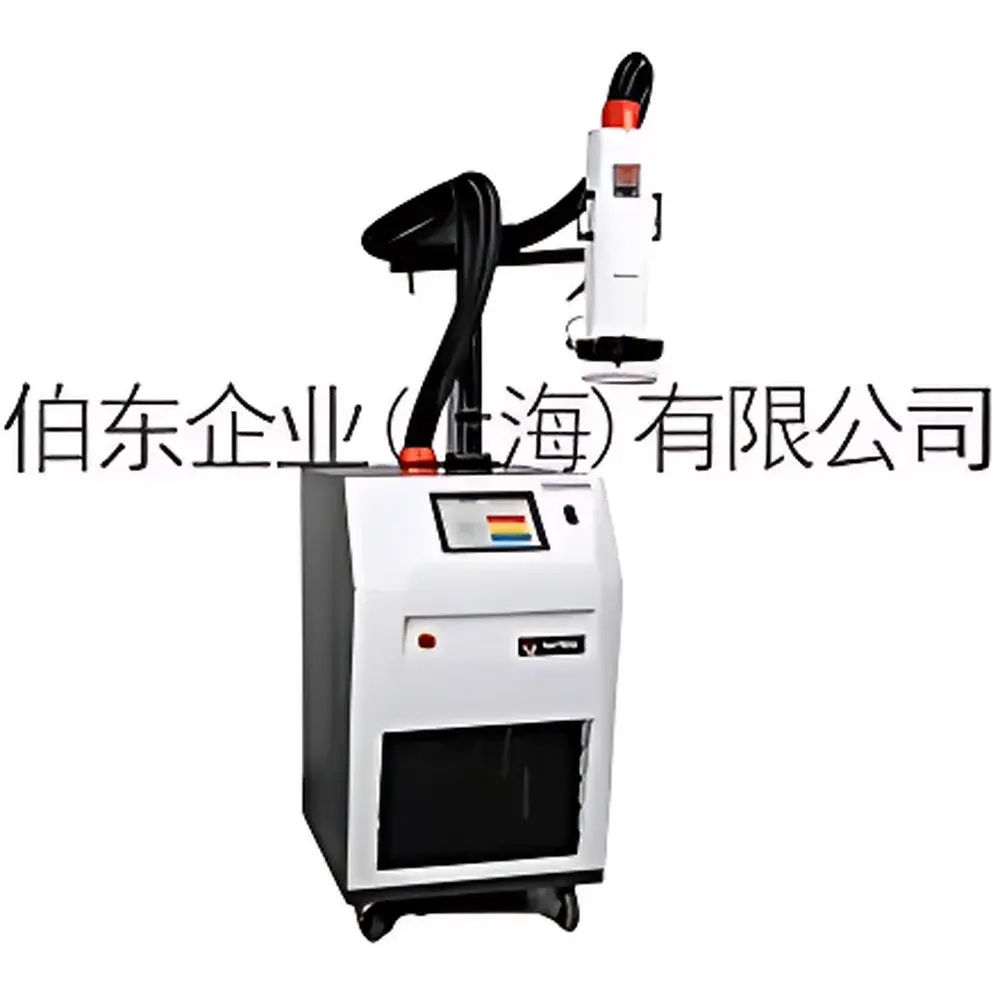
Temptronic TP04300 Thermal Shock Test System
| Brand | inTEST–Temptronic |
|---|---|
| Origin | USA |
| Model | Temptronic TP04300 |
| Temperature Range | −80 °C to +225 °C |
| Cooling Medium | Non-ozone-depleting refrigerant (no LN₂ or LCO₂ required) |
| Airflow Output | 4–18 SCFM (1.8–8.5 L/s) |
| Ramp Rate | <10 s from −55 °C to +125 °C and vice versa |
| Temperature Accuracy | ±1 °C (NIST-traceable calibration) |
| Temperature Resolution | 0.1 °C |
| Sensor Type | T-type or K-type thermocouple |
| Control Interfaces | IEEE-488, RS232, Ethernet |
| Display | Touchscreen Windows®-based HMI |
| Defrosting | Automatic hot-gas defrost |
| Electrostatic Protection | ESD-safe enclosure design |
| Compliance | Designed for GLP/GMP environments |
Overview
The Temptronic TP04300 Thermal Shock Test System is a high-performance, closed-loop thermal test platform engineered by inTEST–Temptronic for precision temperature stress testing of electronic components and assemblies. Unlike conventional environmental chambers, the TP04300 employs directed, high-velocity conditioned air delivery via a focused thermal stream—enabling rapid, localized thermal cycling without subjecting the entire DUT environment to bulk temperature changes. Its core principle relies on convective heat transfer modulation using a dual-stage refrigeration system coupled with a digitally regulated airflow manifold. This architecture delivers repeatable thermal shock profiles across semiconductor devices, PCB-mounted ICs, optoelectronic transceivers, and memory modules—making it indispensable for reliability validation in ATE, burn-in, and qualification labs.
Key Features
- Ultra-fast thermal transition: Achieves full-range ramp rates (<10 s between −55 °C and +125 °C) through optimized compressor staging and low-thermal-mass airflow path design.
- NIST-traceable temperature accuracy of ±1 °C across the full operating range (−80 °C to +225 °C), verified at point-of-use via calibrated T- or K-type thermocouples.
- ESD-safe enclosure and grounded airflow ducting ensure electrostatic integrity during testing of sensitive CMOS, GaAs, and SiGe devices.
- Integrated hot-gas defrost cycle eliminates manual intervention and prevents ice accumulation in evaporator sections—critical for extended unattended operation.
- Windows®-based touchscreen HMI with intuitive profile editor, real-time thermal trace logging, and configurable safety interlocks (over-temperature, under-pressure, sensor fault).
- No cryogenic consumables required: Refrigerant-based cooling eliminates dependency on liquid nitrogen (LN₂) or liquid CO₂ (LCO₂), reducing operational cost and logistical complexity.
Sample Compatibility & Compliance
The TP04300 accommodates a wide spectrum of DUT geometries—from bare die and flip-chip packages to populated PCBs up to 12″ × 12″—when used with optional thermal shrouds (4.5″ or 5.5″ diameter). Its localized heating/cooling capability enables device-level thermal shock without thermal crosstalk, satisfying JEDEC JESD22-A104 (Temperature Cycling) and MIL-STD-883 Method 1010.8 (Thermal Shock) requirements. The system’s architecture supports IQ/OQ/PQ documentation protocols and integrates seamlessly into GLP- and GMP-regulated workflows. When paired with compliant software, full 21 CFR Part 11 audit trail functionality—including user authentication, electronic signatures, and immutable data archiving—is achievable.
Software & Data Management
The embedded control firmware supports deterministic real-time thermal profiling with sub-second update intervals. Standard communication interfaces include IEEE-488 (GPIB), RS232, and 10/100BASE-T Ethernet for integration into automated test systems (e.g., Teradyne, Advantest, or custom LabVIEW platforms). USB host ports enable direct export of CSV-formatted thermal logs, while optional keyboard/mouse support simplifies on-device parameter tuning. Data timestamps are synchronized to system RTC with NTP capability. Optional software packages provide statistical process control (SPC) overlays, failure mode correlation mapping, and automated report generation compliant with ISO/IEC 17025 reporting standards.
Applications
- High-speed optical transceiver qualification (40G/100G/400G SR4/DR4): Precise thermal stabilization of VCSELs and PIN diodes during bit-error-rate (BER) testing.
- Flash and eMMC device screening: Accelerated temperature cycling to detect latent solder joint fatigue, intermetallic growth, or gate oxide degradation.
- Power semiconductor validation: Thermal shock stress of SiC MOSFETs and GaN HEMTs under dynamic load conditions.
- Automotive electronics AEC-Q200 compliance testing: Component-level thermal shock per Grade 1–3 specifications.
- Advanced packaging R&D: Evaluation of thermal mismatch stresses in fan-out wafer-level packages (FOWLP) and 2.5D/3D stacked die configurations.
FAQ
Does the TP04300 require external chiller water or compressed air?
No—the system is fully self-contained with an integrated refrigeration circuit and internal air compressor; only standard 208–240 VAC, 50/60 Hz power is required.
Can the TP04300 perform temperature ramp-and-soak profiles?
Yes—profile editor supports multi-segment ramps, dwell periods, and conditional branching based on real-time thermocouple feedback.
Is remote monitoring supported over standard network infrastructure?
Yes—Ethernet interface enables secure HTTP/HTTPS access to live status, historical logs, and configuration management via standard web browsers.
What safety certifications does the TP04300 carry?
The unit complies with UL 61010-1, CSA C22.2 No. 61010-1, and IEC 61000-6-2/6-3 for EMC and electrical safety; CE marking is applied per EU Machinery Directive 2006/42/EC.
How is temperature uniformity validated across the thermal stream?
Uniformity is characterized using a 9-point thermocouple array per ASTM E2202; typical spatial deviation is ≤±0.8 °C within the central 75% of the shroud aperture at steady-state conditions.



