
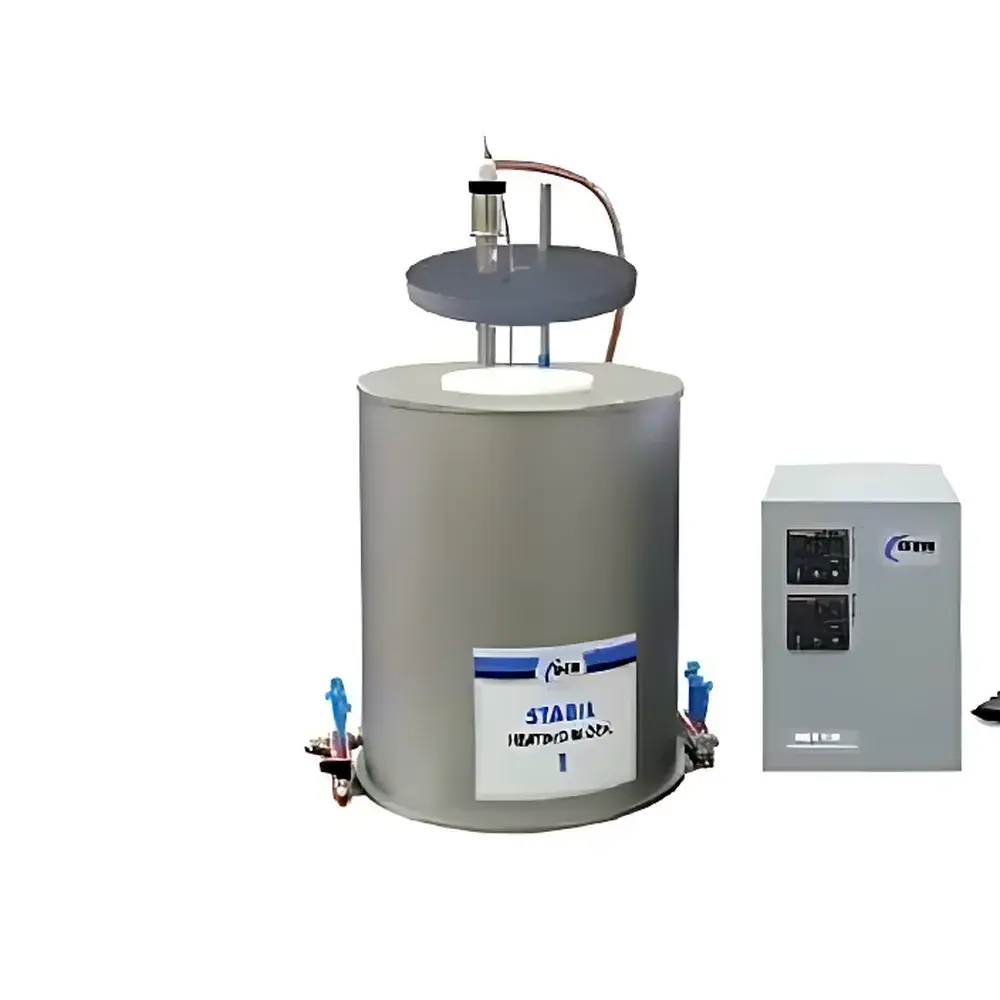
TESTech TTech-GBT2550 Rubber Hose Non-Flammability Tester per GB/T 2550–2007
| Brand | TESTech |
|---|---|
| Origin | Jiangsu, China |
| Manufacturer Type | Direct Manufacturer |
| Origin Category | Domestic (China) |
| Model | TTech-GBT2550 |
| Quotation | Upon Request |
| Test Standard | GB/T 2550–2007 Annex A & ISO 3821:1998 |
| Chamber Material | Stainless Steel |
| Combustion Tube | Borosilicate Glass |
| Heating Element | 350 W Electric Furnace (Φ50 mm × 150 mm depth) |
| Temperature Control | Continuously Adjustable Autotransformer (220 V, 50 Hz) |
| Ignition Source | Tungsten Wire (Ø0.7 mm, tapered tip, 20.0 ± 0.5 mm length) |
| Oxygen Supply | Precision Needle Valve + Flowmeter (0–5 L/min at 101.3 kPa & 15 °C |
| Thermometer | Nitrogen-filled Mercury-in-Glass (0–400 °C, graduation ≤5 °C, stem immersion ≥200 mm above bulb) |
| Power Rating | 500 W max |
| Accessories | Aluminum Foil Shielding |
Overview
The TESTech TTech-GBT2550 Rubber Hose Non-Flammability Tester is a purpose-built benchtop apparatus engineered for the standardized evaluation of flame resistance in rubber hoses used in gas welding, cutting, and related industrial applications. It implements the pass/fail test protocol defined in Annex A of GB/T 2550–2007 — China’s national standard for rubber hoses in gas equipment — which is technically aligned with ISO 3821:1998. The instrument operates on the principle of controlled thermal ignition under enriched oxygen atmosphere: a pre-conditioned hose specimen is inserted into a vertically oriented borosilicate glass combustion tube mounted inside a stainless-steel test chamber; a calibrated tungsten wire igniter is positioned at the hose’s outer surface; and the system maintains a stabilized furnace temperature between 360 °C and 365 °C while delivering a precisely regulated oxygen flow of 2.0 ± 0.1 L/min at standard ambient conditions (101.3 kPa, 15 °C). The test endpoint is determined by visual observation of sustained flaming, glow, or charring over a defined exposure duration — criteria strictly codified in the standard.
Key Features
- Robust stainless-steel test chamber housing ensures long-term corrosion resistance and thermal stability during repeated high-temperature cycles.
- Borosilicate glass combustion tube conforms dimensionally and chemically to GB/T 2550–2007 Annex A specifications, including dedicated ports for oxygen inlet/outlet, thermometer insertion, and specimen access.
- Tungsten ignition wire (0.7 mm diameter, 20.0 ± 0.5 mm tapered length) provides consistent thermal energy input without oxidation-induced drift.
- Dual-stage oxygen delivery: a calibrated rotameter (0–5 L/min range) enables coarse flow setting, while an imported precision needle valve permits fine-tuned adjustment to the mandated 2.0 ± 0.1 L/min operational setpoint.
- Nitrogen-filled mercury-in-glass thermometer (0–400 °C, ≤5 °C graduation, ≥200 mm stem immersion) meets metrological requirements for furnace temperature verification per Clause A.4.2 of GB/T 2550–2007.
- 350 W electric furnace with Φ50 mm internal diameter and 150 mm depth ensures uniform axial heating profile within the combustion zone.
- Continuously variable autotransformer (220 V, 50 Hz input) allows stable, stepless regulation of furnace power to maintain target temperature within ±1 °C tolerance over extended test periods.
- Included aluminum foil shielding minimizes radiant heat loss and improves thermal consistency across replicate tests.
Sample Compatibility & Compliance
The TTech-GBT2550 accommodates standard cylindrical rubber hose specimens as specified in GB/T 2550–2007 — typically cut to 300 mm length with nominal inner diameters ranging from 6 mm to 25 mm. Specimen preparation follows mandatory conditioning protocols (e.g., 23 °C ± 2 °C, 50% ± 5% RH for ≥24 h prior to testing). The system fully supports compliance verification workflows required by quality assurance departments in hose manufacturing facilities, third-party certification labs (e.g., CNAS-accredited), and end-user safety auditors. All mechanical and thermal parameters are traceable to national metrological standards; calibration certificates for thermometer and flowmeter are recommended annually per ISO/IEC 17025:2017 guidelines. The test method itself satisfies regulatory expectations under China’s Special Equipment Safety Law and aligns with international risk mitigation frameworks for combustible gas handling systems.
Software & Data Management
This is a manually operated, analog-controlled instrument with no embedded microprocessor or digital interface. Temperature monitoring, oxygen flow verification, and ignition timing are performed using calibrated physical instruments and documented via paper-based lab notebooks or LIMS-integrated electronic records. While no proprietary software is supplied, the test procedure is fully compatible with GLP-compliant documentation practices: users may log raw observations (e.g., time-to-ignition, flame height, char length), environmental conditions, operator ID, and equipment calibration status in structured templates. Audit trails remain enforceable through handwritten signatures, timestamped entries, and version-controlled SOPs referencing GB/T 2550–2007 and ISO/IEC 17025 requirements. For laboratories operating under FDA 21 CFR Part 11, digital record capture must be implemented externally via validated data acquisition modules interfaced with external thermocouple loggers and mass flow controllers — not included with base unit.
Applications
- Pre-shipment quality control of acetylene, oxygen, propane, and mixed-gas rubber hoses supplied to metal fabrication plants.
- Verification of flame-retardant compound efficacy during elastomer formulation development.
- Regulatory conformance testing for CCC (China Compulsory Certification) and CE marking submissions where GB/T 2550–2007 is invoked.
- Root cause analysis of field failures involving hose ignition incidents in welding/cutting operations.
- Training and proficiency testing for laboratory technicians performing standardized flammability assessments per national and harmonized standards.
FAQ
What standards does the TTech-GBT2550 explicitly support?
It is designed and verified for GB/T 2550–2007 Annex A and ISO 3821:1998. It does not substitute for UL 94, ASTM D635, or EN ISO 5659-2 testing.
Is calibration documentation provided with the instrument?
Factory calibration certificates for the thermometer and flowmeter are available upon request; however, end-user responsibility includes annual recalibration by an ISO/IEC 17025-accredited provider.
Can the furnace temperature be logged continuously during a test?
No — continuous digital logging requires external instrumentation (e.g., Class I thermocouple + data logger); the unit relies on manual thermometer reading at prescribed intervals.
What electrical infrastructure is required for safe operation?
A dedicated 220 V AC, 50 Hz, 10 A circuit with proper grounding is mandatory; use of surge-protected outlets is strongly advised due to thermal cycling stress on the autotransformer.
Does the system include sample mounting fixtures or dimensional gauges?
Yes — standard hose clamps, positioning jigs, and a calibrated ruler (0–500 mm, ±0.5 mm) are supplied to ensure repeatable specimen alignment and measurement per Clause A.3.3 of GB/T 2550–2007.



