testo 190-T3 CFR-Compliant Temperature Data Logger with Flexible, Extended Probe
| Brand | testo |
|---|---|
| Origin | Germany |
| Model | 0572 1903 |
| Measurement Principle | Pt1000 Resistance Thermometry |
| IP Rating | IP68 |
| Operating Temperature | -50 °C to +140 °C |
| Accuracy | ±0.1 °C (-40 °C to +140 °C), ±0.2 °C (-50 °C to -40 °C) |
| Resolution | 0.01 °C |
| Response Time (t₉₀) | 6 s |
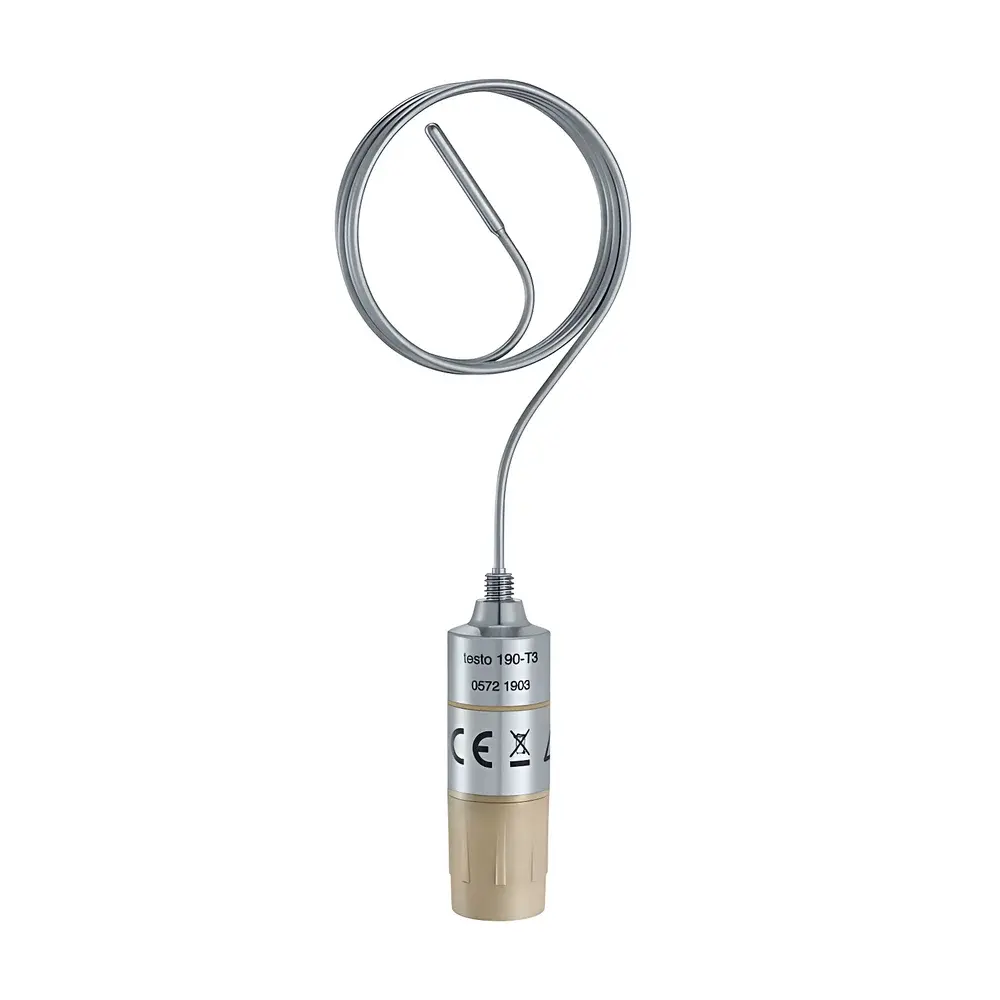
| Probe Length | 775 mm |
| Probe Diameter | 1.5 mm |
| Probe Tip Diameter | 3 mm |
| Memory Capacity | 60,000 data points |
| Battery Life | 2,500 h (10 s cycle at +121 °C) |
| Housing Dimensions | Ø20 × 63 mm |
| Enclosure Material | Stainless steel + PEEK |
| Battery Type | 1/2 AA lithium |
| Storage Temperature | -20 °C to +50 °C |
Overview
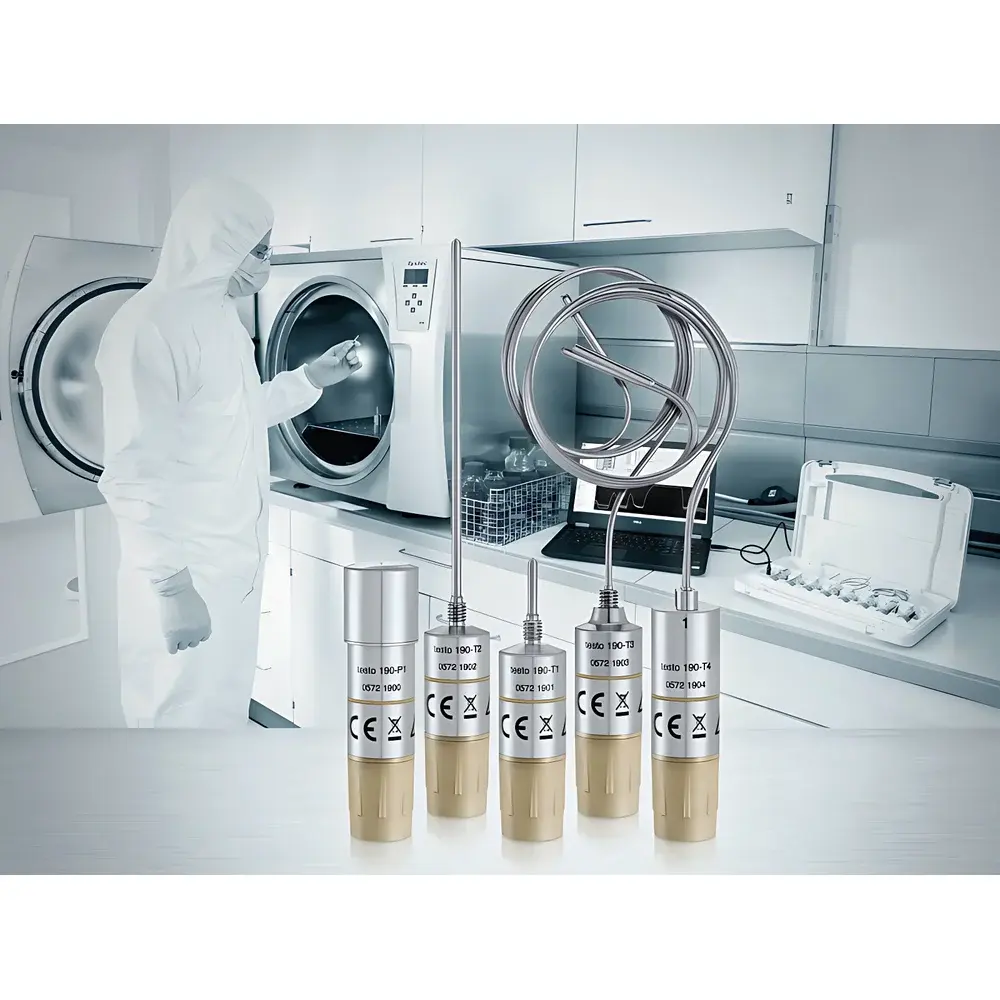
The testo 190-T3 is a 21 CFR Part 11-compliant temperature data logger engineered specifically for critical thermal validation and monitoring in regulated pharmaceutical environments. It employs a high-stability Pt1000 resistance thermometer embedded within a flexible, 775 mm stainless-steel probe sheath (Ø1.5 mm), enabling precise insertion into narrow sterilization chambers, lyophilizer shelves, autoclave loads, and surface contact zones inaccessible to rigid sensors. Its measurement architecture adheres to the fundamental principles of platinum resistance thermometry—where temperature is derived from the predictable, repeatable change in electrical resistance of a Pt1000 element—ensuring traceable accuracy across its full operational range of −50 °C to +140 °C. Designed for compliance-driven workflows, the device meets stringent requirements for equipment qualification (IQ/OQ/PQ), process validation (e.g., steam sterilization per ISO 17665, lyophilization per USP ), and long-term stability monitoring under GMP and GLP conditions.
Key Features
- CFR-compliant design validated for use in FDA-regulated pharmaceutical manufacturing and quality control laboratories
- Hermetically sealed stainless-steel housing (IP68 rated) with PEEK-coated battery compartment, maintaining full environmental integrity even after battery replacement
- Tool-free, rotational-thread battery access enabling sub-second battery exchange without compromising seal integrity or calibration status
- Modular height configuration: supports two lithium 1/2 AA battery variants—compact version for space-constrained applications; extended-life version (included) optimized for low-temperature or high-cycle deployments
- Ultra-slim probe profile (Ø1.5 mm) with 25 mm active tip length, facilitating accurate point measurements in vial racks, freeze-dryer trays, and sterilization load mapping
- Robust memory architecture storing up to 60,000 timestamped readings with 0.01 °C resolution and configurable logging intervals from 1 second to 24 hours
Sample Compatibility & Compliance
The testo 190-T3 is validated for direct contact with pharmaceutical-grade surfaces, liquids, and solid matrices encountered during sterilization, depyrogenation, and lyophilization cycles. Its stainless-steel probe sheath and PEEK-coated enclosure resist corrosion from saturated steam, hydrogen peroxide vapor, and cryogenic solvents. The device conforms to IEC 60584-2 (thermocouple reference tables), DIN EN 60751 (Pt1000 tolerance classes), and ASTM E2877-22 (standard guide for validation of thermal mapping systems). It supports audit-ready documentation per FDA 21 CFR Part 11 through electronic signatures, role-based access control, and immutable audit trails when used with the dedicated testo 190 CFR software. All units ship with individual factory calibration certificates traceable to DKD/DAkkS-accredited standards.
Software & Data Management
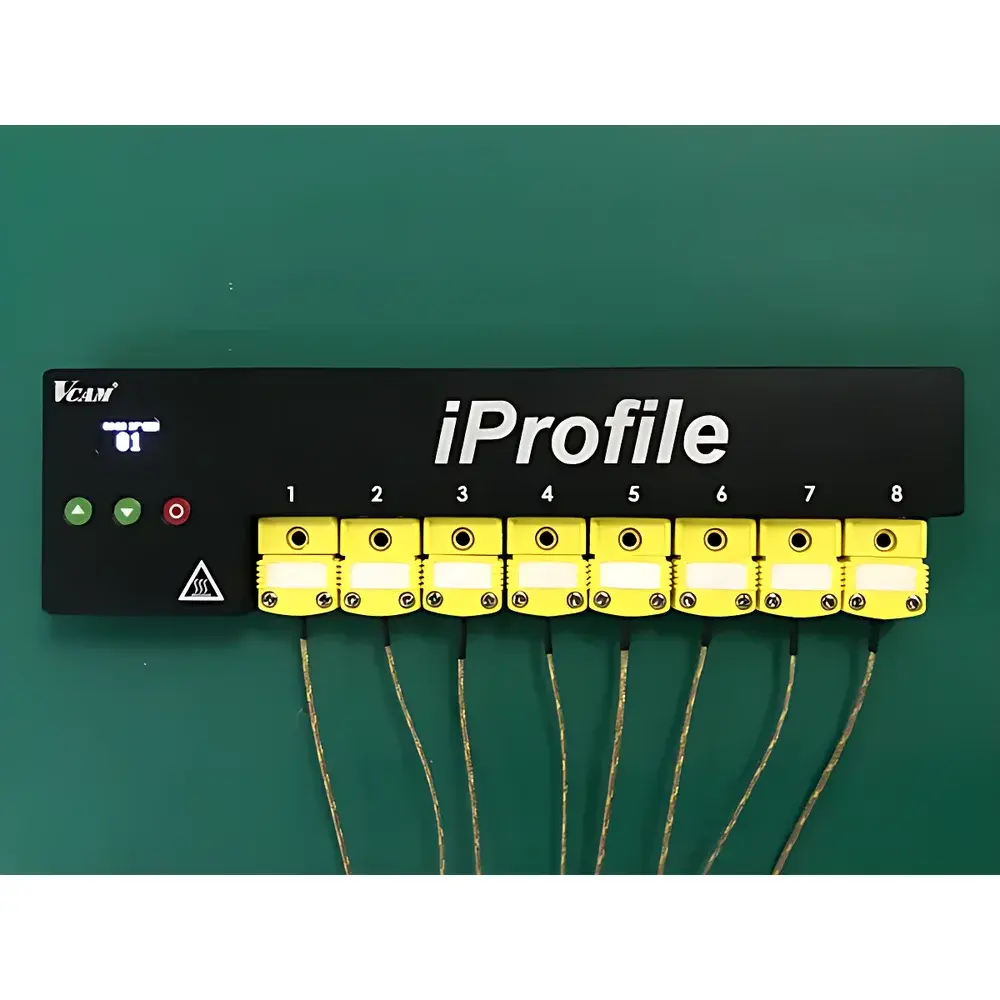
Data acquisition, configuration, and analysis are executed exclusively via the testo 190 CFR software—a validated, standalone Windows application compliant with 21 CFR Part 11 Annex 11 and EU GMP Annex 11 requirements. The software enables simultaneous programming and readout of up to eight testo 190-T3 loggers via the multifunctional docking station—eliminating the need for individual USB interfaces or manual device handling. Each session generates encrypted, tamper-evident .tdf files containing raw sensor data, metadata (operator ID, location tag, cycle ID), and digital signature logs. Reporting modules support automated generation of validation reports aligned with ISO 13485, PIC/S PE 009, and WHO TRS 961 Annex 6 templates. Audit trail records capture all user actions—including parameter changes, start/stop commands, and file exports—with timestamps and operator credentials.
Applications
- Thermal mapping and load qualification of autoclaves, dry heat ovens, and VHP isolators
- Shelf temperature uniformity studies in pharmaceutical lyophilizers (freeze dryers)
- In-process monitoring of bioreactor jacket temperatures and cold chain transport validation
- Surface temperature verification on cleanroom HVAC ducts, sterilizing filters, and filling line components
- Stability chamber qualification per ICH Q5C and USP guidelines
- Retrospective analysis of thermal excursions during storage or distribution of temperature-sensitive APIs and finished dosage forms
FAQ
Is the testo 190-T3 suitable for steam sterilization validation at 121 °C?
Yes—the device is rated for continuous operation at +121 °C, with verified battery life of 2,500 hours under 10-second sampling intervals at that temperature.
Does it meet IP68 for immersion during cleaning-in-place (CIP) cycles?
Yes—the fully sealed stainless-steel housing and PEEK-coated battery cap provide IP68 protection against prolonged water immersion and aggressive cleaning agents.
Can multiple loggers be synchronized to a common time base?
Yes—the testo 190 CFR software automatically synchronizes real-time clocks across all connected devices during docking, ensuring temporal coherence across distributed sensor networks.
Is calibration certificate included with each unit?
Yes—each testo 190-T3 ships with a DKD-traceable calibration certificate covering the full −50 °C to +140 °C range, including uncertainty values per ISO/IEC 17025.
What is the maximum allowable bending radius for the probe?
The probe maintains mechanical integrity and metrological performance down to a minimum bending radius of 15 mm—verified per DIN EN 61000-4-2 for repeated flexing during routine deployment.