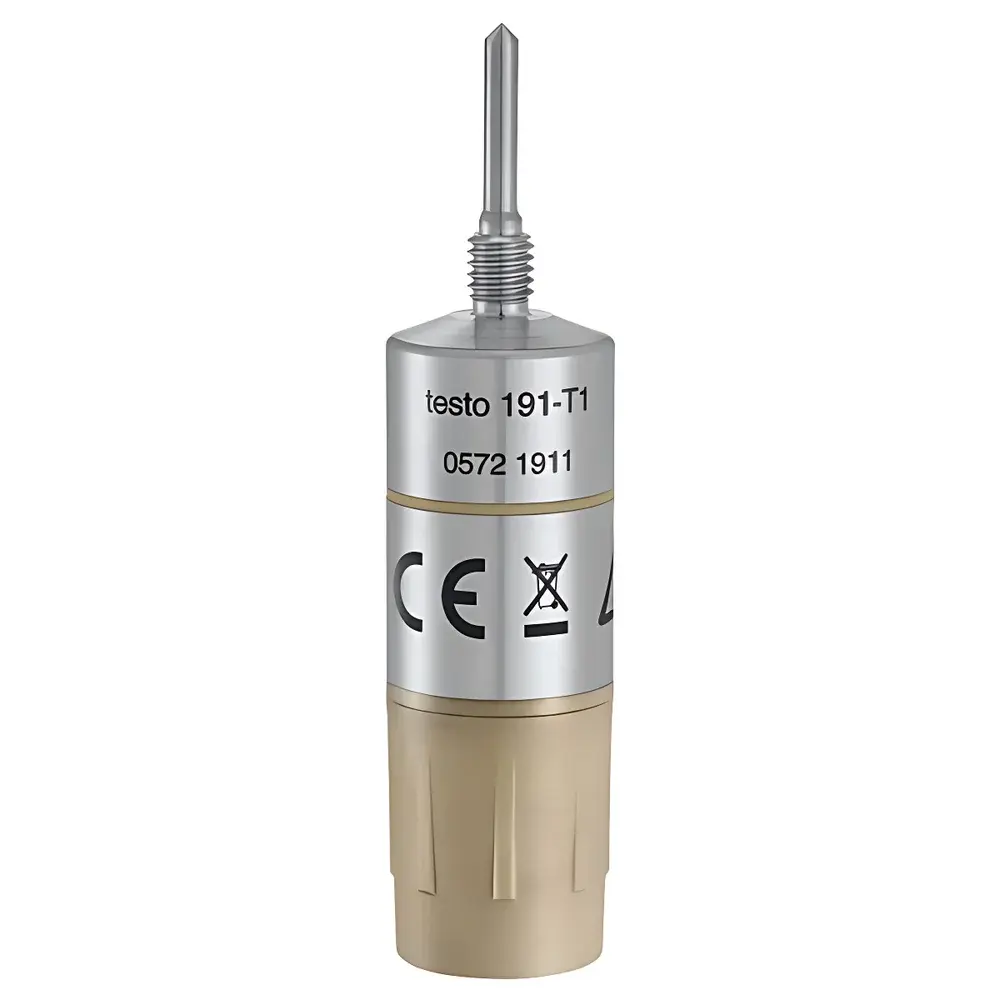
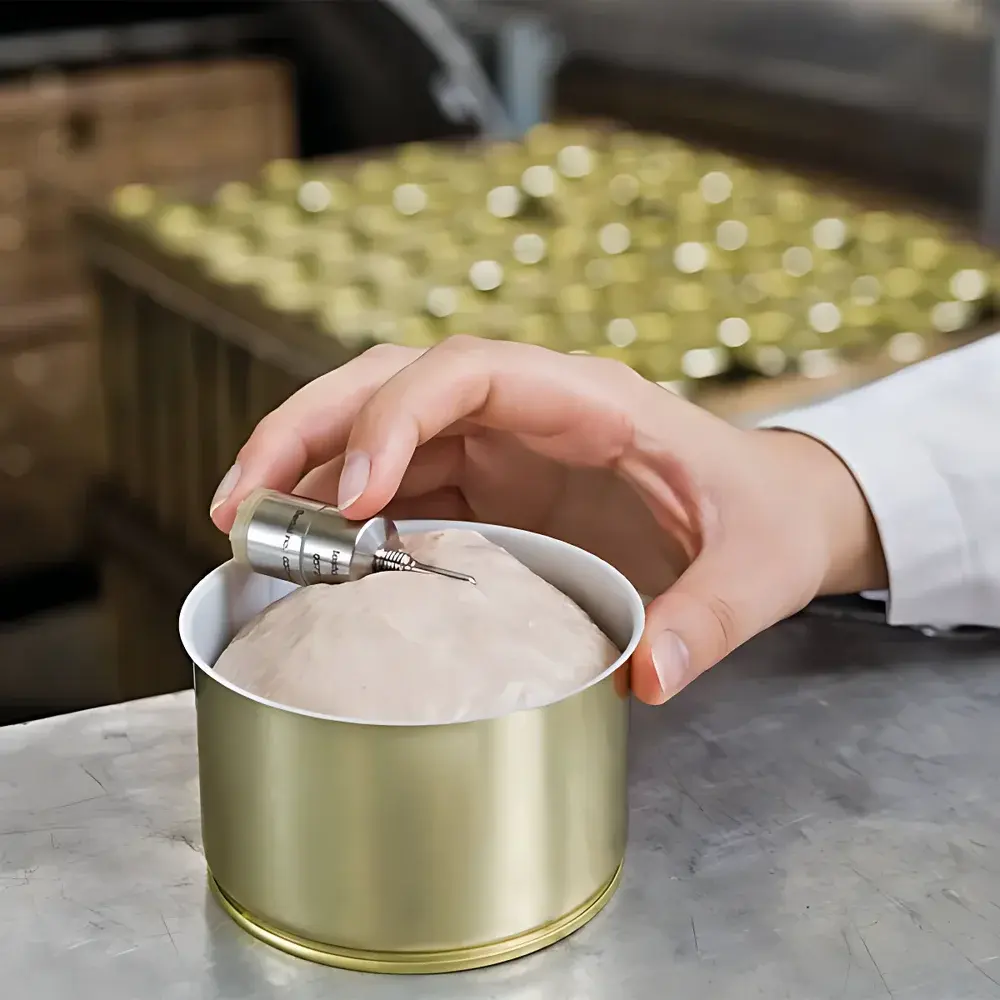
testo 191-T1 HACCP Temperature Data Logger (Model 0572 1911)
| Brand | testo |
|---|---|
| Origin | Germany |
| Model | 0572 1911 |
| Instrument Type | Single-Channel HACCP-Compliant Temperature Data Logger |
| Dimensions | Ø20 × 59 mm |
| Installation | Portable / Immersible |
| Housing Material | Stainless Steel (AISI 316) + PEEK (Polyetheretherketone) |
| IP Rating | IP68 |
| Probe Sleeve Length | 25 mm |
| Probe Diameter | 3 mm |
| Measurement Range | −50 to +140 °C |
| Accuracy | ±0.2 °C (−50 to −40 °C), ±0.1 °C (−40 to +140 °C) |
| Resolution | 0.01 °C |
| Response Time (t₉₀) | 7 s |
| Sampling Interval | 1 s to 24 h |
| Memory Capacity | 60,000 readings |
| Battery | 1/2 AA lithium |
| Operating Life | 2,500 hours (at 10 s interval, +121 °C) |
| Storage Temperature | −20 to +50 °C |
| Sensor Type | Integrated Pt1000 RTD |
Overview
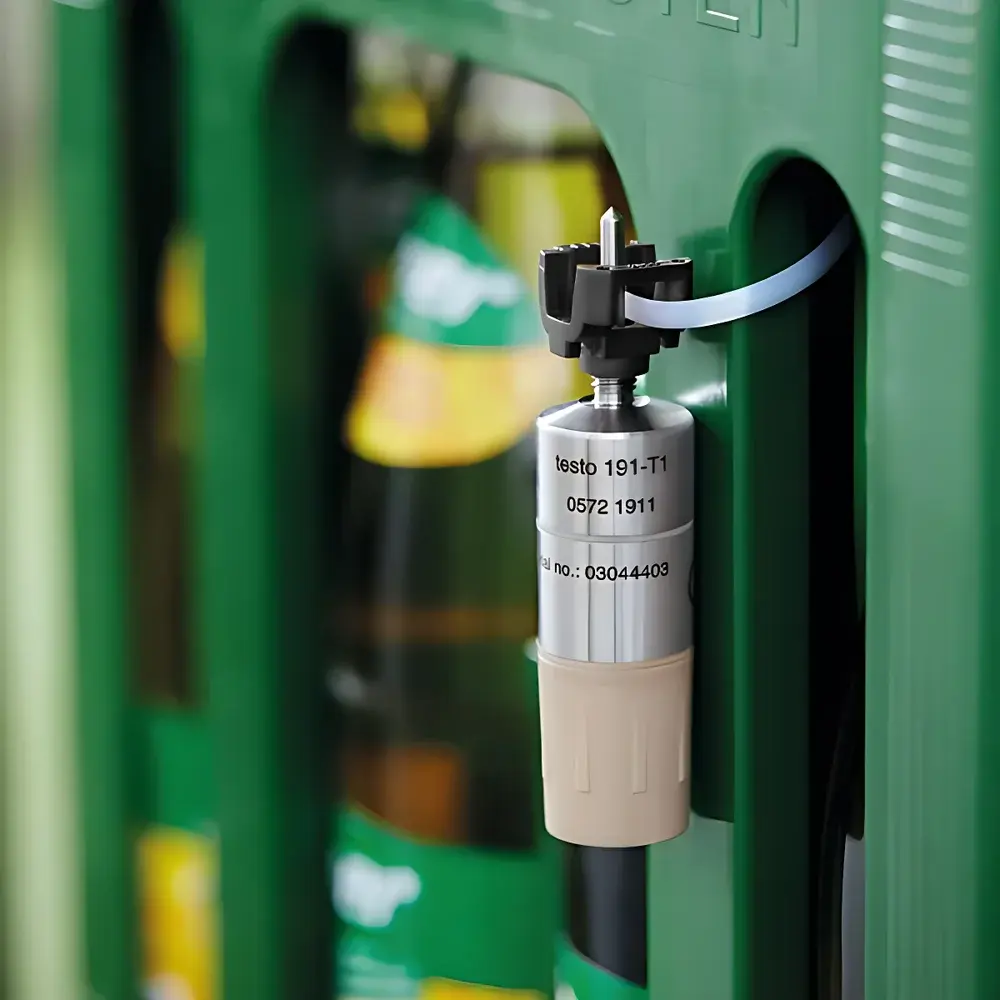
The testo 191-T1 HACCP Temperature Data Logger (Model 0572 1911) is a certified, single-channel, immersion-grade temperature monitoring device engineered for regulatory compliance in thermal process validation across food manufacturing, canning, sterilization, and pasteurization applications. It operates on the principle of high-stability platinum resistance thermometry (Pt1000), delivering traceable, NIST-traceable-capable measurements with metrological integrity across extreme thermal gradients—from cryogenic storage (−50 °C) to retort sterilization (up to +140 °C). Its compact cylindrical form factor (Ø20 × 59 mm) enables direct insertion into sealed containers, product cores, or narrow processing vessels—making it uniquely suited for mapping thermal profiles inside canned goods, pouches, and autoclave loads per FDA Food Code §3-501.12 and EU Regulation (EC) No 852/2004 Annex II. The device meets the functional requirements of HACCP Principle 4 (critical limit monitoring) and supports validation under ISO 22000:2018, BRCGS Food Safety Issue 9, and IFS Food v7.
Key Features
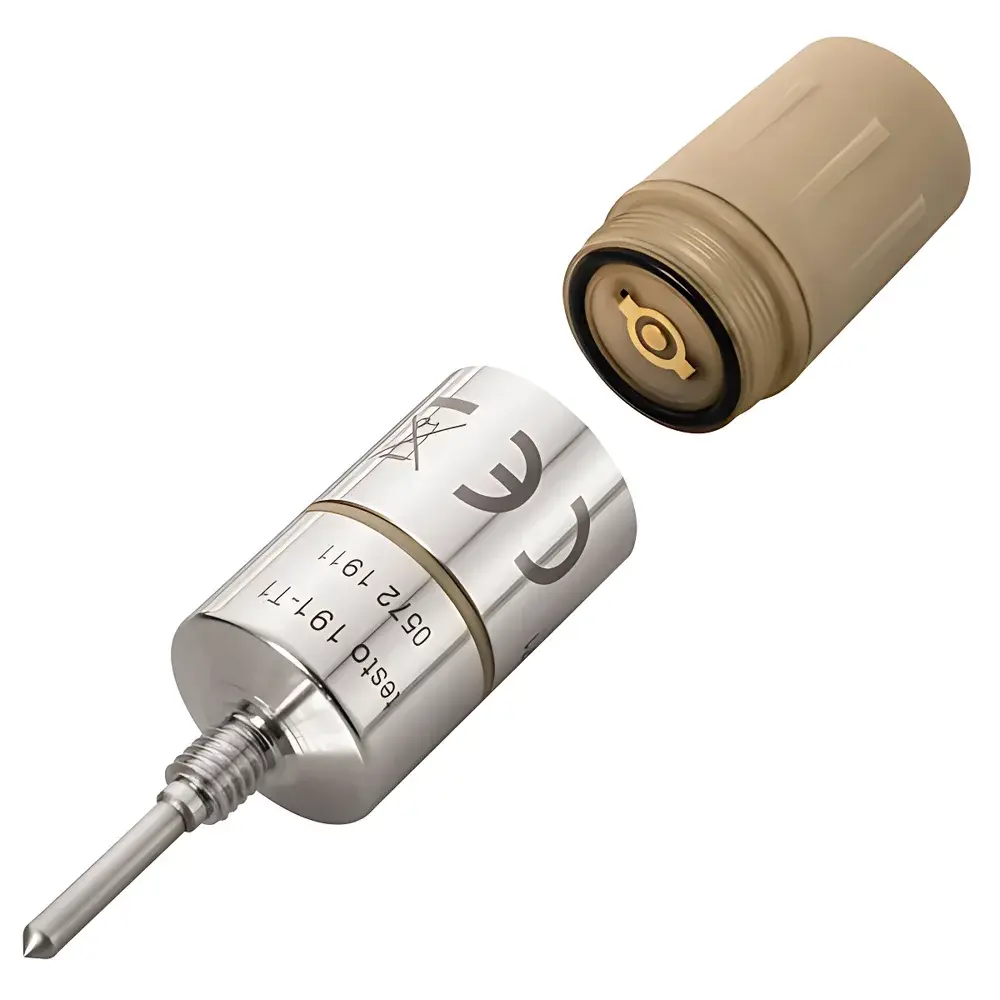
- Hermetically sealed stainless steel (AISI 316) housing with PEEK polymer end cap—rated IP68 for continuous submersion and steam sterilization compatibility
- Integrated Pt1000 sensor with 3 mm diameter rigid probe sleeve (25 mm length) optimized for rapid thermal equilibration (t₉₀ = 7 s) and minimal stem conduction error
- Tool-free, rotary-thread battery compartment enabling 10,000 cycles at 121 °C
- Two battery options: standard (compact footprint) and extended-life (optimized for low-temperature operation down to −50 °C)
- Non-volatile memory storing up to 60,000 timestamped readings with 0.01 °C resolution and dual-range accuracy (±0.1 °C from −40 to +140 °C)
- Configurable sampling interval from 1 second to 24 hours—programmable via testo 190 programming/reading unit or testo 191 Professional Software
Sample Compatibility & Compliance
The testo 191-T1 is validated for direct contact with food matrices—including acidic, fatty, and aqueous products—and complies with EU Regulation (EC) No 1935/2004 on materials in contact with food. Its AISI 316 stainless steel body and PEEK encapsulation resist corrosion from organic acids, chlorinated sanitizers, and saturated steam environments. The device carries CE marking per Directive 2014/30/EU (EMC) and 2014/35/EU (LVD), and its measurement performance aligns with EN 13485:2019 (medical device quality systems) and ASTM E2810–21 (standard specification for validation of thermal processing equipment). For audit readiness, it supports full GLP/GMP data integrity workflows when used with testo 191 Professional Software (21 CFR Part 11 compliant with electronic signature, audit trail, and user access control).
Software & Data Management
Data acquisition, configuration, and analysis are executed via testo 191 Professional Software (sold separately), a Windows-based application designed for regulated environments. The software provides automated calibration certificate generation, configurable alarm thresholds, deviation flagging at critical limits (e.g., time-above-60°C in pasteurization), and export to CSV, PDF, or XML formats compatible with LIMS and ERP integration. When paired with the testo 190 multi-dock station, up to eight units can be simultaneously programmed, read, and reset—eliminating sequential manual interfacing and reducing validation cycle time by >70%. All data files include embedded metadata: device ID, firmware version, UTC timestamps, sensor serial number, and cryptographic hash for tamper detection.
Applications
- Retort process validation (low-acid canned foods per USDA-FSIS 21 CFR Part 113)
- In-container thermal profiling during HTST (high-temperature short-time) pasteurization of dairy, juice, and plant-based beverages
- Freezer mapping and cold chain verification (−50 to −18 °C)
- Sterilization cycle monitoring in pharmaceutical-grade steam autoclaves (121–134 °C)
- Thermal challenge studies for shelf-life extension and lethality (F₀) calculation
- Pre- and post-process verification in HACCP Plan Annexes and SSOP documentation
FAQ
Is the testo 191-T1 suitable for use inside sealed cans during retorting?
Yes—the device’s Ø20 mm profile, IP68 rating, and 121 °C operational capability allow direct insertion into filled and sealed containers prior to thermal processing.
Does it meet FDA 21 CFR Part 11 requirements for electronic records?
When used with testo 191 Professional Software (v3.0+), it supports audit trails, role-based access control, electronic signatures, and data immutability—fulfilling core Part 11 criteria.
Can the battery be replaced in a production environment without recalibration?
Yes—battery replacement does not affect calibration; the device retains factory calibration coefficients in non-volatile memory, and no field recalibration is required after battery change.
What is the maximum continuous exposure temperature?
The unit is rated for continuous operation at +140 °C; transient excursions to +150 °C are permissible for ≤15 minutes per cycle without degradation.
Is PEEK housing chemically resistant to caustic cleaning agents?
Yes—PEEK exhibits exceptional resistance to NaOH (up to 50% w/w, 80 °C), peracetic acid, and quaternary ammonium compounds commonly used in CIP/SIP protocols.