
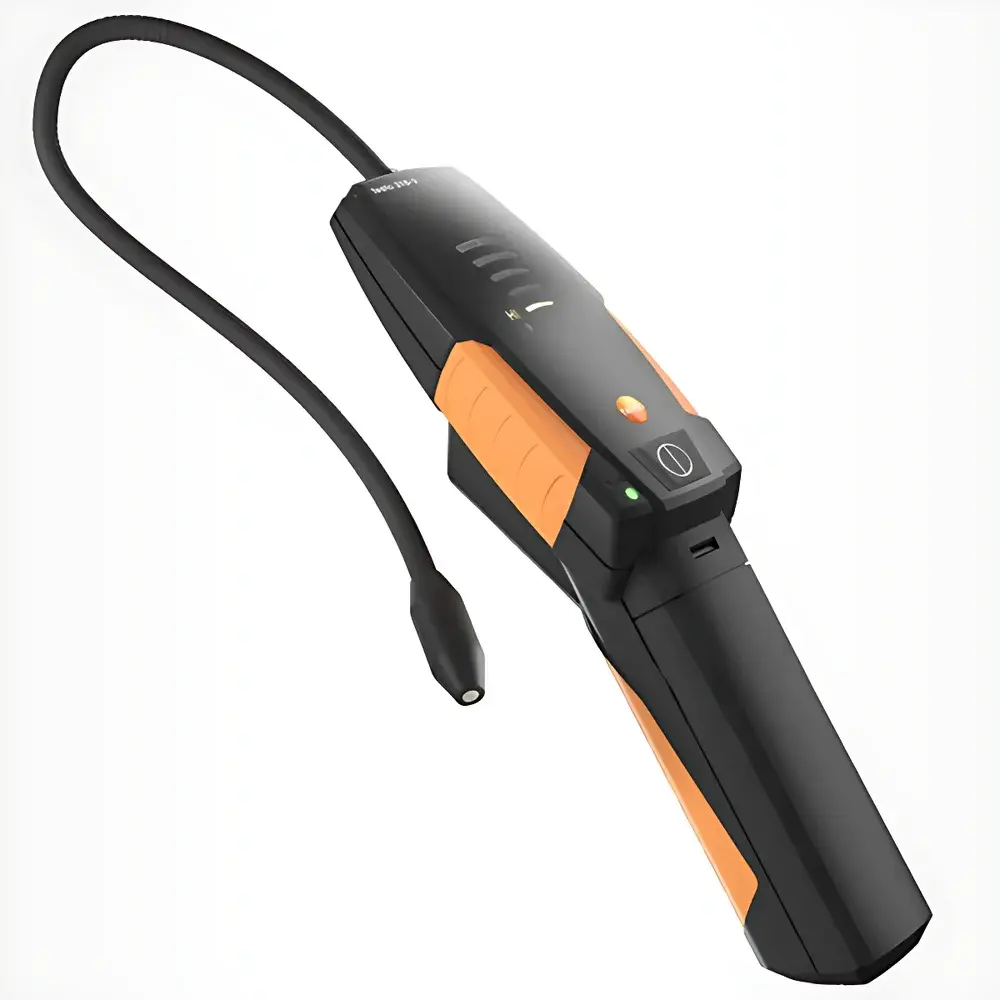
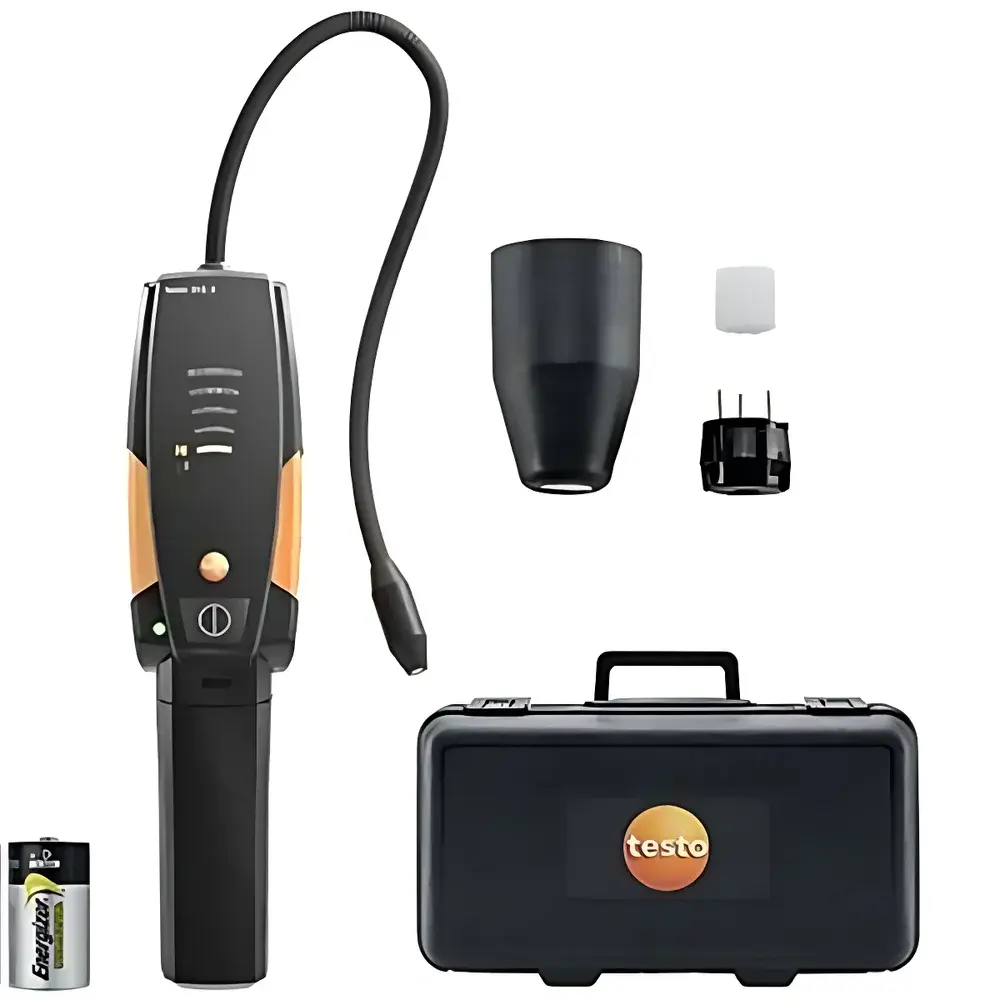
testo 316-3 Refrigerant Leak Detector (Model 0563 3163)
| Brand | testo |
|---|---|
| Origin | Germany |
| Model | 0563 3163 |
| Operating Temperature | −18 to +50 °C |
| Storage Temperature | 0 to +50 °C |
| Relative Humidity Range | 20–80 % RH |
| Weight | 500 g (incl. batteries) |
| Dimensions | 270 × 60 × 61 mm |
| Detectable Refrigerants | R22, R134a, R404A, R410A, R507, R438A, and all CFCs, HCFCs, HFCs |
| Sensitivity | 4 g/year (0.15 oz/year) |
| Sensor Lifetime | 80–100 h (~1 year of typical field use) |
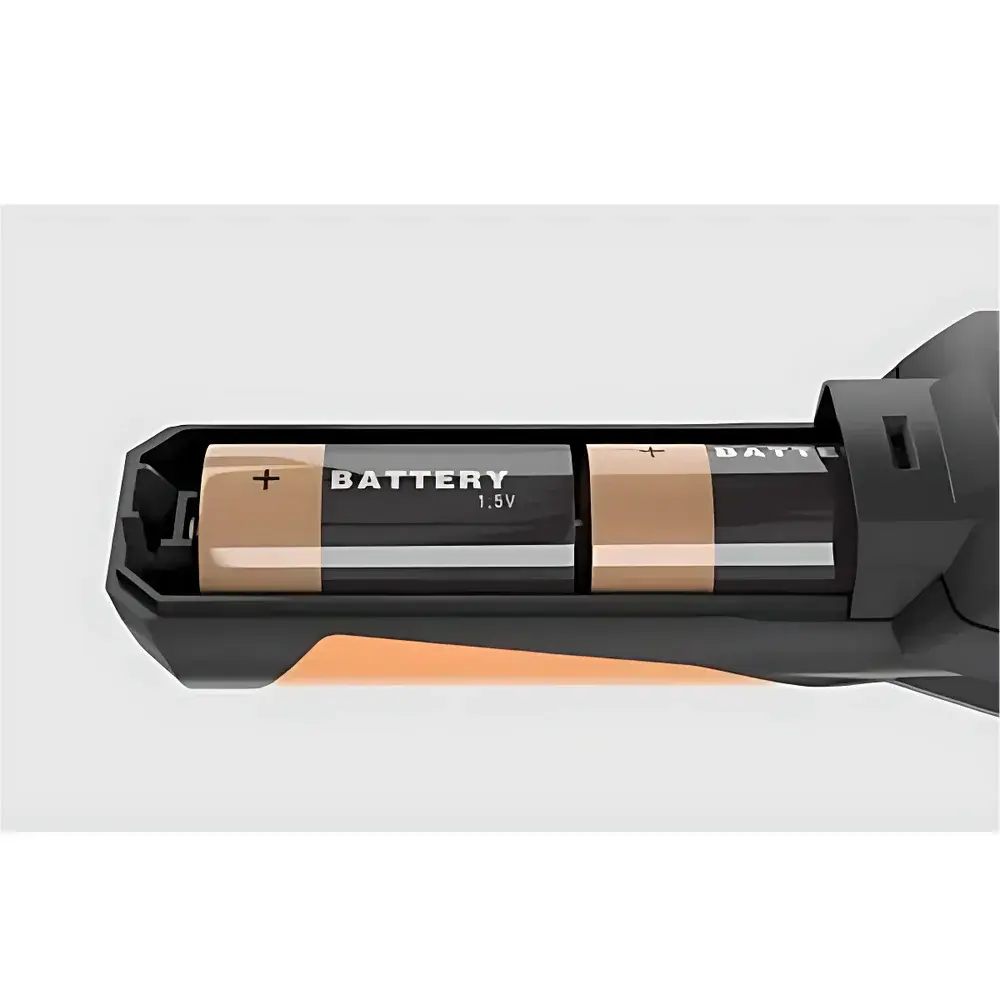
| Battery Type | 2 × D cells |
| Continuous Operation Time | ~16 h |
| Compliance | EN 14624:2012, SAE J1627, EU Directive 2004/108/EC, F-Gas Regulation (EU) No. 517/2014 |
Overview
The testo 316-3 Refrigerant Leak Detector (Model 0563 3163) is a handheld, electrochemical sensor-based instrument engineered for precise, on-site detection and localization of refrigerant leaks across residential, commercial, and industrial HVAC-R systems. It operates on the principle of selective catalytic oxidation of halogenated hydrocarbons—primarily chlorofluorocarbons (CFCs), hydrochlorofluorocarbons (HCFCs), and hydrofluorocarbons (HFCs)—generating measurable current proportional to gas concentration at the sensor surface. Designed for field technicians requiring rapid, repeatable verification under variable ambient conditions, the device delivers quantifiable sensitivity down to 4 g/year—meeting the minimum detectability threshold defined in EN 14624:2012 for professional leak detection equipment. Its compact form factor, robust housing, and battery-powered architecture ensure reliable operation in confined mechanical rooms, rooftop units, or outdoor condensing units without external power dependency.
Key Features
- Single-button operation with automatic zero calibration—enables immediate deployment without manual setup or warm-up delays
- Integrated LED leak indicator with three-tier visual feedback (green/yellow/red) corresponding to relative leak magnitude for intuitive real-time assessment
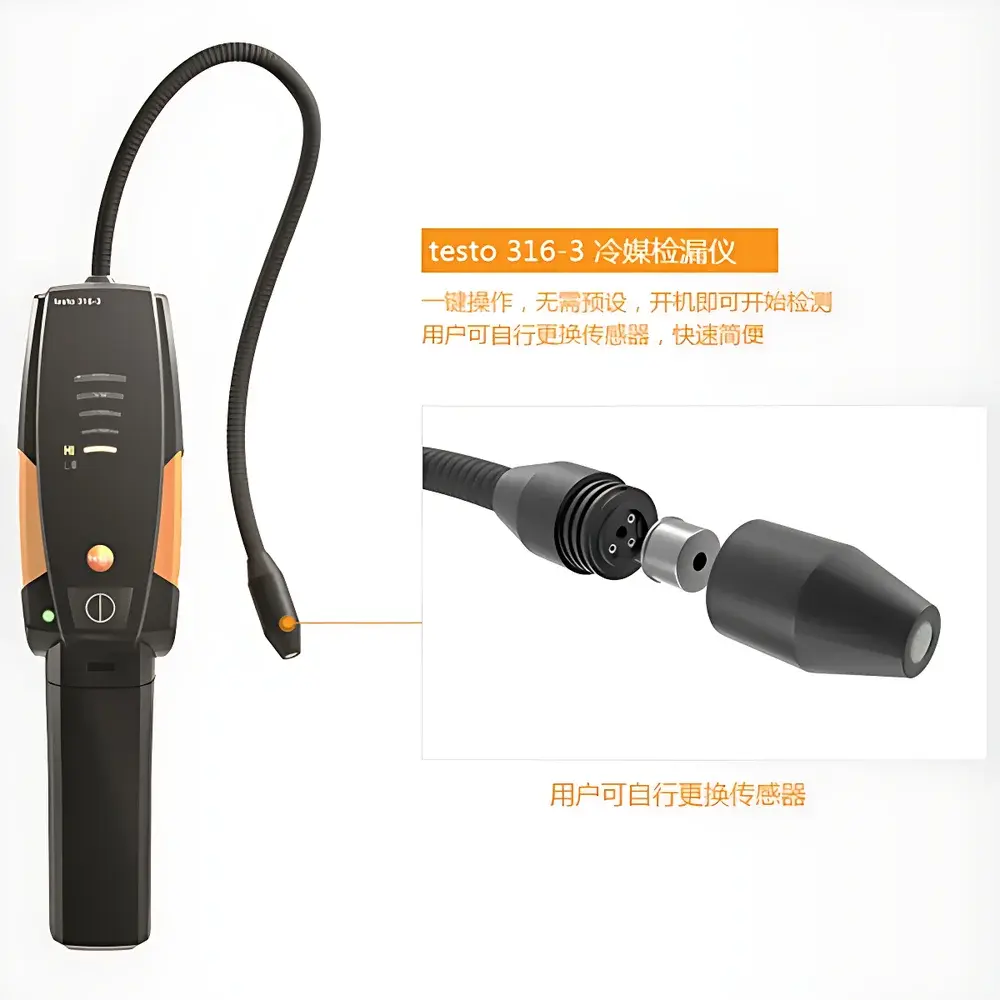
- Field-replaceable electrochemical sensor cartridge—minimizes downtime and eliminates need for factory recalibration between service cycles
- Background-compensated detection logic—maintains accuracy even in environments with residual refrigerant contamination or mixed-gas exposure
- IP54-rated enclosure—provides protection against dust ingress and water splashes during routine maintenance tasks
- Dual D-cell power system—supports up to 16 hours of continuous operation, with low-battery warning and stable voltage regulation across discharge curve
Sample Compatibility & Compliance
The testo 316-3 is validated for detection of all major refrigerant families used in legacy and modern systems: CFCs (e.g., R11, R12), HCFCs (e.g., R22), HFCs (e.g., R134a, R404A, R410A, R507, R438A), and emerging low-GWP blends compliant with EU F-Gas Regulation (EU) No. 517/2014. It satisfies mandatory performance criteria outlined in EN 14624:2012 (detection limit, response time, repeatability) and SAE J1627 (minimum sensitivity, environmental robustness). As an EU-compliant device, it bears CE marking per Directive 2004/108/EC (EMC Directive), confirming electromagnetic compatibility in electrically noisy HVAC environments. While not intended for quantitative emissions reporting under ISO 5149 or EN 378, its pass/fail localization capability supports mandatory leak-check intervals required under Article 5 of the F-Gas Regulation for equipment containing ≥3 kg refrigerant charge.
Software & Data Management
The testo 316-3 operates as a standalone field instrument with no embedded data logging or PC connectivity. All operational parameters—including sensor status, battery level, and zeroing cycle history—are conveyed via front-panel LED indicators and audible tone feedback. For compliance documentation, users are advised to record inspection outcomes manually or integrate findings into third-party CMMS platforms (e.g., Fiix, UpKeep) using standardized leak report templates aligned with ISO 55001 asset management frameworks. The included出厂 calibration certificate provides traceable verification against NIST-traceable reference standards, supporting audit readiness under ISO/IEC 17025-accredited service provider workflows.
Applications
- Routine leak screening during commissioning, preventive maintenance, and post-repair verification of split-system air conditioners, chillers, and refrigerated transport units
- Regulatory compliance checks mandated by national F-Gas authorities for operators of stationary refrigeration systems
- Troubleshooting intermittent cooling failures where micro-leaks (<5 g/year) compromise system efficiency and oil return dynamics
- Verification of brazed joint integrity after retrofitting R22 systems to R407C or R410A alternatives
- Training and certification assessments for EPA Section 608 or EU F-Gas certified technicians
FAQ
Does the testo 316-3 require periodic calibration with certified gas standards?
No—its auto-zero function compensates for baseline drift, but annual sensor replacement and functional verification against known refrigerant sources are recommended per EN 14624:2012 Annex B.
Can the device distinguish between different refrigerant types?
No—it detects halogenated refrigerants collectively; identification requires prior knowledge of system charge or supplementary analysis (e.g., refrigerant identifier).
Is the sensor compatible with non-halogenated refrigerants such as ammonia (R717) or CO₂ (R744)?
No—the electrochemical cell is optimized for chlorine- and fluorine-containing compounds; ammonia and CO₂ fall outside its detection range.
What constitutes proper storage to maximize sensor lifetime?
Store at room temperature (15–25 °C), away from direct sunlight and solvent vapors; avoid prolonged exposure to high humidity or refrigerant-saturated atmospheres when powered off.
How does the device perform in high-airflow environments like ductwork or fan coil units?
Its probe design enables directed sampling; however, turbulent airflow may dilute localized plumes—technicians should reduce probe distance to suspected joints and use slow, methodical scanning patterns.





