
testo 320 Portable Flue Gas Analyzer
| Brand | testo |
|---|---|
| Origin | Germany |
| Model | 320 |
| Instrument Type | Portable Flue Gas Analyzer |
| Measurement Range (O₂) | 0–21 % vol |
| Measurement Range (CO) | 0–500 ppm |
| Accuracy (O₂) | ±0.2 % vol |
| Accuracy (CO) | ±2 ppm (0–39.9 ppm), ±5 % of reading (40–500 ppm) |
| Repeatability | ±5 % of reading (40–500 ppm) |
| Response Time (t₉₀) | < 40 s |
| Stability | ±5 % of reading (40–500 ppm) |
| Operating Temperature | –5 to +45 °C |
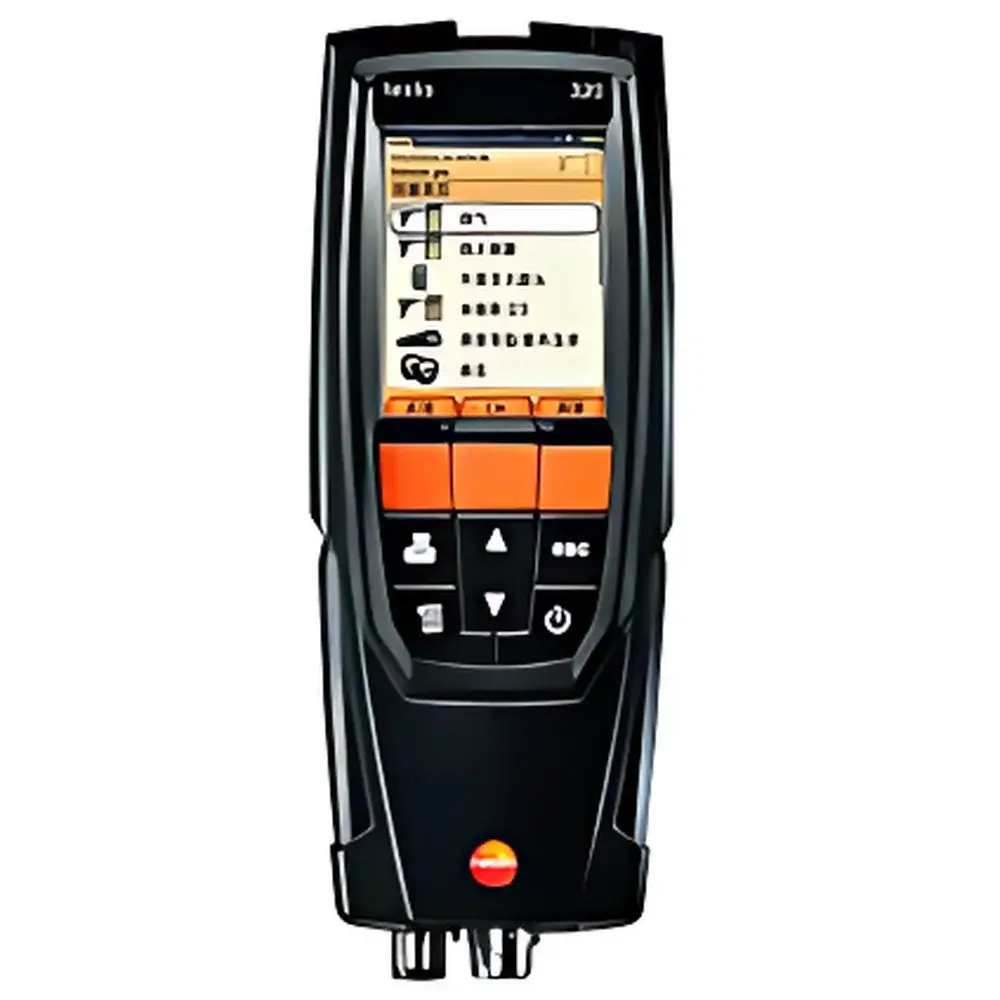
| Display | Backlit graphical LCD |
| Power Supply | Rechargeable Li-ion battery (up to 6 h operation) |
| Compliance | EN 50379-1, EN 50379-2, EN 50379-3, 1st BImSchV, TÜV-certified |
Overview
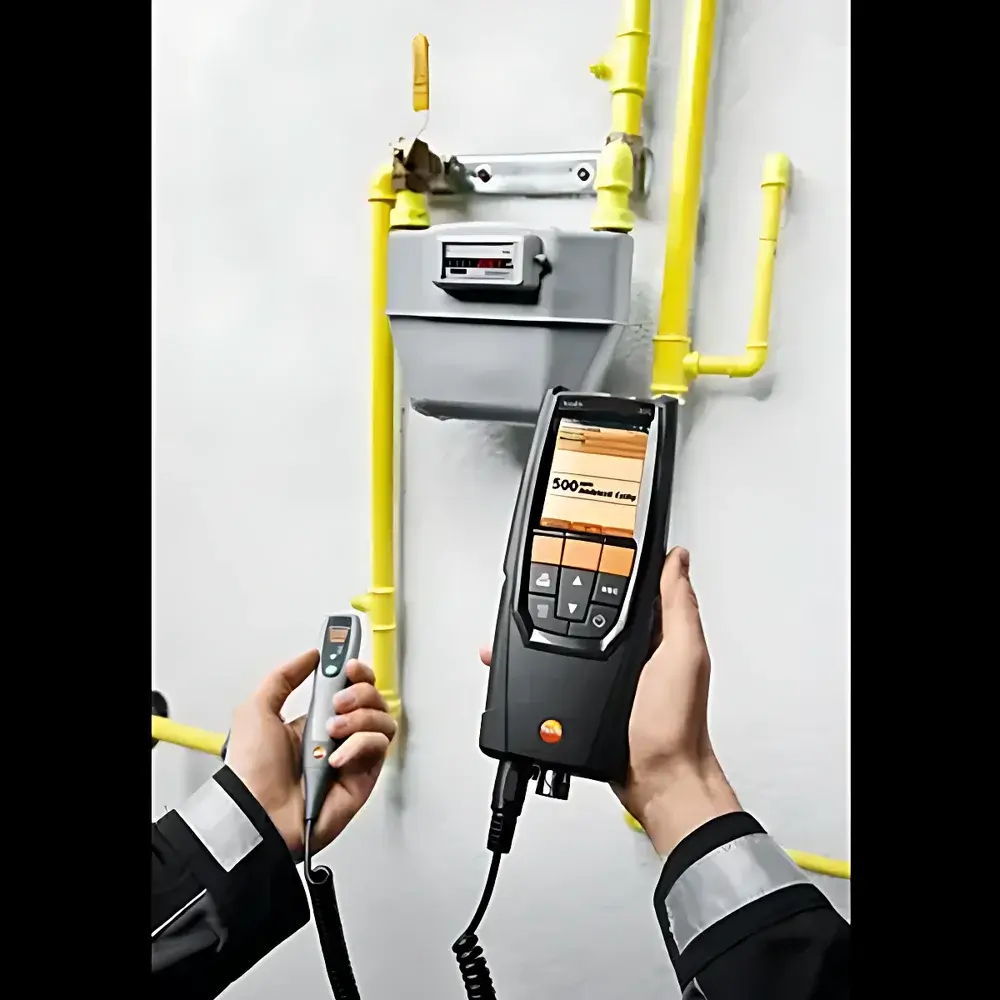
The testo 320 Portable Flue Gas Analyzer is an engineered solution for precision combustion diagnostics and regulatory-compliant flue gas analysis in residential, commercial, and light industrial heating systems. Designed in accordance with the fundamental principles of electrochemical gas sensing and thermocouple-based temperature measurement, the instrument delivers trace-level CO detection and parametric combustion efficiency calculation in real time. Its core architecture integrates dual-sensor modules—factory-calibrated O₂ and CO electrochemical cells—alongside a built-in combustion air temperature sensor and integrated thermocouple interface within the flue gas probe connector. This enables simultaneous acquisition of O₂ concentration, CO concentration, flue gas temperature, ambient air temperature, and differential pressure (when equipped with optional pressure probe), forming the foundational dataset required for EN 50379-compliant boiler performance evaluation.
Key Features
- Dual-sensor configuration: Standard O₂ and CO electrochemical sensors, with optional second CO sensor for redundancy or cross-validation in high-risk environments.
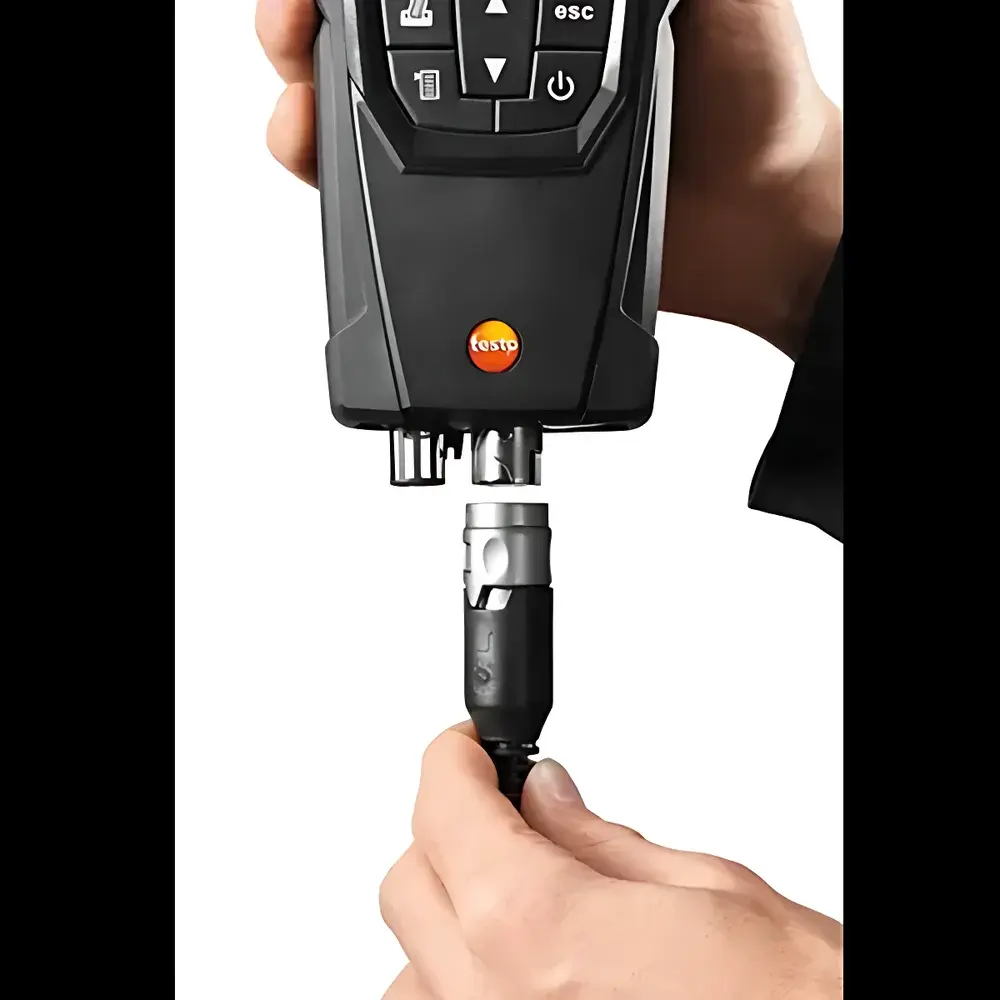
- Integrated thermal measurement: Combustion air temperature sensor embedded in instrument base; thermocouple input (type K) directly accessible via flue probe interface for synchronized flue gas temperature monitoring.
- Real-time combustion parameter derivation: Automatic calculation of CO₂ volume concentration (% vol), combustion efficiency (%), flue gas loss (%), lambda (λ) value, and dew point temperature—based on measured O₂, CO, and temperature inputs per DIN EN 12953 and VDI 2046 guidelines.
- Modular probe ecosystem: Compatible with a range of certified accessories including multi-hole sampling probes (for stratified flue gas profiling), flexible flue gas probes (for tight or curved duct access), and differential pressure probes (for draft and under-pressure verification per 1st BImSchV §15).
- TÜV-certified hardware and firmware: Fully compliant with EN 50379 Parts 1–3 for portable flue gas analyzers used in official emission inspections and periodic maintenance reporting.
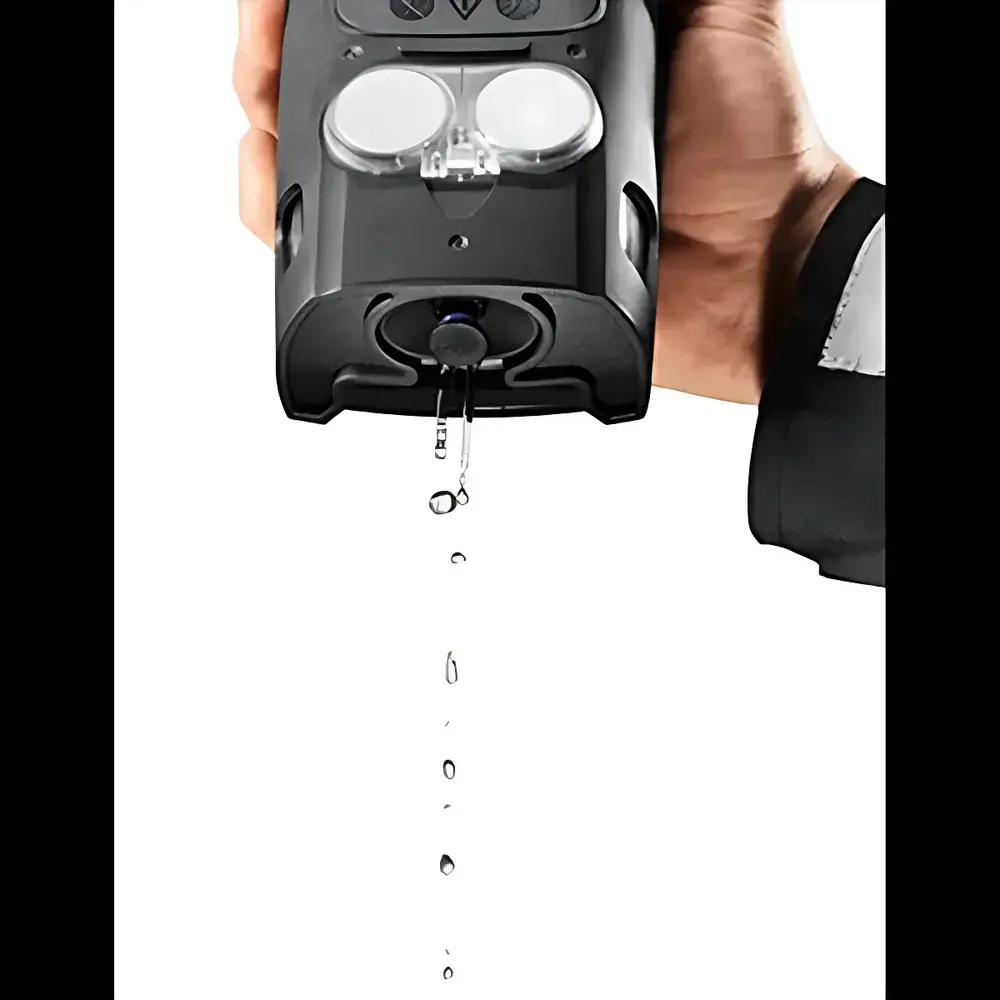
- Robust field operation: IP42-rated enclosure, rechargeable lithium-ion battery (6 h typical runtime), backlit graphical display with intuitive menu navigation, and automatic zero-point stabilization during warm-up.
Sample Compatibility & Compliance
The testo 320 is validated for use with dry, non-condensing flue gases from gas-fired, oil-fired, and solid-fuel boilers operating at nominal thermal outputs up to 400 kW. It is not intended for use with wet, corrosive, or particulate-laden exhaust streams without appropriate filtration or dilution. All sensor modules undergo factory calibration traceable to national standards (DKD/DAkkS), and calibration certificates are provided with each unit. The analyzer meets the metrological requirements of the German 1st BImSchV (Federal Immission Control Ordinance) for chimney sweeps and heating technicians performing legally mandated inspections. It supports audit-ready documentation workflows aligned with DIN EN ISO/IEC 17025 laboratory quality management principles.
Software & Data Management
Data export is supported via USB interface to testo’s proprietary Smart Probes software (Windows-compatible), enabling post-measurement report generation with customizable templates compliant with VDI 2046 and EN 12953 Annex D. Raw measurement logs include timestamps, sensor status flags, and environmental metadata (e.g., ambient pressure, probe insertion depth). The device stores up to 250 complete measurement sets internally. While the testo 320 does not feature wireless connectivity or cloud synchronization, its file structure adheres to ASTM E2918-13 data interchange conventions for combustion diagnostics, facilitating integration into third-party CMMS or energy management platforms via CSV import. Firmware updates preserve full GLP/GMP traceability with version-controlled change logs.
Applications
- Regulatory flue gas inspection per EN 50379 and national implementation ordinances (e.g., 1st BImSchV in Germany, BS 7967 in UK).
- Routine commissioning and maintenance of condensing and non-condensing boilers, heat pumps with auxiliary burners, and biomass stoves.
- Draft and under-pressure verification across flue systems, including balanced-flue and room-sealed configurations.
- Combustion optimization through iterative lambda adjustment and efficiency mapping across load stages.
- Leak detection of combustible gases (CO, natural gas surrogate) in boiler rooms, utility corridors, and service areas using ambient CO mode.
- Thermal balance assessment via simultaneous measurement of supply/return water temperatures and radiator surface differentials—leveraging integrated thermocouple inputs.
FAQ
Is the testo 320 suitable for official emissions certification under EU directives?
Yes—the device carries TÜV certification to EN 50379-1/-2/-3 and is approved for legally binding flue gas measurements under the 1st BImSchV and equivalent national frameworks.
Can the testo 320 measure CO₂ directly, or is it calculated?
CO₂ is calculated stoichiometrically from measured O₂ concentration and fuel-specific combustion equations (e.g., methane, propane, heating oil); no dedicated NDIR CO₂ sensor is included.
What is the recommended recalibration interval for field use?
Testo recommends functional verification before each day’s measurements and full sensor recalibration every 12 months—or after exposure to sensor-poisoning agents (e.g., H₂S, Cl₂, silicone vapors).
Does the instrument support differential pressure measurement out of the box?
No—differential pressure measurement requires the optional testo 510 pressure probe, which connects via the same interface used for thermocouples and enables synchronous ΔP logging alongside gas and temperature data.
How is measurement uncertainty reported in compliance documentation?
Uncertainty values follow EN 50379-2 Annex C: ±2 ppm (0–39.9 ppm CO), ±5 % of reading (40–500 ppm CO), and ±0.2 % vol O₂—documented in the device’s calibration certificate and reflected in generated reports.







