
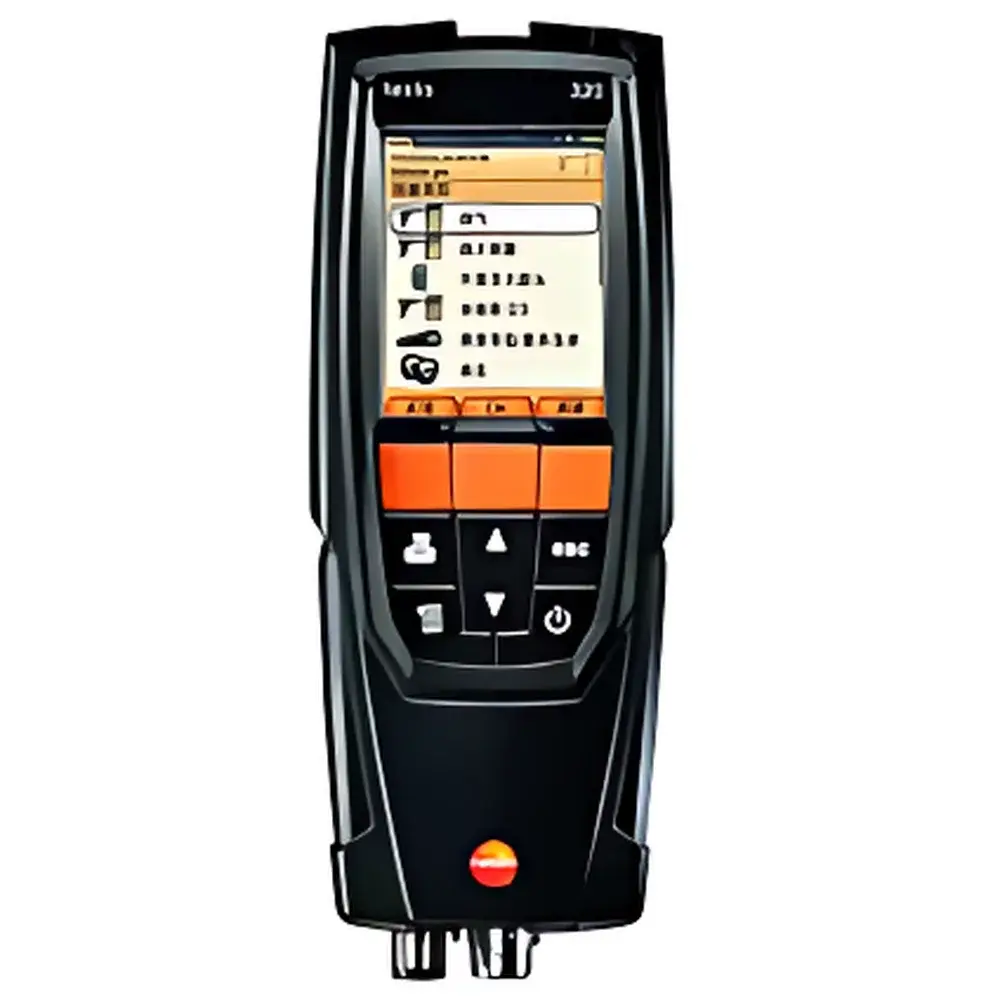
Testo 320 Portable Flue Gas Analyzer
| Brand | Testo |
|---|---|
| Origin | Germany |
| Model | testo 320 |
| Instrument Type | Portable Flue Gas Analyzer |
| Measurement Accuracy | ±2 ppm (0–39.9 ppm CO) |
| Repeatability | ±5% of reading (40–500 ppm CO) |
| Response Time | < 40 s |
| Stability | ±5% of reading (40–500 ppm CO) |
| Measured Gases | O₂, CO |
| Compliance | EN 50379-1 to -3, 1st BImSchV, TÜV-certified |
| Included Sensors | Integrated O₂ sensor, built-in CO sensor, combustion air temperature sensor, thermocouple input in probe connector |
| Optional Accessories | Multi-hole probe, flexible flue gas probe, differential pressure probe |
Overview
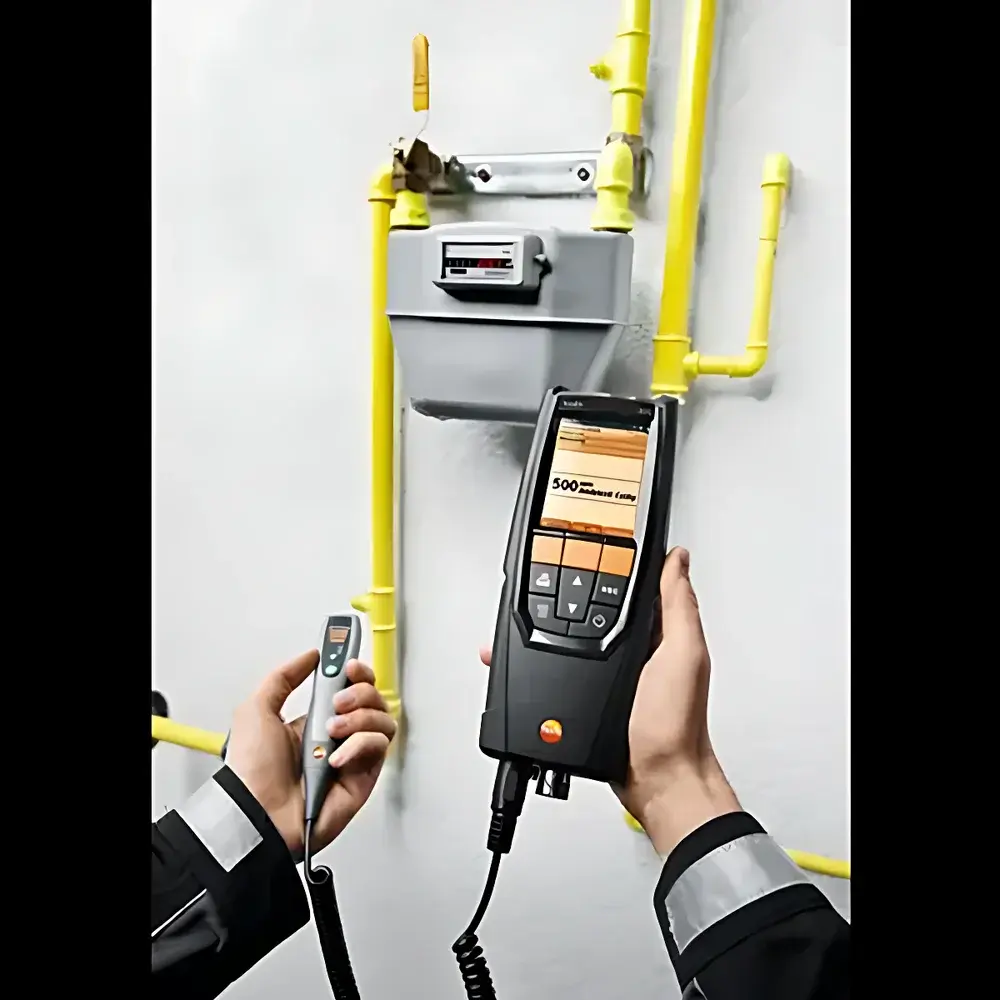
The testo 320 Portable Flue Gas Analyzer is a field-deployable, CE-marked instrumentation platform engineered for precision combustion analysis and regulatory-compliant emissions verification in heating systems. Operating on electrochemical sensing principles, the device simultaneously quantifies oxygen (O₂) and carbon monoxide (CO) concentrations in flue gases—core parameters for assessing combustion efficiency, safety, and environmental compliance. Its measurement architecture adheres to the stringent metrological requirements defined in EN 50379 Parts 1–3 and the German 1st BImSchV (Federal Immission Control Ordinance), and it carries official TÜV certification for use in statutory inspection workflows across EU member states. Designed for HVAC technicians, energy auditors, and facility maintenance engineers, the testo 320 delivers traceable, repeatable readings under real-world operating conditions—including variable draft, transient load changes, and low-temperature condensing boiler exhausts.
Key Features
- Integrated dual-sensor configuration: factory-calibrated electrochemical O₂ and CO sensors with automatic cross-sensitivity compensation
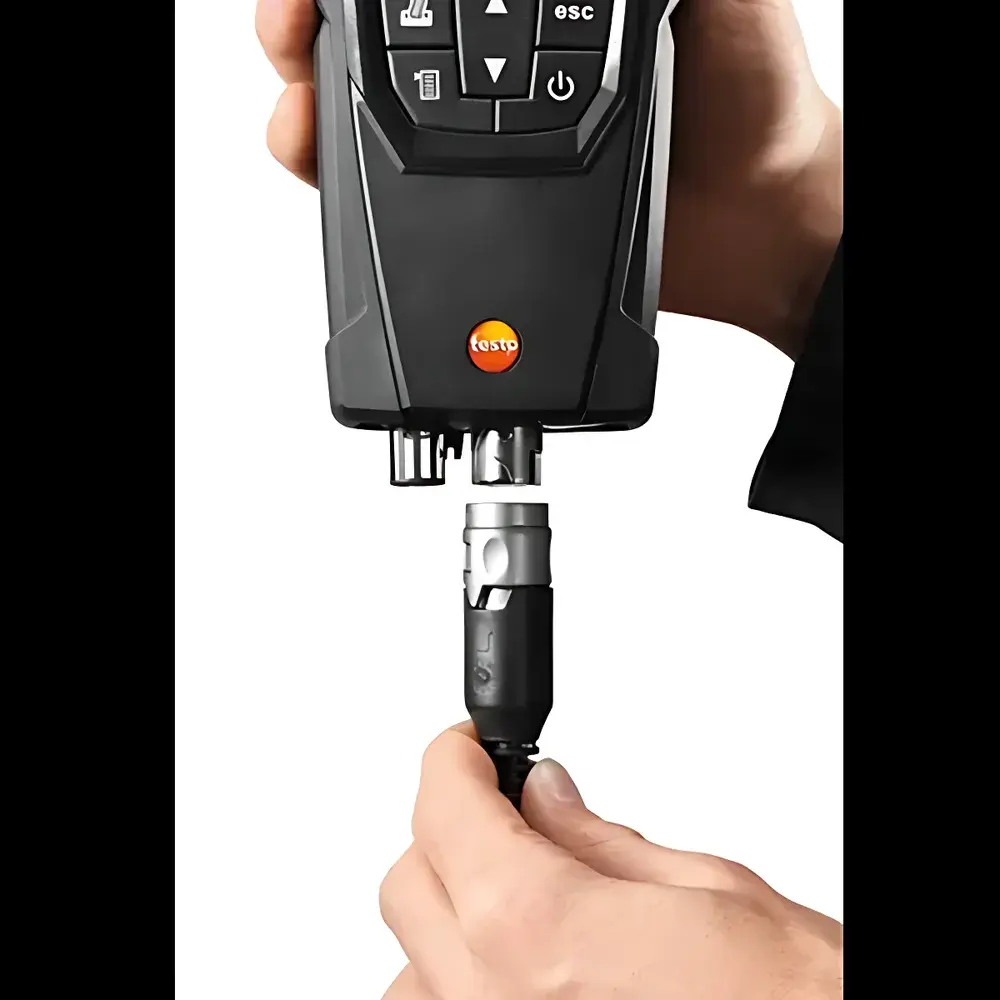
- Dual-temperature capability: built-in combustion air temperature sensor + dedicated thermocouple input (Type K) integrated into the flue gas probe connector for simultaneous flue gas temperature acquisition
- Real-time derived parameter calculation: automatic computation of CO₂ concentration (based on O₂ depletion), combustion efficiency (η), flue gas loss (qA), and lambda (λ) value per DIN EN 267 and DIN EN 676
- Rugged industrial housing rated IP54 for dust and splash resistance, optimized for workshop and rooftop installation environments
- Intuitive push-button interface with backlit graphical display; no PC required for basic operation or data review
- Modular probe ecosystem: supports interchangeable flue gas probes—including multi-hole sampling probes for stratified flow profiling, flexible 1.2 m probes for tight duct access, and differential pressure probes for draft and Δp measurement synchronized with gas readings
Sample Compatibility & Compliance
The testo 320 is validated for use with dry and moderately wet flue gases from oil-, gas-, and biomass-fired heating appliances up to 120 kW nominal thermal output. It meets the functional and performance criteria specified in EN 50379-1 (general requirements), EN 50379-2 (requirements for CO and O₂ measurement), and EN 50379-3 (requirements for data handling and reporting). As a TÜV-certified instrument, it satisfies mandatory periodic inspection protocols under German and Austrian building codes and supports audit readiness for GLP-aligned maintenance documentation. The analyzer’s ±2 ppm CO accuracy at low concentrations (0–39.9 ppm) ensures reliable detection of incomplete combustion signatures well below occupational exposure limits (e.g., OSHA PEL = 50 ppm), while its ±5% repeatability and stability specifications align with routine service-level verification requirements.
Software & Data Management
Data logging is supported via internal memory (up to 250 measurement sets) and optional Bluetooth connectivity to the testo Smart Probes app (iOS/Android) for live telemetry, annotation, and report generation. Export formats include CSV and PDF—structured to include timestamp, sensor IDs, ambient and flue temperatures, O₂%, CO ppm, calculated efficiency, and user-defined notes. While the base unit does not implement FDA 21 CFR Part 11 electronic signature controls, the optional testo IRSoft PC software enables full traceability: audit trails, user access levels, and calibration history tracking—facilitating ISO/IEC 17025-compliant laboratory workflows when deployed in certified testing labs or third-party inspection agencies.
Applications
- Commissioning and annual servicing of domestic and commercial boilers (condensing and non-condensing)
- Combustion optimization and tuning of burners per EN 15502 and VDI 2047 guidelines
- Flue draft assessment and chimney system integrity verification using integrated differential pressure measurement
- Leak detection of combustible gases in boiler rooms and mechanical plant spaces (ambient CO screening mode)
- Hydronic system balancing via simultaneous supply/return temperature differential measurement
- Energy performance diagnostics for EN 16247-1-compliant audits and EPC (Energy Performance Certificate) preparation
FAQ
Does the testo 320 require annual recalibration?
Yes—electrochemical gas sensors exhibit gradual drift; Testo recommends full functional verification and span calibration every 12 months or after 2,000 hours of operation, per EN 50379-2 Annex A.
Can the testo 320 measure NOx or SO2?
No—the base model is configured exclusively for O₂ and CO. Multi-gas variants (e.g., testo 330i) support NOx, SO2, and CO2 via additional sensor modules.
Is the instrument suitable for high-humidity flue gases?
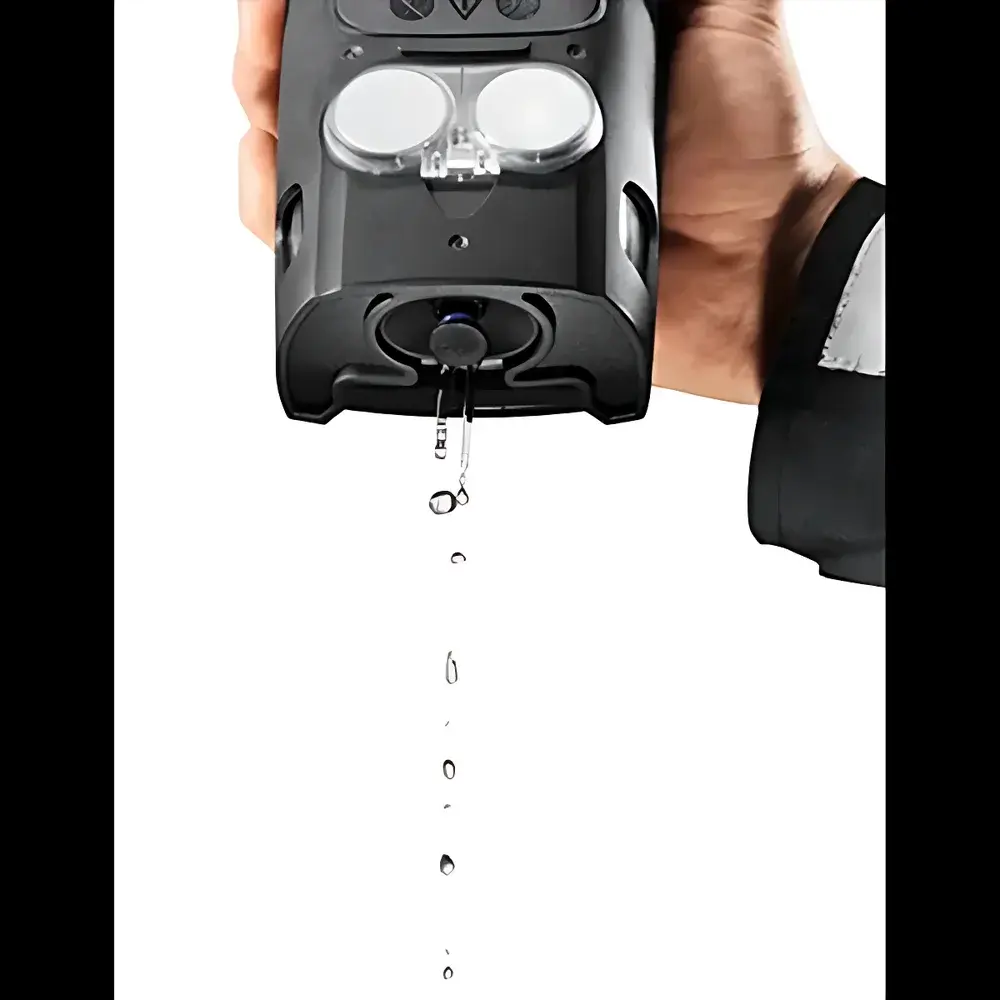
It tolerates short-term exposure to saturated flue gas (up to 100% RH), but prolonged condensation may affect sensor longevity; use of a heated probe or gas conditioning unit is advised for continuous monitoring in condensing applications.
What pressure ranges does the optional differential pressure probe cover?
The standard testo 510 differential pressure probe measures –200 to +200 Pa with 0.1 Pa resolution—sufficient for draft verification in residential chimneys and fan-assisted flues.
How is measurement uncertainty reported in compliance documentation?
Uncertainty budgets follow EURACHEM/CITAC Guide CG4, incorporating sensor accuracy, temperature coefficient error, and calibration reference standard traceability to national metrology institutes (e.g., PTB).
Related Products







