
Testo 890 High-Resolution Infrared Thermal Imaging Camera
| Brand | Testo |
|---|---|
| Origin | Germany |
| Model | testo 890 |
| Frame Rate | 33 Hz |
| Temperature Accuracy | ±2 °C or ±2% of reading |
| Temperature Range | −30 to +100 °C |
| Infrared Resolution | 640 × 480 pixels |
| Spectral Range | 7.5–14 µm |
| Thermal Sensitivity (NETD) | < 40 mK at 30 °C |
| Minimum Focus Distance | 0.1 m (with wide-angle lens) |
| Spatial Resolution (IFOV) | 0.11–1.13 mrad (lens-dependent) |
| SuperResolution Output | 1280 × 960 pixels |
| Measurement Method | Non-contact infrared radiometry |
| Detector Type | Uncooled microbolometer |
| Operating Temperature Class | Ambient-uncooled |
Overview
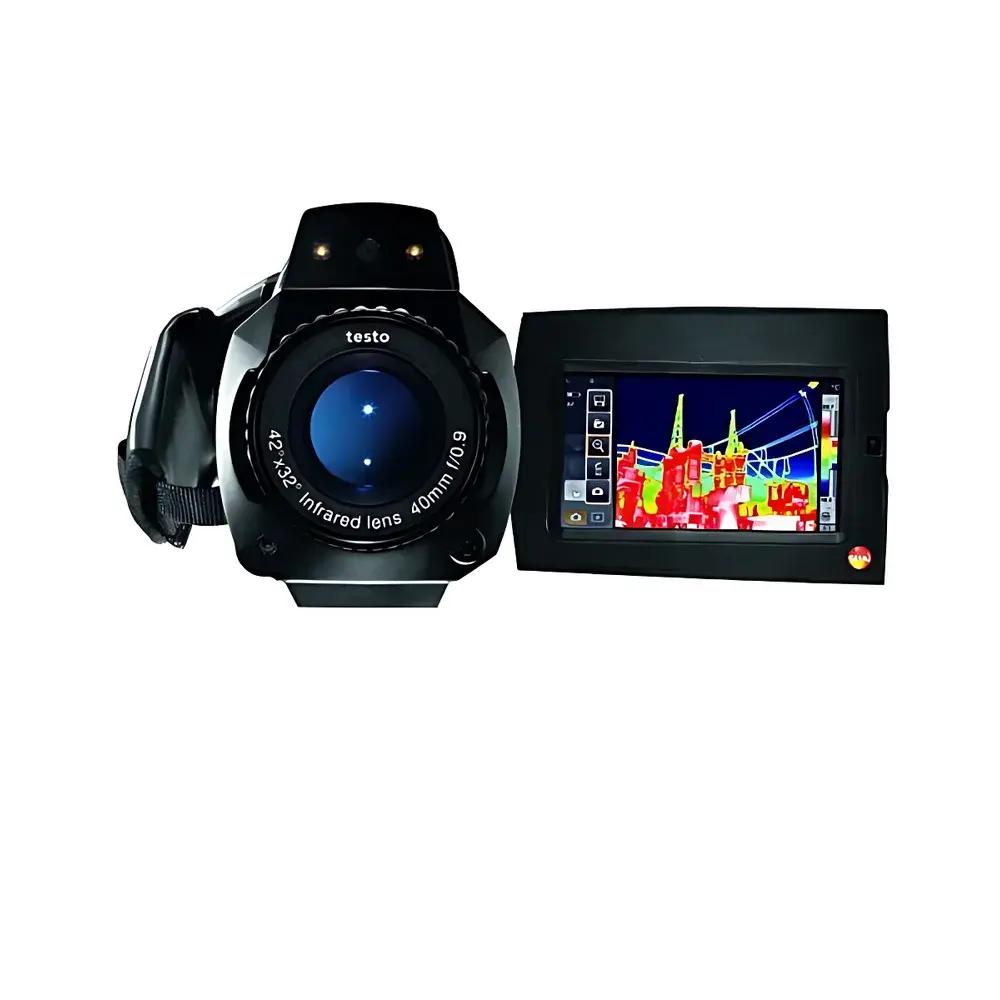
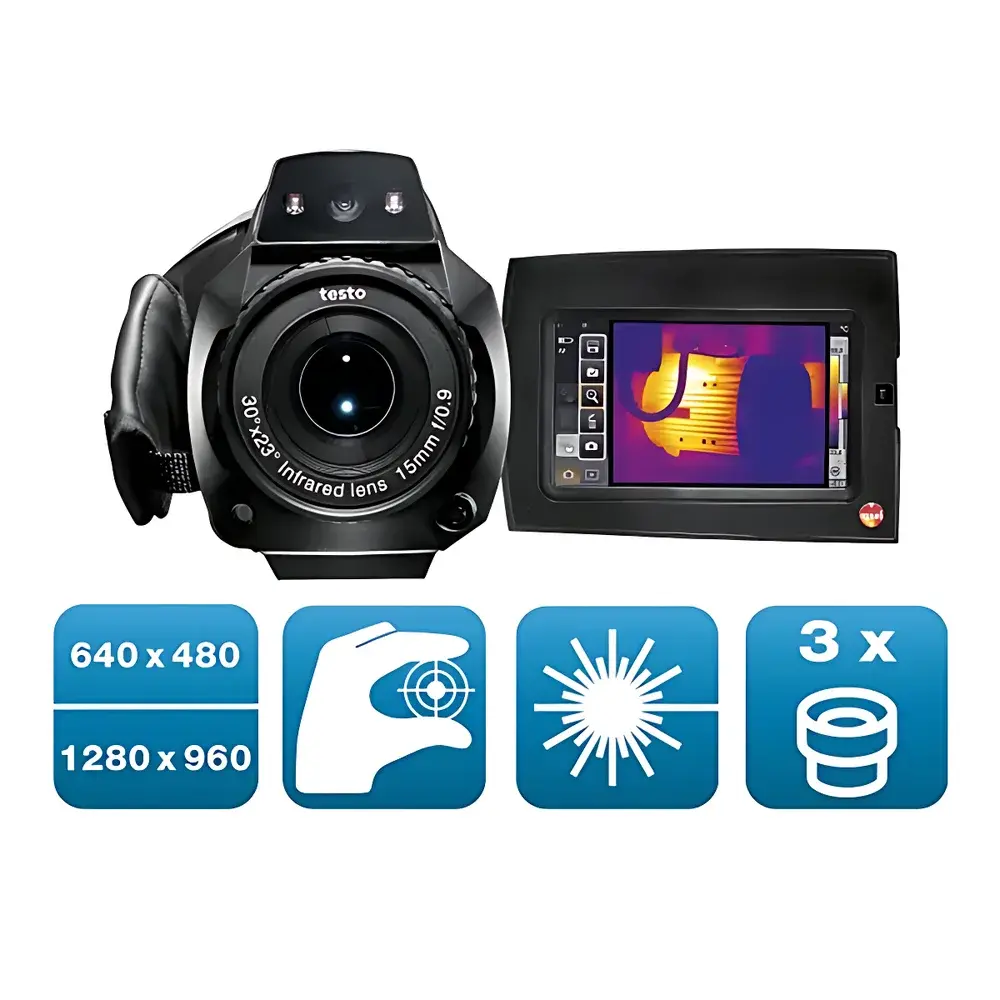
The testo 890 is a professional-grade, uncooled microbolometer-based infrared thermal imaging camera engineered for precision thermographic diagnostics across industrial maintenance, building science, electrical infrastructure, and R&D applications. Operating within the long-wave infrared (LWIR) spectral band (7.5–14 µm), it captures radiant energy emitted from surfaces and converts it into high-fidelity thermal images using calibrated Planck-law-based radiometric algorithms. Its core architecture features a native 640 × 480 pixel detector array—delivering 307,200 independent temperature measurement points per frame—and leverages Testo’s proprietary SuperResolution technology to synthetically enhance spatial resolution up to 1280 × 960 pixels without compromising radiometric integrity. With a thermal sensitivity (NETD) of < 40 mK at 30 °C, the instrument reliably resolves subtle thermal gradients critical for early fault detection in low-contrast scenarios—such as insulation voids in façades, latent moisture ingress, or marginal overloads in switchgear.
Key Features
- Native infrared resolution of 640 × 480 pixels with radiometric calibration traceable to national standards
- SuperResolution image enhancement yielding 1280 × 960 synthetic resolution for improved edge definition and defect localization
- Four interchangeable lens options (wide-angle, standard, telephoto, super-telephoto) enabling application-specific field-of-view and spatial resolution optimization—from 42° × 32° (wide) to 6.6° × 5° (super-telephoto)—with corresponding IFOVs ranging from 0.11 to 1.13 mrad
- Auto-focus system with minimum focus distance as low as 0.1 m (wide-angle lens), facilitating close-range PCB-level inspections
- Integrated 5-megapixel visible-light camera with LED illumination for synchronized optical-thermal image pairing and contextual annotation
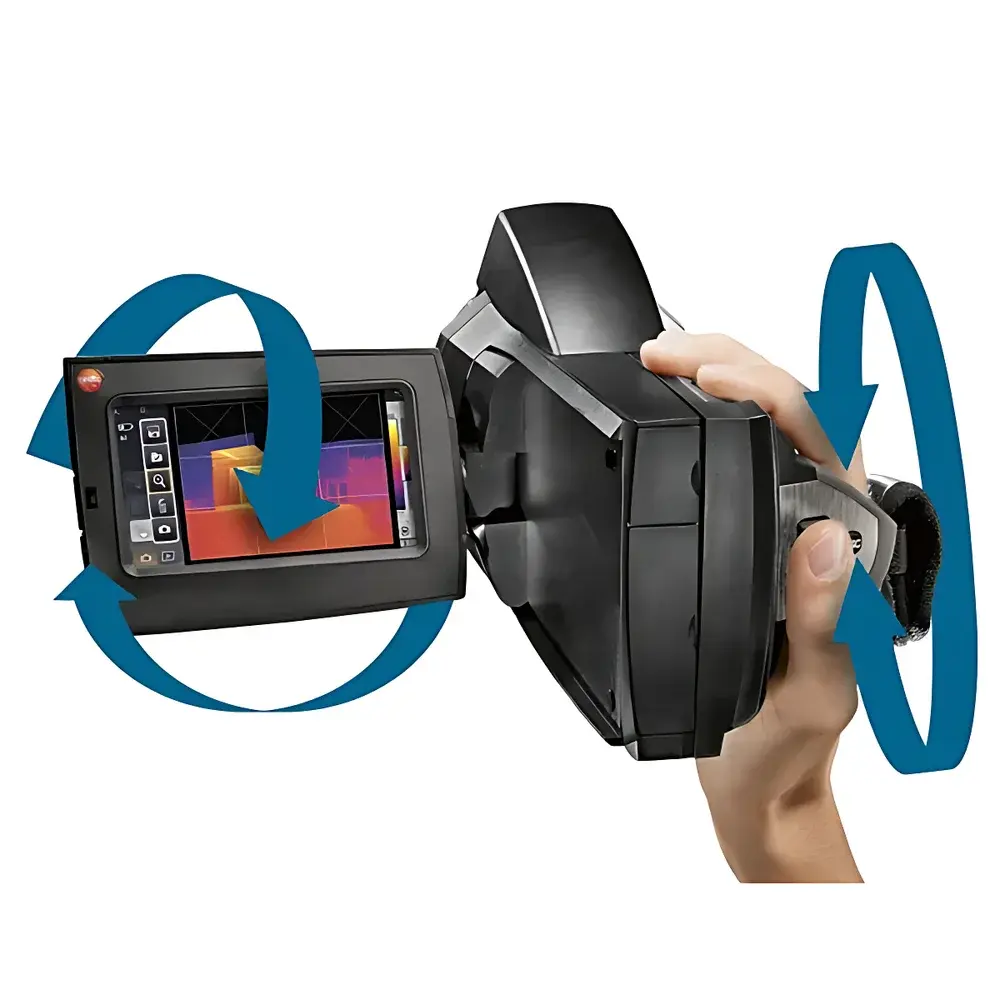
- Ergonomic, one-handed operable design with rotatable 5.0″ LCD touchscreen and integrated wrist strap for field mobility
- Non-contact measurement capability compliant with ISO 18434-1 and ASTM E1934 standards for infrared thermography
Sample Compatibility & Compliance
The testo 890 is suitable for non-destructive surface temperature mapping of solid, opaque materials—including concrete, metal enclosures, composite panels, and printed circuit boards—under ambient conditions. It complies with electromagnetic compatibility (EMC) requirements per EN 61326-1 and safety standards per EN 61010-1. Radiometric accuracy (±2 °C or ±2% of reading) is validated across its primary operating range (−30 to +100 °C) and extended ranges (0 to +350 °C and 0 to +650 °C) following internal factory calibration protocols aligned with ISO/IEC 17025 principles. Optional high-temperature module extends operational capability to 1200 °C with certified protective optics. For building diagnostics, the instrument supports dew point calculation and surface humidity risk assessment per ISO 13788, visualized via intuitive traffic-light color coding (green/yellow/red) on-screen.
Software & Data Management
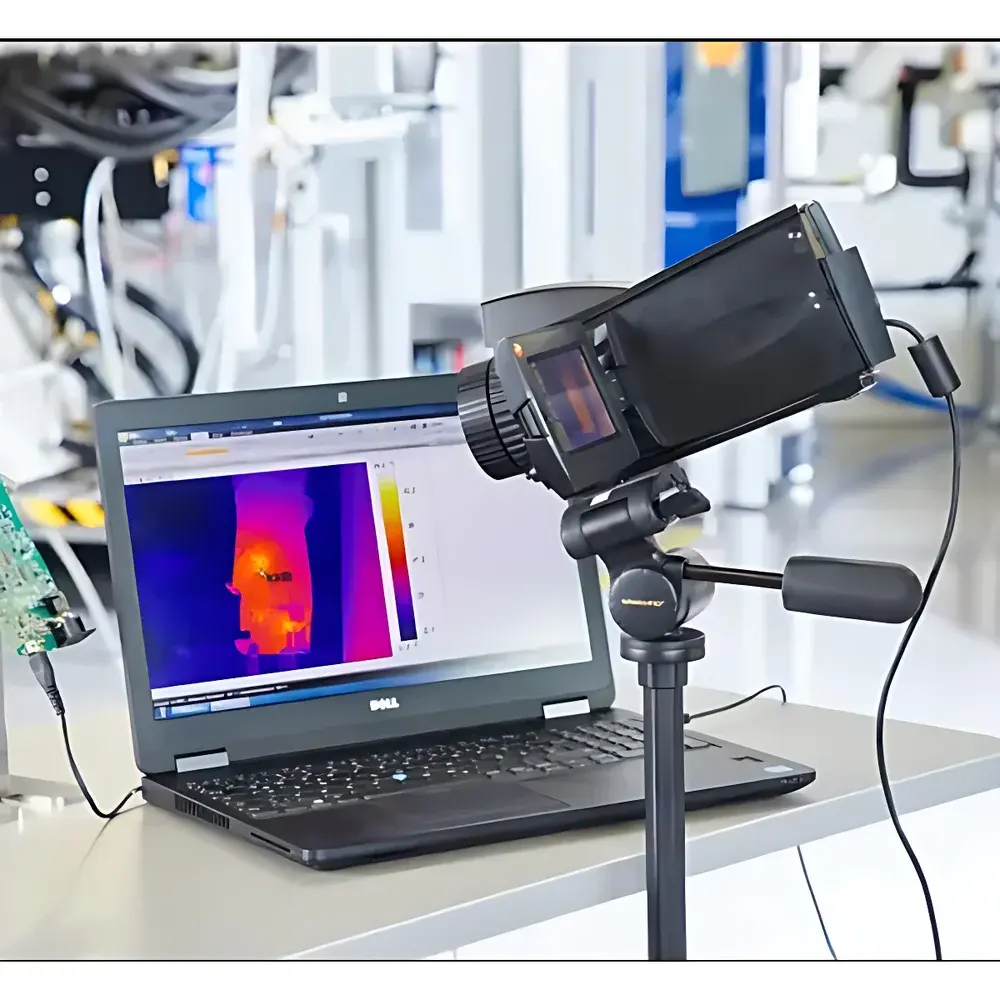
The included testo IRSoft software provides full post-processing functionality for thermographic data: emissivity correction, reflected temperature compensation, isotherm overlay, delta-T analysis, and customizable report generation (PDF/HTML). All measurements are stored with embedded metadata—including GPS coordinates, time stamp, lens ID, and environmental parameters—ensuring auditability under GLP and GMP frameworks. Optional PTA (Process Trend Analysis) module enables time-synchronized thermal sequence capture at user-defined intervals, generating timestamped thermal video files (.avi/.mp4) compatible with time-series analytics tools. Image auto-archiving via QR code tagging allows seamless integration into asset management systems by linking thermal records directly to physical equipment identifiers. Data export supports CSV, XML, and DICOM formats for interoperability with CMMS and LIMS platforms.
Applications
- Electrical distribution systems: Detection of loose connections, overloaded circuits, and aging components in switchgear, transformers, and busbars
- Building envelope diagnostics: Identification of thermal bridging, insulation deficiencies, air leakage paths, and moisture accumulation per ISO 6946 and EN 13187
- Industrial predictive maintenance: Monitoring bearings, motors, steam traps, and refractory linings for abnormal thermal signatures
- R&D thermal profiling: Capturing transient thermal behavior during product validation, battery cycling, or electronics thermal management testing
- Facility energy auditing: Quantifying heat loss distribution across façades and roofs to support ASHRAE Guideline 2-2021 compliance
- Surface condensation risk assessment: Real-time dew point comparison for mold susceptibility evaluation in HVAC commissioning
FAQ
What standards does the testo 890 comply with for thermographic reporting?
It meets the technical requirements of ISO 18434-1 for condition monitoring and ASTM E1934 for infrared inspection of electrical systems. Calibration documentation follows ISO/IEC 17025 guidelines.
Can the testo 890 be used for medical screening applications?
While it offers optional fever screening mode, it is not FDA-cleared or CE-marked as a medical device. Its use in public health contexts is limited to preliminary, non-diagnostic temperature anomaly detection.
Is radiometric video recording supported?
Yes—optional thermal video modules record fully radiometric .avi files with embedded temperature data per pixel, enabling frame-by-frame quantitative analysis in testo IRSoft.
How is measurement traceability ensured?
Each unit ships with a factory calibration certificate referencing NIST-traceable blackbody sources. Periodic recalibration is recommended annually or after mechanical shock per ISO 17025 best practices.
Does the instrument support custom emissivity tables?
Yes—users may define material-specific emissivity values or import spectral emissivity curves for multi-wavelength correction in advanced analysis workflows.





