
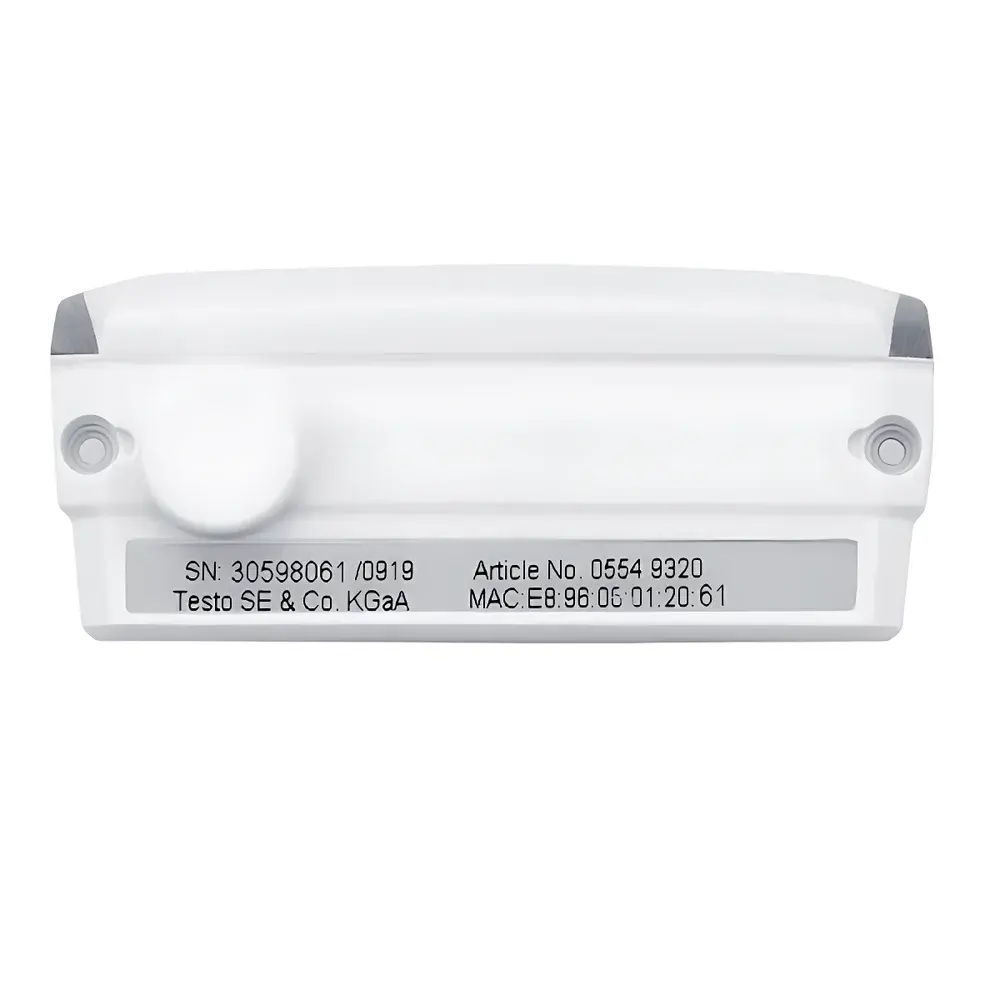
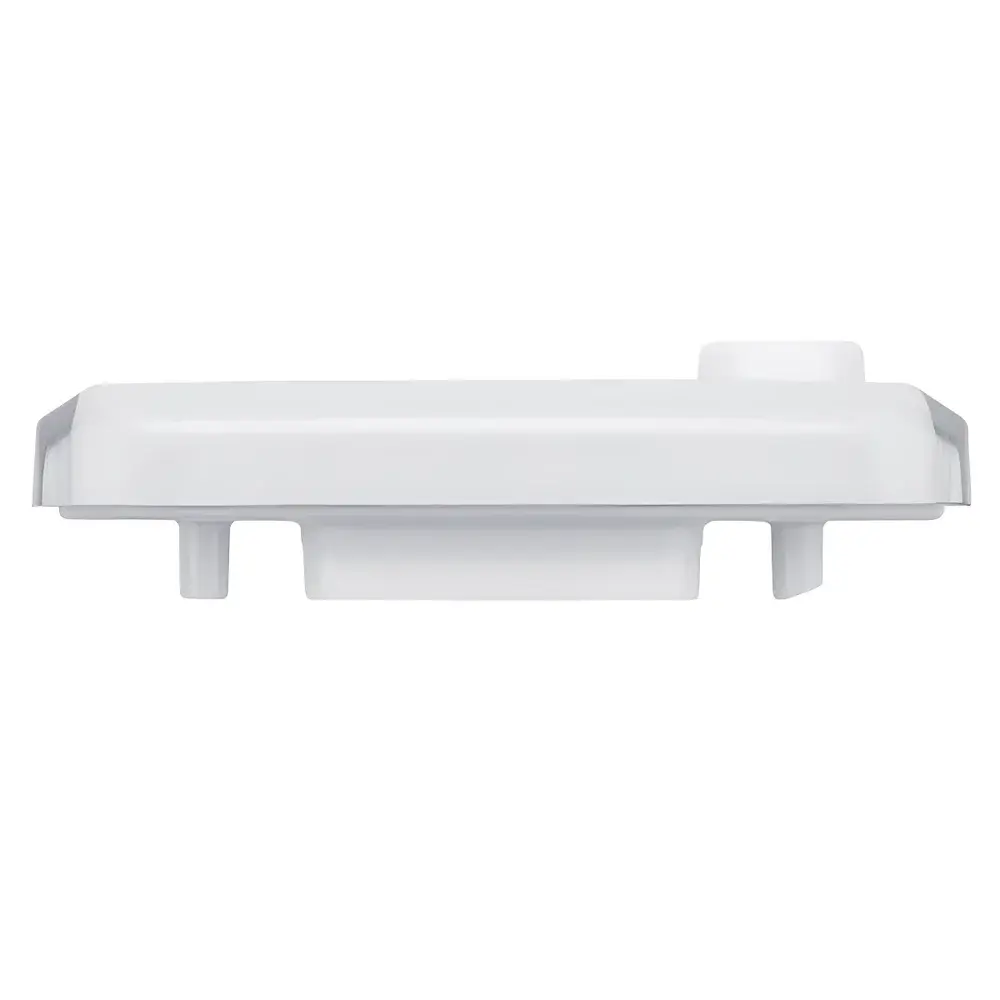
testo WLAN Communication Module 0554 9320
| Brand | testo |
|---|---|
| Origin | Germany |
| Model | 0554 9320 |
| Application | Wireless connectivity module for testo 150 data logger system |
| Communication Protocol | IEEE 802.11 b/g/n (2.4 GHz) |
| Security | WPA2-PSK encryption |
| Operating Temperature | -20 °C to +60 °C |
| IP Rating | IP20 |
| Compliance | CE, RoHS, FCC Part 15 Subpart B |
Overview
The testo WLAN Communication Module 0554 9320 is a certified industrial-grade wireless interface designed exclusively for integration with the modular testo 150 data logger platform. Engineered to extend connectivity options within regulated environmental monitoring environments, this module enables secure, real-time transmission of measurement data—temperature, humidity, CO₂, differential pressure, and other validated parameters—over existing enterprise WLAN infrastructure. It operates on the IEEE 802.11 b/g/n standard in the 2.4 GHz ISM band and implements WPA2-PSK encryption to ensure data integrity and confidentiality during over-the-air transmission. As a core component of the testo Saveris Pharma ecosystem, the module supports continuous compliance with Good Manufacturing Practice (GMP), ISO 14644, ISO 17025, and FDA 21 CFR Part 11 requirements by enabling audit-ready, time-stamped, and tamper-evident data flow from distributed sensor nodes to centralized Saveris cloud or on-premise servers.
Key Features
- Fully integrated plug-and-play design for seamless attachment to any testo 150 base module (e.g., testo 150-T, 150-H, 150-P)
- Support for dual-mode communication: automatic fallback to testo UltraRange radio technology when WLAN signal strength falls below configurable thresholds
- Configurable transmission intervals (1 s to 24 h) and alarm-triggered immediate reporting upon limit violation
- Embedded TLS 1.2 support for encrypted HTTPS-based data upload to testo Saveris Web or local Saveris Server installations
- Robust firmware architecture with remote OTA (Over-The-Air) update capability via Saveris Management Console
- Low-power idle state operation (< 50 mW) and thermal management optimized for unattended deployment in HVAC ducts, cold rooms, and cleanroom perimeter zones
Sample Compatibility & Compliance
The testo 0554 9320 module is compatible only with testo 150-series data loggers equipped with the standardized 12-pin expansion interface. It does not support legacy testo 174/175 or testo 176 devices. All connected sensor modules must be calibrated per ISO/IEC 17025-accredited procedures, and calibration certificates must include traceability to national standards (e.g., PTB, NIST). The module itself carries CE marking under the EU Radio Equipment Directive (2014/53/EU) and EMC Directive (2014/30/EU), and complies with FCC Part 15 Subpart B for intentional radiators. For pharmaceutical applications, it meets Annex 11 (EU GMP) requirements for electronic records and signatures when deployed with testo Saveris Pharma configuration—including full electronic audit trail, user role-based access control (RBAC), and ALCOA+ data governance principles.
Software & Data Management
Data transmitted via the 0554 9320 module is ingested exclusively through testo Saveris software platforms. The Saveris Web cloud service provides real-time dashboards, automated PDF report generation, and configurable SMS/email alerting. On-premise deployments utilize Saveris Server v5.0+, which supports SQL Server or PostgreSQL backends and offers full 21 CFR Part 11 compliance with electronic signature workflows, change control logs, and immutable record archiving. All communication sessions are logged with timestamps, source MAC addresses, and cryptographic hash verification. Firmware updates and module configuration (SSID, password, TLS settings, retry logic) are managed centrally via Saveris Management Console—eliminating manual field intervention and ensuring configuration consistency across large-scale deployments.
Applications
This module is deployed in mission-critical environments where regulatory-grade environmental validation is mandatory: sterile manufacturing suites (Grade A–D), stability chambers (ICH Q1A–Q5C), vaccine cold chain storage (WHO PQS), bioreactor monitoring, and HVAC performance qualification (PQ/IQ/OQ). Its ability to coexist with existing WLAN infrastructure—without requiring dedicated RF spectrum allocation—reduces installation complexity and capital expenditure. In multi-building campuses, the module’s automatic failover to UltraRange mode ensures uninterrupted data continuity across basements, shielded labs, or reinforced concrete structures where Wi-Fi coverage is marginal. Integration with Building Management Systems (BMS) via Modbus TCP or OPC UA gateways is supported through Saveris Enterprise API.
FAQ
Is the testo 0554 9320 module compatible with non-testo data loggers?
No. It is mechanically and electrically designed solely for the testo 150 modular system and lacks generic RS-485 or analog output interfaces.
Does the module support WPA3 or enterprise WPA2-Enterprise (802.1X)?
No. It supports WPA2-PSK only. Enterprise authentication requires external WLAN infrastructure bridging or use of testo Saveris Server with reverse proxy configuration.
Can historical data be stored locally on the module if network connectivity is lost?
No. The module has no internal memory. Data buffering occurs only within the host testo 150 base unit (up to 2 million readings depending on model), with automatic resynchronization upon network recovery.
What is the maximum recommended distance between the module and the WLAN access point?
Under typical office conditions (line-of-sight, 2 dBi antenna), up to 50 m; in obstructed industrial environments, range is application-specific and should be verified during site survey using testo Saveris Site Survey Tool.
Is firmware validation documentation available for GxP audits?
Yes. testo provides a Firmware Validation Package (FVP) including IQ/OQ protocols, version history, and release notes—all compliant with ASTM E2500 and ICH Q9 principles.






