
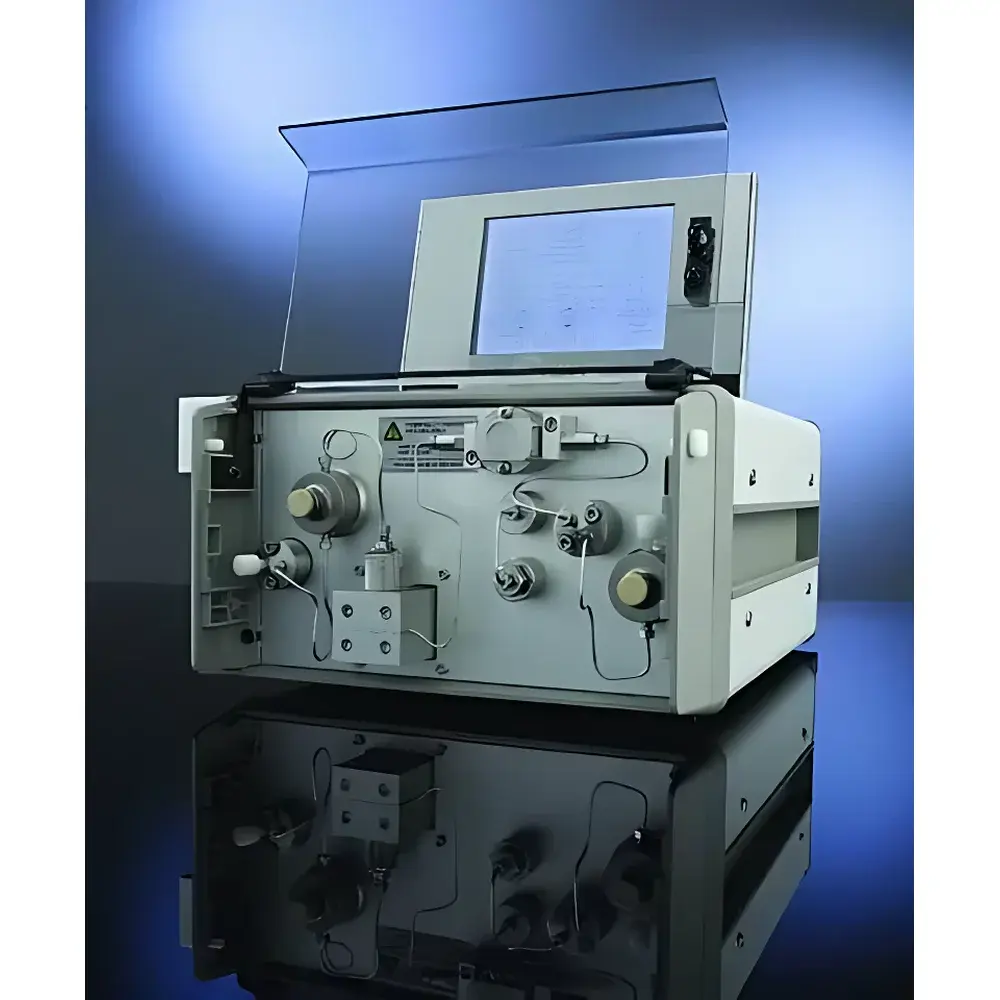
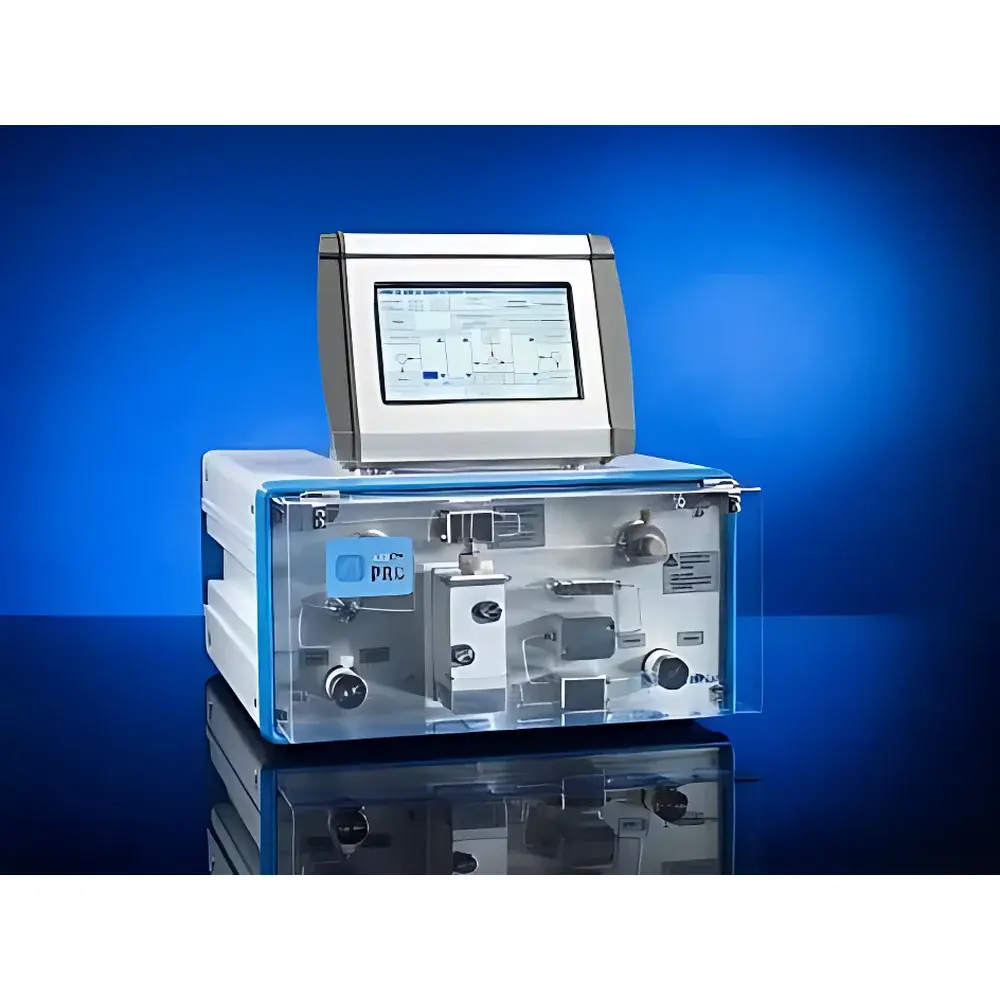
ThalesNano H-Cube Pro Continuous Flow Hydrogenation System
| Brand | ThalesNano |
|---|---|
| Origin | Hungary |
| Manufacturer Type | Authorized Distributor |
| Origin Category | Imported |
| Model | H-Cube Pro |
| Price Range | USD 65,000 – 105,000 |
| Reaction Throughput | 10 mg – 100 g |
| Temperature Range | Ambient to 150 °C |
| Pressure Range | Up to 100 bar |
| Flow Rate | Up to 3 mL/min |
| System Material | Standard 316L Stainless Steel |
| Power Supply | 110–220 V, 47–63 Hz |
| Electrolyte Requirement | Deionized water (conductivity ≤ 0.0714 µS/cm) |
| H₂ Concentration Control | Adjustable volumetric % in H₂/substrate stream |
| Safety Features | Integrated H₂ leak detection, automatic H₂ purge post-run, sealed CatCart catalyst cartridges |
Overview
The ThalesNano H-Cube Pro Continuous Flow Hydrogenation System is an R&D 100 Award-winning benchtop platform engineered for safe, precise, and scalable catalytic hydrogenation under controlled flow conditions. Unlike conventional batch hydrogenation using high-pressure autoclaves, the H-Cube Pro implements a continuous-flow microreactor architecture grounded in heterogeneous catalysis principles. It generates high-purity hydrogen on-demand via membrane-separated water electrolysis—eliminating reliance on external H₂ cylinders—and delivers stoichiometrically controlled H₂/substrate mixtures directly into a thermally and pressure-regulated reaction zone. The system operates across a validated range of 0–100 bar and ambient to 150 °C, enabling rapid kinetic screening, selective partial reductions, and reproducible scale-up from milligram to multigram quantities. Its compact footprint (≤0.15 m³) permits operation within standard laboratory fume hoods without structural modification or dedicated gas infrastructure.
Key Features
- On-demand hydrogen generation via PEM-based electrolysis using deionized water—no compressed gas handling, no cylinder storage, no external supply lines
- Patented CatCart disposable or reusable catalyst cartridges: pre-packed with Pd/C, PtO₂, Raney Ni, or custom heterogeneous catalysts; eliminate manual catalyst weighing, filtration, and pyrophoric handling risks
- Integrated real-time H₂ leak detection with automatic system shutdown and post-run inert purge sequence
- Touchscreen HMI with intuitive workflow navigation, parameter logging, and in-run adjustment of temperature, pressure, flow rate, and H₂ concentration
- Modular stainless-steel fluidic path constructed from electropolished 316L tubing and fittings—compatible with organic solvents, acids, and halogenated substrates
- Microfluidic reactor design ensures efficient gas–liquid–solid mass transfer, minimizing diffusion limitations and enhancing catalyst utilization efficiency
Sample Compatibility & Compliance
The H-Cube Pro supports a broad scope of reducible functional groups—including nitro, alkenyl, alkynyl, nitrile, sulfoxide, aryl halide, imine, benzyl ether, and diazonium moieties—under chemoselective conditions unattainable in batch reactors. Its closed-loop architecture complies with institutional safety protocols for handling flammable gases in academic and industrial labs. The system meets CE marking requirements for electrical safety (EN 61010-1) and electromagnetic compatibility (EN 61326-1). While not certified as intrinsically safe per ATEX/IECEx, it is routinely deployed in GLP-compliant synthetic laboratories where process documentation, audit trails, and operator training align with ISO/IEC 17025 and FDA 21 CFR Part 11 data integrity expectations. Catalyst cartridge traceability (lot number, loading, activation history) supports full experimental reproducibility.
Software & Data Management
The embedded control firmware records all operational parameters—including time-stamped temperature, pressure, flow rate, H₂ concentration, and power consumption—at 1 Hz resolution. Exportable CSV logs support integration with LIMS or ELN platforms. No proprietary software installation is required: configuration, monitoring, and diagnostics are performed exclusively via the onboard capacitive touchscreen interface. Audit trail functionality captures user ID, timestamp, and parameter changes—enabling compliance with ALCOA+ principles (Attributable, Legible, Contemporaneous, Original, Accurate, Complete, Consistent, Enduring, Available). Firmware updates are delivered via USB stick with SHA-256 checksum verification.
Applications
The H-Cube Pro enables method development and optimization for synthetic routes requiring high chemoselectivity, such as late-stage functionalization of pharmaceutical intermediates, asymmetric hydrogenation precursors, and heterocyclic scaffolds. Its ability to decouple residence time (via flow rate), thermal energy (via heating block), and hydrogen availability (via electrolysis current) allows systematic investigation of competing reduction pathways—for example, selective alkyne-to-alkene semihydrogenation versus full saturation, or orthogonal deprotection of N-benzyl vs. O-benzyl groups. It has been cited in >180 peer-reviewed publications for applications spanning medicinal chemistry, agrochemical synthesis, polymer precursor preparation, and materials science feedstock upgrading. Typical throughput: complete conversion of 10–50 mg substrate in 95% selectivity confirmed by inline or offline GC/HPLC analysis.
FAQ
Does the H-Cube Pro require external hydrogen gas supply?
No. Hydrogen is generated on-demand via electrolysis of deionized water; no gas cylinders, regulators, or ventilation upgrades are needed.
Can I use my own catalysts in the H-Cube Pro?
Yes—custom catalysts may be loaded into empty CatCart housings following ThalesNano’s packing protocol and qualification guidelines.
Is the system compatible with corrosive reagents such as HCl or TFA?
Standard 316L stainless steel components tolerate short-term exposure; extended use with strong acids requires optional Hastelloy C-276 wetted parts upgrade.
What maintenance is required?
Routine tasks include periodic replacement of electrolyte water, inspection of O-rings, and cleaning of the electrolysis cell every 200 operating hours.
How is catalyst recycling handled?
Spent CatCarts may be returned to ThalesNano for regeneration or disposed of as solid metal waste per local regulations; reuse is validated only for non-sulfided, non-leached catalysts.



