
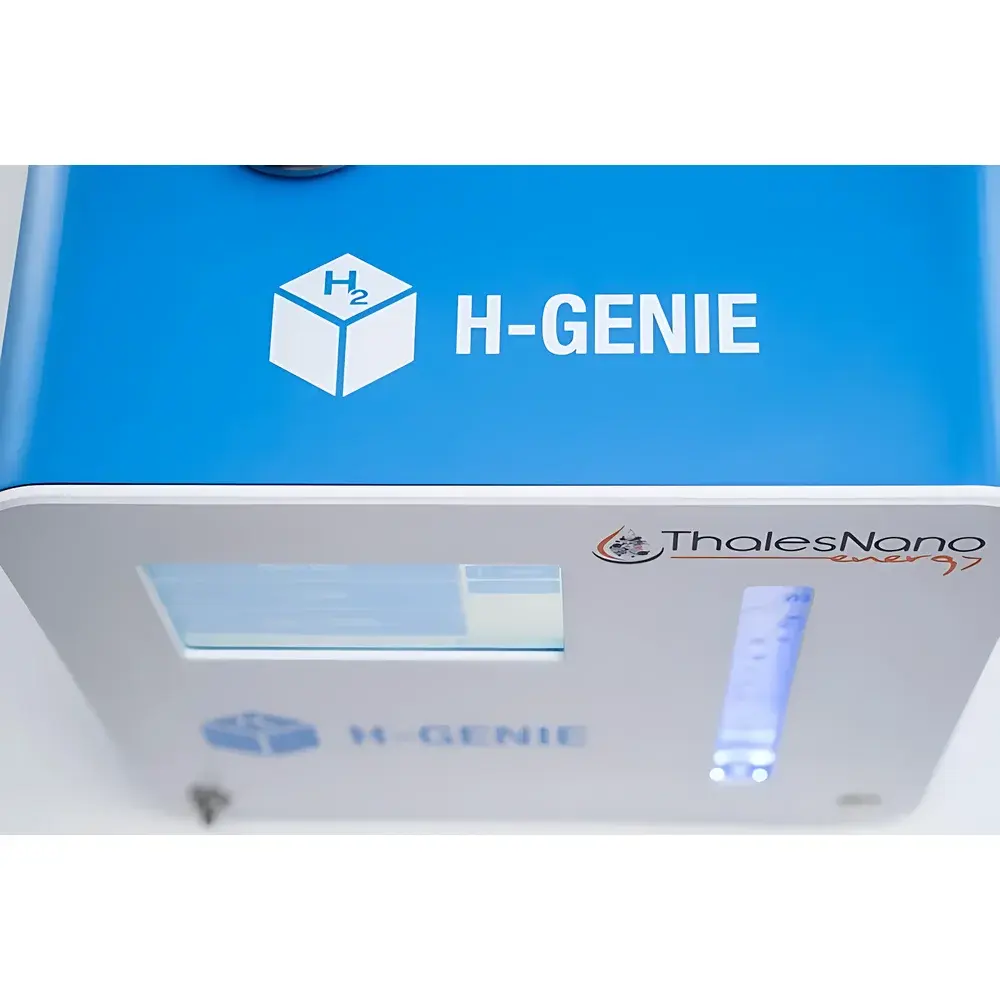
ThalesNano H-Genie Hydrogen Generator
| Brand | ThalesNano |
|---|---|
| Origin | Imported (Hungary) |
| Model | H-Genie |
| Hydrogen Generation Principle | Proton Exchange Membrane (PEM) Electrolysis with Patented Pressurized Cell Technology |
| Output Flow Rate | 0.1–1 NL/min |
| Output Pressure | 1–100 bar (14.5–1450 psi) |
| Hydrogen Purity | ≥99.99% (Grade 4.0, verified at 100 bar) |
| Power Consumption | Up to 1500 VA |
| Water Requirement | Deionized water, conductivity <1 µS/cm |
| Water Consumption | <200 mL/hr |
| Internal Water Reservoir | 3 L |
| Dimensions (W×D×H) | 345 × 365 × 460 mm |
| Weight | 38 kg |
| Electrical Input | 100–240 V AC, 47–63 Hz |
| Operating Environment | 10–35 °C, <80% RH |
| Safety Features | Integrated hydrogen leak detector with automatic shutdown |
| Gas Outlet | 1/8" OD tubing connection with male NPT thread |
Overview
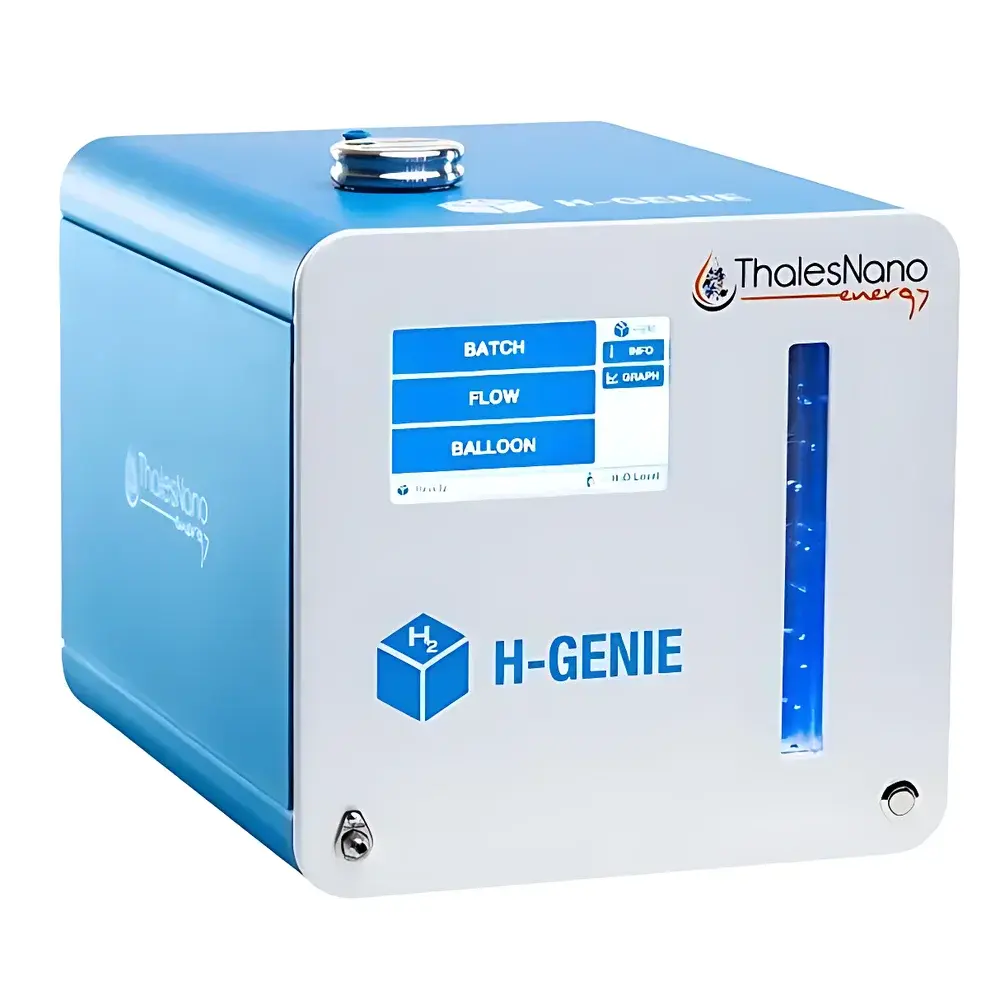
The ThalesNano H-Genie Hydrogen Generator is a compact, on-demand laboratory-scale hydrogen source engineered for precision, safety, and operational autonomy. It employs solid polymer electrolyte (SPE) proton exchange membrane (PEM) electrolysis—enhanced by ThalesNano’s proprietary pressurized cell architecture—to generate high-purity hydrogen directly from deionized water, eliminating the need for external gas cylinders, compressors, or chemical hydride reagents. Unlike conventional alkaline electrolyzers, the H-Genie operates without caustic electrolytes or consumable drying agents, delivering hydrogen at pressures up to 100 bar while maintaining consistent purity of ≥99.99% (ISO 8573-1 Class 4.0, verified under full-pressure conditions). Its integrated pressure regulation enables direct coupling with high-pressure catalytic reactors—including flow hydrogenation systems, supercritical fluid setups, and fixed-bed reactors—without intermediate boosting stages. Designed for integration into GLP-compliant laboratories and R&D environments, the H-Genie supports continuous, unattended operation with real-time monitoring of pressure, flow, temperature, and system integrity.
Key Features
- Patented pressurized PEM electrolysis cell: Enables direct hydrogen generation at 1–100 bar without mechanical compression; eliminates oil contamination and pressure drop losses associated with post-generation boosting.
- Zero-dryer architecture: Built-in membrane-based dehydration ensures continuous delivery of dew-point-controlled hydrogen (<−40 °C), removing reliance on replaceable desiccant cartridges or external dryers.
- Multi-reactor capability: Programmable flow and pressure profiles allow simultaneous supply to up to three independent reaction systems via optional manifold configurations (with pressure-balanced distribution).
- Embedded safety suite: Real-time hydrogen concentration monitoring (0–1000 ppm range) in the instrument enclosure triggers immediate power cutoff and venting upon detection exceeding 25% LEL (Lower Explosive Limit).
- Minimal footprint & plug-and-play operation: Compact chassis (345 × 365 × 460 mm) fits under standard fume hoods; startup requires only DI water fill, power connection, and touchscreen confirmation—no calibration or gas conditioning required.
- Energy-efficient design: Dynamic load management adjusts power draw (up to 1500 VA max) proportionally to output demand, reducing idle consumption and thermal load during low-flow operation.
Sample Compatibility & Compliance
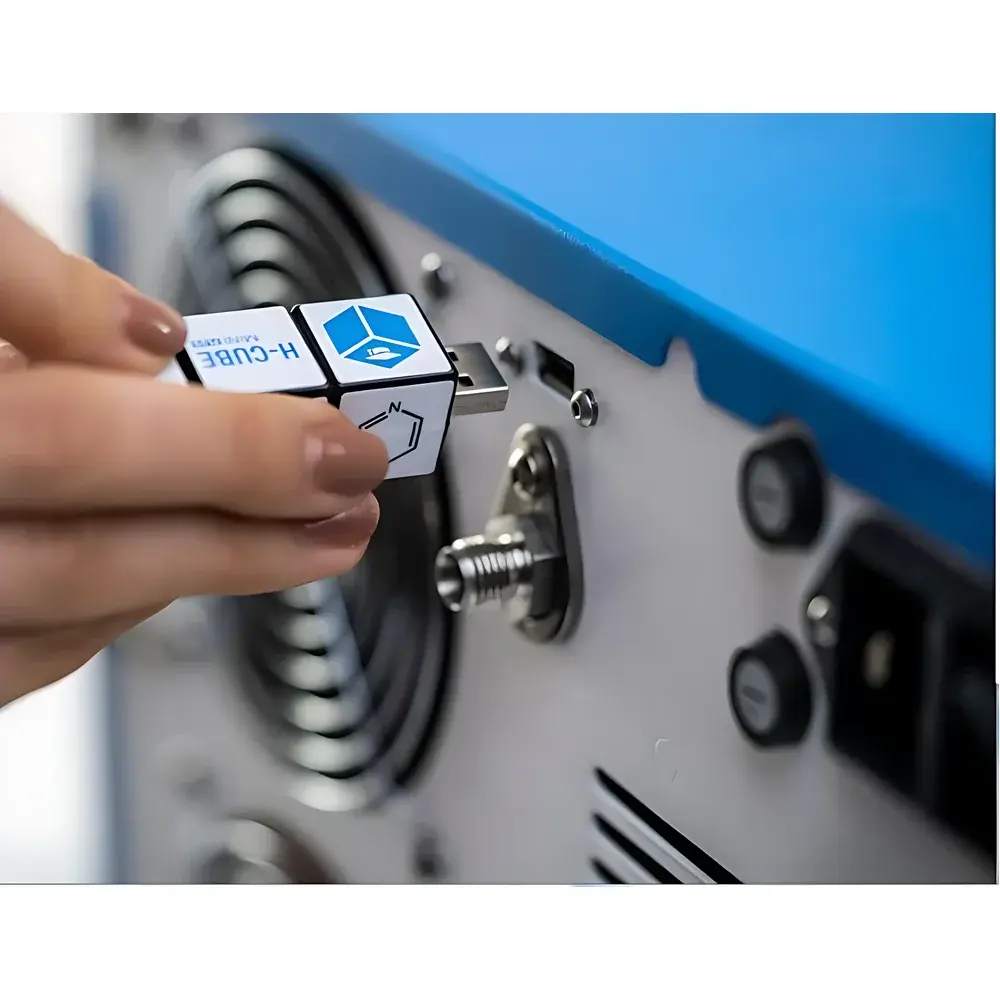
The H-Genie is compatible with all standard stainless-steel and Hastelloy-based hydrogenation reactors, flow chemistry modules (e.g., Vapourtec, Uniqsis), and analytical interfaces requiring ultra-high-purity H₂. It meets ISO 8573-1:2010 Class 4.0 for particulate, moisture, and oil content in compressed gases. The system adheres to IEC 61000-6-3 (EMC emission standards) and IEC 61010-1 (safety requirements for electrical equipment for measurement, control, and laboratory use). All firmware and hardware revisions are traceable per ISO 9001 quality management protocols. For regulated environments, audit trails—including runtime logs, pressure/flow setpoint changes, and safety event records—are stored internally and exportable via USB for 21 CFR Part 11-compliant documentation.
Software & Data Management
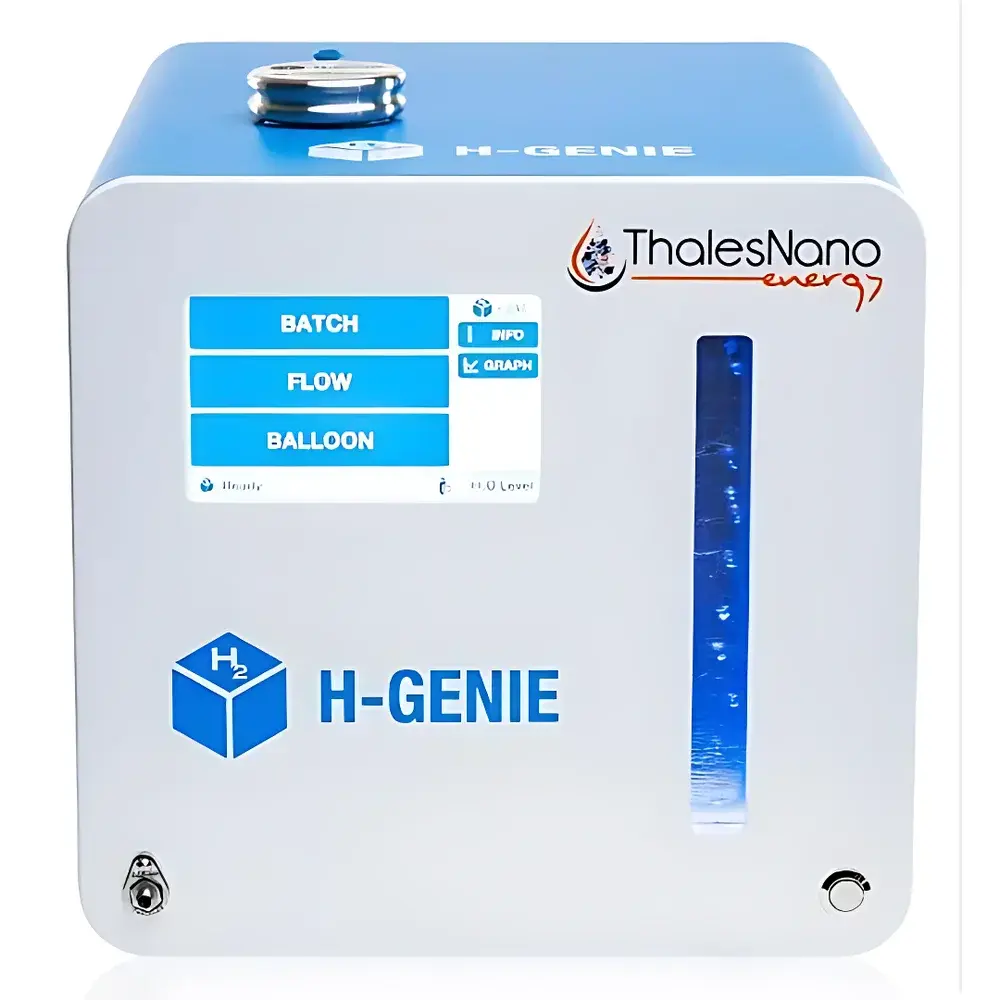
Control and diagnostics are managed through a dedicated 5-inch capacitive touchscreen interface running embedded Linux OS. The GUI provides live visualization of H₂ flow (NL/min), outlet pressure (bar), cell temperature (°C), water level (%), and cumulative operating hours. All parameters are adjustable within validated ranges and locked via password-protected administrator mode. Event logs—including startup/shutdown sequences, safety interlocks, and maintenance alerts—are timestamped and retained for ≥12 months. Data export is supported in CSV format over USB 2.0; optional RS-485 Modbus RTU interface enables integration into LabVantage, DeltaV, or custom SCADA systems for centralized monitoring and alarm forwarding.
Applications
- Catalytic hydrogenation in batch and continuous-flow reactors (e.g., asymmetric reduction, nitro-group conversion, olefin saturation)
- Hydrogen-powered fuel cell testing and electrochemical characterization
- GC carrier gas supply (replacing helium where method validation permits)
- In-situ reduction of metal precursors in nanomaterial synthesis
- High-pressure hydrothermal and supercritical hydrogenation studies (e.g., biomass upgrading, lignin depolymerization)
- Method development for pharmaceutical API synthesis under GMP-aligned lab conditions
FAQ
What water quality is required for optimal performance?
Deionized water with conductivity ≤1 µS/cm is mandatory. Resistivity should exceed 1 MΩ·cm. Tap water, distilled water, or low-grade DI water will cause rapid electrode fouling and void the warranty.
Can the H-Genie be used outside a fume hood?
No. Per IEC 60079-10-1 and local laboratory safety codes, operation must occur inside a certified ventilated enclosure due to potential hydrogen accumulation risk—even with integrated leak detection.
Is hydrogen purity affected by output pressure?
No. Purity remains ≥99.99% across the full 1–100 bar operating range, as confirmed by third-party GC-TCD analysis per ISO 8573-1 Annex B at maximum rated pressure.
How often does the system require maintenance?
Annual service includes PEM stack inspection, sensor recalibration, and firmware update. No routine consumables (e.g., filters, dryers, electrolytes) are required under normal operating conditions.
Does the H-Genie support remote monitoring or automation?
Yes. Via optional RS-485 Modbus RTU interface, it integrates with PLCs, LIMS, or process control software for automated start/stop, setpoint scheduling, and fault reporting.



