
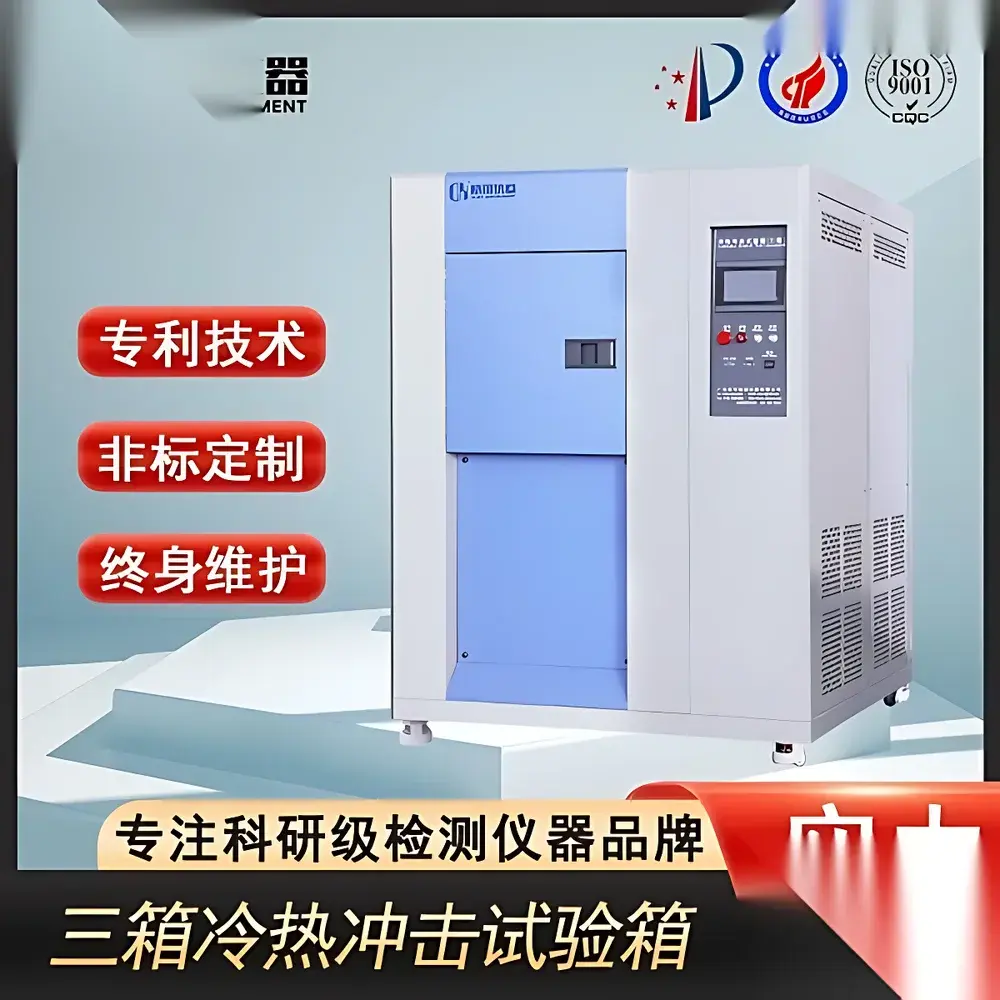
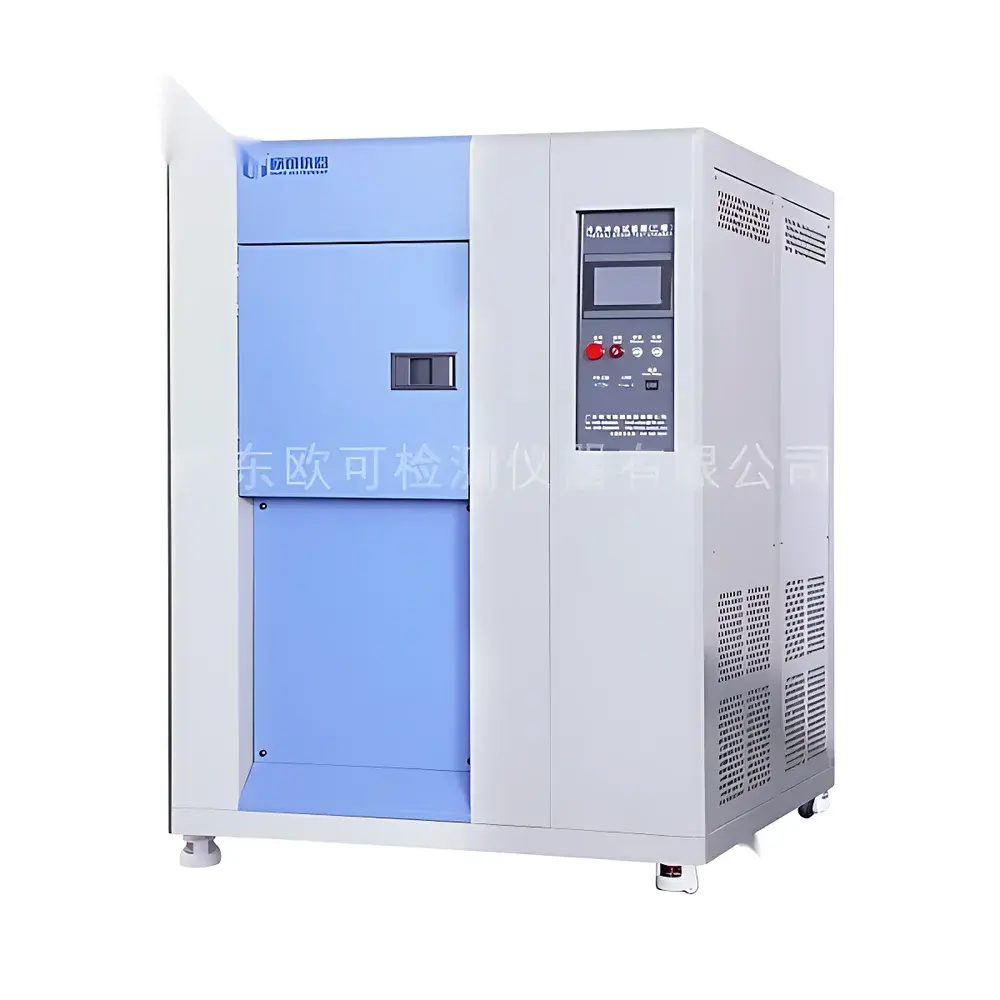
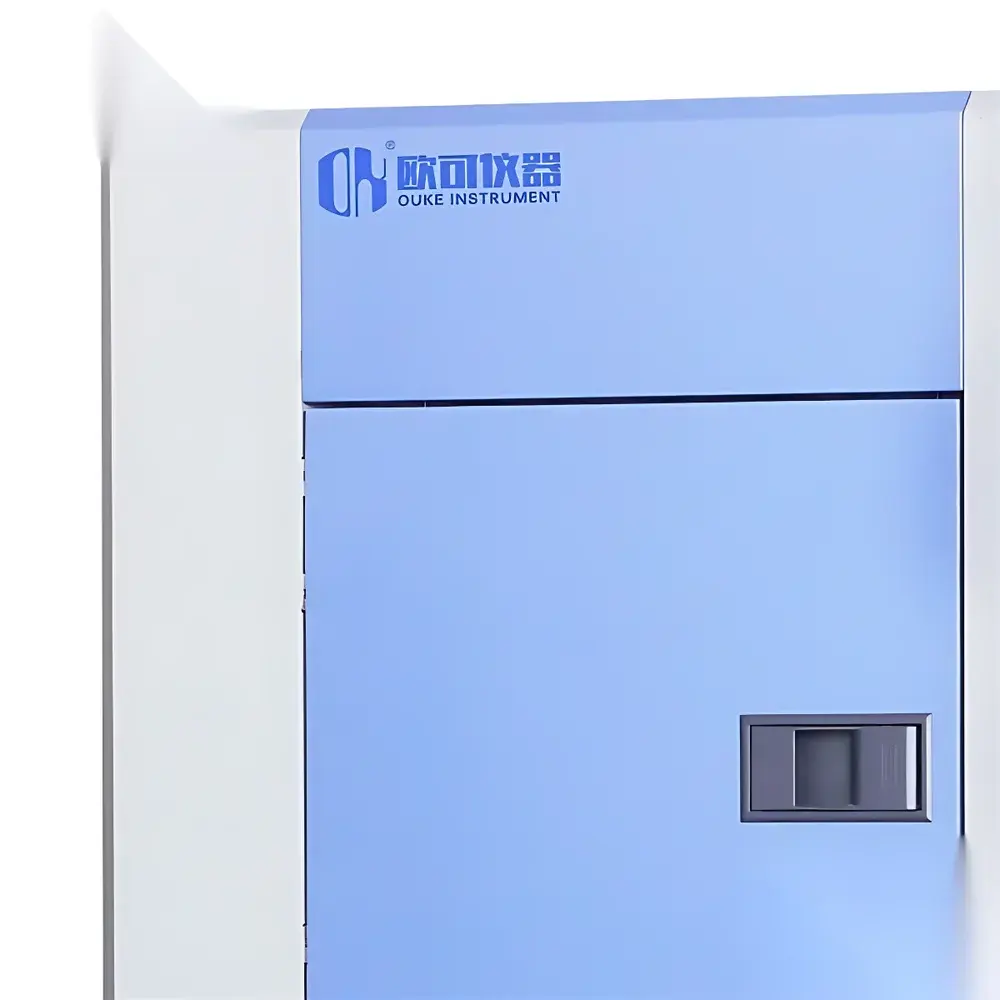
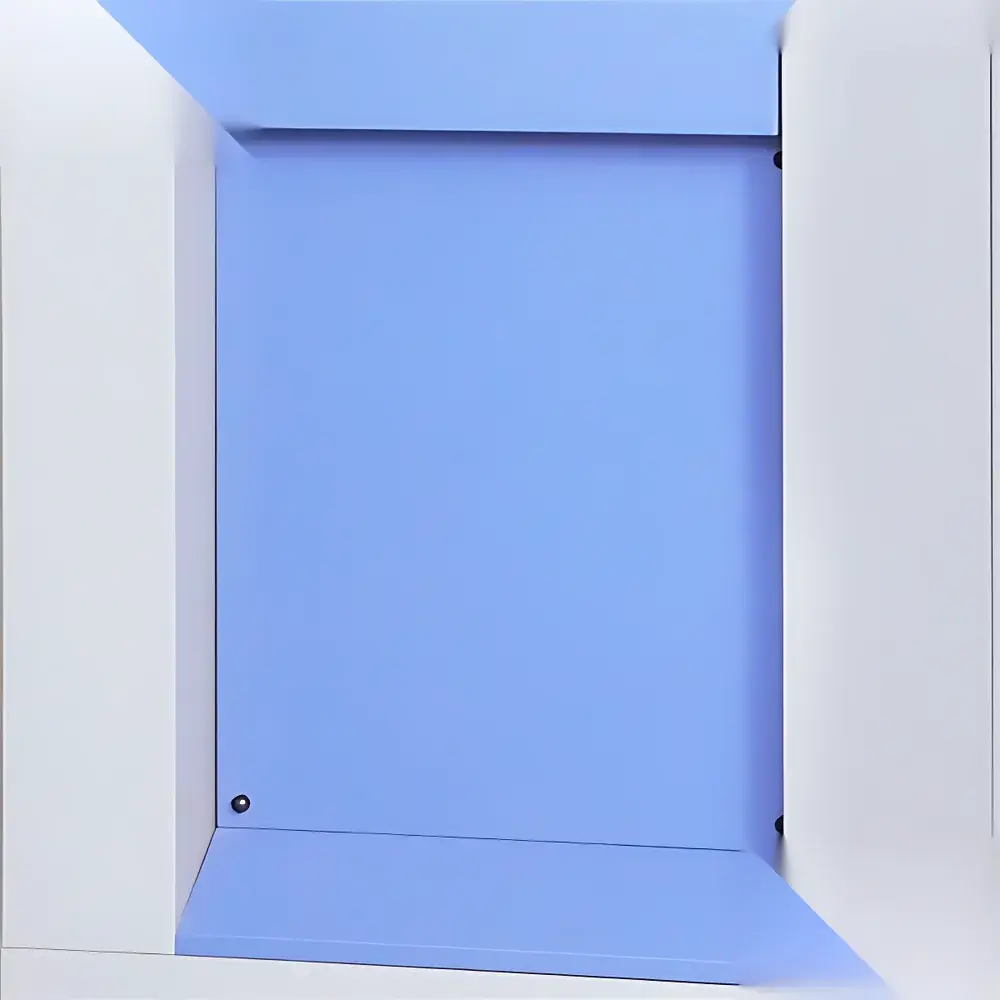
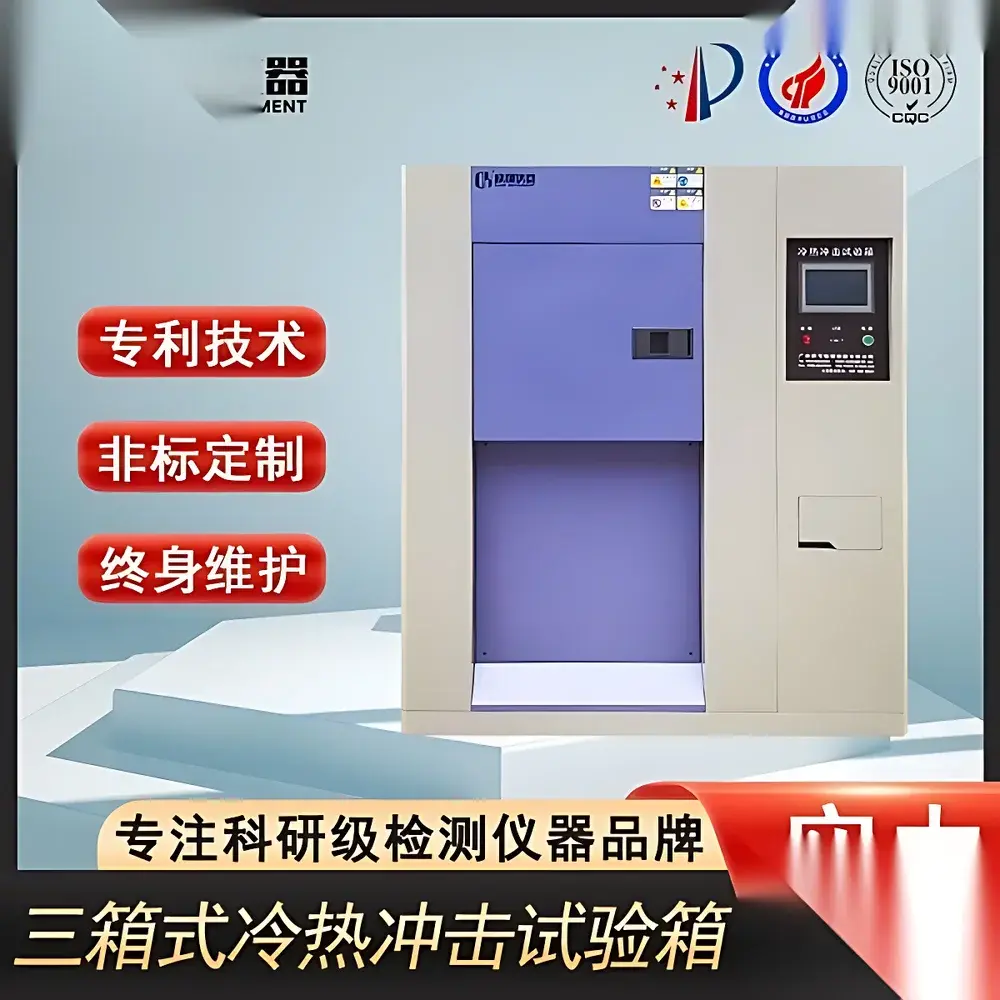
Thermal Shock Test Chamber – -40°C to +150°C, 1000 L Capacity, Dual-Stage PID-Controlled Environmental Test Chamber
| Brand | OEM / Private Label |
|---|---|
| Origin | Imported |
| Manufacturer Type | Authorized Distributor |
| Temperature Range | -40°C to +150°C (empty load) |
| Humidity Range | 20–98% RH |
| Temperature Stability | ±0.3°C |
| Humidity Accuracy | +2 / -3% RH |
| Temperature Uniformity | ±2.0°C |
| Heating Rate | ~10 min (20°C → 150°C) |
| Cooling Rate | ~30 min (20°C → -20°C) |
| Internal Dimensions | 1000 × 1000 × 1000 mm (L×W×H) |
| External Dimensions | 1700 × 1450 × 1850 mm (L×W×H) |
| Inner Liner | Mirror-finish SUS#304 stainless steel |
| Outer Casing | Brushed-finish SUS#304 stainless steel |
| Insulation | High-density rigid PU foam + 24K glass wool |
| Refrigeration System | Hermetically sealed French Tecumseh compressor |
| Refrigerant | Eco-friendly R-404A or equivalent |
| Control System | Touchscreen HMI with bilingual (EN/CN) interface, 120 programs × 1200 segments, PID + BTHC (Balance Thermal & Humidity Control) algorithm |
| Sensor | Dual PT-100 platinum resistance thermometers |
| Resolution | 0.1°C / 0.1% RH |
| Data Logging | Built-in runtime counter, fault diagnostics, and event-triggered alarm history |
Overview
The Thermal Shock Test Chamber is an engineered environmental simulation system designed for accelerated reliability testing of electronic components, automotive parts, aerospace materials, and polymer-based products under rapid, repetitive thermal transitions. Operating on the principle of dual-zone or single-chamber thermal shock—depending on configuration—it subjects test specimens to extreme, controlled temperature excursions between -40°C and +150°C, while maintaining precise humidity regulation (20–98% RH) where required. Its balanced thermal-humidity control (BTHC) architecture employs proportional-integral-derivative (PID) algorithms in conjunction with solid-state relays (SSR) to dynamically match heating/cooling/humidification output to real-time thermal load and ambient loss—enabling stable, repeatable, and long-duration test cycles without manual recalibration. This chamber meets foundational requirements for IEC 60068-2-14 (Environmental Testing – Part 2-14: Tests – Test N: Change of temperature), MIL-STD-810G Method 503.5, and supports qualification protocols aligned with AEC-Q200 and IPC-9701 standards.
Key Features
- High-performance refrigeration system featuring a hermetically sealed French Tecumseh compressor, paired with eco-compliant refrigerant (R-404A or equivalent) and multi-stage evaporator with automatic capacity modulation.
- Robust thermal insulation comprising high-density rigid polyurethane (PU) foam and 24K glass wool, minimizing energy consumption and enhancing thermal inertia stability.
- Touchscreen human-machine interface (HMI) supporting both English and Chinese languages, with adjustable backlight, real-time SV curve visualization, and full programmability: up to 120 test programs, each containing 1200 individual segments.
- Dual PT-100 platinum resistance temperature sensors for redundancy and cross-validation; integrated humidity sensing with ±0.1% RH resolution and automatic drift compensation.
- Structural integrity ensured by mirror-finish SUS#304 stainless steel interior and brushed-finish SUS#304 exterior, corrosion-resistant and compliant with ISO 14644 cleanroom-compatible surface finish requirements.
- Standardized 50 mm diameter test port on left side wall with stainless steel cover, enabling integration with external monitoring equipment, data loggers, or signal feedthroughs without compromising chamber integrity.
Sample Compatibility & Compliance
The chamber accommodates samples up to 1000 mm × 1000 mm × 1000 mm (L×W×H), with two adjustable stainless steel shelf sets included as standard. Its internal layout supports uniform airflow distribution via extended-shaft motor-driven multi-wing impellers, ensuring minimal thermal gradient across the working volume (±2.0°C). The unit is suitable for testing PCB assemblies, lithium-ion battery modules, encapsulated sensors, medical device housings, and coated optical substrates. It complies with electrical safety per IEC 61010-1 and electromagnetic compatibility per EN 61326-1. While not certified out-of-box for FDA 21 CFR Part 11, its audit-ready data logging—including timestamped fault events, runtime accumulation, and parameter change history—facilitates validation under GLP/GMP environments when deployed with documented SOPs and third-party IQ/OQ/PQ protocols.
Software & Data Management
The embedded controller provides native data acquisition at user-defined intervals (1–60 sec), storing up to 30 days of continuous temperature/humidity logs internally. Export is supported via USB flash drive in CSV format for traceability and post-processing in MATLAB, Excel, or statistical process control (SPC) platforms. Optional RS-485/Modbus RTU or Ethernet TCP/IP interfaces enable remote monitoring and integration into centralized lab management systems (e.g., LabVantage, Thermo Fisher SampleManager). All program edits, setpoint changes, and alarm acknowledgments are automatically timestamped and logged with operator ID fields—supporting ALCOA+ principles (Attributable, Legible, Contemporaneous, Original, Accurate, Complete, Consistent, Enduring, Available) for regulated industries.
Applications
- Thermal cycling stress screening of semiconductor packages prior to burn-in and final qualification.
- Evaluation of solder joint fatigue resistance in automotive ECUs exposed to under-hood thermal transients.
- Validation of seal integrity and dimensional stability in plastic enclosures subjected to condensation-prone humidity cycling.
- Accelerated aging studies of adhesives, conformal coatings, and potting compounds used in outdoor-rated electronics.
- Pre-compliance testing for JEDEC JESD22-A104 (Temperature Cycling) and JESD22-A106 (Highly Accelerated Temperature and Humidity Stress Test – HAST).
FAQ
What is the maximum thermal ramp rate achievable in this chamber?
The chamber achieves approximately 10°C/min average heating rate (20°C → 150°C in ~10 min) and ~1.3°C/min cooling rate (20°C → -20°C in ~30 min) under no-load conditions. Actual rates vary with sample mass, thermal mass, and fixture configuration.
Does the controller support automated compliance reporting?
The onboard HMI does not generate PDF reports natively, but all logged data exports to CSV with timestamps and metadata—enabling custom report generation using validated external software per ISO/IEC 17025 or ISO 9001 requirements.
Can the chamber operate continuously for 72+ hours without intervention?
Yes. Its BTHC architecture, redundant sensor inputs, and self-diagnostic alarm system—including visual/audible alerts and automatic power cutoff on critical faults—enable unattended operation over extended durations when properly maintained and calibrated.
Is calibration certification included with delivery?
Factory calibration data (as-found/as-left) is provided with each unit. Full ISO/IEC 17025-accredited calibration with uncertainty budget requires engagement of an accredited third-party laboratory; recommended annually or per internal quality policy.
What maintenance intervals are recommended for the refrigeration system?
Compressor oil and refrigerant levels should be verified every 12 months; condenser coils cleaned quarterly; desiccant replaced biannually. Preventive maintenance logs are supported within the controller’s event history module.



