
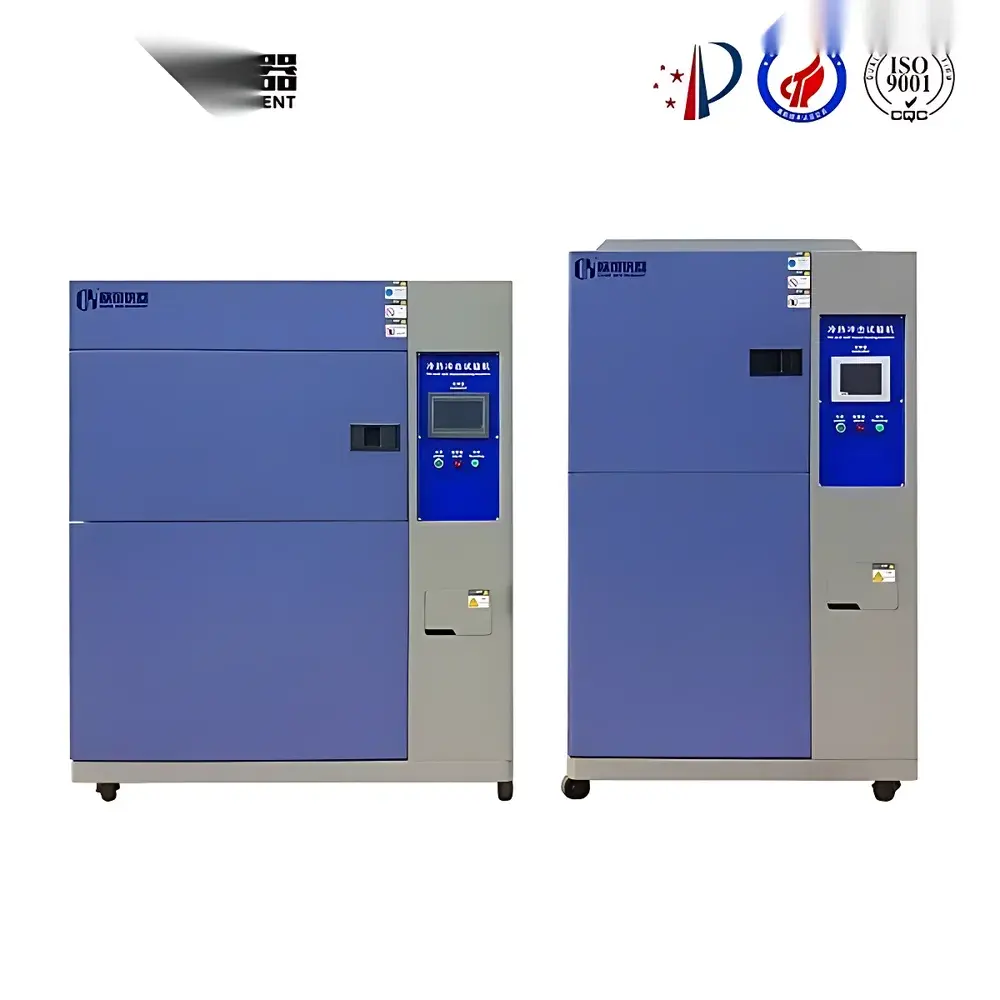
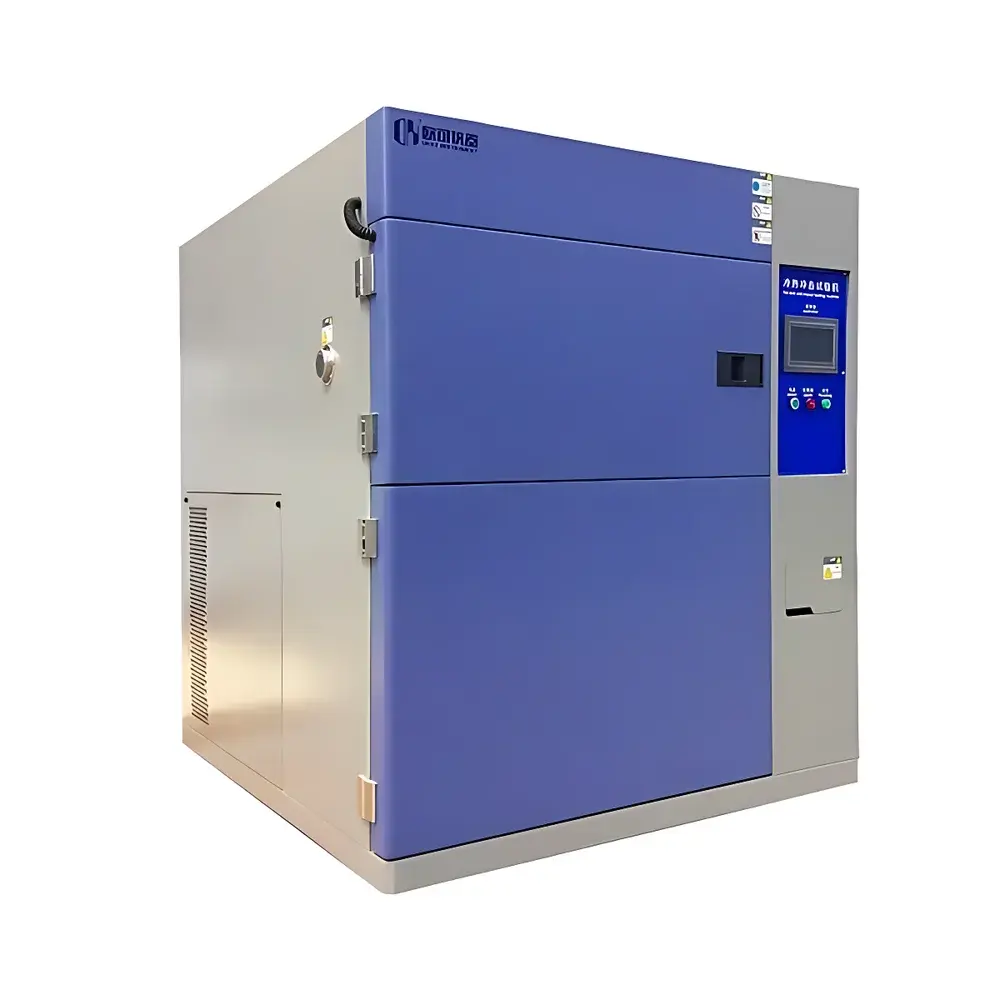
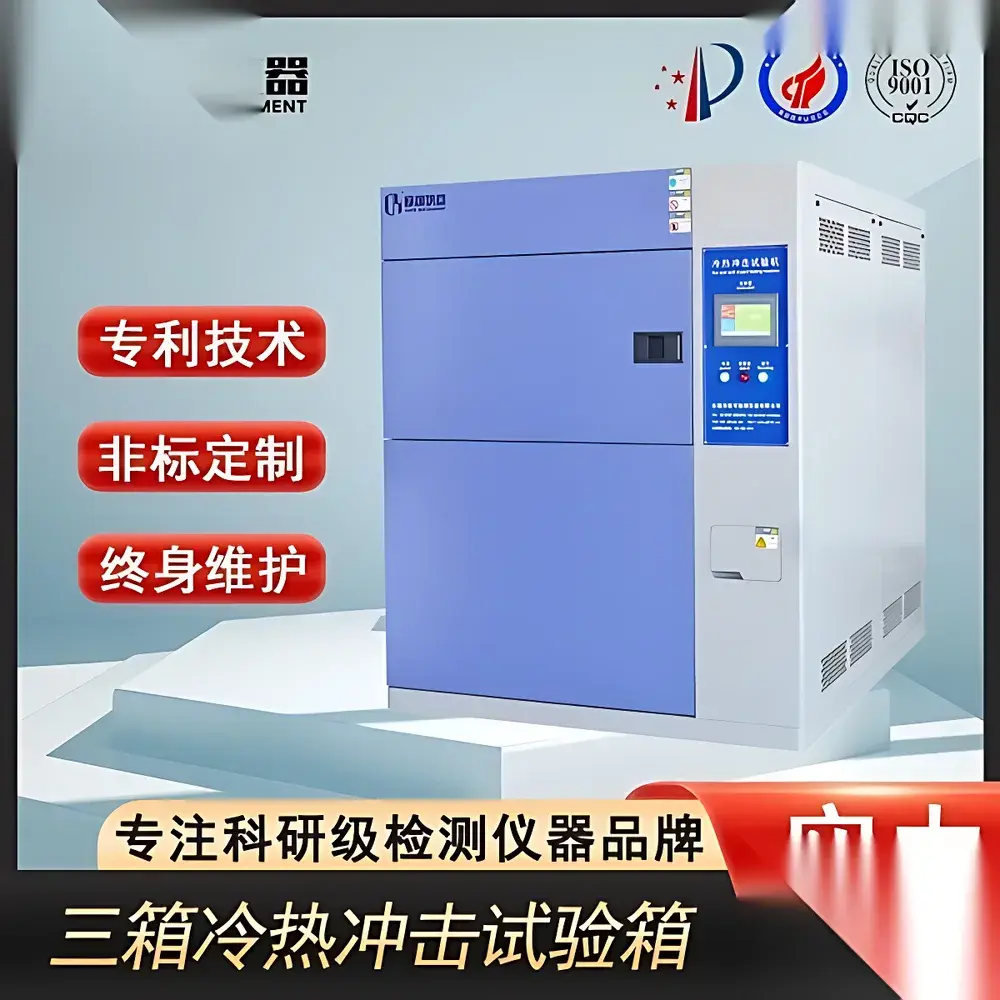
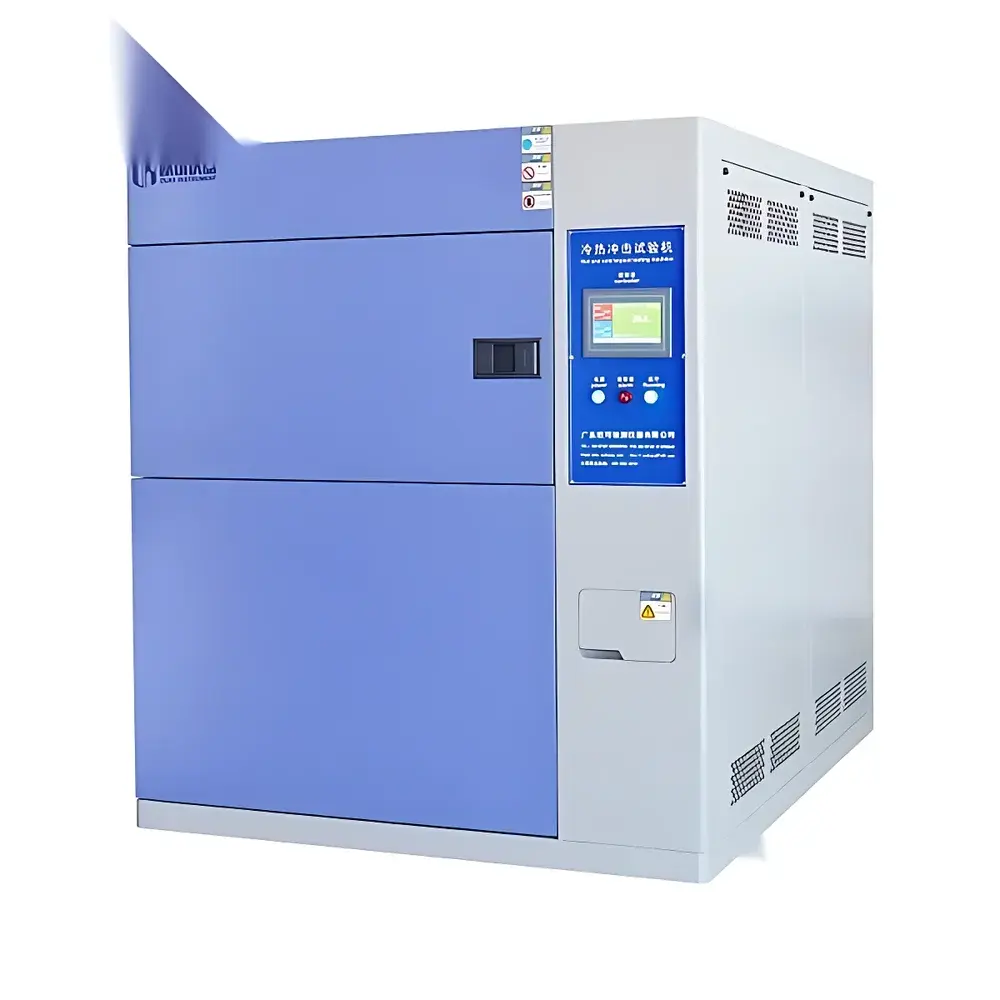
Thermal Shock Test Chamber – High-Performance Three-Zone Static-Test Environmental Chamber
| Brand | OEM / Custom-Built |
|---|---|
| Origin | Imported |
| Manufacturer Type | Authorized Distributor |
| Pricing | USD 11,200 (FOB) |
| Temperature Range | −65°C to +180°C |
| Transition Time (50°C to −50°C) | ≤15 s (typical, per IEC 60068-2-14) |
| Test Zone Volume | Standard 100 L (customizable: 30–500 L) |
| Control System | 7″ TFT Color Touchscreen HMI with PID Auto-Tuning |
| Cooling Method | Dual-Stage Cascade Refrigeration (R404A/R23) |
| Compliance | IEC 60068-2-14, MIL-STD-810H Method 503.5, DIN EN 60068-2-14, JIS C 60068-2-14 |
| Test Zone Configuration | Three-Chamber Static-Test Architecture (High-Temp Chamber / Low-Temp Chamber / Test Chamber) |
| Safety Features | Liquid Nitrogen (LN₂)–Free Operation, Oxygen Depletion Risk Eliminated, Over-Temp/Over-Pressure/Phase Failure Protection |
| Data Logging | Real-Time Curve Plotting, Event Timestamping, Audit-Trail-Ready Export (CSV/Excel) |
| Software | Embedded Firmware v4.2 with Optional PC-Based Remote Monitoring (USB/Ethernet) |
Overview
The Thermal Shock Test Chamber – High-Performance Three-Zone Static-Test Environmental Chamber is an engineered solution for accelerated thermal stress evaluation of electronic components, PCB assemblies, automotive sensors, and aerospace-grade materials. Unlike conventional two-chamber (hot/cold) shock systems, this unit implements a true three-zone architecture—comprising independent high-temperature, low-temperature, and test chambers—enabling precise, repeatable, and LN₂-free thermal transitions. Its static-test methodology ensures the DUT remains physically stationary throughout the entire cycle, eliminating mechanical vibration, positional drift, or connector fatigue induced by shuttle mechanisms. This design directly supports international qualification standards including IEC 60068-2-14 (Change of Temperature), MIL-STD-810H Method 503.5 (Temperature Shock), and DIN EN 60068-2-14, particularly where intermediate ambient dwell periods are mandated between extreme temperature phases.
Key Features
- Three-chamber static-test configuration eliminates moving parts, ensuring long-term mechanical reliability and zero DUT displacement during thermal transitions
- Dual-stage cascade refrigeration system (R404A/R23) delivers stable low-temperature performance down to −65°C without cryogenic consumables—eliminating occupational hazards associated with liquid nitrogen (LN₂) handling and oxygen-deficient atmospheres
- 7-inch full-color TFT touchscreen HMI with intuitive icon-based navigation, multi-language support (English, German, Japanese, Chinese), and real-time graphical display of chamber temperatures, cycle progress, and fault diagnostics
- PID auto-tuning temperature control with ±0.3°C uniformity (test zone) and ±0.5°C stability (per IEC 60068-3-5), enabling compliance with stringent process validation requirements
- Programmable cycle parameters: up to 999 cycles, user-defined dwell times (1 min–999 h), selectable start condition (high-temp-first or low-temp-first), and automatic defrost scheduling
- Integrated safety architecture includes over-temperature cutoff, compressor high-pressure shutdown, phase failure detection, and door interlock monitoring—all logged with timestamps for GLP/GMP traceability
- Standard 100 L test volume (custom options: 30 L, 200 L, 500 L); all chambers constructed with 100 mm thick polyurethane insulation (λ = 0.022 W/m·K) and stainless-steel 304 inner lining
Sample Compatibility & Compliance
This chamber accommodates a broad range of physical configurations via front-access test ports (standard Ø50 mm, optional Ø100 mm), enabling external power/data cabling without compromising thermal integrity. It supports samples up to 450 mm × 450 mm × 450 mm (W×D×H) within the test zone. The static-test principle ensures compatibility with fragile substrates (e.g., MEMS devices, thin-film sensors), solder-joint reliability specimens, and hermetically sealed packages. All operational firmware and data logging functions comply with FDA 21 CFR Part 11 requirements for electronic records and signatures when paired with optional audit-trail-enabled software. Full documentation—including IQ/OQ templates, calibration certificates (NIST-traceable sensors), and conformity declarations to CE, UKCA, and RoHS—is provided upon delivery.
Software & Data Management
The embedded controller firmware (v4.2) records all critical parameters—including chamber setpoints, actual temperatures, cycle counts, alarm events, and defrost triggers—at 1-second resolution. Data exports as timestamped CSV files compatible with statistical process control (SPC) platforms such as Minitab and JMP. Optional Ethernet/USB connectivity enables remote monitoring via secure HTTP or Modbus TCP protocols. For regulated environments, the optional PC-based ThermalLog Pro Suite provides 21 CFR Part 11-compliant user access controls, electronic signature workflows, and immutable audit trails—including operator ID, action type, timestamp, and pre-/post-change values for every parameter modification.
Applications
- Qualification testing of automotive ECUs per AEC-Q200 Rev D
- Solder joint reliability assessment (IPC-9701, JEDEC JESD22-A104)
- Failure mode analysis of plastic housings, adhesives, and conformal coatings
- Pre-screening of semiconductor wafers and packaged ICs prior to burn-in
- Material compatibility verification for space-grade polymers (ECSS-Q-ST-70-08C)
- Process validation of reflow soldering profiles in contract manufacturing
FAQ
Does this chamber require liquid nitrogen or other cryogenic media for operation?
No. It uses a self-contained dual-stage cascade refrigeration system rated for −65°C; no external cryogens are needed, reducing operational risk and consumable costs.
Can the test chamber accommodate custom-sized DUTs or fixtures?
Yes. Standard test ports and modular interior mounting rails allow integration of customer-provided fixtures; optional custom chamber dimensions and port configurations are available upon request.
Is the temperature control system validated for ISO/IEC 17025-accredited labs?
Yes. NIST-traceable PT100 sensors (Class A, ±0.15°C at 0°C) are factory-calibrated, and full calibration reports—including uncertainty budgets—are supplied with each unit.
What level of data security and audit readiness does the system provide?
The base firmware logs all operational events with timestamps; the optional ThermalLog Pro Suite adds role-based access, electronic signatures, and tamper-proof audit trails compliant with FDA 21 CFR Part 11 and EU Annex 11.
How is maintenance performed, and what is the expected service interval?
Compressor oil and refrigerant filters are serviced annually; full preventive maintenance (including sensor recalibration and refrigerant leak check) is recommended every 24 months by certified field engineers.



