
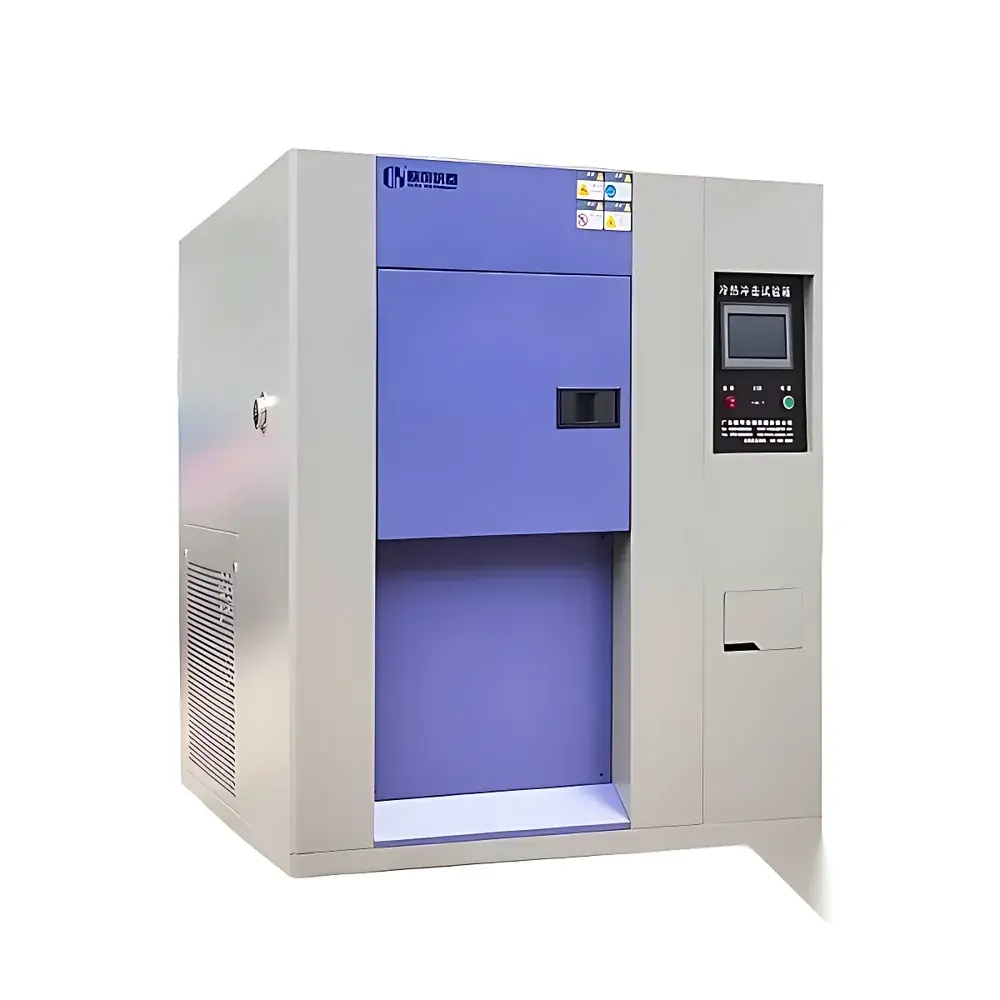
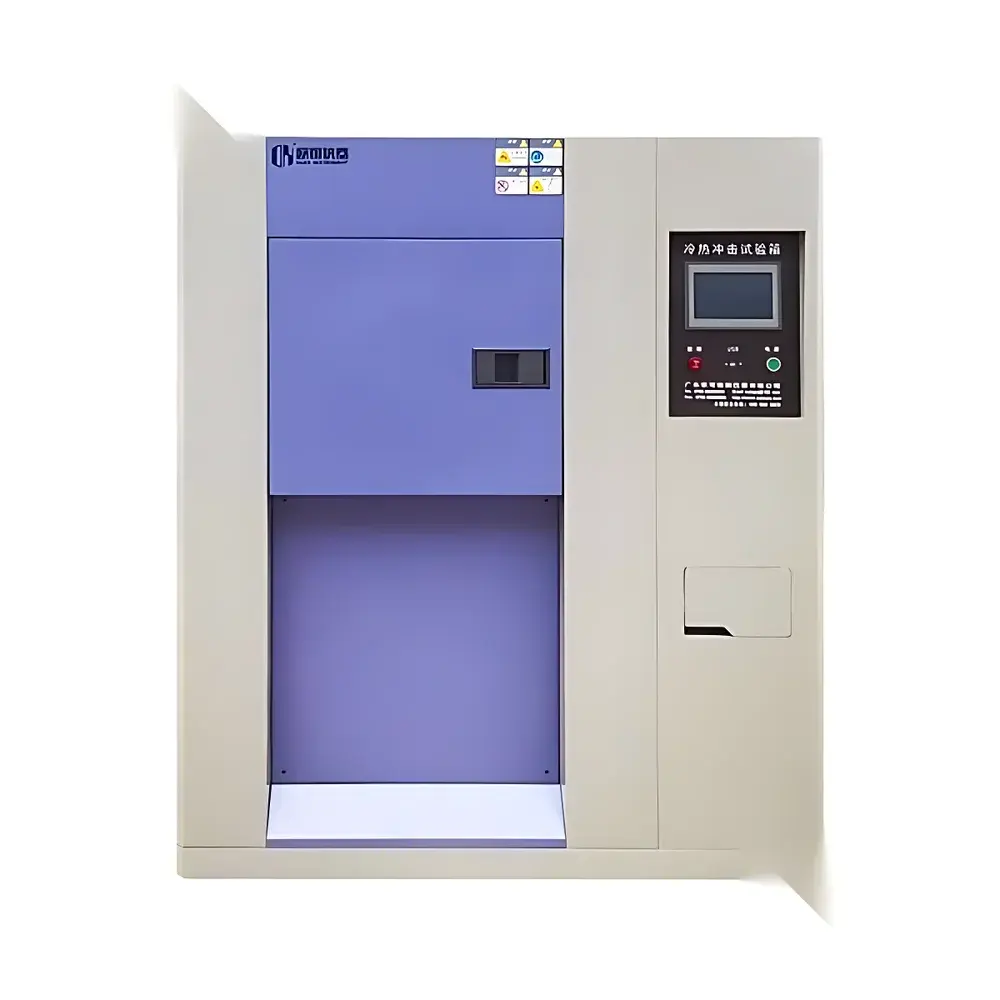
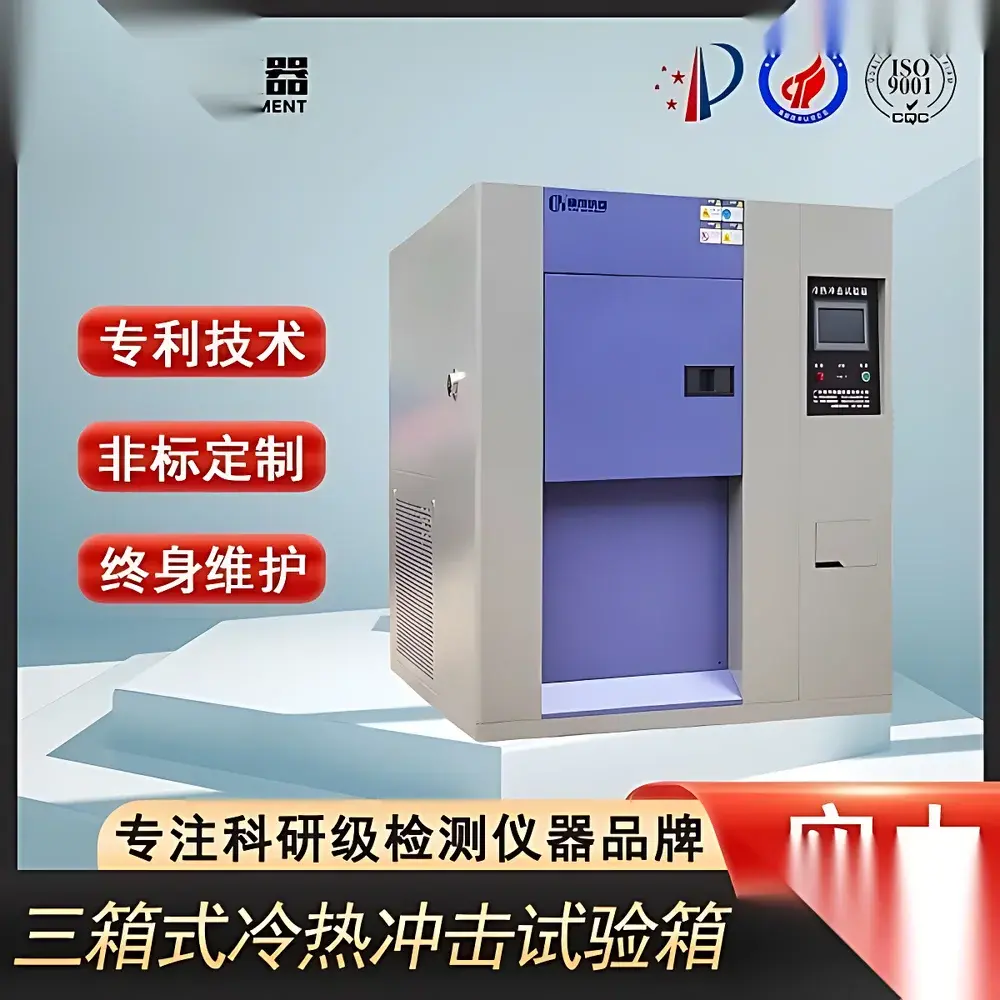
Thermal Shock Test Chamber – Industrial-Grade Environmental Test System
| Key | Temperature Range Options: -20°C to 150°C |
|---|---|
| Humidity Range (optional) | 20–98% RH |
| Temperature Uniformity | ≤ ±2°C |
| Temperature Stability | ≤ ±0.5°C |
| Humidity Deviation | +2 / −3% RH |
| Heating Rate | 1.0–3.0°C/min |
| Cooling Rate | 0.7–1.0°C/min |
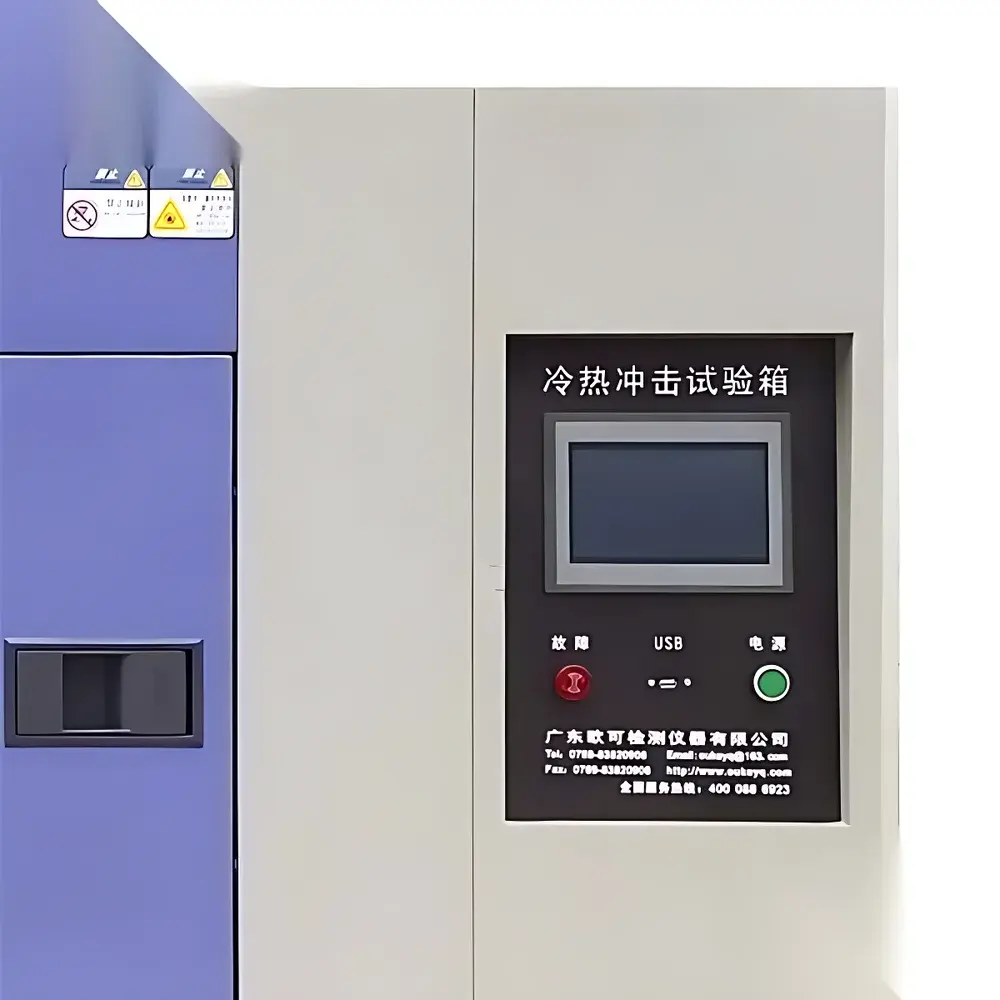
| Control System | Programmable Touchscreen Controller (English/Chinese UI) |
| Temperature Setpoint Accuracy | ±0.1°C |
| Humidity Setpoint Accuracy | ±1% RH |
| Sensor Type | PT100 Platinum Resistance Thermometer |
| Heating Method | Independent Nickel-Chromium Alloy Heaters |
| Humidification | Stainless Steel Surface Evaporation System |
| Dehumidification | Evaporator Coil Dew-Point Contact Method |
| Exterior Material | Cold-Rolled Carbon Steel with Phosphating & Electrostatic Powder Coating OR SUS304 Brushed Stainless Steel |
| Interior Material | SUS304 Mirror-Finish Stainless Steel |
| Insulation | Polyurethane Rigid Foam + Ultra-Fine Glass Fiber |
| Door Seal | Dual-Layer High/Low-Temperature Resistant Silicone Rubber |
| Power Supply | AC 380V ±10%, 50 ±0.5 Hz, 3-Phase 5-Wire |
| Refrigeration | Twin-Stage Cascade Air-Cooled System with Imported Hermetic Compressors (France) |
Overview
The Thermal Shock Test Chamber is an industrial-grade environmental test system engineered for rapid, repeatable, and highly controlled transitions between extreme high- and low-temperature conditions. It operates on the principle of mechanical thermal shock—subjecting specimens to abrupt temperature shifts within defined dwell times—to evaluate material integrity, solder joint reliability, coating adhesion, and packaging performance under accelerated stress. Designed for compliance with key international standards—including ASTM D5229/D5229M (low-temperature impact), IEC 60068-2-14 (change of temperature), MIL-STD-810H Method 503.5 (temperature shock), and JESD22-A104 (temperature cycling)—this chamber supports qualification testing in aerospace, automotive electronics, semiconductor packaging, and medical device manufacturing environments.
Key Features
- Four selectable temperature range configurations: −20°C to +150°C, −40°C to +150°C, −60°C to +150°C, and −70°C to +150°C—enabling application-specific calibration and validation.
- Programmable touchscreen controller with bilingual (English/Chinese) interface, supporting multi-segment ramp-soak profiles, real-time trend logging, and alarm-triggered event capture.
- Dual-stage cascade refrigeration architecture using imported hermetic compressors, ensuring stable sub-zero operation and consistent cooling rates (0.7–1.0°C/min) without reliance on liquid nitrogen or external chillers.
- Independent heating and humidification systems: nickel-chromium alloy heaters for precise thermal control; stainless steel surface evaporation humidifier for uniform moisture distribution (optional 20–98% RH capability).
- High-fidelity sensor suite: Class A PT100 platinum resistance thermometers calibrated to ±0.1°C setpoint accuracy and ±0.1°C indication accuracy; humidity sensors traceable to NIST standards.
- Robust thermal insulation: composite layer of rigid polyurethane foam (≥100 mm thick) and ultra-fine glass fiber minimizes thermal bridging and ensures ≤±2°C internal uniformity across working volume.
- Structural integrity: interior chamber constructed from mirror-finish SUS304 stainless steel; exterior options include electrostatically coated carbon steel or brushed SUS304—both resistant to corrosion, thermal fatigue, and cleaning agents used in GMP-compliant facilities.
Sample Compatibility & Compliance
This chamber accommodates a broad spectrum of sample types—including PCB assemblies, molded plastic housings, lithium-ion battery modules, optical lenses, and sealed medical enclosures—within standard working volumes (customizable upon request). All models are designed to meet electromagnetic compatibility (EMC) requirements per EN 61326-1 and safety standards per IEC 61010-1. Optional validation packages support IQ/OQ/PQ documentation aligned with ISO/IEC 17025 and FDA 21 CFR Part 11 data integrity requirements, including electronic signature capability, audit trail logging, and user-access-level controls.
Software & Data Management
The embedded controller provides native CSV export for time-stamped temperature/humidity profiles, with optional Ethernet or RS485 interfaces for integration into centralized laboratory information management systems (LIMS) or MES platforms. Firmware supports configurable alarm thresholds (e.g., deviation >±1.0°C for >60 s), automatic email/SMS notifications via SMTP protocol, and password-protected parameter locking to prevent unauthorized configuration changes. For regulated environments, optional software modules deliver full 21 CFR Part 11 compliance—including electronic signatures, change history, and immutable record retention—validated per GAMP 5 guidelines.
Applications
- Qualification of electronic components subjected to field-relevant thermal cycling in automotive ECUs and ADAS modules.
- Evaluation of adhesive bond strength and delamination resistance in multilayer ceramic capacitors (MLCCs) and flex-rigid PCBs.
- Validation of hermetic seal integrity in implantable medical devices per ISO 11607-2 accelerated aging protocols.
- Testing of polymer-based optical films and AR coatings for refractive index stability under repeated thermal excursions.
- Reliability screening of power semiconductor packages (e.g., SiC MOSFETs) prior to AEC-Q101 qualification.
- Support for JEDEC J-STD-020 moisture sensitivity level (MSL) preconditioning when configured with humidity control.
FAQ
What temperature transition times can be achieved between extremes?
Transition times depend on chamber size, load mass, and selected temperature range—but typical air-to-air transfer between −65°C and +150°C is ≤15 seconds for standard configurations, meeting IEC 60068-2-14 Category Z criteria.
Is remote monitoring and control supported?
Yes—via optional Ethernet module with web-based HMI, allowing secure access to real-time chamber status, historical trends, and manual override functions from any authorized workstation.
Can the chamber be validated for GxP environments?
Absolutely. Factory-installed validation kits include calibrated reference sensors, uncertainty budgets, and IQ/OQ protocols compliant with ISO 17025 and Annex 11. PQ execution support is available through certified third-party service partners.
What maintenance intervals are recommended for the refrigeration system?
Compressor oil analysis and filter dryer replacement are advised every 24 months under continuous operation; annual inspection of evaporator coils, door gaskets, and heater continuity is included in standard preventive maintenance contracts.
Does the system support custom test profiles beyond standard thermal shock cycles?
Yes—the controller supports up to 99 programmable segments per profile, including variable ramp rates, dwell durations, humidity modulation (if equipped), and conditional branching based on sensor feedback or elapsed time.



