
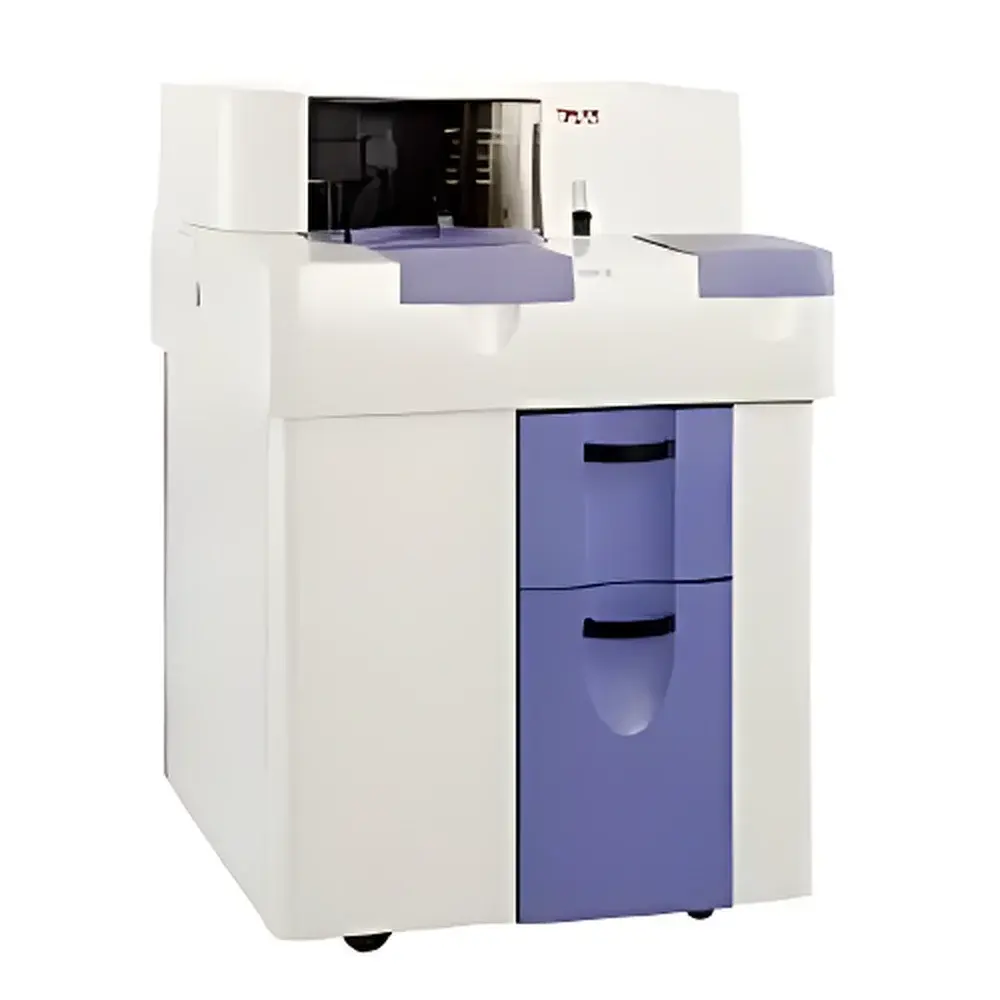
Thermo Fisher Arena20 Fully Automated Industrial Analyzer
| Brand | Thermo Fisher |
|---|---|
| Origin | Finland |
| Manufacturer | Thermo Fisher Scientific |
| Product Type | Imported Instrument |
| Model | Arena20 |
| Instrument Category | Beverage & Food-Specific Analyzer |
| Optical Range | 275–700 nm |
| Reaction Volume | Microliter-scale (sample + reagent) |
| Detection Methodology | Photometric (absorbance), Enzymatic Assay, and Bitterness Unit (BU) Quantification |
| Sample Throughput | Random-access, on-demand analysis with variable throughput configurations |
| System Architecture | Open-platform, user-programmable method environment |
| Compliance Framework | Designed for GLP/GMP-aligned workflows |
Overview
The Thermo Fisher Arena20 Fully Automated Industrial Analyzer is a dedicated photometric clinical-analog platform engineered for high-throughput, traceable biochemical analysis in food, beverage, pharmaceutical, and chemical manufacturing environments. Unlike general-purpose clinical analyzers, the Arena20 integrates industrial-grade fluidics, thermal stabilization, and optical calibration protocols specifically optimized for complex, non-physiological matrices—such as wort, beer, fruit juice, dairy emulsions, and fermentation broths. Its core measurement principle relies on dual-beam spectrophotometry across a broad UV-Vis range (275–700 nm), enabling precise quantification of absorbance-based analytes—including enzymatically generated chromophores, polyphenol-derived complexes, and iso-alpha-acid derivatives critical to bitterness assessment. The system employs a fixed-wavelength photodiode array supplemented by programmable filter selection, ensuring reproducible wavelength assignment without mechanical grating drift. As a true random-access analyzer, it eliminates batch-based processing constraints, allowing concurrent scheduling of heterogeneous assays—from glucose oxidase kinetics to anthocyanin stability profiling—within a single run.
Key Features
- Microliter-scale reaction architecture: Total assay volume (sample + reagent) remains consistently below 150 µL, minimizing consumables use and waste generation while maintaining analytical sensitivity.
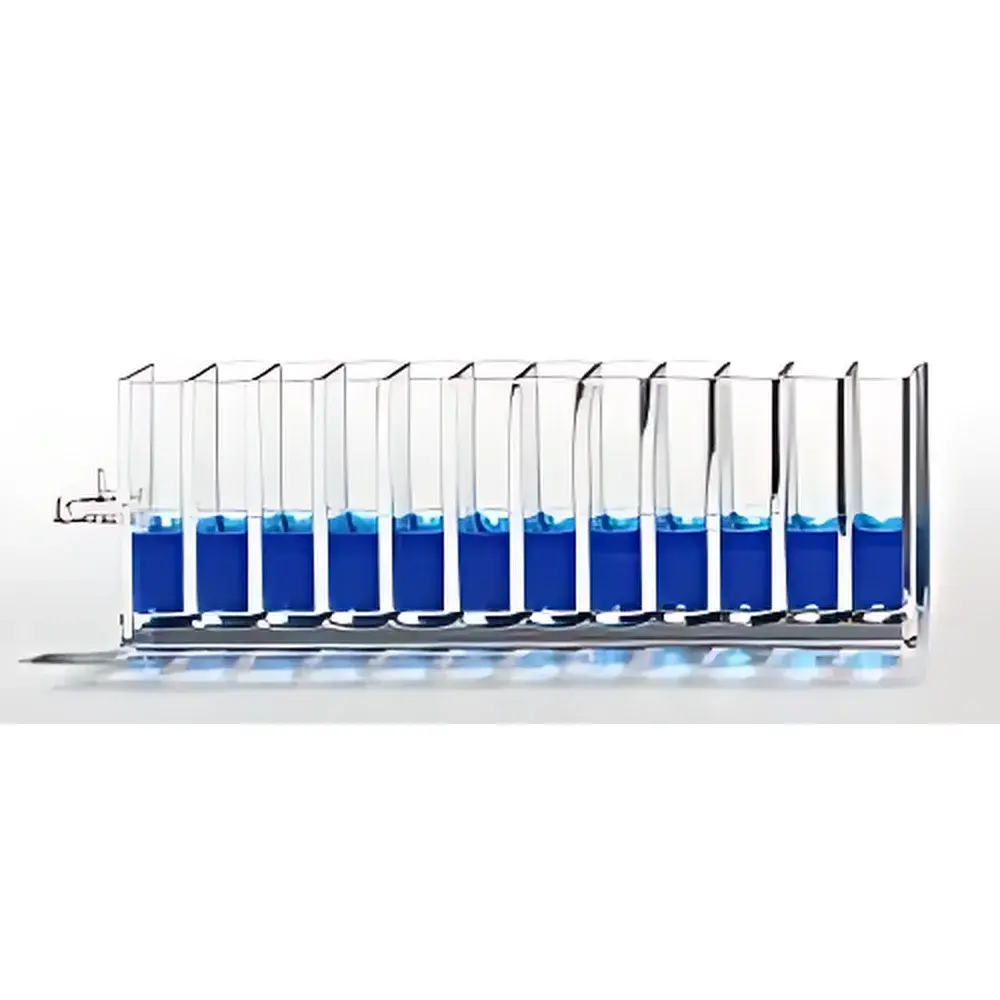
- Disposable multi-cuvette carousel: Each polystyrene cuvette is individually sealed and optically calibrated; no washing step required, eliminating carryover and cross-contamination between samples or assay types.
- Integrated bitterness quantification module: Dedicated optical path and temperature-controlled reaction chamber enable standardized EBC/ASBC-compliant iso-alpha-acid extraction and spectrophotometric BU determination in under 4 minutes per sample.
- Barcode-driven sample and reagent management: All consumables—including reagent kits, calibrators, and cuvettes—are tracked via 2D DataMatrix codes; software auto-links lot-specific calibration curves and expiry validation.
- On-board dilution capability: Programmable pre-dilution (1:2 to 1:100) and post-reaction secondary dilution extend dynamic range without manual intervention—critical for high-sugar or high-pigment matrices.
- Multi-point blanking strategy: Supports reagent blank, sample blank, and dual-reference blank modes to correct for matrix interference, turbidity, and endogenous chromophore background.
Sample Compatibility & Compliance
The Arena20 accepts liquid samples ranging from clarified filtrates to moderately turbid suspensions (up to 30 NTU), including unfiltered wort, centrifuged beer, pasteurized milk, and enzyme-treated starch hydrolysates. It complies with ISO 5725 (accuracy and precision), ISO 17511 (calibration traceability), and ASTM D8196 (beer bitterness standard test method). Its software architecture supports 21 CFR Part 11-compliant electronic signatures, audit trails with immutable timestamps, and role-based user permissions—making it suitable for regulated quality control laboratories operating under GMP or HACCP frameworks. Method validation documentation templates (including LOD/LOQ, linearity, and intermediate precision) are embedded within the application suite.
Software & Data Management
ArenaControl™ software provides a browser-based interface compatible with Windows and macOS clients, supporting remote monitoring and method deployment across networked instruments. All methods—including custom enzymatic kinetics, multi-wavelength ratio calculations, and BU algorithms—are stored as XML-defined protocols with version history and change logs. Raw absorbance data, kinetic traces, and calibration curves are archived in vendor-neutral HDF5 format. Integration with LIMS is achieved via ASTM E1384-compliant HL7 messaging or direct SQL database export (ODBC/JDBC). Audit trail records capture operator ID, timestamp, parameter modifications, and result overrides—fully searchable and exportable for regulatory review.
Applications
- Beer & Brewing: Real-time monitoring of fermentable sugars (glucose, maltose), alcohol content (via enzymatic oxidation), free amino nitrogen (FAN), diacetyl, and iso-alpha-acid concentration (BU).
- Soft Drinks & Juices: Titratable acidity, vitamin C (ascorbic acid), total phenolics (Folin-Ciocalteu), and browning index (420 nm absorbance).
- Dairy & Fermented Products: Lactose, lactic acid, urea, and proteolytic activity (o-phthaldialdehyde assay).
- Pharmaceutical Excipients: Starch hydrolysis kinetics, reducing sugar quantification, and excipient purity screening.
- Research & Development: High-resolution kinetic profiling of enzyme inhibitors, substrate saturation curves, and reaction thermodynamics under controlled temperature gradients.
FAQ
What sample volume is required for routine analysis?
Typical sample input ranges from 20 µL to 100 µL, depending on assay sensitivity and dilution settings.
Can the Arena20 be integrated into an existing laboratory automation workflow?
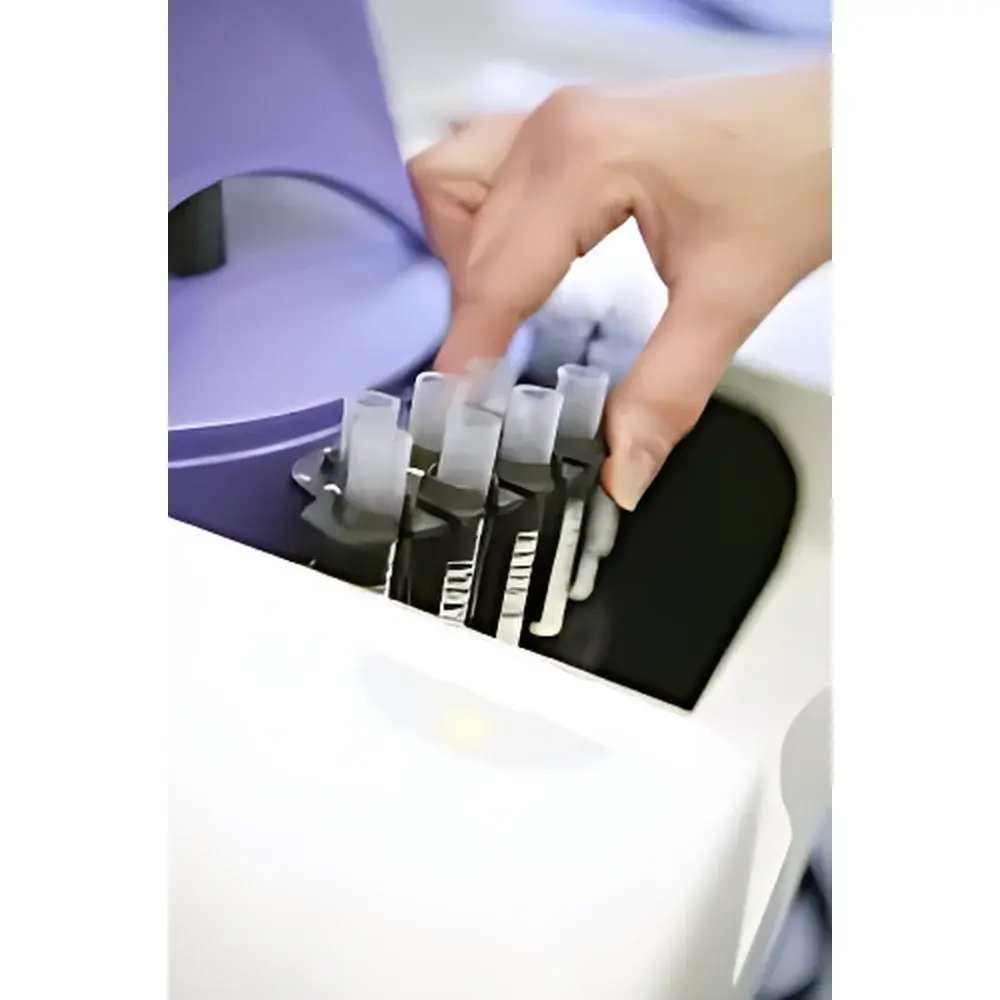
Yes—it supports RS-232, Ethernet, and USB interfaces for bidirectional communication with robotic sample handlers and central LIMS platforms.
Is method development supported for non-standard analytes?
Absolutely—the open method editor allows full customization of reaction timing, wavelength selection, reagent addition sequences, and calculation algorithms.
How often does the optical system require recalibration?
Factory-calibrated photometric accuracy is verified daily via built-in neutral density filters; full spectral calibration is recommended every six months or after hardware service.
Does the system support temperature-controlled incubation for enzymatic assays?
Yes—reaction cuvettes are maintained at 25°C, 30°C, or 37°C ±0.2°C using Peltier-based thermal regulation, with real-time monitoring logged in audit trail.






