Thermo Fisher Chromeleon 7 Chromatography Data System
| Brand | Thermo Fisher |
|---|---|
| Origin | USA |
| Manufacturer Type | Original Equipment Manufacturer (OEM) |
| Origin Category | Imported |
| Model | Chromeleon® 7 |
| Software Type | Chromatography & Mass Spectrometry Data System |
| Regulatory Compliance | FDA 21 CFR Part 11, GLP, GMP |
Overview
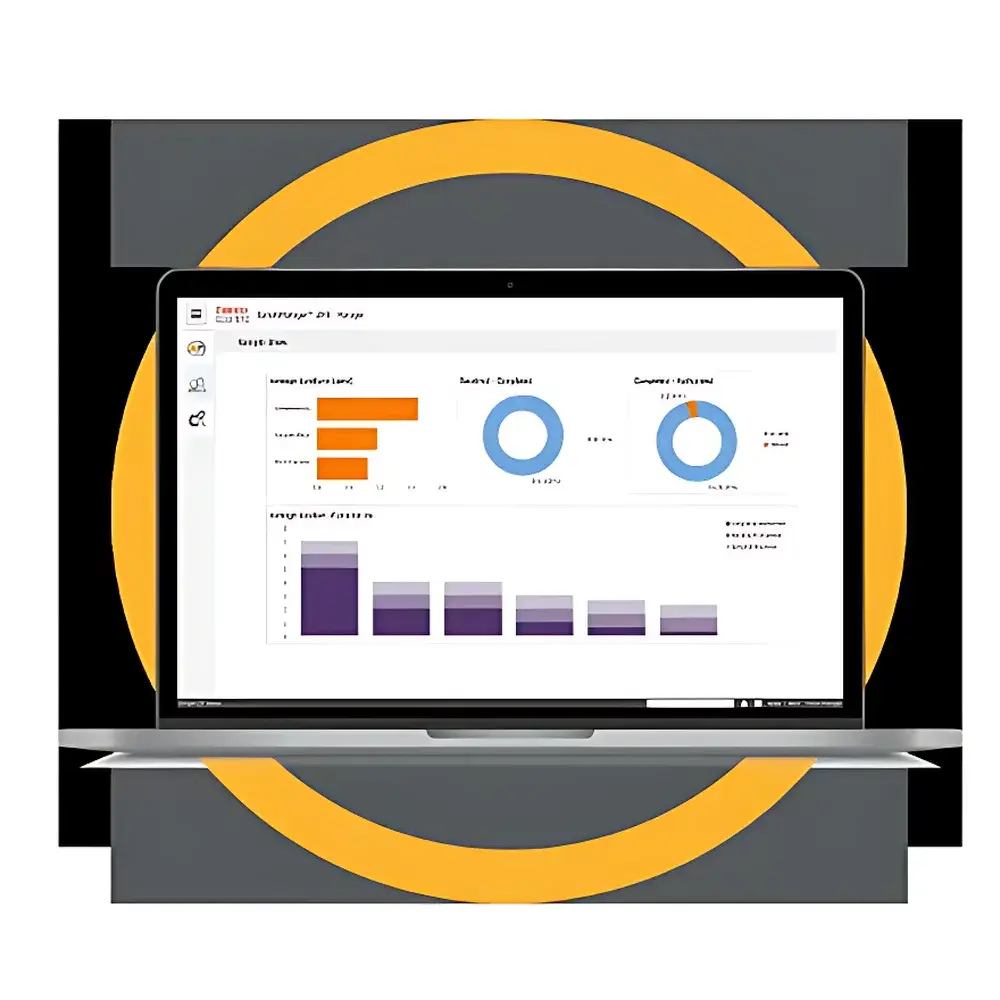
Chromeleon 7 is a fully integrated, database-driven Chromatography Data System (CDS) engineered for precision, scalability, and regulatory integrity across liquid chromatography (LC), gas chromatography (GC), ion chromatography (IC), and hyphenated mass spectrometry (LC-MS, GC-MS) workflows. Built on a robust client-server architecture, it operates as both a standalone workstation and an enterprise-grade platform supporting distributed laboratories, multi-site deployments, and centralized instrument management. Its core measurement paradigm is not hardware-based but software-defined—orchestrating instrument control, sequence execution, real-time data acquisition, peak integration, quantitative reporting, and audit-trail–enabled data archiving within a single unified environment. Designed explicitly for regulated environments, Chromeleon 7 implements deterministic workflow logic, electronic signature enforcement, and immutable audit trails to meet the evidentiary requirements of pharmaceutical quality control, clinical research, environmental testing, and food safety laboratories.
Key Features
- Operational Simplicity™ Architecture: A patented design philosophy minimizing cognitive load through context-aware interface elements, dynamic toolbars, and role-based dashboards—reducing training time and operator error without sacrificing analytical depth.
- eWorkflows Technology: Preconfigured, parameter-locked method templates that guide users step-by-step from sample injection to report generation, ensuring procedural consistency and reducing manual configuration errors.
- Multi-Vendor Instrument Control: Native support for Thermo Fisher instruments (UltiMate™, Vanquish™, ISQ™, TSQ™ series) plus certified drivers for Agilent, Waters, Shimadzu, and PerkinElmer platforms—enabling heterogeneous lab consolidation without hardware replacement.
- FDA 21 CFR Part 11 Compliance: Full implementation of electronic signatures, audit trail logging (with user, action, timestamp, and pre-/post-value capture), system access controls, and secure electronic records retention per ALCOA+ principles.
- Enterprise Scalability: Supports up to 1,000+ concurrent users and 500+ controlled instruments via centralized server deployment; integrates with LDAP/Active Directory and supports SQL Server or Oracle backends.
- Advanced Data Handling: Real-time peak detection with customizable integration algorithms (e.g., valley-to-valley, tangent skim), batch reprocessing, spectral deconvolution for MS data, and automated calibration curve fitting with residual analysis.
Sample Compatibility & Compliance
Chromeleon 7 does not process physical samples directly but governs the entire analytical lifecycle—from sample registration and vial mapping to result verification and certificate of analysis (CoA) generation. It natively accepts raw data files from all major chromatographic detectors (UV-Vis, DAD, fluorescence, conductivity, ECD, TCD, FID) and mass spectrometers (single quad, triple quad, Q-TOF). The system enforces compliance with ISO/IEC 17025, USP , ASTM E2500, and ICH guidelines through configurable validation protocols, IQ/OQ/PQ documentation templates, and built-in change control logs. All audit trails are cryptographically hashed and stored in tamper-evident format, satisfying inspection readiness for FDA, EMA, PMDA, and WHO pre-approval audits.
Software & Data Management
Data integrity is maintained via a relational SQL database backend (Microsoft SQL Server or Oracle), ensuring ACID-compliant transactions and referential integrity across sequences, methods, results, and metadata. Raw data files remain unaltered on network storage while metadata—including instrument conditions, processing parameters, and reviewer annotations—is indexed and searchable. The system supports automated backup scheduling, granular permission hierarchies (e.g., analyst, supervisor, QA reviewer, system administrator), and scheduled report exports in PDF, CSV, or XML formats. Integration with LIMS and ERP systems is achieved via RESTful APIs and HL7/SOAP web services, enabling bidirectional sample tracking and result dissemination without manual re-entry.
Applications
- Pharmaceutical QC/QA: Release testing of APIs and finished dosage forms per USP monographs, stability-indicating assays, and impurity profiling under ICH Q2(R2).
- Clinical Toxicology: Quantitative bioanalysis of drugs and metabolites in plasma/urine using LC-MS/MS with internal standard calibration and incurred sample reanalysis (ISR) workflows.
- Environmental Monitoring: EPA Method 525.3 (drinking water), 8270 (semivolatiles), and 8082 (PCBs) compliance with automated reporting and EPA-approved calculation engines.
- Food & Beverage Safety: Pesticide residue screening (EU MRLs), mycotoxin quantification (aflatoxins, ochratoxin A), and allergen marker detection using validated eWorkflows.
- Academic & Contract Research: Method development acceleration via comparative chromatogram overlays, retention time prediction tools, and shared method libraries across collaborative teams.
FAQ
Does Chromeleon 7 support hybrid cloud deployment?
Yes—while the core CDS engine requires on-premises Windows Server infrastructure for instrument control, select modules (e.g., remote monitoring, report viewing, audit trail review) can be accessed via secure HTTPS through Chromeleon Web Access, enabling limited cloud-enabled collaboration without compromising data sovereignty.
Can legacy Chromeleon 6.x methods be migrated to version 7?
Yes—Chromeleon 7 includes an automated method conversion utility that preserves integration parameters, calibration models, and report templates, with validation reports generated for each converted method to support requalification.
Is 21 CFR Part 11 compliance enabled by default?
No—compliance features must be activated during installation and configured per site-specific SOPs; enabling electronic signatures, audit trail retention policies, and user authentication protocols requires formal validation per GxP requirements.
What database versions are certified for production use?
Microsoft SQL Server 2016 SP2 through 2022, and Oracle Database 12c Release 2 (12.2.0.1) through 21c—both with Transparent Data Encryption (TDE) and database-level auditing enabled.
How is software validation supported?
Thermo Fisher provides Installation Qualification (IQ) and Operational Qualification (OQ) protocols, along with documented risk assessments and traceability matrices; Performance Qualification (PQ) remains the responsibility of the end user per their internal validation policy.