
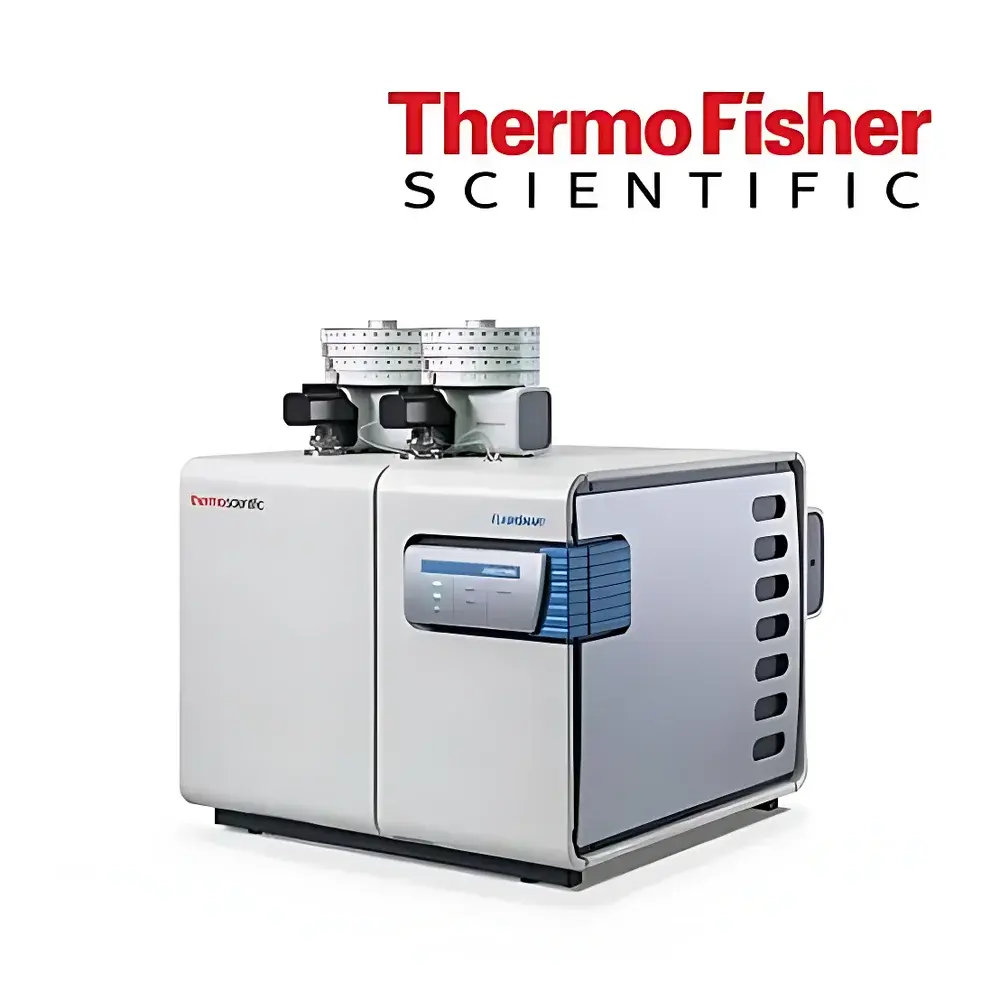
Thermo Fisher FlashSmart Organic Elemental Analyzer for CHNSO Analysis
| Brand | Thermo Fisher |
|---|---|
| Origin | Italy |
| Model | FlashSmart |
| Element Range | CHNSO, CHNS, CHN, NCS, NC, N, S, O (configurable modes) |
| Analysis Time | 5–10 min (sample-weight- and matrix-dependent) |
| Detection Limit | <40 ppm (S: down to 4 ppm with FPD/IR |
| Measurement Precision | ≤0.05% RSD |
| Sample Introduction | Up to 500 µL liquid or 1 g solid |
| Detector Options | Thermal Conductivity Detector (TCD), Flame Photometric Detector / Infrared Detector (FPD/IR), Isotope Ratio Mass Spectrometer (IRMS) interface, Chlorine (Cl) measurement module |
| Combustion Temperature | Up to 1800 °C |
| Compliance | Designed for GLP/GMP environments |
Overview
The Thermo Fisher FlashSmart Organic Elemental Analyzer is a high-performance, modular combustion-based instrument engineered for precise quantitative determination of carbon (C), hydrogen (H), nitrogen (N), sulfur (S), and oxygen (O) in organic and organometallic samples. Based on high-temperature catalytic combustion (up to 1800 °C) followed by gas chromatographic separation and selective detection, the system converts sample-bound elements into stable, measurable gaseous species—CO₂, H₂O, N₂, SO₂, and CO (for O)—which are quantified using thermally stable, low-drift detectors. Developed from the legacy of Carlo Erba Instruments (founded 1948) and refined over eight decades of elemental analysis expertise, the FlashSmart platform integrates robust furnace architecture, optimized reactive gas management, and intelligent flow control to deliver exceptional reproducibility and long-term baseline stability. Its design adheres to fundamental principles of ASTM D5291, ISO 14852, USP , and EN 15407, making it suitable for regulated laboratories requiring method validation and data integrity.
Key Features
- Modular configuration supporting up to five-element (CHNSO) simultaneous or sequential analysis—with hardware- and software-defined mode switching without hardware reconfiguration
- Dual-zone high-efficiency combustion furnace with programmable temperature ramping (ambient to 1800 °C) and ceramic-packed reactor tubes ensuring complete oxidation of refractory matrices
- Thermal Conductivity Detector (TCD) as standard—optimized for CO₂, N₂, and H₂O detection with <0.05% RSD precision across routine calibration ranges
- Optional FPD/IR detector module for trace sulfur quantification (detection limit: 4 ppm in solid matrix; validated per ASTM D4294)
- IRMS-compatible interface enabling offline or online coupling for δ¹³C, δ¹⁵N, δ³⁴S, δ¹⁸O, and δ²H isotope ratio measurements under controlled carrier gas conditions
- Integrated Cl measurement module (optional) for halogen-speciation workflows compliant with EPA Method 5050B and ISO 17211
- 15-year warranty on combustion tube and TCD cell—reflecting proven mechanical and thermal durability under continuous operation
Sample Compatibility & Compliance
The FlashSmart accommodates solids (powders, tablets, filters, polymers), liquids (oils, solvents, biological extracts), and heterogeneous materials (soils, sediments, biomass) within a 0.1–100 mg mass range (solids) or 1–500 µL volume range (liquids). Automated sample weighing integration (via METTLER TOLEDO or Sartorius interfaces) and optional autosampler (up to 120 positions) support unattended operation. All analytical protocols align with Good Laboratory Practice (GLP) and current Good Manufacturing Practice (cGMP) requirements. When operated with Thermo Scientific Chromeleon Chromatography Data System (CDS) v7.3+, the platform supports full 21 CFR Part 11 compliance—including electronic signatures, role-based access control, and immutable audit trails for all method changes, calibration events, and result exports.
Software & Data Management
Instrument control, method development, and data evaluation are managed via Thermo Scientific Eager Xpress software—a dedicated, intuitive interface built on Microsoft .NET framework. The software includes pre-validated methods from the proprietary Organic Elemental Analysis Cookbook (containing >1,200 peer-reviewed protocols for pharmaceuticals, polymers, fuels, soils, and biologics). Raw chromatograms, peak integration parameters, calibration curves (linear and quadratic), and uncertainty propagation reports are stored in vendor-neutral .cdf format. Export options include CSV, PDF analytical reports, and direct LIMS integration via ASTM E1384-compliant HL7 or ASTM E2500-07 XML schema.
Applications
The FlashSmart serves as a reference-grade tool across multiple regulated and research-intensive domains: verification of API elemental composition per ICH Q5C guidelines; determination of nitrogen content in fertilizers (ISO 13878); sulfur speciation in diesel fuels (ASTM D2622); oxygen content in biofuels (EN 15407); carbon sequestration studies in soil organic matter (ISO 10694); and quality control of polymer additives (e.g., flame retardants containing Br/Cl/S). It is routinely deployed in academic core facilities, pharmaceutical QC labs, petrochemical R&D centers, and environmental testing laboratories accredited to ISO/IEC 17025.
FAQ
What sample types can be analyzed without derivatization?
Solid organic compounds (e.g., APIs, polymers, plant tissues), viscous liquids (e.g., crude oil fractions), and filter-captured particulates require no pretreatment. Halogenated or highly saline samples may need dilution or matrix-matched calibration.
Is oxygen analysis performed by pyrolysis or combustion?
Oxygen is determined via high-temperature pyrolysis in a graphite reactor under helium, generating CO, which is subsequently oxidized to CO₂ in a post-column CuO furnace and measured by TCD.
Can the system be validated for GMP use?
Yes—full IQ/OQ/PQ documentation packages are available, including installation checklists, operational performance tests (e.g., repeatability at 0.1–10 mg level), and software validation kits aligned with Annex 11 and GAMP5.
How is detector drift compensated during extended runs?
Real-time baseline correction is applied using dual-reference TCD cells and periodic automatic zero-gas injections; FPD/IR modules include internal photomultiplier gain stabilization and pulse-height discrimination algorithms.
What maintenance intervals are recommended for routine operation?
Combustion tube inspection every 500 analyses; TCD cell cleaning every 2,000 runs; GC column replacement every 6–12 months depending on sample load and matrix complexity.




