
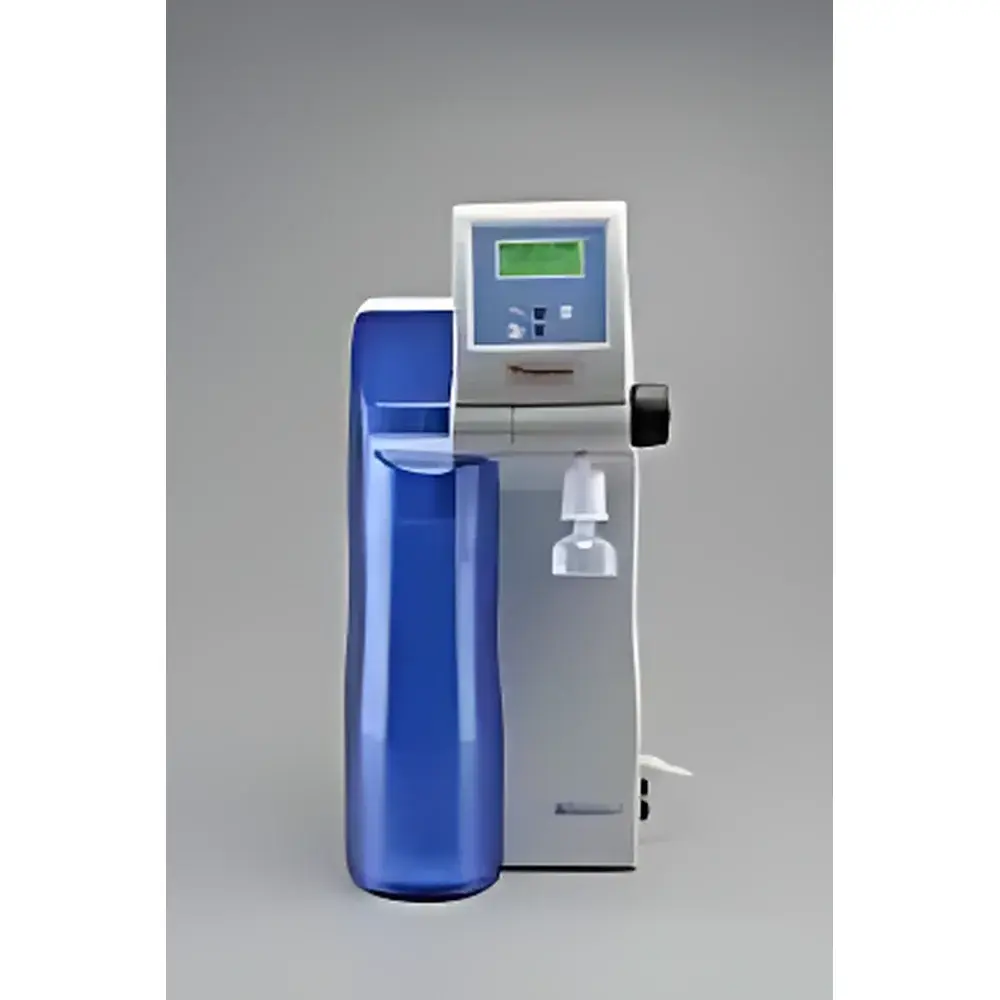
Thermo Fisher MicroPure Ultra Pure Water System
| Brand | Thermo Fisher |
|---|---|
| Origin | Imported |
| Manufacturer | Thermo Fisher Scientific |
| Model | MicroPure |
| Purified Water Grade | Type I (ASTM D1193-20) |
| Resistivity | 18.2 MΩ·cm @ 25°C |
| Total Organic Carbon (TOC) | 1–5 ppb |
| Endotoxin | < 0.001 EU/mL |
| Particles (>0.1 µm) | < 1 particle/mL |
| Flow Rate | ≤ 1 L/min |
| Dimensions (W×D×H) | 305 × 300 × 455 mm (without tank) |
| Power Consumption | 0.06 kW |
| Feed Water Requirement | RO/DI/distilled water with conductivity < 5 µS/cm, TOC ≤ 50 ppb, bacteria < 100 CFU/mL, turbidity < 1.0 NTU, temperature 2–35°C, pressure 0.1–6 bar |
Overview
The Thermo Fisher MicroPure Ultra Pure Water System is an integrated, benchtop-grade laboratory water purification platform engineered for the consistent production of Type I ultrapure water per ASTM D1193-20 and ISO 3696:1995 standards. It employs a multi-stage purification architecture—comprising dual-wavelength (185/254 nm) UV photooxidation, electro-deionization (EDI) or mixed-bed ion exchange (depending on configuration), ultrafiltration (UF), and final 0.2 µm sterile filtration—to eliminate ions, organic compounds, endotoxins, nucleases, particles, and microorganisms. Unlike single-pass systems, MicroPure incorporates a recirculating loop with continuous monitoring and automatic periodic UF membrane rinsing to suppress biofilm formation during standby, ensuring microbiological stability without compromising flow dynamics or system longevity.
Key Features
- Real-time, on-board resistivity and TOC monitoring with graphical backlit LCD interface for intuitive operation and status visualization
- Modular design supporting three validated configurations: MicroPure Base (analytical grade), MicroPure UV (organic analysis), MicroPure UF (biochemical applications), and MicroPure UV/UF (life science–critical workflows)
- Integrated recirculation pump with programmable flush cycles to maintain bioburden < 1 CFU/mL and prevent stagnation-related contamination
- Automated ultrafiltration membrane cleaning protocol extends UF cartridge service life to ≥24 months under typical lab usage
- Pre-installed 0.2 µm pleated sterilizing-grade final filter delivering ≥5× higher microbial retention efficiency vs. standard flat-sheet membranes
- Comprehensive diagnostics engine with fault logging, error-code display, and audible/visual alerts for out-of-spec conditions (e.g., elevated TOC, low pressure, endotoxin breach)
Sample Compatibility & Compliance
MicroPure delivers water meeting stringent specifications required for high-sensitivity analytical and biological applications—including AA, ICP-OES, ICP-MS, HPLC, IC, GC-MS, and TOC analysis—where trace-level contaminants directly impact calibration accuracy and detection limits. Its endotoxin level (< 0.001 EU/mL) and nuclease performance (RNase: ≤0.003 ng/mL; DNase: ≤0.4 pg/µL) comply with USP , EP 2.2.44, and ISO 13485 requirements for cell culture, IVF, monoclonal antibody production, and PCR-based assays. All system firmware supports audit trails and electronic signatures in accordance with FDA 21 CFR Part 11 when paired with optional IQ/OQ documentation packages (E50133913, E50133914). The system is CE-marked and designed for GLP/GMP-aligned environments.
Software & Data Management
While MicroPure operates as a standalone instrument, its digital interface enables seamless integration into lab-wide data governance frameworks. Optional RS-232–equipped GLP-compliant printers (09.2207) generate time-stamped, tamper-evident printouts of daily performance logs—including resistivity trends, TOC excursions, UV lamp hours, and filter saturation alerts. IQ/OQ validation kits include full traceable documentation, installation checklists, operational test protocols, and performance verification reports compliant with ISO/IEC 17025 and Annex 11. All consumables—including DI cartridges (02.1500), UF modules (50133981), UV lamps (09.1002), and terminal filters (09.1003)—carry serialized lot tracking for full supply chain traceability and expiry management.
Applications
- Analytical Chemistry: Preparation of mobile phases for HPLC/UHPLC, standards for ICP-MS quantification, blanks for trace metal analysis (AA, ICP-OES), and reagents for ion chromatography and TOC measurement
- Molecular Biology: Formulation of PCR master mixes, electrophoresis buffers, and transfection reagents where RNase/DNase carryover compromises assay fidelity
- Cell Culture & Biopharma: Media and buffer preparation for primary cell lines, hybridoma cultures, and therapeutic mAb manufacturing under cGMP conditions
- Clinical Diagnostics: Support of IVF laboratories, clinical genomics platforms, and accredited reference labs requiring CLIA- and CAP-aligned water quality assurance
FAQ
What feed water quality is required to achieve Type I output?
MicroPure requires pretreated feed water—RO, DI, or distilled—with conductivity ≤5 µS/cm, TOC ≤50 ppb, turbidity <1.0 NTU, and bacterial load <100 CFU/mL. Use of substandard feed accelerates consumable depletion and risks noncompliance with 18.2 MΩ·cm resistivity.
Can MicroPure be wall-mounted?
Yes. An optional wall-mount kit (09.2212) is available for space-constrained laboratories, enabling secure vertical installation without compromising airflow or service access.
How often must the ultrafiltration cartridge be replaced?
Under typical usage (≤8 h/day, 5 days/week) and with proper feed water conditioning, the UF module (50133981) maintains validated endotoxin removal performance for up to 24 months—confirmed by routine challenge testing per ISO 13408-1.
Is remote monitoring supported?
MicroPure does not include native Ethernet or Wi-Fi connectivity. However, analog outputs (0–5 V resistivity/TOC signals) and RS-232 ports allow integration with third-party building management or LIMS systems via external gateways.
What validation documentation is provided?
Standard shipment includes factory test reports. Full IQ/OQ documentation (E50133913/E50133914) is available separately and includes equipment specifications, calibration certificates, functional test records, and risk assessment summaries aligned with GAMP5 principles.



