
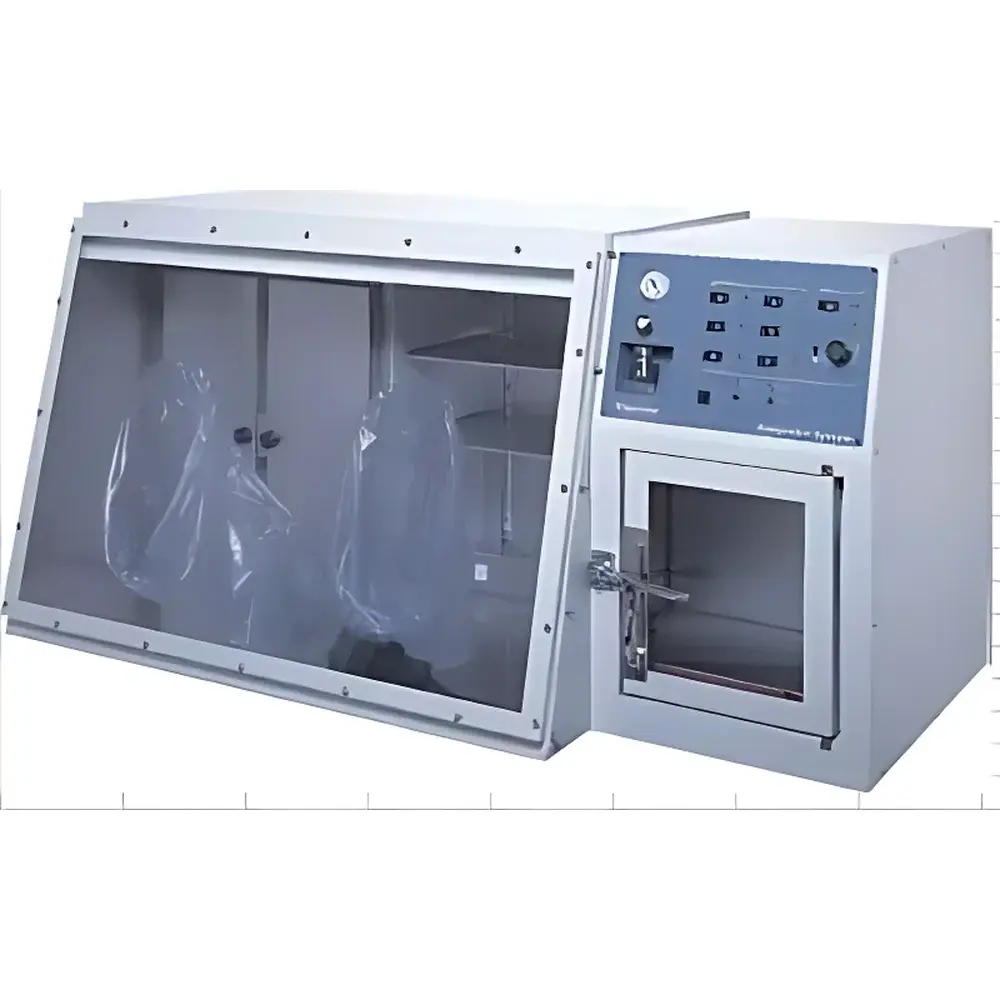
Thermo Fisher Scientific Forma Anaerobic Chamber
| Brand | Thermo Fisher Scientific |
|---|---|
| Origin | USA |
| Manufacturer | Yes |
| Import Status | Imported |
| Model | Forma Anaerobic |
| Pricing | Upon Request |
Overview
The Thermo Fisher Scientific Forma Anaerobic Chamber is a rigorously engineered, gas-controlled incubation system designed for the reliable cultivation and manipulation of obligate anaerobes, microaerophiles, and oxygen-sensitive cell lines. Operating on a closed-loop, catalytic deoxygenation principle, the chamber maintains a stable, ultra-low-oxygen environment (<10 ppm O₂) through continuous hydrogen-mediated palladium-catalyzed oxygen removal, coupled with active carbon-based H₂S scavenging and automated gas exchange cycling. Unlike conventional anaerobic jars or glove boxes relying on single-batch gas flushing, the Forma system employs a dynamic equilibrium strategy—integrating precise temperature regulation (35°C fixed or RT+4°C to 70°C adjustable), uniform gas distribution via jacketed heating, and real-time atmospheric stabilization—to ensure high reproducibility across long-term culture experiments. Its 77 L internal workspace conforms to ISO 13485–aligned manufacturing standards and supports GLP-compliant workflows in clinical microbiology, gut microbiome research, and anaerobic bioprocessing.
Key Features
- Ultra-low oxygen maintenance: <10 ppm O₂ achieved and sustained via integrated Pd catalyst wafers and desiccant tablets, with H₂S adsorption by activated carbon to extend catalyst service life
- Dual-zone thermal control: Independent operation of the main incubation chamber (35°C fixed or RT+4°C–70°C adjustable) and ambient work area, both regulated to ±0.3°C accuracy using PID-controlled gas-jacketed heating
- Ergonomic access design: Elliptical glove ports enable full reach into all corners of the 445 × 559 × 305 mm internal chamber; front panel features micro-angled, non-condensing transparent acrylic (standard) or optional polycarbonate for enhanced impact resistance
- Gas efficiency optimization: Automated continuous purge-and-replenish cycle reduces mixed-gas consumption by up to 50% versus static-flush systems—compatible with high-purity 85% N₂ / 10% H₂ / 5% CO₂ or 5–7% H₂ blends
- Robust mechanical architecture: Stainless steel interior (non-condensing surface finish), two removable stainless steel shelves per zone, built-in fluorescent lighting, multiple grounded AC outlets (IEC 60320 C13), and integrated vacuum port (½” MPT) for rapid air evacuation
- Safety redundancy: Independently adjustable overtemperature cutoff with audible alarm, dual pressure interfaces (¼” NPT for mixed gas and N₂), and fail-safe interlock logic preventing door opening under non-equilibrated conditions
Sample Compatibility & Compliance
The Forma Anaerobic Chamber accommodates standard microbiological and cell culture formats—including 100 × 15 mm Petri dishes (up to 425 units), multiwell plates, slant tubes, and anaerobic blood culture bottles—without spatial compromise. Its internal dimensions (W×H×D: 445 × 559 × 305 mm) and 77 L volume support simultaneous handling of multiple sample sets under identical atmospheric conditions. The system complies with ASTM E2614–22 (Standard Practice for Verification of Anaerobic Systems), meets ISO 14644-1 Class 5 cleanroom airflow guidance for operator interface zones, and is validated for use in FDA-regulated environments requiring 21 CFR Part 11–compliant data integrity when paired with Thermo Fisher’s optional ChronoLog™ software suite. All materials contacting the anaerobic atmosphere are USP Class VI certified and autoclavable.
Software & Data Management
While the base Forma Anaerobic Chamber operates via analog controls and mechanical gauges, it is fully compatible with Thermo Fisher’s ChronoLog™ Environmental Monitoring Platform (optional add-on). This Windows-based application provides time-stamped, password-protected logging of chamber temperature, O₂ concentration (via optional electrochemical sensor integration), gas pressure differentials, door-open events, and alarm triggers. Audit trails meet ALCOA+ principles and support 21 CFR Part 11 compliance through electronic signatures, role-based access control, and immutable record retention. Data export is available in CSV and PDF formats for integration into LIMS or QMS platforms. Firmware updates are delivered via secure USB interface with cryptographic signature verification.
Applications
- Clinical microbiology: Isolation and identification of *Clostridioides difficile*, *Bacteroides spp.*, *Fusobacterium*, and other fastidious anaerobes from stool, wound, and blood specimens
- Gut microbiome research: Stable co-culture of complex anaerobic consortia under physiologically relevant gas compositions mimicking colonic conditions
- Pharmaceutical microbiology: Sterility testing of anaerobic product formulations and environmental monitoring of Grade A/B cleanrooms
- Biotechnology: Anaerobic fermentation process development for biohydrogen, short-chain fatty acid, or vitamin B12 production
- Veterinary diagnostics: Culture of rumen-derived microbes and porcine intestinal pathogens requiring strict O₂ exclusion
FAQ
What gas mixtures are supported for anaerobic operation?
The chamber is validated for use with high-purity 85% N₂ / 10% H₂ / 5% CO₂ or custom blends containing 5–7% H₂. Nitrogen must be ≥99.999% pure; hydrogen and CO₂ require ≥99.99% purity.
Is the system compatible with ISO 13485 or GMP documentation requirements?
Yes—when operated with documented IQ/OQ protocols and paired with ChronoLog™, the system supports full traceability, calibration records, and change control logs required for medical device and pharmaceutical manufacturing audits.
Can the chamber be retrofitted with an O₂ sensor for real-time monitoring?
An optional electrochemical O₂ sensor module (P/N 5012347) is available for direct integration into the control panel, providing continuous digital readout and threshold-triggered alarms.
What vacuum pump is recommended for optimal performance?
Thermo Fisher recommends the model 901025 diaphragm vacuum pump (230 V / 50 Hz), rated for continuous duty and chemically resistant to H₂S and moisture-laden effluent.
How frequently must the Pd catalyst and desiccant be replaced?
Under typical usage (8 hrs/day, 5 days/week), catalyst wafers last 12–18 months; desiccant tablets require replacement every 3–6 months depending on ambient humidity and door-open frequency.



