
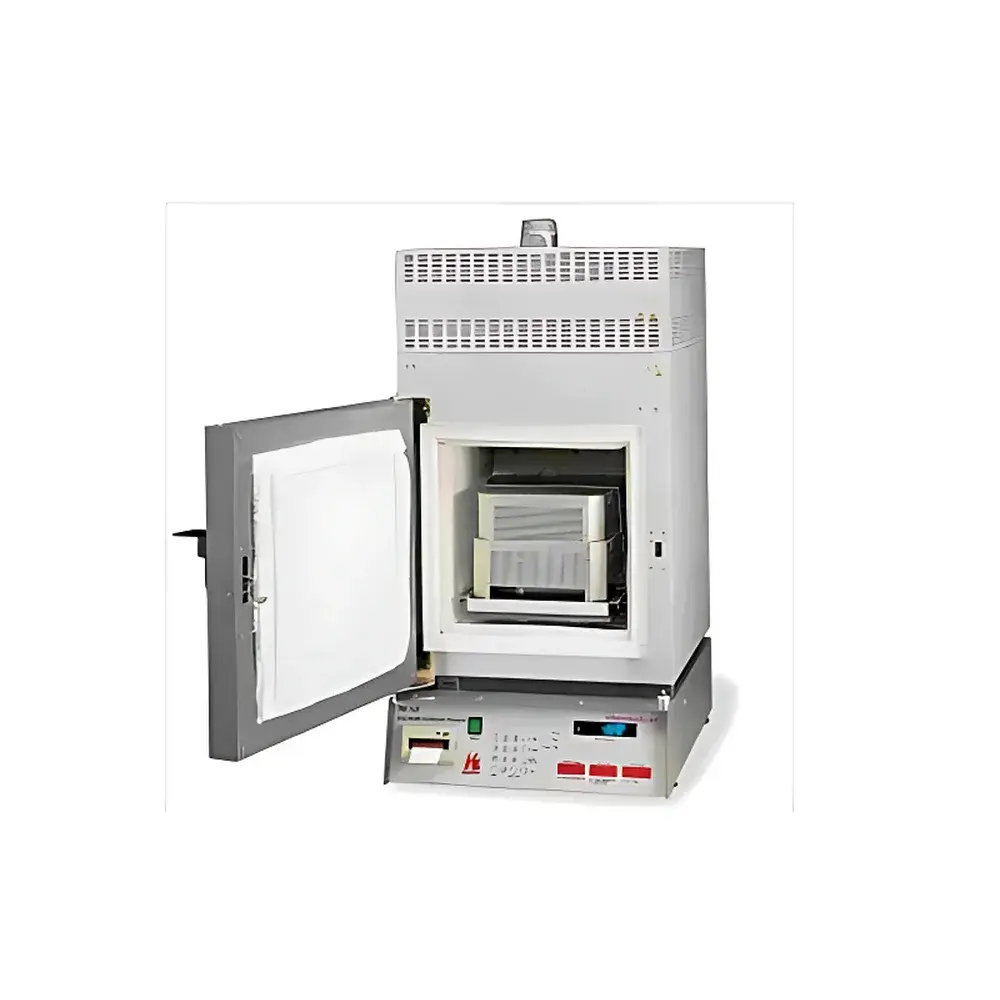
Thermo Fisher Scientific Thermolyne F85930 NCAT Asphalt Combustion Furnace (Asphalt Content Analyzer by Combustion Method)
| Brand | Thermo Fisher Scientific |
|---|---|
| Origin | USA |
| Manufacturer Type | Authorized Distributor |
| Origin Category | Imported |
| Model | F85930 |
| Pricing | Upon Request |
Overview
The Thermo Fisher Scientific Thermolyne F85930 NCAT Asphalt Combustion Furnace is a precision-engineered thermal gravimetric analyzer designed for the quantitative determination of asphalt binder content in hot-mix asphalt (HMA) specimens via controlled high-temperature combustion. Developed in collaboration with the National Center for Asphalt Technology (NCAT), this instrument implements a standardized, solvent-free methodology grounded in mass loss measurement under calibrated oxidative conditions. The system operates on the principle that organic asphalt binder volatilizes and combusts completely at temperatures between 538 °C and 600 °C, while mineral aggregates remain thermally stable—enabling direct calculation of binder content as the percentage mass loss relative to the original sample weight. This method complies strictly with AASHTO T308, ASTM D6307, EN 12697-39, and JTG E20 T0735, and has been validated across NCAT’s network of twelve accredited laboratories. Its certified repeatability of ±0.11% asphalt content ensures data integrity required for quality control in pavement construction, mix design verification, and regulatory compliance reporting.
Key Features
- Integrated high-precision analytical balance (±0.1 g resolution) continuously monitors specimen mass during combustion, enabling real-time gravimetric tracking.
- Programmable endpoint detection with adjustable sensitivity (0.01–0.04% mass change threshold) and automatic termination when mass stabilization falls below ±0.01%—minimizing operator intervention and inter-test variability.
- Dual-mode operation: fully automated cycle (auto-stop, auto-print, auto-cool-to-start temperature) or manual confirmation mode (audible alert + user-initiated stop).
- Dynamic temperature compensation algorithm corrects for thermal drift induced by sample basket and specimen heat capacity—calculating corrections per individual test rather than applying fixed offsets.
- Energy-efficient design operating on standard 30 A/240 V circuits—eliminating need for dedicated 40–50 A service lines required by legacy systems.
- Robust ceramic-lined combustion chamber (14″ × 14″ × 14″) with integrated high-temperature afterburner and ceramic particulate filter, achieving >95% hydrocarbon abatement without external exhaust ducting.
- Full-swing 180° access door with mechanical hinge lock and interlocked safety cutoff—automatically de-energizing heating elements upon door opening.
- Front-panel RS-232 serial interface enables bidirectional communication with laboratory PCs for raw data export, trend charting, and audit-ready report generation.
Sample Compatibility & Compliance
The F85930 accommodates specimens up to 5000 g, supporting coarse-graded HMA, SMA, and porous asphalt mixes. Sample baskets are fabricated from high-purity alumina ceramic to withstand repeated thermal cycling without degradation or metal contamination. All operational parameters—including ramp rate, soak temperature, dwell time, and endpoint criteria—are configurable within predefined limits aligned with ASTM D6307 Annex A1 and AASHTO T308 Section 7. The instrument supports GLP-compliant workflows through timestamped test logs, user ID tagging, and uneditable digital records—facilitating traceability for DOT audits and ISO/IEC 17025 accreditation. Optional software modules provide 21 CFR Part 11–compliant electronic signatures and audit trails.
Software & Data Management
The embedded firmware provides dual-display output: real-time mass curve with derivative overlay and final calculated results (asphalt content % or binder-to-aggregate ratio). Users may input calibration correction factors (±) to account for aggregate moisture retention or minor ash formation. Data exports include CSV-formatted time-series mass readings, endpoint metadata, and environmental logs (chamber temperature, ambient pressure). When connected to Thermo Fisher’s optional LabLink™ Analytics Suite, users gain access to statistical process control (SPC) dashboards, multi-instrument fleet monitoring, and automated PDF report templating compliant with state DOT submission requirements.
Applications
- Quality assurance testing of incoming HMA batches at asphalt plants and paving contractors’ field labs.
- Validation of volumetric mix design (e.g., Superpave) against target binder content tolerances (±0.25%).
- Forensic analysis of pavement core samples to assess binder depletion or segregation in aged pavements.
- Research-grade binder recovery quantification for rheological characterization—providing clean, solvent-free aggregates suitable for subsequent sieve analysis per ASTM C136.
- Regulatory compliance reporting for FHWA-funded projects requiring AASHTO T308–certified instrumentation.
FAQ
What standards does the F85930 comply with for asphalt content testing?
It meets AASHTO T308, ASTM D6307, EN 12697-39, and JTG E20 T0735, and is routinely deployed in NCAT’s interlaboratory proficiency program.
Can the instrument be used for reclaimed asphalt pavement (RAP) analysis?
Yes—its wide dynamic range and adaptive endpoint logic accommodate variable RAP binder content and aging states, provided specimens are homogenized and representative sub-sampling protocols are followed.
Is routine calibration required, and what does it involve?
Daily verification using NIST-traceable stainless steel weights is recommended; full calibration of the integrated balance and temperature sensors is performed annually by Thermo Fisher Field Service Engineers using ISO/IEC 17025–accredited procedures.
Does the system require external ventilation or fume hood integration?
No—the self-contained high-efficiency ceramic filtration and afterburner system meets EPA Method 25A emission thresholds, allowing standalone benchtop installation in standard laboratory environments.
How is data integrity ensured during long-duration tests?
All measurements are timestamped, stored in non-volatile memory, and protected against power interruption via internal backup capacitors—ensuring no data loss even during unexpected shutdowns.





