
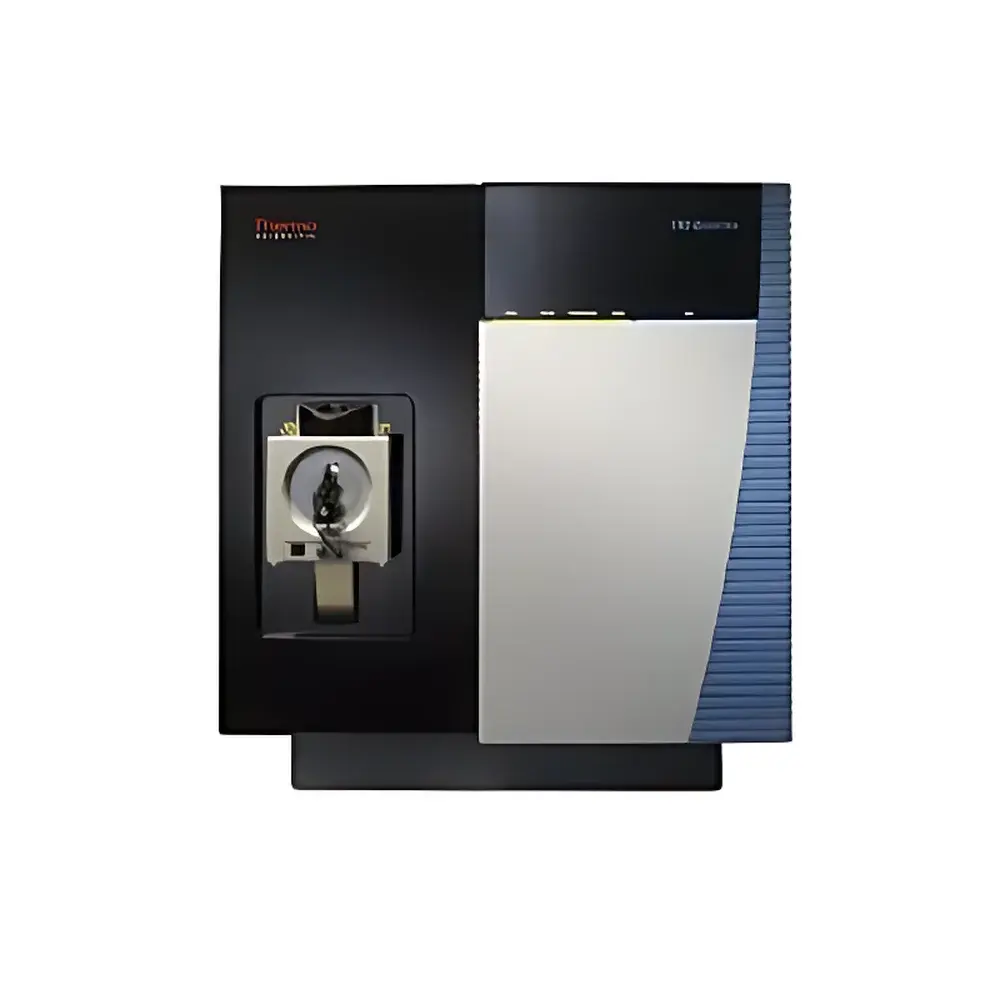
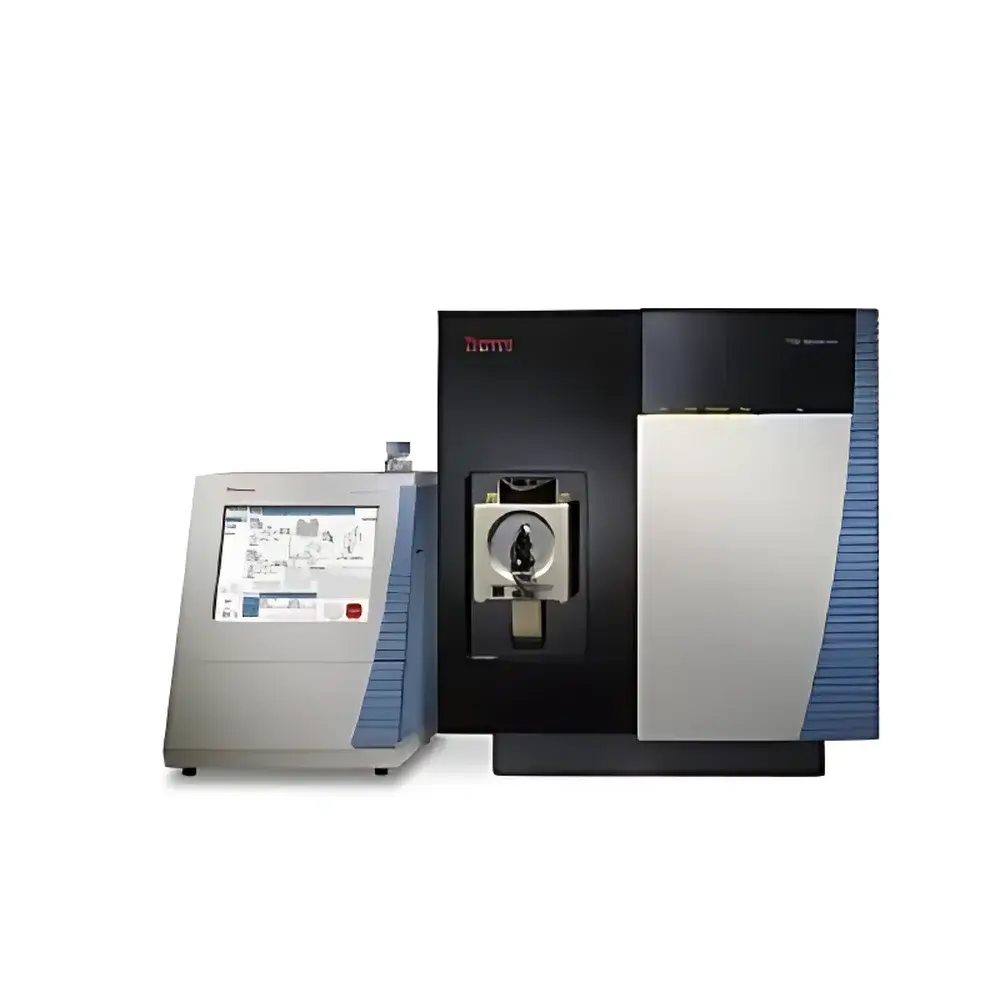
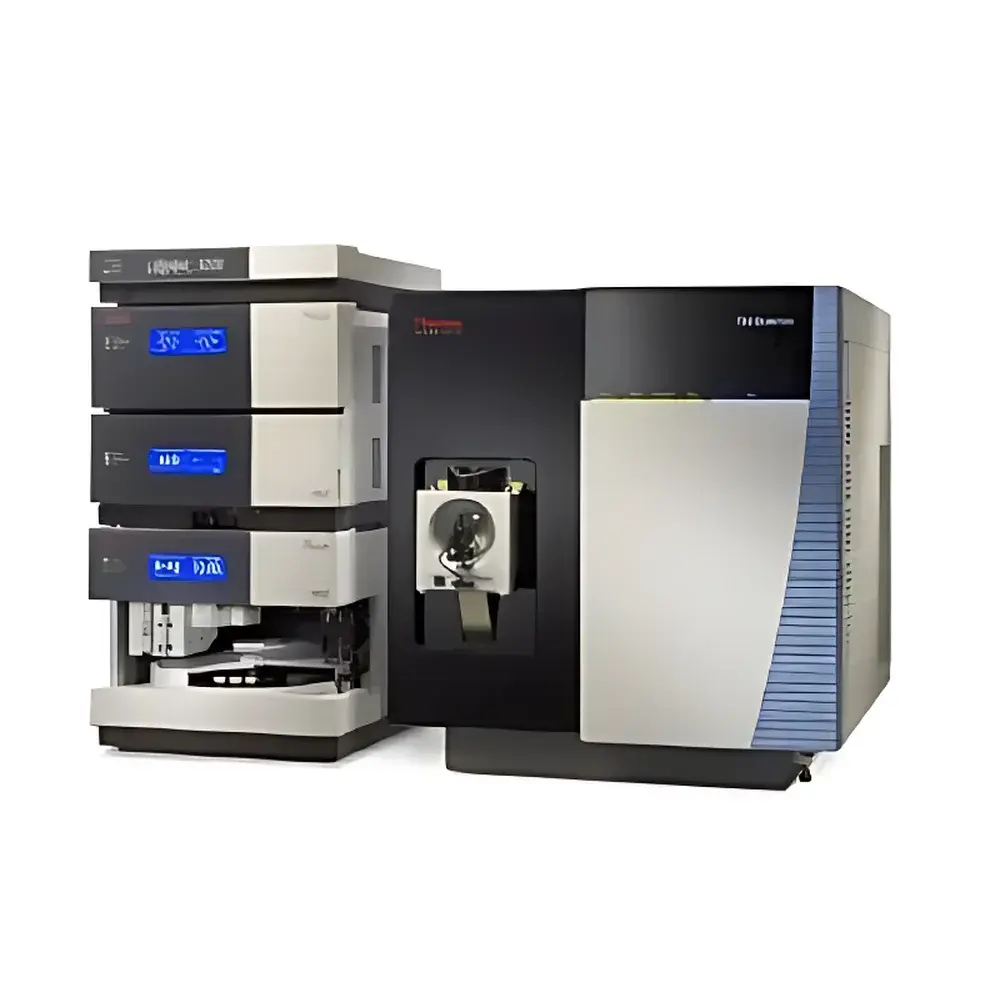
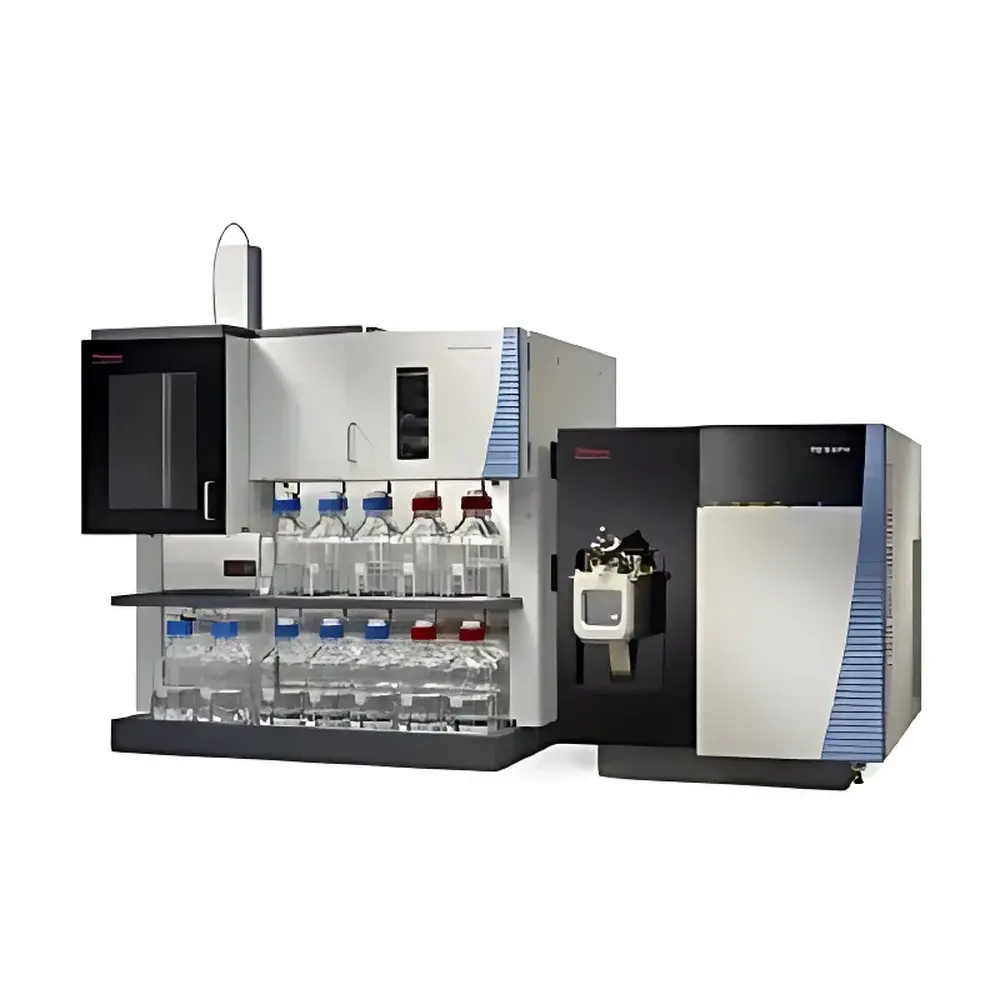
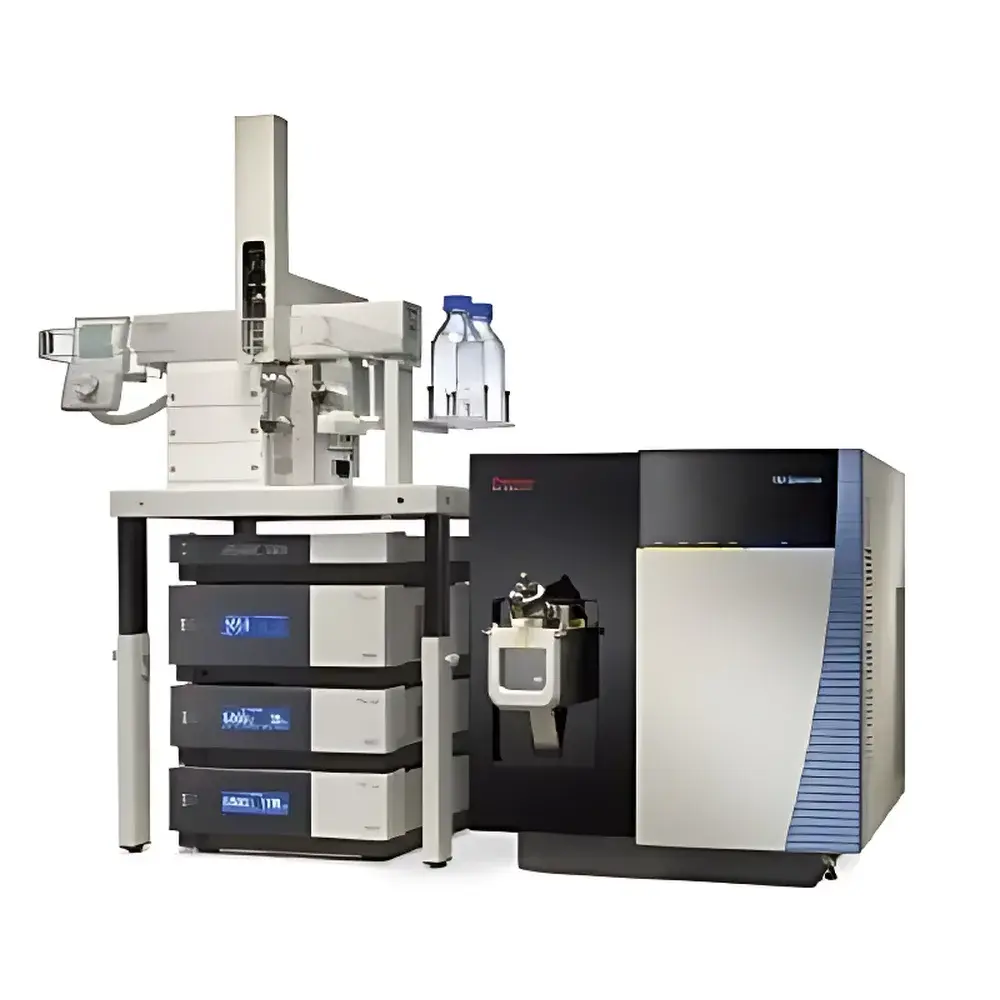
Thermo Fisher TSQ Quantiva Triple Quadrupole Mass Spectrometer
| Brand | Thermo Fisher |
|---|---|
| Origin | USA |
| Manufacturer Type | Original Equipment Manufacturer (OEM) |
| Product Origin | Imported |
| Model | TSQ Quantiva |
| Instrument Type | Tandem Quadrupole (Triple Quadrupole) |
| Price Range | USD 260,000 – 390,000 (estimated FOB US) |
Overview
The Thermo Fisher TSQ Quantiva Triple Quadrupole Mass Spectrometer is a high-performance, research-grade LC-MS/MS system engineered for ultra-trace quantitative analysis in demanding applications across pharmaceutical development, clinical research, environmental monitoring, and food safety testing. Operating on the principle of tandem mass spectrometry (MS/MS) in selected reaction monitoring (SRM) and multiple reaction monitoring (MRM) modes, the TSQ Quantiva leverages a robust triple quadrupole architecture to deliver exceptional specificity, sensitivity, and reproducibility. Its core innovation—Active Ion Management (AIM)—integrates real-time ion trajectory optimization with dynamic background suppression, enabling stable ion transmission across wide concentration ranges while minimizing chemical noise from complex matrices. Coupled with the Ion Max NG source and an electrospray-compatible electric ion funnel, the system achieves sub-attomole (sub-100 zg) detection limits for many small-molecule analytes under optimized conditions—consistent with performance benchmarks reported in peer-reviewed literature for regulated bioanalysis.
Key Features
- Active Ion Management (AIM) Technology: A closed-loop ion optics control system that dynamically adjusts lens voltages and RF amplitudes to maintain optimal ion transmission efficiency across varying sample loads and matrix compositions—critical for high-precision quantitation in biological fluids and environmental extracts.
- HyperQuad Quadrupole Design: Precision-machined, temperature-stabilized quadrupole rods with enhanced field homogeneity and reduced field distortion, supporting high-resolution precursor and product ion selection without sacrificing transmission or duty cycle.
- Ion Max NG Source with Electric Ion Funnel: A next-generation electrospray ionization (ESI) interface featuring active desolvation gas heating, adjustable spray voltage, and an integrated electrodynamic ion funnel that improves ion capture efficiency by >5× compared to conventional capillary-based sources—particularly beneficial for low-flow LC and microfluidic separations.
- Neutral Ion Filtering Capability: Integrated neutral particle deflection components reduce chemical noise from non-ionized matrix components, directly contributing to improved signal-to-noise ratios and lower limits of quantification (LLOQ) in high-background samples.
- High-Speed MRM Acquisition: Capable of monitoring >1,000 MRM transitions per second with dwell times as low as 1 ms—enabling comprehensive multi-analyte panels without compromising chromatographic resolution or quantitative accuracy.
Sample Compatibility & Compliance
The TSQ Quantiva interfaces seamlessly with standard and ultra-high-performance liquid chromatography (UHPLC) systems, supporting reversed-phase, HILIC, and ion-pairing methods. It accommodates flow rates from 10 nL/min to 1 mL/min and is compatible with common ionization techniques including ESI, APCI, and optional nano-ESI sources. The platform meets essential regulatory requirements for GLP and GMP environments: full audit trail functionality, electronic signature support, and 21 CFR Part 11–compliant software modules (via Thermo Scientific Chromeleon CDS or TraceFinder). Method validation workflows align with ICH M10, FDA Bioanalytical Method Validation Guidance, and ISO/IEC 17025 criteria for accredited testing laboratories.
Software & Data Management
Instrument control, data acquisition, and quantitative processing are managed through Thermo Scientific TraceFinder Software—a purpose-built application for targeted quantitative workflows. TraceFinder supports automated peak integration, internal standard normalization, calibration curve fitting (linear, quadratic, weighted), and outlier detection based on user-defined statistical thresholds. All raw data files (.raw) are stored in vendor-neutral formats compliant with mzML standards. Secure data handling includes role-based access control, encrypted database storage, and export options compatible with LIMS integration (via ODBC or API). Audit logs record all method modifications, instrument parameter changes, and result reprocessing events—ensuring full traceability for regulatory submissions.
Applications
- Pharmaceutical bioanalysis: PK/PD studies, metabolite identification support, and impurity quantification in drug substance and product testing.
- Clinical toxicology: Multi-panel screening for drugs of abuse, therapeutic drug monitoring (TDM), and endogenous biomarker quantification (e.g., steroids, vitamins, acylcarnitines).
- Environmental analysis: Detection of pesticides, PFAS, pharmaceutical residues, and endocrine disruptors in wastewater, soil extracts, and drinking water at ng/L levels.
- Food safety: Mycotoxin, veterinary drug residue, and allergen peptide quantification in complex food matrices using isotopically labeled internal standards.
- Academic and government research: Method development for novel biomarkers, exposure science, and forensic chemistry requiring high-confidence, low-abundance quantitation.
FAQ
What distinguishes the TSQ Quantiva from earlier TSQ models such as the Vantage or Altis?
The Quantiva introduces AIM technology, HyperQuad quadrupoles, and the Ion Max NG source—collectively delivering ~3× improvement in LLOQ for challenging matrices compared to TSQ Vantage, along with enhanced long-term signal stability during extended batch runs.
Is the TSQ Quantiva compatible with non-Thermo LC systems?
Yes—it supports standard analog and digital communication protocols (e.g., RS-232, Ethernet, LabVantage) and integrates with Agilent, Waters, and Shimadzu UHPLC platforms via Thermo’s universal LC interface drivers.
Does the system support retrospective data reprocessing?
Yes—TraceFinder allows full reintegration and recalibration of acquired .raw files without reacquisition, preserving original acquisition metadata and audit trail integrity.
What maintenance intervals are recommended for routine operation?
Ion source cleaning every 2–4 weeks (depending on sample load), quadrupole calibration quarterly, and vacuum system inspection annually—per Thermo’s documented preventive maintenance schedule (PMS-008 Rev. D).
Can the TSQ Quantiva be configured for GMP-compliant workflows out-of-the-box?
When deployed with Chromeleon CDS v7.3+ and validated IQ/OQ protocols, the system satisfies baseline 21 CFR Part 11 requirements; however, site-specific risk assessment and procedural documentation remain the responsibility of the end-user laboratory.
Related Products





