
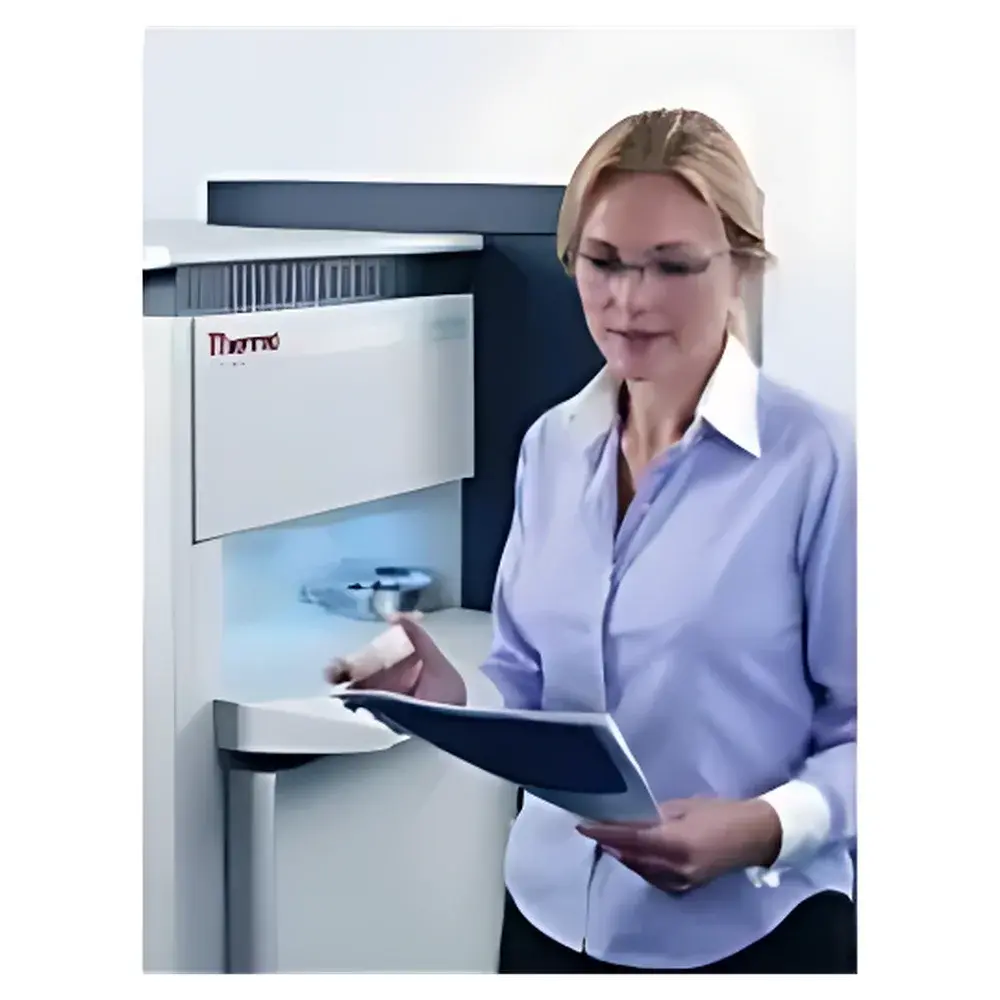
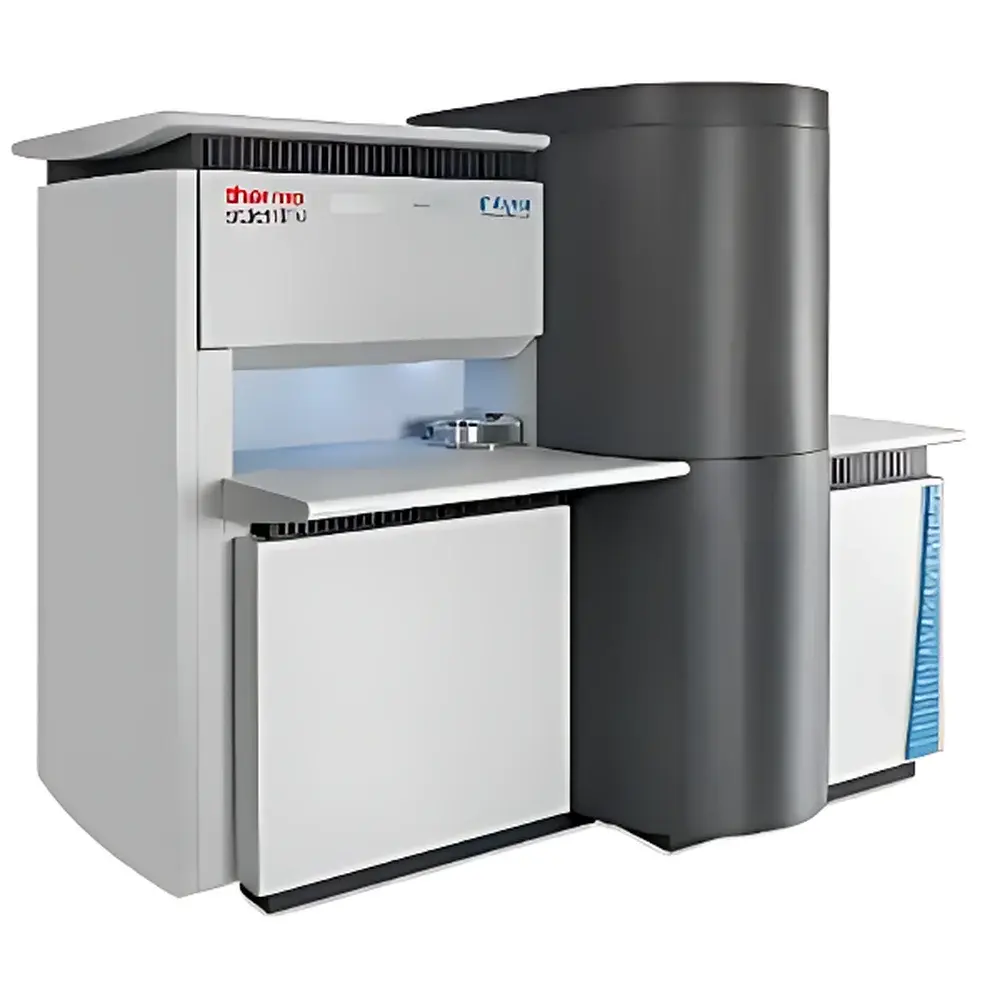
Thermo Scientific K-Alpha X-ray Photoelectron Spectrometer
| Brand | Thermo Fisher |
|---|---|
| Origin | United Kingdom |
| Manufacturer Type | Original Equipment Manufacturer (OEM) |
| Origin Category | Imported Instrument |
| Model | K-Alpha |
| Pricing | Available upon Request |
Overview
The Thermo Scientific K-Alpha X-ray Photoelectron Spectrometer (XPS) is a high-performance, laboratory-based surface analysis system engineered for precision quantitative elemental and chemical state characterization of solid materials. Operating on the fundamental principle of the photoelectric effect—where monochromatic Al Kα X-rays (1486.6 eV) irradiate a sample surface and eject photoelectrons whose kinetic energies are measured to determine binding energy—the K-Alpha delivers high spectral resolution (<0.5 eV FWHM on Ag 3d5/2), excellent signal-to-noise ratio, and exceptional chemical sensitivity. Designed specifically for multi-user academic, industrial, and quality control laboratories, it integrates a micro-focused monochromated X-ray source, a double-focusing hemispherical analyzer, and a multi-channel detection system to enable rapid acquisition of high-fidelity survey, high-resolution core-level, and depth-profiling spectra. Its robust architecture supports routine operation under standard vacuum conditions (base pressure <2 × 10⁻⁹ mbar), with optional differential pumping for enhanced surface sensitivity and reduced charging effects on insulating samples.
Key Features
- Monochromated Al Kα X-ray source with 20–40 µm spot size for spatially resolved analysis and high lateral resolution chemical imaging
- Dual-mode charge neutralization system (low-energy electron flood gun + Ar+ ion gun) optimized for insulator analysis and stable charge compensation
- Automated five-axis sample stage with precise tilt (±90°), rotation (360°), and XYZ translation for angle-resolved XPS (AR-XPS) and multi-point mapping
- Integrated sample transfer lock and optional recirculating inert-gas glovebox interface for air-sensitive and reactive material handling (e.g., battery electrodes, catalysts, organometallics)
- Intelligent automation suite: one-click experiment setup, auto-alignment, real-time spectrum preview, and adaptive dwell-time optimization
- High-throughput data acquisition engine supporting snapshot mode (full survey in <60 s), sequential high-resolution scans, and automated depth profiling using dual-beam Ar+ sputtering
Sample Compatibility & Compliance
The K-Alpha accommodates flat, irregular, and particulate samples up to 50 mm in diameter and 20 mm in height. It supports conductive, semi-conductive, and insulating materials—including polymers, oxides, thin films, nanoparticles, and corrosion layers—via integrated charge compensation and low-dose acquisition protocols. The system complies with ISO 18118:2017 (Surface chemical analysis — X-ray photoelectron spectroscopy — Terminology and definitions) and supports audit-ready workflows aligned with GLP and GMP requirements. Data integrity is ensured through built-in electronic signatures, time-stamped audit trails, and secure user-access controls compliant with FDA 21 CFR Part 11 principles. All calibration standards (Ag, Cu, Au, C 1s adventitious carbon) are traceable to NIST-certified reference materials.
Software & Data Management
The Avantage data system provides fully integrated instrument control, real-time spectral visualization, peak fitting, quantification (with Scofield sensitivity factors), chemical state deconvolution, depth-profile reconstruction, and false-color chemical imaging. Advanced modules include PCA-based multivariate analysis, overlay comparison tools, batch processing for high-throughput labs, and export compatibility with ASTM E1527-compliant reporting templates. Raw and processed data are stored in vendor-neutral .avd format with embedded metadata (instrument parameters, calibration logs, environmental conditions). The software maintains full revision history, supports role-based permissions, and generates system performance logs for preventive maintenance scheduling and ISO/IEC 17025 accreditation documentation.
Applications
- Surface oxidation state mapping of transition metal catalysts and battery cathode materials
- Thin-film composition verification and interfacial diffusion analysis in semiconductor fabrication
- Adhesion promoter layer characterization on polymer substrates for automotive coatings
- Corrosion product identification and passivation layer thickness estimation on stainless steel alloys
- Contamination screening and organic residue identification on medical device surfaces per ISO 10993-18
- Quantitative atomic concentration profiling across graded interfaces in photovoltaic absorber stacks
FAQ
What vacuum level does the K-Alpha achieve during analysis?
The system maintains a base pressure of ≤2 × 10⁻⁹ mbar in the analysis chamber, with differential pumping enabling stable operation even during extended depth profiling or insulator analysis.
Can the K-Alpha perform depth profiling on non-conductive samples?
Yes—using synchronized charge neutralization and low-energy Ar+ sputtering (0.5–4 keV), the K-Alpha achieves reproducible depth profiles on glasses, ceramics, and polymer laminates without significant preferential sputtering artifacts.
Is the Avantage software validated for regulated environments?
Avantage includes 21 CFR Part 11-compliant features such as electronic signatures, audit trail logging, and user access management—validated per internal IQ/OQ protocols and compatible with third-party validation support packages.
How is instrument calibration verified and maintained?
Calibration is performed automatically at startup using internal reference peaks; users may schedule periodic verification against certified reference samples, with all results logged in the system performance database.
What sample introduction options are available for air-sensitive materials?
An optional recirculating inert-gas glovebox (Ar/N2, O2 <0.1 ppm) interfaces directly with the load-lock, enabling transfer of pyrophoric catalysts, lithiated anodes, and moisture-sensitive MOFs without atmospheric exposure.




