
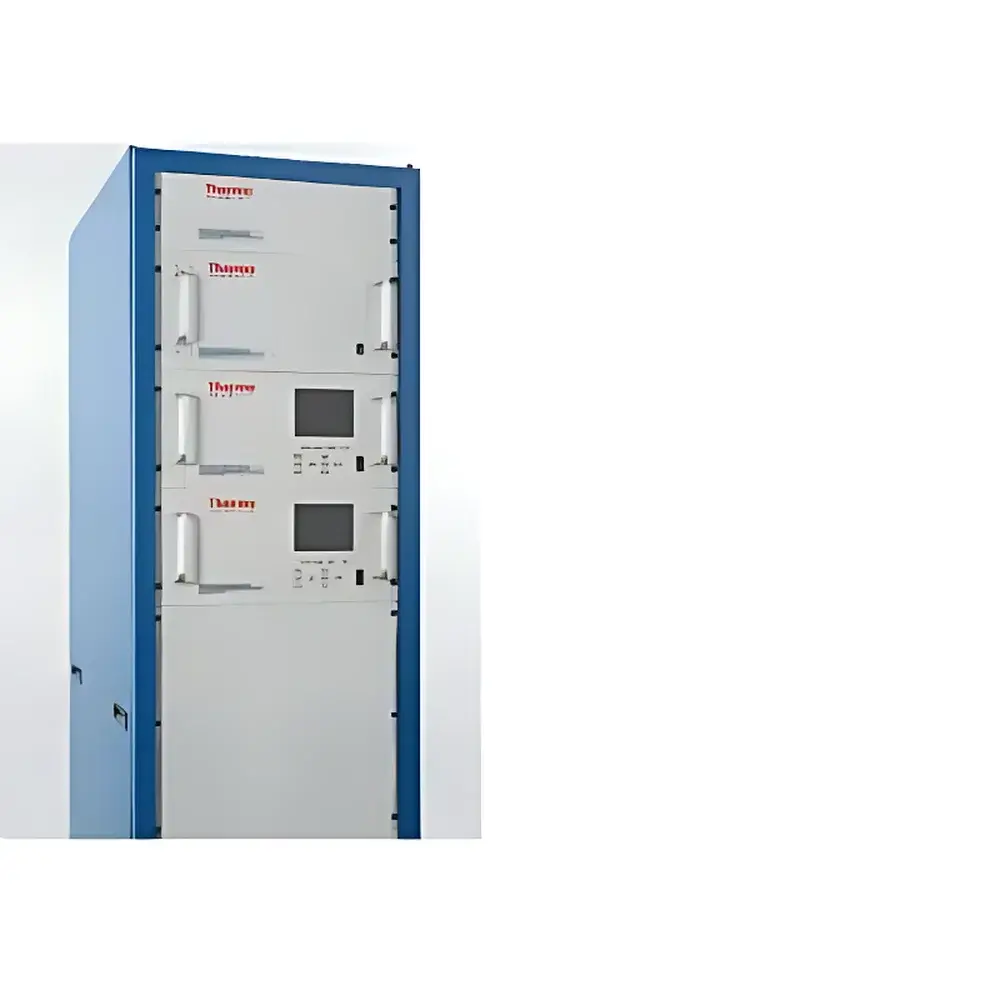
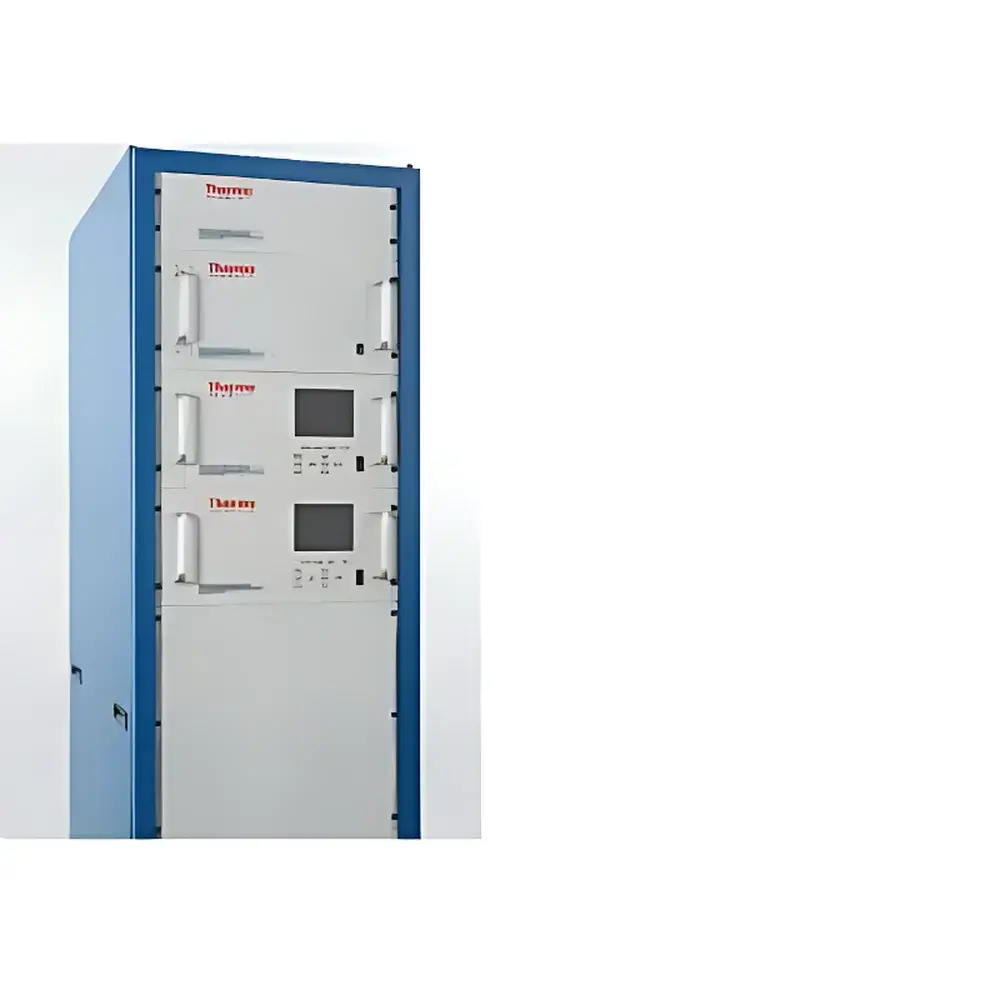
Thermo Scientific CEMS Hg Continuous Mercury Emission Monitoring System
| Brand | Thermo Fisher |
|---|---|
| Origin | USA |
| Manufacturer Type | Original Equipment Manufacturer (OEM) |
| Product Origin | Imported |
| Model | CEMS Hg |
| Pricing | Upon Request |
Overview
The Thermo Scientific CEMS Hg Continuous Mercury Emission Monitoring System is a fully integrated, EPA-compliant solution engineered for real-time, speciated mercury (Hg⁰, Hg²⁺, and total Hg) measurement in flue gas streams from coal-fired power plants, waste incinerators, and industrial combustion sources. It operates on the principle of cold vapor atomic fluorescence spectroscopy (CVAFS), coupled with in-situ thermal conversion and selective catalytic reduction, enabling quantitative differentiation between elemental and oxidized mercury species without chemical derivatization. Designed in strict accordance with U.S. EPA Performance Specification 12A (PS-12A) and Appendix A to 40 CFR Part 75, the system meets all regulatory requirements for continuous compliance monitoring under the Mercury and Air Toxics Standards (MATS) and the Clean Air Act. Its dilution-based sampling architecture—featuring a 100:1 dilution ratio—effectively mitigates interference from high moisture content, elevated temperature, particulate loading, and acidic gases (e.g., SO₂, HCl), ensuring stable operation across variable stack conditions.
Key Features
- Speciated mercury quantification: Simultaneous measurement of elemental mercury (Hg⁰), oxidized mercury (Hg²⁺), and total mercury (HgT) via integrated probe-side thermal conversion and CVAFS detection
- Sub-ng/m³ detection sensitivity: Achieves a method detection limit (MDL) of ≤ 0.5 ng/m³ (wet basis) at standard temperature and pressure (STP), validated per EPA PS-12A protocols
- Dilution-based wet-basis measurement: Eliminates need for independent flue gas moisture analyzers; reports Hg concentration directly on a wet-volume basis as required by 40 CFR Part 75
- No consumable gold traps or SO₂ scrubbers: Proprietary atomic fluorescence detector design bypasses traditional amalgamation chemistry, reducing operational cost and maintenance frequency
- In-probe Hg²⁺ stabilization: Utilizes glass-coated inert filtration and on-tip catalytic reduction to prevent adsorptive loss or redox transformation during sample transport
- Zero reagent usage: No acid gas removal chemicals, no hazardous waste generation, and no liquid effluent requiring disposal
- Unattended 7×24 operation: Engineered for >95% data capture rate over 30-day validation periods, compliant with EPA QA/QC criteria for CEMS
- i-Series platform integration: Leverages Thermo Scientific’s standardized hardware architecture, firmware architecture, and diagnostic interface for interoperability with existing CEMS infrastructure
Sample Compatibility & Compliance
The CEMS Hg system is validated for use with flue gas matrices containing up to 15% O₂, 12% CO₂, 15% H₂O (v/v), and ≤ 3,000 ppm SO₂. It maintains accuracy across flue gas temperatures ranging from 80 °C to 180 °C and particulate loadings up to 50 g/Nm³. All performance claims are substantiated through third-party field evaluations conducted under EPA’s Hg CEMS Field Assessment Program. The system conforms to ISO/IEC 17025:2017 (testing laboratory competence), supports GLP/GMP audit trails, and includes full 21 CFR Part 11–compliant electronic record functionality—including user authentication, change logging, and secure data archiving—for regulated environments.
Software & Data Management
Data acquisition and control are managed via Thermo Scientific’s i-Series CEMS software suite, featuring intuitive menu-driven navigation, automated calibration scheduling, and configurable alarm thresholds. Raw spectral data, diagnostic logs, and QA/QC metrics—including daily zero/span checks, linearity verification, and drift assessments—are stored locally and exportable in CSV or XML format. The system supports Modbus TCP, OPC UA, and DNP3 communication protocols for seamless integration into plant DCS or central environmental data management systems (EDMS). Audit-ready reports—including PS-12A test summaries, 7-day rolling precision statistics, and 30-day compliance summaries—are generated automatically and meet EPA Electronic Reporting Tool (ERT) formatting standards.
Applications
- Regulatory compliance monitoring for coal- and oil-fired utility boilers subject to MATS and state-level Hg rules
- Continuous emissions monitoring at municipal solid waste (MSW) and medical waste incinerators
- Process optimization support in chlor-alkali facilities and non-ferrous metal smelters
- Research-grade mercury speciation studies in pilot-scale carbon injection trials
- Baseline characterization and long-term trend analysis for EPA National Emissions Inventory (NEI) reporting
FAQ
Does the CEMS Hg system require periodic replacement of gold traps or mercury sorbent cartridges?
No. The system employs a mercury-specific atomic fluorescence detector with no consumable amalgamation media.
Can it measure oxidized mercury (Hg²⁺) independently without interference from HCl or SO₂?
Yes. The probe-integrated thermal converter and inert glass-lined filter minimize Hg²⁺ adsorption and redox artifacts, enabling robust speciation even in high-acid-gas environments.
Is humidity correction necessary for reported Hg concentrations?
No. The dilution system delivers a stable, low-moisture sample stream, and all outputs are reported on a wet-basis per 40 CFR Part 75—eliminating the need for parallel moisture measurement.
What calibration gases are required for routine operation?
Only certified zero air (generated internally) and NIST-traceable Hg⁰ permeation tube standards; no Hg²⁺ reference gases are needed due to the in-probe conversion methodology.
How does the system handle particulate-laden flue gas?
The heated, glass-coated inert probe filter retains >99.9% of fly ash particles ≥0.5 µm while maintaining Hg species integrity through controlled thermal conditioning.
Related Products







